Whether a Damp Bichon Frise Mats Faster
Oh, the sheer joy of a freshly bathed, perfectly fluffed Bichon Frise! They look like a cloud on legs, pure white and utterly adorable. But then, life happens. A splash in a puddle, a quick drink that drips down their chin, or even just humidity in the air, and suddenly, you're wondering if you just blinked and created a mat out of thin air. The truth is, one of the most frustrating battles Bichon owners face is the relentless fight against matting, and dampness is often the secret weapon of those insidious tangles. This guide is here to shed light on why a damp Bichon Frise mats faster than you can say "fluffy," and more importantly, what you can actually do about it.
The Truth About Dampness and Bichon Frise Mats
It’s not just your imagination, and you're not doing anything wrong if your Bichon seems to mat at the speed of light after getting even a little bit wet. There's a scientific reason behind why their beautiful, cotton-candy coats are so susceptible to dampness, and understanding it is the first step toward winning the grooming war.
Why Moisture is a Mat Magnet for Bichons
A Bichon Frise’s coat is truly unique, a delightful blend of a soft, dense undercoat and a coarser, spiraling outer coat. This combination is what gives them that signature powder-puff look, but it's also their Achilles' heel when it comes to moisture. Unlike many breeds that shed their undercoat, a Bichon’s loose hairs tend to get trapped within their dense coat, intertwining with the live hair. When moisture enters the picture, it acts like a sticky glue.
Think of it like this: each hair shaft, especially the soft undercoat, has tiny scales. When dry, these scales lie relatively flat, allowing the hairs to slide past each other with minimal friction. Introduce water, however, and these scales can lift and expand. As the coat dries, especially if it's left to air dry without proper brushing and airflow, these lifted scales interlock with those of neighboring hairs. The trapped loose hair, now thoroughly saturated and clumped, becomes even more entangled, tightening into solid knots and eventually, painful mats right against the skin. Humidity in the air, even without direct wetness, can exacerbate this, making the hair slightly tacky and encouraging it to clump. It’s a perfect storm for mat formation, and unfortunately, your Bichon's lovely cloud-like texture is the very thing that makes them so prone to it.
The Speed Factor: How Quickly Mats Form
If you've ever given your Bichon a bath and thought, "I'll just let them air dry for a bit," only to return to a coat that feels oddly felted, you've experienced the speed at which mats can form. We’re not talking about a slow, gradual process that takes days. Oh no, with a Bichon Frise, matting can begin in mere hours, sometimes even minutes, after their coat gets damp. A quick dash through wet grass, a vigorous shake after a drink of water, or even just the condensation from a cold windowpane can initiate the tangling process.
Consider the common scenario: your Bichon enjoys a lovely walk on a misty morning, or perhaps they've just had a bath and you haven't meticulously line-brushed them dry. The moisture in their coat causes those hair shafts to stick together. As your dog moves, the friction further intertwines these damp, clinging hairs. By the time the coat is fully dry, those once-loose hairs have solidified into a dense, impossible-to-comb knot. The areas most prone to this rapid matting are typically behind the ears, under the chin, in the armpits, and on the inner thighs – places where friction is high and the coat is often thicker and finer. It's a frustrating reality, but recognizing this rapid onset means you can be proactive about preventing it rather than playing catch-up once the damage is done.
Common Scenarios Where Dampness Leads to Disaster
Understanding why dampness causes mats is one thing, but knowing when and where it's most likely to happen in your daily life with a Bichon is key to prevention. From bath time to everyday antics, moisture is lurking.
Post-Bath Blues: The Biggest Matting Culprit
Ah, bath time! It's meant to be a refreshing experience, leaving your Bichon sparkling white and smelling delightful. However, for many Bichon owners, it can quickly turn into a matting nightmare if not handled correctly. The bath itself, while necessary, is often the single biggest contributor to matting because it saturates the entire coat. If you skip the critical step of thoroughly brushing out your Bichon before the bath to remove any existing tangles, those tangles will only tighten and multiply once wet.
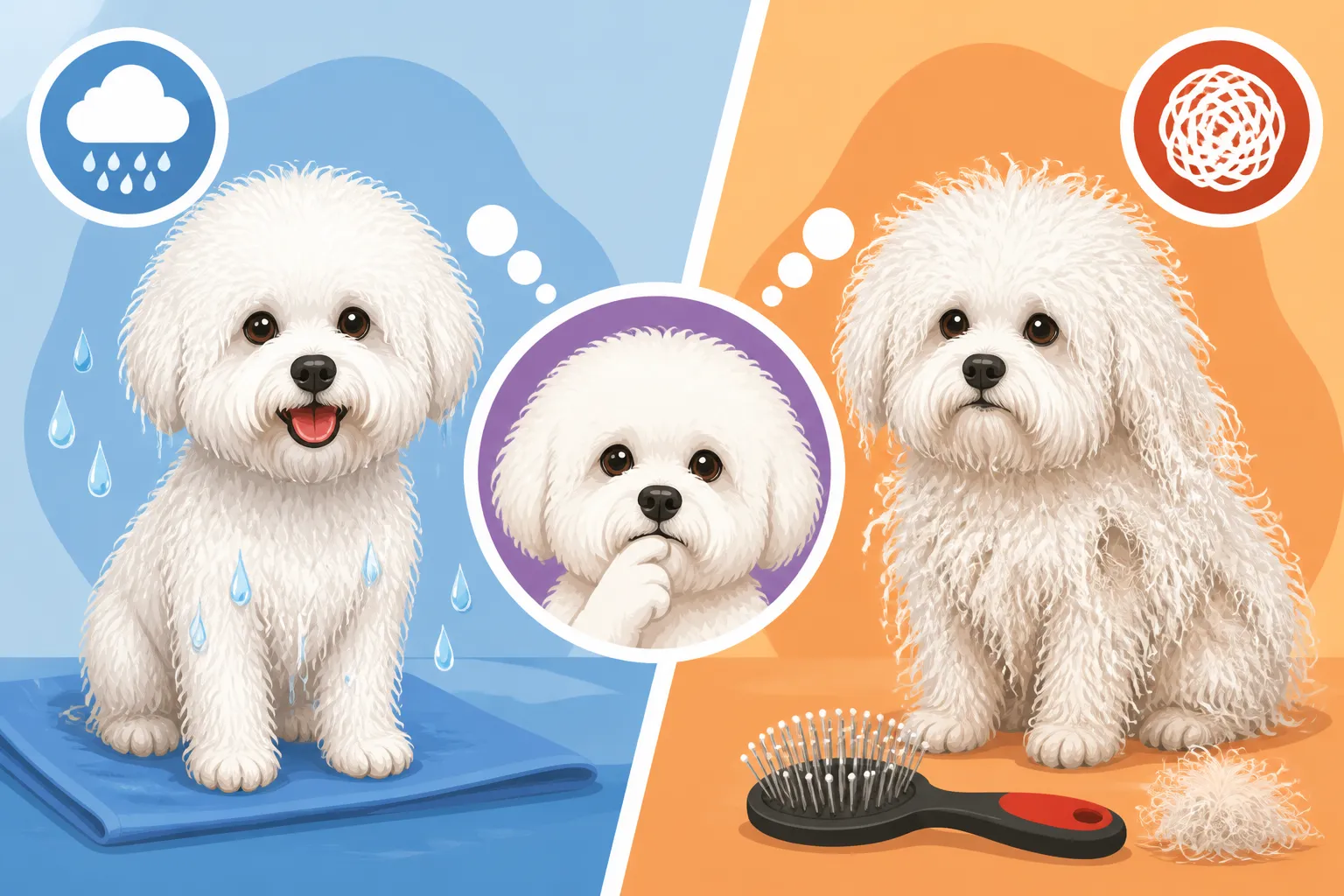
But the real trouble often begins after the shampoo. The common mistake is thinking a towel dry and a bit of air-drying will suffice. For a Bichon’s thick, cottony coat, this is a recipe for disaster. Air-drying allows the hair to dry in clumped sections, fusing together and creating solid mats close to the skin. These mats aren't just unsightly; they can pull on the skin, causing pain, irritation, and even skin infections due to trapped moisture and lack of air circulation. Areas like the chest, belly, ears, and tail are particularly vulnerable to this post-bath matting because they tend to stay damp longer and often get overlooked during drying. It’s absolutely crucial to not just dry the surface layer but to ensure every single hair shaft down to the skin is dry and separated.
Rainy Day Revelations and Puddle Plunges
We all know the look: your Bichon peers out at a rainy day with a look that says, "You expect me to go out there?" And honestly, sometimes you can't blame them! But even if they try to avoid it, wet weather walks, misty mornings, or unexpected puddles are almost inevitable. When your Bichon’s fluffy legs and belly encounter wet grass or splash through a shallow puddle, that moisture wicks right up into their dense coat. The fine hair on their legs and feathering quickly becomes saturated.
If your Bichon comes in from a damp walk and you simply towel off the obvious wetness, you’re leaving a lot of trapped moisture in that dense undercoat. As they shake off, lie down, or move around, the damp hairs rub together, rapidly forming tight knots. The paws, in particular, are a hotspot for matting after wet outings. Mud and water can mix with the hair between their paw pads and around their ankles, forming dense, painful clumps. Similarly, the hair on their chest and belly, which often brushes against wet surfaces, becomes a prime target. Many owners, ourselves included, have fallen victim to thinking a quick pat-down is enough, only to discover painful, tight mats later on. Being prepared for these wet encounters is just as important as managing bath time.
Everyday Dampness: Drinking, Drooling, and Dewdrops
It’s not just baths and rainy walks that pose a threat; even the most mundane daily activities can introduce enough dampness to trigger matting in a Bichon Frise. Take drinking water, for instance. A Bichon’s adorable beard and muzzle hair inevitably dip into their water bowl. While a small amount of wetness might seem harmless, if left to dry clumped, that chin fur can quickly turn into a matted mess, sometimes even developing a stiff, yellowish crust. This isn't just an aesthetic issue; persistent dampness can also lead to skin irritation or yeast infections under the chin. Whether a Bichon Frise's Beard Stains Too is a related concern, as dampness can exacerbate tear and saliva staining.
Beyond drinking, morning dew is another sneaky culprit. If your Bichon loves to prance through the dewy grass on their first morning potty break, their delicate leg and belly fur will quickly become saturated. Similarly, playing in light snow can cause tiny ice balls to form in their fur, which then melt, leaving their coat damp and prone to matting. Even drool, if your Bichon is particularly enthusiastic or has certain dental issues, can cause matting around their mouth and chest. These might seem like minor amounts of moisture, but for a Bichon’s mat-prone coat, they are more than enough to start the tangling process. It truly feels like you're constantly on alert, doesn't it?
Your Anti-Matting Arsenal: Prevention and Intervention
Okay, so we know dampness is the enemy. But what can we actually do about it? The good news is, with the right routine and tools, you can significantly reduce the struggle and keep your Bichon's coat beautifully fluffy and mat-free. It takes dedication, but it’s absolutely worth it.
The Golden Rule: Brush Before Wet, Dry Thoroughly After
This isn't just a suggestion; it's the absolute commandment for Bichon Frise owners. Before your Bichon ever touches water – whether it's a bath, a swim, or even just a quick rinse of muddy paws – you must thoroughly brush and comb their entire coat. Why? Because any existing tangles, no matter how small, will shrink and tighten into impenetrable mats when wet. Imagine trying to untangle a knot of string after it's been soaked and dried; it's almost impossible without cutting. So, grab your slicker brush and metal comb and work through every section of their coat, ensuring there are no snags. This crucial step alone can prevent a massive amount of post-bath matting. How Long Brushing a Bichon Frise Takes can vary, but it's time well spent.
After the bath, drying is where the magic happens – or where disaster strikes. Towel drying is merely the first step to remove excess water. The real work involves a good quality pet force dryer, combined with continuous brushing. This isn’t a quick process; you need to dry your Bichon completely, down to the skin, while simultaneously brushing the hair in the direction it grows, layer by layer. This technique, known as line brushing, ensures that each hair shaft is separated as it dries, preventing it from clumping and matting. Focus on those prone areas like the armpits, behind the ears, and inner thighs. It might take a good How Long Drying a Bichon Frise Takes, but rushing it will only lead to mats. Think of it as sculpting their coat back into that beautiful powder-puff shape as you dry. Whether Brushing While Drying Sets the Coat is absolutely true; it's essential for a mat-free, fluffy finish.
Tools of the Trade for a Mat-Free Bichon
You wouldn't go into battle without your weapons, and keeping a Bichon Frise mat-free is certainly a battle! Having the right grooming tools is non-negotiable for any Bichon owner. First and foremost, you need a high-quality slicker brush. This is your primary tool for daily brushing, designed to gently separate hairs and remove loose undercoat. Make sure it has fine, firm pins that can reach deep into the coat without scratching the skin. Which Brush Suits a Bichon Frise will often be a slicker, but it's important to find one that's comfortable for both you and your dog.
Next, a sturdy metal comb, with both wide and fine teeth, is indispensable. This isn't just for checking your work after brushing; it's vital for line brushing and getting down to the skin to ensure no tangles are hiding. You should be able to comb through your Bichon's coat from root to tip without any snags. If the comb catches, you know you've got a tangle to work on with your slicker. Whether a Slicker Reaches a Bichon Frise's Skin is important, but Whether a Comb Should Follow the Brush is how you verify the slicker's effectiveness.
For drying, a pet-specific force dryer (also known as a high-velocity dryer) is a game-changer. These dryers blow air at a high speed, separating the hair shafts and significantly cutting down drying time, which directly reduces matting risk. While they can be an investment, they are incredibly effective. You can often find a good range of slicker brushes, metal combs, and force dryers on platforms like Amazon or Chewy. Additionally, a good detangling spray can be a lifesaver for working out minor tangles, applied before brushing, not directly to mats. And don't forget quality conditioning shampoos and rinses to keep the coat healthy and less prone to tangling in the first place.
Here's a quick overview of essential grooming tools:
| Tool | Purpose | Key Feature | When to Use |
|---|---|---|---|
| Slicker Brush | Daily brushing, removing tangles and loose undercoat | Fine, angled wire pins, often rectangular head | Daily or every other day, before and during drying |
| Metal Comb | Checking for mats, line brushing, detangling | Two sides with wide and fine teeth | After brushing, during drying, for detail work (ears, face) |
| Force Dryer | Rapid, thorough drying, separating hair | High-velocity airflow, often with adjustable heat/speed | Immediately after bathing, for drying wet spots after walks |
| Detangling Spray | Lubricates hair to ease knot removal | Conditioning agents to smooth hair cuticle | Sparingly on minor tangles before brushing, never on dry mats |
| Conditioner | Smooths hair, reduces static and tangles | Moisturizing ingredients to improve coat texture | After shampooing, helps prevent hair from sticking together as it dries |
Quick Fixes for Unexpected Dampness
Life happens, and sometimes, despite your best efforts, your Bichon will get damp unexpectedly. Knowing how to handle these smaller incidents can prevent them from escalating into full-blown matting disasters. If your Bichon comes in with a wet belly or damp paws after a potty break in wet grass, don't just let them air dry. Grab a dedicated towel and thoroughly dry those areas. For the paws, gently separate the fur between the pads and around the ankles, ensuring no mud or moisture is left trapped.
The beard is another notorious area for unexpected dampness. After your Bichon drinks, their chin fur can become saturated. A small, absorbent cloth specifically for their face can be kept by the water bowl for a quick pat-dry after each drink. Some owners even use specialized snoods or bibs during feeding and drinking times to keep the facial hair drier. For general dampness or light grime from a walk, grooming wipes can be incredibly useful for a quick clean and dry, especially around the legs and undercarriage. While these aren't a substitute for a full bath and groom, they are excellent preventative measures for those little bursts of moisture that often catch us off guard. Remember, the key is to address any dampness as soon as possible, before it has a chance to set into a mat.
When to Call in the Pros: Groomers and Their Wisdom
Despite your best efforts, sometimes mats happen. And sometimes, they’re just too much for home care. That's when your professional groomer becomes your best friend. Don't feel guilty; it happens to the best of us!
Recognizing When a Mat is Beyond Home Care
It’s crucial to know the difference between a minor tangle you can carefully brush out at home and a severe mat that requires professional attention. A minor tangle might feel like a small knot, easily worked through with a metal comb and a detangling spray after a good brushing. But a mat is different. It's a dense, compacted clump of fur, often felted together, that sits close to the skin. You might not even see the skin underneath. You can test the severity by trying to gently lift the mat away from the skin. If it pulls tightly and causes your dog discomfort, or if your comb cannot penetrate it, it's likely a significant mat.
Trying to cut out mats at home with scissors is incredibly risky and can easily lead to accidental nicks or cuts on your Bichon's delicate skin, especially since mats often pull the skin tight and obscure where the mat ends and the skin begins. Furthermore, forcefully brushing out severe mats can be extremely painful for your dog, turning grooming into a traumatic experience. If you encounter large, tight, or painful mats, or if you simply feel overwhelmed, it's time to put down the brush and call your groomer. They have the specialized tools and expertise to handle matted coats safely and with the least amount of stress for your beloved pet.
The Groomer's Role in Mat Prevention and Removal
Professional groomers are absolute wizards when it comes to Bichon Frise coats. They understand the unique challenges of the breed and have the experience to tackle even the most stubborn mats. When you bring in a matted Bichon, a good groomer will assess the severity. Their first priority is always the dog's comfort and safety. If the mats are severe and extensive, close to the skin, and causing pain, the most humane option is often a complete shave down. While this might be disappointing for an owner who loves their Bichon's fluffy look, it removes the painful mats entirely and allows the skin to breathe and heal. Whether a Matted Bichon Frise Must Be Shaved is often a reality for severe cases, and it's always done with the dog's well-being in mind. You can discuss What a Shave Down Costs on a Bichon Frise with your groomer beforehand.
For less severe matting, a groomer might be able to carefully demat the coat using specialized tools and techniques, though this can be time-consuming and costly, and still carries a risk of discomfort. Beyond mat removal, a professional groomer is your partner in prevention. Regular appointments, typically every four to six weeks, are essential for a Bichon Frise. During these visits, the groomer will thoroughly brush, bathe, and dry your dog, keeping their coat in top condition and catching any small tangles before they become major mats. They also offer services like ear cleaning and nail trims, which contribute to overall comfort and prevent other issues. How Often a Bichon Frise Needs a Full Groom is generally every 4-6 weeks, and What a Full Bichon Frise Groom Costs can vary, but it's an investment in your dog's health and happiness. Some groomers even offer Whether a Mobile Groomer Suits a Bichon Frise for those who prefer the convenience or whose dogs are stressed by salon environments. Don't hesitate to lean on their expertise and advice to keep your Bichon looking and feeling their best.
Disclaimer
This article is for general informational purposes only and does not constitute professional advice. Laws, prices and regulations vary by location and change over time. Consult a qualified professional for guidance on your specific situation.