Whether Blocked Tear Ducts Cause a Bichon Frise’s Stains
Oh, the infamous Bichon Frise tear stains! If you've ever owned one of these adorable, fluffy clouds, you know the frustration. You bathe them, groom them, and still, those reddish-brown streaks seem to cling stubbornly to their pristine white fur under their eyes. Many of us wonder if there's some underlying health issue, and one common theory is blocked tear ducts. This guide is here to unravel that mystery and help you understand if blocked tear ducts are indeed the culprit behind your Bichon's tear stains, and what you can do about it.
Understanding Bichon Frise Tear Stains Beyond the Obvious
Let's start by digging into the very mechanics of tears and why some dogs, especially our beloved Bichons, seem to struggle with staining more than others. It's not just about what you see on the surface; there's a whole system at play.
The Anatomy of Tears and Tear Ducts in Dogs
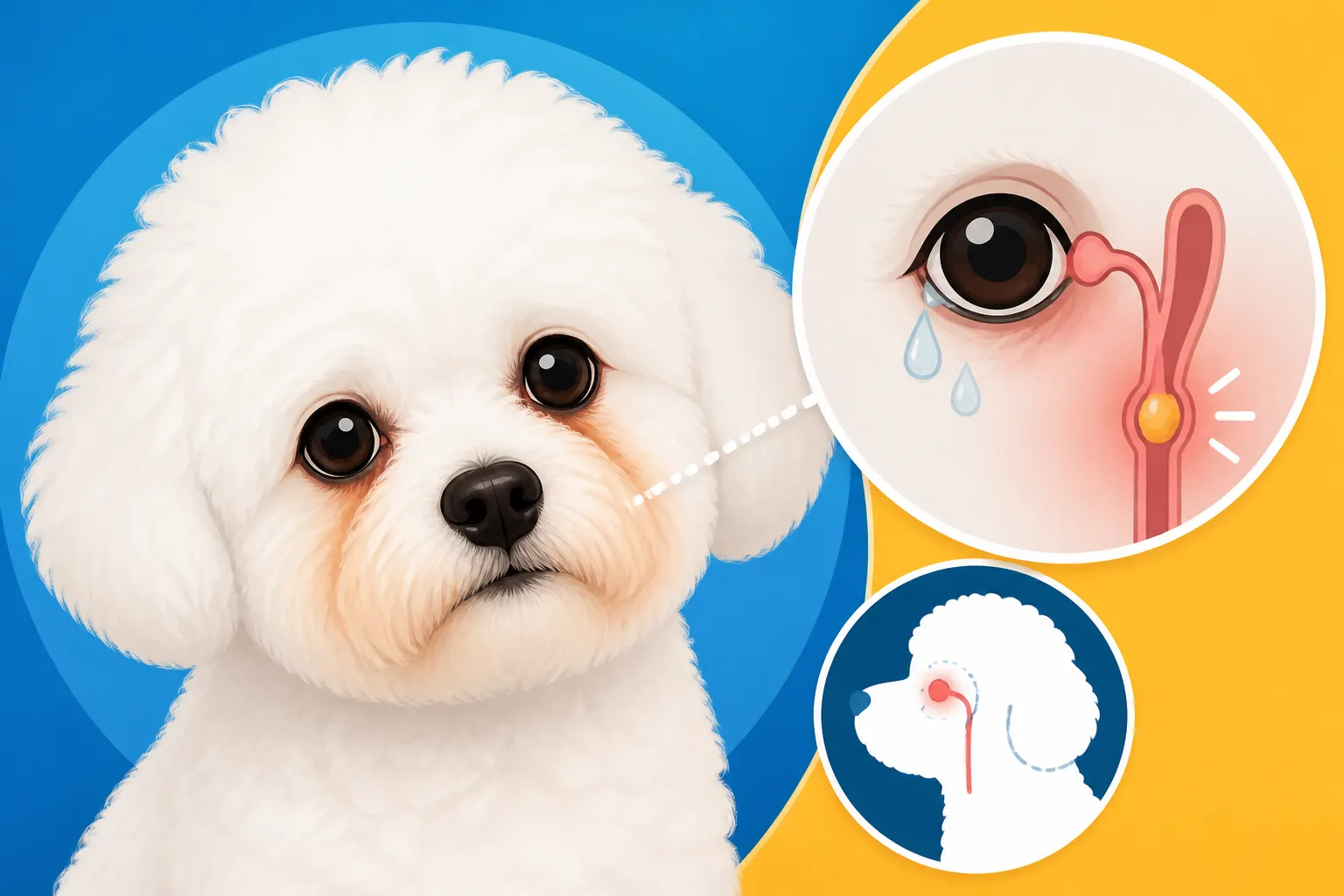
Just like us, dogs produce tears to keep their eyes lubricated and free from irritants. These tears are constantly being produced by the lacrimal glands and, ideally, they drain away through tiny openings in the inner corner of the eyelids, called puncta. From there, the tears travel down small tubes known as nasolacrimal ducts, which empty into the nasal cavity or throat. It's a neat little drainage system designed to keep the eyes clean and prevent tear overflow.
However, in many small breeds, especially those with those gorgeous, round, prominent eyes and short muzzles – a description that perfectly fits our Bichons – this system isn't always as efficient as nature intended. Their nasolacrimal ducts can sometimes be narrower than average, or even have a slight kink or bend that makes drainage less effective. Imagine trying to drain a sink with a bent pipe; the water still goes down, but much slower, and sometimes it just overflows. This anatomical predisposition means tears might sit on the surface of the eye longer or overflow onto the face more easily, even without a complete blockage.
Why Bichons Seem More Prone to Staining
It’s almost a cruel irony that such a beautiful, snowy-white coat is also the perfect canvas for showing off every little stain. If a dark-coated dog has tear overflow, you might not even notice it. But on a Bichon Frise, those reddish-brown streaks are undeniably prominent. This is the first, most obvious reason why we perceive Bichons as being "more prone" to tear stains – the stark contrast makes every stain stand out.
Beyond the visibility factor, the unique facial structure of the Bichon Frise plays a significant role. Their lovely, expressive, round eyes often sit quite prominently, and the surrounding hair can be dense. This combination means that any tears that do overflow are easily trapped in the fur, creating a perpetually damp environment. This dampness, combined with the normal bacteria and yeast that live on the skin and in tears, creates the perfect breeding ground for the reddish-brown discoloration we're all familiar with. It's often the presence of certain types of yeast, like Red Yeast (Pityrosporum), that reacts with the porphyrins in tears to create that characteristic rusty hue. This is why you might sometimes hear people talk about Whether Yeast Causes a Bichon Frise's Brown Stains. It's not just about the tears, but what grows in the tears.
Diagnosing Blocked Tear Ducts in Bichon Frises
So, how do you know if those persistent stains are truly due to a blocked tear duct, or if it's something else entirely? It's easy to jump to conclusions when you see constant tearing, but a vet's diagnosis is crucial here.
Signs That Might Point to a Blockage
While excessive tearing is the most common indicator, it’s important to distinguish between "a lot of tears" and "truly excessive, watery discharge." Normal tears should typically drain without making the fur constantly wet and stained. If you notice a consistent, clear, watery discharge that seems to perpetually soak the hair below your Bichon's eyes, this could certainly be a sign of a drainage problem.
Beyond just the wetness, look for other symptoms. Is your Bichon pawing at their eyes more often? Do the eyes look red or irritated? Are they squinting? Sometimes, a partial or complete blockage can lead to tears pooling on the eye's surface, which can cause discomfort or even lead to secondary infections, like conjunctivitis. If you see thick, yellowish, or green discharge along with the excessive clear tears, that's a definite red flag suggesting an infection might be brewing, possibly exacerbated by poor drainage. These are all reasons to get your fluffy friend to the vet.
How Vets Check for Blocked Ducts
When you visit your veterinarian with concerns about tear stains and potential blocked ducts, they have a few tricks up their sleeve. The most common diagnostic test is often referred to as the fluorescein dye test, or sometimes the Jones test. This involves placing a small amount of a harmless, bright green dye into your dog's eye. Normally, if the tear ducts are open and draining properly, you should see this dye appear in the dog's nostril or throat within a few minutes. If it doesn't appear, or if it takes an unusually long time, it suggests a blockage or a severely narrowed duct.
If the dye test indicates a problem, your vet might then recommend flushing the nasolacrimal ducts. This procedure involves gently inserting a tiny catheter into the puncta (the tear duct openings) and flushing sterile saline solution through the ducts. The goal is to clear any debris, mucus plugs, or even minor anatomical constrictions. This procedure is usually performed under sedation, as it requires the dog to be very still to avoid injury. Sometimes, the flushing itself can be therapeutic, clearing a minor blockage and restoring proper drainage. However, it's not a permanent fix if the underlying issue is a severe anatomical narrowing or recurring inflammation.
It’s worth noting that even with these tests, sometimes the answer isn't a clear-cut blockage. A dog's tear ducts might be functionally inefficient rather than completely blocked, meaning tears drain slowly rather than not at all. This partial inefficiency can still lead to tear overflow and staining, making the problem harder to 'fix' with a single intervention.
Is a Blocked Tear Duct the Main Culprit for Bichon Stains?
While blocked tear ducts can certainly contribute to tear staining, it's important to understand that they are often just one piece of a much larger, more complex puzzle. For many Bichon Frises, the problem isn't a single cause, but a combination of factors.
Other Common Causes of Tear Stains
If your vet confirms your Bichon's tear ducts are perfectly clear, don't despair! There are many other common reasons why your fluffy companion might still have those unsightly stains. Often, it's a combination of these issues that leads to the problem.
One of the biggest culprits is allergies. Just like people, dogs can suffer from environmental allergies (pollen, dust mites, mold) or food allergies. When an allergen triggers a reaction, it can cause the eyes to become itchy and watery, leading to increased tear production that simply overwhelms the normal drainage system. If your Bichon also scratches their face, licks their paws, or has recurrent ear infections, allergies might be high on the list. For managing skin issues, you might want to explore options like Whether Allergy Treatment Can Avoid Steroids.
Diet quality and ingredients play a huge role. Some believe that artificial colors, fillers, and certain proteins in lower-quality dog foods can exacerbate tear staining. The theory is that the body tries to eliminate these irritants through tears, leading to more porphyrins and thus more staining. Opting for high-quality, limited-ingredient diets can sometimes make a noticeable difference. Brands available on Chewy or Amazon often offer a wide range of premium, sensitive-stomach options that might help. Even fresh-cooked services like Ollie are gaining popularity for pets with sensitivities.
Water quality is another often-overlooked factor. Tap water in many areas contains high levels of minerals, like iron and magnesium, which can contribute to the reddish-brown color of the stains. Switching to filtered or distilled water for your Bichon's drinking bowl can sometimes help reduce staining over time.
Hair irritation around the eyes is a very practical cause. Bichons have glorious, continuously growing hair. If the hair around their eyes isn't kept meticulously trimmed, it can constantly poke and irritate the eye, leading to reflexive tearing. Even small hairs can act like wicks, drawing tears out onto the surrounding fur. This is a common reason why regular grooming is so vital. You'll want to make sure the hair around their delicate eye area is always kept short and neat; consider reading Whether the Hair Under a Bichon Frise's Eyes Should Be Trimmed for more on this.
Finally, eye infections (bacterial or yeast) or even eyelid conformation issues like entropion (eyelids roll inward) or ectropion (eyelids roll outward) can cause chronic irritation and tearing. Puppies might also experience increased tear staining during teething, as the inflammation in their gums can affect the tear ducts.
When Blocked Ducts Are a Contributing Factor, Not the Sole Cause
It’s rare for a Bichon's tear stains to be caused by one single, isolated issue. More often, it's a symphony of factors playing together. Even if the tear ducts aren't completely blocked, they might be simply inefficient or partially obstructed. Perhaps they drain slowly, or are easily irritated by environmental factors. When you combine this with a little bit of eye irritation from stray hairs, a touch of seasonal allergies, and maybe some minerals in the drinking water, suddenly you have a perfect storm for persistent, noticeable tear stains.
Think of it like this: your car has a drainage system for rainwater. If a leaf partially blocks the drain, water might accumulate. But if it's also raining heavily (excessive tears from allergies) and your car is parked under a tree shedding sap (poor diet/minerals), the problem becomes much worse than just the partially blocked drain. Addressing just one element, like trying to clear a partially blocked duct, without considering the others, might only offer temporary or partial relief. This is why a multi-pronged approach to managing tear stains is almost always the most effective strategy.
Management and Treatment Options
So, what's a dedicated Bichon parent to do? The good news is that there are many steps you can take, ranging from veterinary interventions to daily home care, to manage and reduce those stubborn tear stains.
Addressing Confirmed Blockages
If your veterinarian performs the fluorescein dye test and/or a tear duct flush and confirms a true blockage or significant narrowing of the nasolacrimal ducts, they will guide you on the next steps. As mentioned earlier, sometimes a simple flush under sedation can clear the issue, especially if it's due to mucus or debris. This procedure might need to be repeated if the blockage recurs.
In very rare and severe cases, where anatomical deformities are causing significant discomfort or chronic infections, surgical intervention might be considered. This could involve widening the duct openings or creating a new drainage pathway. However, such aggressive treatments are typically reserved for situations where the dog's health and comfort are severely impacted, not just for cosmetic staining. Always discuss the risks and benefits thoroughly with your vet, and perhaps even seek a referral to a veterinary ophthalmologist for specialized advice.
Holistic Approaches for Tear Stain Reduction (Even Without a Blockage)
For most Bichon owners, the path to cleaner eyes involves a consistent, holistic approach that tackles multiple potential causes. Even if a blockage isn't the primary issue, these strategies can make a world of difference.
Diet is paramount. Seriously, it cannot be stressed enough. Feeding a high-quality, balanced diet without unnecessary fillers, artificial colors, or common allergens can significantly reduce tear staining. Look for limited-ingredient diets or those designed for sensitive stomachs. Many owners report improvements after switching to premium kibbles or fresh food diets. You can find excellent options and compare ingredients on Chewy or Amazon. Services like Ollie, which provide customized fresh meals, are also popular among owners trying to tackle various sensitivities, including tear stains. A healthy gut often means a healthier dog overall, and that can reflect in tear clarity.
Water quality matters. Ditch the tap water if it's hard or heavily chlorinated. Switching to filtered, distilled, or even bottled water can sometimes reduce the mineral deposits that contribute to stain discoloration. It's a simple change that many owners swear by.
Consistent hygiene is non-negotiable. Daily wiping is your best friend in the battle against tear stains. Use a soft, damp cloth or a pet-safe tear stain wipe to gently clean the area around your Bichon's eyes every day. This removes accumulated tears, bacteria, and yeast before they have a chance to set and stain the fur. For tips on effective cleaning, check out Whether Wiping Daily Keeps a Bichon Frise Clean. This routine prevents the damp environment where staining thrives.
Regular, meticulous grooming is essential. Keep the hair around your Bichon's eyes short and neatly trimmed. This prevents hair from irritating the eyes and from wicking away tears onto the face. If you're doing it at home, be incredibly careful with sharp tools around those delicate eyes. Many professional groomers are experts at this precision work. Regular baths with appropriate shampoos also help keep the coat clean.
Address underlying allergies. If you suspect allergies are contributing to excessive tearing, work with your vet to identify and manage them. This might involve an elimination diet to pinpoint food sensitivities or medication for environmental allergies. Successfully managing allergies will reduce tear production and, consequently, tear stains.
Supplements can be a controversial topic, but some owners find them helpful. There are various tear stain supplements on the market, but always exercise caution and discuss them with your vet. Some older formulas contained antibiotics which are now widely discouraged due to concerns about antibiotic resistance and potential side effects. Always prioritize natural, vet-approved options and do your research; for more on this, consider reading Whether Tear Stain Supplements Are Safe for a Bichon Frise.
Here’s a quick overview of common causes and their primary solutions:
| Cause of Tear Stains | Description | Diagnostic Test (if any) | Common Solutions |
|---|---|---|---|
| Blocked/Inefficient Tear Ducts | Tears don't drain through the nose as effectively, causing overflow. | Fluorescein dye test, tear duct flush | Vet-performed flushing, sometimes surgical intervention (rare for stains alone) |
| Allergies | Immune reaction (food or environmental) leading to tear overproduction. | Allergy testing, elimination diet | Allergy medication, hypoallergenic diet, environmental controls |
| Poor Water Quality | High mineral content in drinking water. | None | Filtered, distilled, or bottled water |
| Hair Irritation | Eyelash or facial hair constantly rubbing the eye. | Visual inspection | Regular grooming, careful trimming of periocular hair |
| Eye Infections | Bacterial or yeast growth in the tear film or conjunctiva. | Ocular exam, tear stain cytology, culture | Topical antibiotics/antifungals, medicated eye drops |
| Dietary Factors | Certain ingredients or low-quality food may exacerbate staining. | Food trial, elimination diet | High-quality, limited-ingredient diet; consider fresh food options |
| Eyelid Conformation | Eyelids roll in (entropion) or out (ectropion) causing irritation. | Ocular exam by a vet | Surgical correction in severe cases |
Ultimately, tackling Bichon Frise tear stains is rarely a one-and-done solution. It's an ongoing commitment to their health, hygiene, and diet. By understanding all the potential factors, including (but not limited to) blocked tear ducts, you can create a comprehensive plan with your vet to keep your precious Bichon looking their absolute best and feeling comfortable. Don't be afraid to keep experimenting with different high-quality foods and grooming routines until you find what works best for your individual dog. Your dedication will shine through, just like their bright, unstained eyes!
Disclaimer
This article is for general informational purposes only and does not constitute professional advice. Laws, prices and regulations vary by location and change over time. Consult a qualified professional for guidance on your specific situation.