Whether a Bichon Frise Suits Someone With Allergies
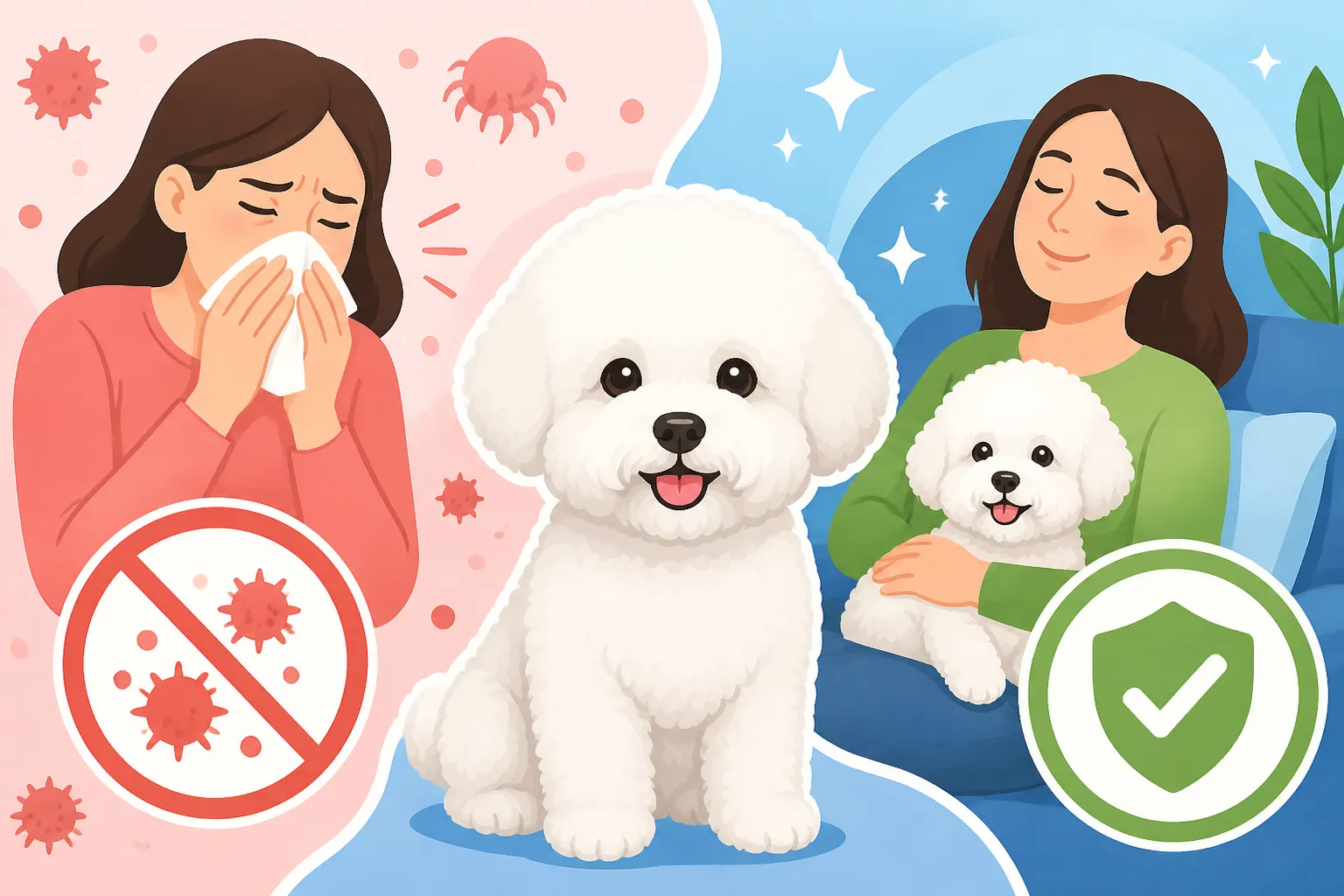
A Bichon Frise may shed very little around your home, yet still trigger sneezing, itchy eyes, or asthma symptoms. That mismatch can be confusing when you’re looking for a dog that seems allergy-friendly. This guide explains what Bichons do and don’t offer allergy-sensitive households, how to assess your own reaction, and what daily care can realistically help.
Can a Bichon Frise Suit Someone With Allergies
Low shedding is not the same as allergy-proof
Bichon Frises are often described as hypoallergenic because they shed relatively little compared with many breeds. Loose hairs tend to stay caught in the coat rather than landing all over furniture and clothing. That can make cleanup more manageable, but it does not make the breed allergen-free. No dog breed can guarantee that a person with allergies will have no symptoms.
Dog allergens are proteins found in substances such as dander, saliva, and urine. Dander consists of tiny flakes of skin that can become airborne or settle on fabrics. A dog can spread allergens when it licks its coat, shakes, rubs against furniture, or simply moves through the home. Hair can carry allergens around, but hair itself is not the whole story. Whether Dander Rather Than Hair Is the Trigger explains why a low-shedding coat may still be a problem for some people.
If you’ve heard that a Bichon Frise is “safe for allergies,” it’s worth treating that claim as a possibility, not a promise. Some people with dog allergies tolerate a particular Bichon better than a different dog. Others react to Bichons despite their low-shedding reputation. The breed label alone cannot predict an individual person’s response.
Allergy reactions vary from person to person
One person may have a stuffy nose after spending an hour in a home with a Bichon, while another may develop itchy skin or watery eyes after only a few minutes. Someone with mild symptoms may manage a dog successfully with practical changes at home. For someone with asthma or a more serious allergy, ongoing exposure could be much riskier.
Your reaction can also depend on more than the dog. Time spent together, ventilation, the amount of dog hair and dander in the room, and whether the dog licks you can all affect symptoms. A quick visit with a freshly groomed Bichon is not a reliable test of what living with one would feel like day after day. Whether an Allergic Person Reacts to a Bichon Frise is a useful related read if you’re trying to understand why experiences differ.
It’s also possible to react to one dog more than another, even when both are the same breed. That variability is one reason it’s better to assess your own response to a particular dog than to rely on breed descriptions. If your symptoms include wheezing, chest tightness, or difficulty breathing, speak with a qualified health professional before planning to bring a dog into your home.
Who may find the breed a better fit
A Bichon may be worth considering if your symptoms around dogs are mild, you have room in your routine for regular coat care, and you’re prepared to make parts of your home easier to clean. The breed’s low-shedding coat can reduce the amount of visible loose hair. For some households, that makes daily life more comfortable than it would be with a dog that sheds heavily.
Still, low shedding comes with a tradeoff: the coat needs frequent attention to prevent tangles and mats. It isn’t a way to avoid cleaning or grooming. Whether a Bichon Frise Is Truly Hypoallergenic covers the difference between a breed’s reputation and the more limited claim that it may be easier for some allergy sufferers to live with.
A Bichon may be a poor fit if a household member has severe dog allergies, uncontrolled asthma, or symptoms that become intense with regular exposure. It may also be difficult if no one can handle the grooming routine or if the household is unwilling to set boundaries around bedrooms and upholstered furniture. Making these decisions before adopting is kinder to both the people in the home and the dog.
How to Test Your Reaction Before Committing
Spend meaningful time with the individual dog
If possible, arrange more than one visit with the specific Bichon you’re considering. A brief encounter in a public place may not reflect the experience of sharing a home. Spend time indoors, where allergens may collect in soft furnishings, and notice how you feel later that day as well as during the visit.
Try to avoid relying on a single short interaction. A dog that has just been bathed or groomed may expose you to a different level of loose dander than one whose coat has not been maintained recently. On the other hand, a visit to a home with several pets may expose you to allergens from more than the Bichon you’re hoping to adopt. The aim is not to engineer a perfect test but to get a more realistic sense of your response.
When possible, talk with a rescue group about a foster period or another arrangement that allows for a careful transition. Ask how the dog behaves around visitors, whether it spends time on beds or couches, and what its grooming routine looks like. A calm meet-and-greet can be useful, but it cannot guarantee that symptoms won’t appear after weeks of daily contact.
Talk with a health professional
An allergist or another qualified health professional can help you understand your symptoms and discuss whether bringing a dog home is sensible. Allergy testing may help identify what you react to, but a test result cannot promise that a particular Bichon will or won’t trigger symptoms in your home. Take your medical history seriously, especially if you’ve had breathing symptoms around dogs.
It can help to describe the household honestly: who will live with the dog, how much time the dog may spend indoors, and whether bedrooms or furniture can be kept dog-free. If a child has allergies, include their clinician in the discussion rather than making the decision based only on what adults notice during a visit.
Before adopting, decide what you would do if symptoms worsen. That conversation can feel uncomfortable, but it is more responsible to make a plan early than to wait until an allergy flare becomes a crisis. If the dog must be rehomed later, that can be stressful for everyone involved.
Use a realistic checklist
Consider the people, the dog, and the home together. A Bichon is not a low-maintenance choice just because it may shed less. Grooming appointments, daily brushing, cleaning, and household boundaries all take time. If you’re comparing the breed with another small companion dog, Whether a Bichon Frise Is More Work Than It Looks can help you think beyond appearance.
| Question to consider | Why it matters |
|---|---|
| Are symptoms mild, or do they include asthma or breathing difficulty? | Serious symptoms call for medical guidance before bringing a dog home. |
| Can you spend repeated time with the specific dog? | A single brief visit may not reflect long-term exposure. |
| Can someone in the household handle regular brushing and grooming? | Coat care helps prevent mats and loose material from building up. |
| Can the dog stay out of bedrooms and off some furniture? | Fewer dog-accessible soft surfaces can make cleaning more manageable. |
| Is there a clear plan if symptoms become difficult? | Planning ahead protects household members and reduces the risk of a rushed rehoming decision. |
Living With a Bichon Frise When Allergies Are a Concern
Build a manageable grooming routine
The Bichon’s coat needs regular brushing because shed hairs can become trapped and form tangles. Brushing is most useful when it reaches through the coat rather than smoothing only the surface. If the coat is allowed to mat, grooming may become uncomfortable for the dog and harder for the household to keep up with. Whether Brushing Every Other Day Is Enough offers more detail on maintaining the coat between professional appointments.
If the person with allergies is the dog’s main caregiver, ask whether someone else can do brushing and bathing, preferably in a well-ventilated area away from the main living space. A groomer can help keep the coat at a manageable length, but salon visits do not replace routine home care. Establishing a grooming rhythm before the dog arrives is much easier than trying to catch up once the coat is tangled.
When you’re gathering brushes, combs, and washable grooming towels, Chewy is one retailer where pet owners may look for routine grooming supplies. Choose tools that suit the dog’s coat and ask a groomer or veterinarian for guidance if you’re unsure how to use them. Brushing too roughly can irritate the skin, and a Bichon who dislikes handling may need patient, gradual training rather than longer or more forceful sessions.
Reduce allergens around the home
A few household habits can make exposure easier to manage, though they cannot remove all allergens. Consider keeping the dog out of bedrooms, washing bedding and blankets regularly, and choosing washable covers for places where the dog rests. Vacuuming and damp dusting can help control material that settles on floors and furniture. A properly sized air purifier with a HEPA filter may be useful in rooms where household members spend a lot of time.
Think about the details that are easy to overlook. Dog hair and dander can collect in car seats, throws, rugs, and fabric pet beds. If your Bichon is allowed on the couch, a washable cover can make cleaning simpler. Chewy may be a place to compare pet beds and washable covers, but the important part is choosing items that fit your home and can be cleaned consistently.
Washing the dog may reduce some allergens on the coat for a time, but it is not a permanent fix. Frequent bathing can dry or irritate skin if it is not appropriate for that dog, so discuss a suitable schedule and shampoo with a veterinarian or groomer. After walks, wiping paws and coat can remove outdoor debris and pollen, which may also be helpful if seasonal allergies are part of the picture.
Set boundaries without making the dog feel unwelcome
Household rules work best when they are consistent from the beginning. If the dog is not allowed in bedrooms, keep that boundary in place rather than making exceptions that are hard to reverse. A comfortable dog bed in a common area can give the Bichon a cozy place to settle without sharing the allergy-sensitive person’s sleeping space.
It’s also worth teaching basic cues and settling habits early. A Bichon that is comfortable resting on its own bed is easier to manage than one that expects constant access to every lap, pillow, and blanket. This doesn’t mean keeping the dog isolated; it means arranging the home so the dog can be included while allergy-conscious spaces remain predictable.
For some households, practical supplies can make those boundaries easier to maintain. Chewy and other pet retailers carry items such as washable blankets and beds that can be useful in a designated dog area. Keep expectations realistic: a tidy setup can reduce some of the mess, but it cannot make a dog allergen-free.
Making the Decision That Fits Your Household
Weigh the daily commitment, not just the breed label
A Bichon Frise can be affectionate, lively, and suited to many homes, but the coat requires regular maintenance. A household already stretched by work, school, or caregiving may find it difficult to keep up with brushing, grooming appointments, and extra cleaning. If grooming is neglected, the coat can become matted, which is uncomfortable for the dog and may lead to a difficult grooming session.
A pet trim can make coat care more practical for many owners, but it still needs maintenance between appointments. If you’re comparing grooming demands across small breeds, Whether a Bichon Frise Is Easier to Groom Than a Maltese may help you assess the commitment. Also think about whether someone in the household can take responsibility for the dog’s daily needs if the person with allergies needs to limit close contact.
The dog’s welfare matters just as much as symptom management. A Bichon needs companionship, exercise, training, and regular care—not just a place to stay while people try to keep allergens under control. Make sure the household can meet those needs even if the allergic person cannot do every task.
Have a backup plan before adoption
Before bringing a dog home, agree on what to do if symptoms become more frequent or more severe. That might mean changing cleaning routines, adjusting where the dog can go, or speaking with a clinician about next steps. Avoid assuming that you’ll simply “get used to it”; allergy symptoms can persist or worsen, and breathing problems deserve prompt attention.
It’s also wise to consider where the dog would go if the arrangement truly did not work. Ask the breeder or rescue organization about its return or rehoming policies, and make sure every adult in the household understands the plan. A thoughtful backup plan is not a sign that you expect to fail. It is part of responsible ownership when a health concern could affect the whole household.
A Bichon Frise may be a good match for some people with allergies, particularly when symptoms are mild and the household can follow a realistic care routine. But low shedding does not guarantee a symptom-free home. Spend time with the individual dog, get appropriate medical advice, and make the decision based on your actual response and your ability to care for the dog—not on the word “hypoallergenic” alone.
Disclaimer
This article is for general informational purposes only and does not constitute professional advice. Laws, prices and regulations vary by location and change over time. Consult a qualified professional for guidance on your specific situation.