Whether a Covered Potty Area Helps a Bichon Frise
One of the most persistent headaches for any Bichon Frise parent is navigating the treacherous waters of housetraining, especially when Mother Nature decides to be less than cooperative. It's truly frustrating when your otherwise perfectly trained fluffy companion refuses to do their business outside because of a little rain or snow, leaving you with accidents indoors. This guide is here to explore whether a covered potty area can genuinely be the game-changer you need to achieve consistent outdoor potty success with your beloved Bichon Frise, saving your carpets and your sanity.
The Housetraining Hurdles of a Bichon Frise
Let's be honest, Bichon Frises have a reputation, and it's not always for being stellar students in the housetraining department. Many owners can share tales of woe, feeling like they’re constantly cleaning up after their adorable, yet stubborn, little cloud. This isn't just an urban legend; there are very real, understandable reasons why housetraining a Bichon can feel like an uphill battle. It's not about them being 'bad' dogs; it's about their inherent traits and preferences.
The Small Bladder, Big Problem
One of the primary physiological reasons that can make housetraining a Bichon Frise challenging is their size. Being a small breed, they naturally have smaller bladders compared to larger dogs. This means they simply cannot hold their urine for as long. A puppy, especially, needs to go out with incredible frequency, sometimes every hour or two when awake, and definitely after waking up, eating, or playing. It’s a constant dance of vigilance, and missing a window by even a few minutes can lead to an indoor puddle.
It's easy to get frustrated when you feel like you just took them out, only for them to squat inside moments later. But remember, their tiny internal plumbing isn't built for endurance. For an adult Bichon, expecting them to hold it for an entire eight-hour workday might be asking too much, leading to accidents even in otherwise well-trained dogs. This constant need to "go" can really test an owner's patience, making the entire process feel endless. How Long a Bichon Frise Puppy Holds It Overnight is a great resource to understand these bladder limits.
The Weather-Related Woes
Ah, the weather! This is often the biggest culprit behind housetraining regression or outright refusal for many Bichon Frise owners. These little dogs, with their delicate dispositions and fluffy white coats, are not generally fond of getting wet or cold. A sudden drizzle, a patch of morning dew, or a blanket of pristine snow can turn your eager outdoor potty-goer into a statue, rooted firmly at the back door, giving you "the look" that clearly says, "No, thank you."
It’s not uncommon for a Bichon Frise to refuse to even step paw on wet grass, let alone stay out long enough to relieve themselves. They might dash out, take one sniff, and bolt back inside, leaving you to wonder if they went at all. This aversion means that on many days, especially in regions with unpredictable weather, achieving consistent outdoor potty success becomes a significant challenge. Owners often find themselves battling their dog's reluctance, making potty breaks a stressful ordeal rather than a routine. Whether a Bichon Frise Refuses to Go Out in Rain delves deeper into this common problem.
Sensitive Souls and Cleanliness
Bichon Frises are generally quite fastidious creatures. They prefer to do their business in a clean spot, and if their designated outdoor area is muddy, overly wet, or has accumulated too much previous waste (even if you've scooped it), they might hesitate. This preference for cleanliness extends indoors too, which is why when they do have accidents, it’s often in a less trafficked area of the house, perhaps behind a curtain or in a quiet corner.
This sensitivity also means they can be easily deterred by unpleasant sensations. Cold concrete, sharp gravel, or overly tall, wet grass can all be reasons for them to hold it in, only to then release it on your warm, soft rug the moment they come back inside. Understanding this innate desire for comfort and cleanliness is key to creating an outdoor potty solution that they will actually want to use consistently.
What Exactly is a Covered Potty Area?
When we talk about a covered potty area for a Bichon Frise, it's really about creating a designated, protected space where your dog feels safe and comfortable enough to relieve themselves, regardless of the outdoor conditions. It’s a solution designed to mitigate those common Bichon frustrations – the aversion to wet weather, cold ground, or simply being exposed. These areas can range from simple DIY setups to more elaborate, commercially available structures, each with its own benefits and considerations.
Outdoor Solutions
For those with a yard or even a small patio, outdoor covered potty areas are often the most effective. These options allow your Bichon to still have the outdoor experience while being shielded from the elements.
-
Simple Shelters: This could be as basic as a large, sturdy outdoor umbrella strategically placed over a patch of grass or an artificial turf patch. Or, you might consider a small pop-up canopy, similar to those used for camping or outdoor events, which can be quickly assembled and provides overhead protection. The key here is ease of setup and portability if needed. These basic options are often readily available on platforms like Amazon and are a good starting point for owners who want to test the concept without a significant investment.
-
Dog Houses with Attached Runs: Some dog houses come with a small, covered run or porch area. While typically designed for dogs that spend more time outdoors, a smaller version can be a dedicated, weather-protected potty zone for your Bichon. The roof of the dog house itself, or a small extension, provides the cover, and the run keeps them contained in the designated spot. This is a more permanent solution and offers a strong sense of a "private" bathroom.
-
Dedicated Pergolas or Awnings: For a more integrated and aesthetically pleasing solution, some owners might install a small pergola or a permanent awning off a patio or deck. Underneath this structure, you can lay down a patch of real or artificial grass. This creates a fully protected, inviting outdoor space that your Bichon can access directly from the house or via a dog door. This type of setup is an investment but offers maximum comfort and longevity.
Indoor Alternatives
Sometimes, an outdoor setup isn't feasible due to living arrangements (apartments, no yard) or extreme weather conditions. In these cases, indoor alternatives can function as a "covered" or protected potty area within your home.
-
Potty Pads and Artificial Grass Patches: These are the most common indoor solutions. Potty pads are absorbent squares, often with an attractant scent, that provide a designated spot for your dog to go. Artificial grass patches (often with a tray underneath for drainage) mimic the feel of real grass and can be very appealing to dogs. While not "covered" in the traditional sense, they offer a consistent, clean, and comfortable indoor spot that removes the weather variable entirely. They are particularly useful for puppies learning where to go, or for older dogs with incontinence. Whether a Bichon Frise Learns to Use a Pad explores this further.
-
Enclosed Potty Systems: Some brands offer more elaborate indoor potty systems that are partially enclosed, providing a sense of privacy and containing any potential splash. These might include high-sided litter boxes designed for dogs, or systems with small "walls" that create a den-like feel around the grass patch. These can be particularly good for a Bichon who likes a bit more solitude when doing their business, and some also help contain odors better.
The "Why": How They Address Bichon-Specific Issues
The fundamental principle behind all these covered potty areas is consistency and comfort. By providing a predictable, weather-neutral, and clean spot, you remove many of the common excuses a Bichon Frise might have for not going outside.
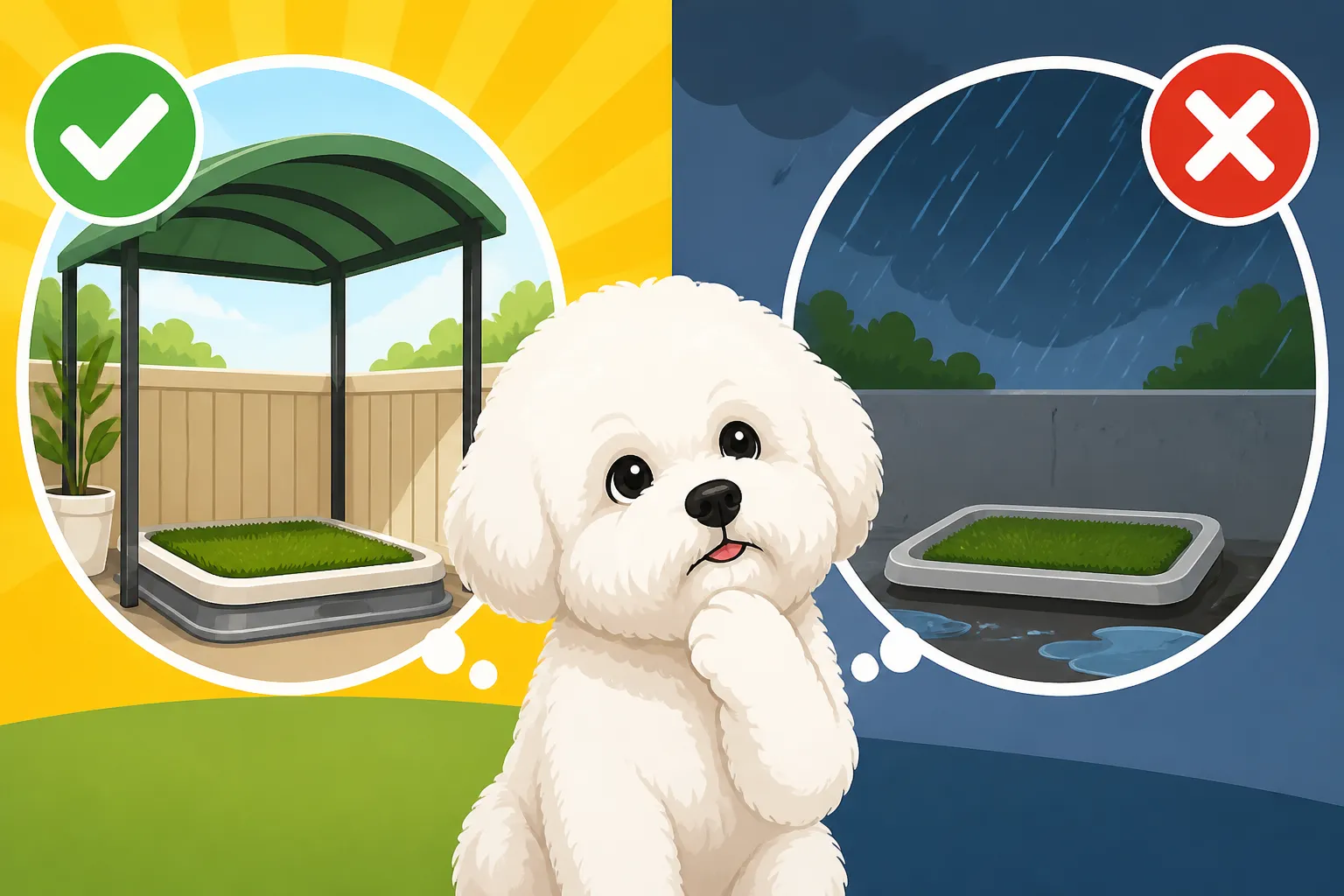
Imagine a rainy Tuesday morning. Instead of you dragging your reluctant Bichon into the downpour, they can simply trot out to their covered spot, stay dry, and do their business without drama. This consistency reinforces the idea that this is the place to go, irrespective of the wind, rain, or snow. It minimizes stress for both you and your furry friend and helps to solidify positive housetraining habits, creating a routine that works even when the weather doesn't.
How a Covered Potty Area Can Make a Difference
For a Bichon Frise owner, a covered potty area isn't just a convenience; it can be a genuine game-changer in the ongoing saga of housetraining. It directly addresses some of the breed's unique quirks and needs, transforming a battle into a much smoother, more predictable routine.
Weather Protection and Consistency
This is perhaps the most obvious and impactful benefit. As we discussed, Bichons are notorious for their disdain for anything less than perfect weather conditions when it comes to outdoor potty breaks. A covered area completely neutralizes this problem. Rain or shine, sleet or snow, your Bichon has a dry, comfortable spot to do their business. This means no more wrestling them out the door, no more sad puppy eyes pleading to come back inside immediately, and no more last-minute dashes back to the comfort of your rug.
By removing the weather variable, you introduce unparalleled consistency into their housetraining routine. Dogs thrive on routine and predictability. When the potty spot is always accessible and always comfortable, regardless of external factors, your Bichon will be much more likely to use it reliably. This consistency solidifies the learned behavior, making accidents due to weather reluctance a thing of the past. It simplifies the entire process for you as an owner, reducing stress and frustration immensely. This is particularly vital for places where rain or snow is a regular occurrence, allowing for year-round success.
Creating a Dedicated "Go-To" Spot
A covered potty area serves as a very clear, unambiguous signal to your Bichon: "This is where you go." It becomes their private bathroom, a familiar and consistent environment that stands out from the rest of the yard. This clarity is incredibly beneficial for housetraining. Instead of wandering around, trying to find a suitable patch of grass (which might be wet, cold, or undesirable for other reasons), your Bichon learns to head straight for their protected zone.
This dedicated space also helps to contain waste to a specific, manageable area, making cleanup easier. If you've chosen an artificial turf patch under the cover, cleaning involves simply rinsing it down regularly, perhaps with an enzymatic cleaner to eliminate odors. This neatness further encourages your Bichon, as they appreciate a clean spot. It's a structured approach that leaves little room for confusion, helping even the most reluctant Bichon understand exactly what's expected of them. For additional tips on consistency, check out The Toilet Routine That Finally Works on a Bichon Frise.
Owner Convenience and Less Stress
Let's not forget the human element here! A covered potty area significantly enhances the owner's convenience and reduces daily stress. No more bundling up in a rain jacket and boots just for a quick potty break during a downpour. You can simply open the door, and your Bichon can take care of business without you having to stand out in the elements. This is especially appreciated during early morning or late-night potty runs.
Furthermore, the peace of mind that comes from knowing your Bichon has a reliable outdoor option, no matter the weather, is invaluable. It reduces anxiety about potential indoor accidents and allows you to enjoy your dog's companionship more fully, rather than constantly worrying about their bladder schedule or the forecast. It frees up mental space and makes the daily routine of dog ownership feel less like a chore and more like a joy. This positive feedback loop—less stress for you, more consistent success for your Bichon—reinforces good habits all around.
Potential Drawbacks and Considerations
While a covered potty area offers numerous benefits for Bichon Frise owners, it's not a one-size-fits-all magic bullet. There are practical considerations and potential drawbacks that you should weigh before investing time and money into such a setup. Being realistic about these aspects will help you decide if it's the right solution for your household and your furry friend.
Cost and Space Requirements
Setting up a covered potty area can range from a minimal investment to a significant one, depending on the chosen solution. A simple outdoor umbrella might be relatively inexpensive, but a sturdy, aesthetically pleasing pergola or a high-quality dog house with a run will cost more. You'll also need to consider the cost of the potty surface itself – whether it's real grass to maintain, or an artificial turf patch that needs periodic replacement. Don't forget the ongoing expense of enzyme cleaners and waste bags.
Beyond the monetary cost, there's the requirement for physical space. If you live in an apartment with no balcony or a very small outdoor area, a large covered structure might simply not be feasible. Even a smaller setup requires careful placement to ensure it's easily accessible to your Bichon while not obstructing your own outdoor living space or violating any community regulations. It's crucial to measure your available area and budget carefully to determine what type of covered potty area is practical for your situation. For those considering indoor solutions, even artificial grass patches take up floor space, which can be a concern in smaller homes.
Maintaining Cleanliness and Hygiene
While a covered potty area protects your Bichon from the elements, it doesn't automatically mean it's maintenance-free. In fact, concentrating waste in one spot, especially a covered one, can lead to quicker accumulation of odors and bacteria if not cleaned diligently. You'll need a consistent routine for waste removal and sanitation. This means daily scooping or removal of solid waste, and regular rinsing or washing of the surface underneath.
If you're using artificial turf, it will need to be sprayed down with water and an appropriate cleaner regularly to prevent odors and bacterial growth. If it's a natural grass patch, you'll need to consider how to manage saturation and prevent it from becoming muddy or unhygienic over time. Overlooking this crucial aspect can lead to the area becoming unsanitary, which will deter your fastidious Bichon from using it, defeating the whole purpose. Furthermore, a dirty potty area can attract pests, so maintaining a strict cleaning schedule is paramount. Using a good quality enzyme cleaner, often found on Amazon, will be essential for odor control. Whether Enzyme Cleaner Matters for a Bichon Frise highlights this importance.
Still Needs Training and Supervision
A covered potty area is a tool, not a magical solution that instantly housetrains your Bichon Frise. It still requires active training and supervision, especially during the initial introduction phase. You can't just set it up and expect your dog to instinctively know it's their new bathroom. You'll need to guide them to it, praise them lavishly when they use it, and reward them consistently. Think of it as an extension of their regular housetraining.
Even with a covered area, consistency in taking your Bichon out at appropriate times (after waking, eating, playing) remains vital. You might still need to monitor them to ensure they actually do their business rather than just sniffing around or waiting to come back inside. For puppies, the guidance from resources like BAXTER & Bella's online puppy school can be invaluable in integrating this new potty spot into a comprehensive training plan. The covered area just makes the act of going outside more appealing and consistent; it doesn't replace the foundational training principles.
Setting Up Your Bichon Frise for Success with a Covered Potty Area
Implementing a covered potty area isn't just about constructing or placing a structure; it's about thoughtful integration into your Bichon Frise's routine and positive reinforcement. To truly make it a success, you need a strategy that encourages your dog to embrace this new bathroom spot wholeheartedly.
Introduction and Positive Reinforcement
When you first introduce the covered potty area, whether it's an outdoor shelter or an indoor grass patch, your Bichon Frise might be curious, confused, or even hesitant. This is where patience and positive reinforcement come into play. Initially, you'll need to actively lead your Bichon to the new area, especially during times when you know they're likely to need to go – after waking up, eating, or a play session. Keep them on a leash if necessary, guiding them directly to the spot.
The moment your Bichon uses the covered potty area, unleash a flood of praise, happy tones, and high-value treats. Make it the most exciting and rewarding experience ever. This immediate positive feedback helps them associate the specific location and the act of relieving themselves there with something wonderful. Repeat this process consistently. Avoid scolding if they have an accident elsewhere; instead, simply clean it up thoroughly and redouble your efforts to get them to the covered spot at the right times. Remember, consistency is key, and making the experience positive builds a strong association. Whether a Written Toilet Schedule Helps a Bichon Frise can provide more structure for this.
Choosing the Right Location and Materials
The success of your covered potty area heavily depends on its location and the materials you choose for the surface. For outdoor setups, the location should be easily accessible from your house, ideally somewhere your Bichon can reach quickly when urgency strikes. Consider proximity to a door, a sheltered corner of the yard, or a patio area. Ensure the ground underneath the cover is level and provides good drainage if you're using real grass. If you opt for artificial turf, choose a high-quality, pet-friendly option that is designed for drainage and easy cleaning. Make sure it's comfortable for your Bichon's sensitive paws.
For indoor setups, place the potty area in a quiet, accessible corner away from their eating and sleeping areas, but not so hidden that they forget about it. Think about practicality – can it be easily cleaned? Is it out of the main thoroughfare of your home? Regardless of whether it's inside or out, choose durable materials that can withstand the elements (if outside) and frequent cleaning. Consider how you will prevent strong odors from developing, as this will deter your Bichon. Whether a Bichon Frise Hates Wet Grass is a great reminder to choose a surface they'll actually use.
Combining with Other Housetraining Strategies
A covered potty area is a powerful addition to your housetraining arsenal, but it works best when integrated with other proven strategies. It's not a standalone solution. Continue with a consistent potty schedule, taking your Bichon out frequently, especially during the learning phase. For puppies, this means hourly trips when awake, and immediately after naps, meals, and play. Whether a Bichon Frise Should Be Taken Out Hourly emphasizes this frequency.
Consider crate training as a complementary tool, as dogs are naturally reluctant to soil their sleeping areas. This teaches them to hold it until they can get to the appropriate spot. Remember to always supervise your Bichon when they are not crated, and intervene immediately (gently pick them up and carry them to the covered potty area) if you see signs they are about to have an accident. Using verbal cues like "Go potty!" every time you take them to the spot can also create a strong association. Resources like BAXTER & Bella offer comprehensive online training programs that can help you weave all these strategies together, maximizing your chances of success with your Bichon Frise's housetraining journey. The goal is to build a comprehensive system where the covered potty area is a reliable and comfortable component.
Summary Table of Covered Potty Area Types
Here's a quick overview of different types of covered potty areas, their pros, and cons to help you decide what might work best for your Bichon Frise and your home.
| Type of Potty Area | Description | Pros | Cons | Ideal For |
|---|---|---|---|---|
| Outdoor Solutions | ||||
| Simple Umbrella/Canopy | A large, sturdy umbrella or small pop-up canopy over a designated outdoor spot. | Affordable, flexible, offers basic weather protection. | Can be flimsy in strong winds, less aesthetic, requires manual setup. | Owners on a budget, testing the concept, temporary solutions. |
| Dog House with Run | A small dog house with an attached covered run or porch. | Offers excellent protection, sense of privacy, more durable. | Higher cost, permanent fixture, requires more space. | Dedicated outdoor space, dogs who like a "den" feel, consistent use. |
| Pergola/Awning | A permanent structure attached to the house or freestanding over an outdoor patch. | Most durable, aesthetically pleasing, seamless access, full protection. | High cost, permanent installation, requires significant space/construction. | Owners looking for a long-term, integrated solution and aesthetic value. |
| Indoor Alternatives | ||||
| Potty Pads | Absorbent disposable pads placed indoors. | Very convenient, easy cleanup, no weather issue, widely available (e.g., Amazon). | Disposable (ongoing cost), can be unsightly, dog might miss the pad, not truly "covered". | Apartments, small spaces, puppies, older incontinent dogs, temporary solutions. |
| Artificial Grass Patch | Tray system with synthetic grass, often with drainage. | Mimics outdoor feel, reusable, no weather issue, good for apartment living. | Requires regular cleaning to prevent odor, some dogs prefer real grass. | Apartment dwellers, small spaces, consistent indoor spot, training. |
| Enclosed Potty System | Indoor potty unit with high sides or a partial enclosure. | Provides privacy, contains splash, can look neater. | Can be bulky, higher cost than basic pads/grass, still needs thorough cleaning. | Dogs seeking privacy, owners wanting better containment/aesthetics indoors. |
Disclaimer
This article is for general informational purposes only and does not constitute professional advice. Laws, prices and regulations vary by location and change over time. Consult a qualified professional for guidance on your specific situation.