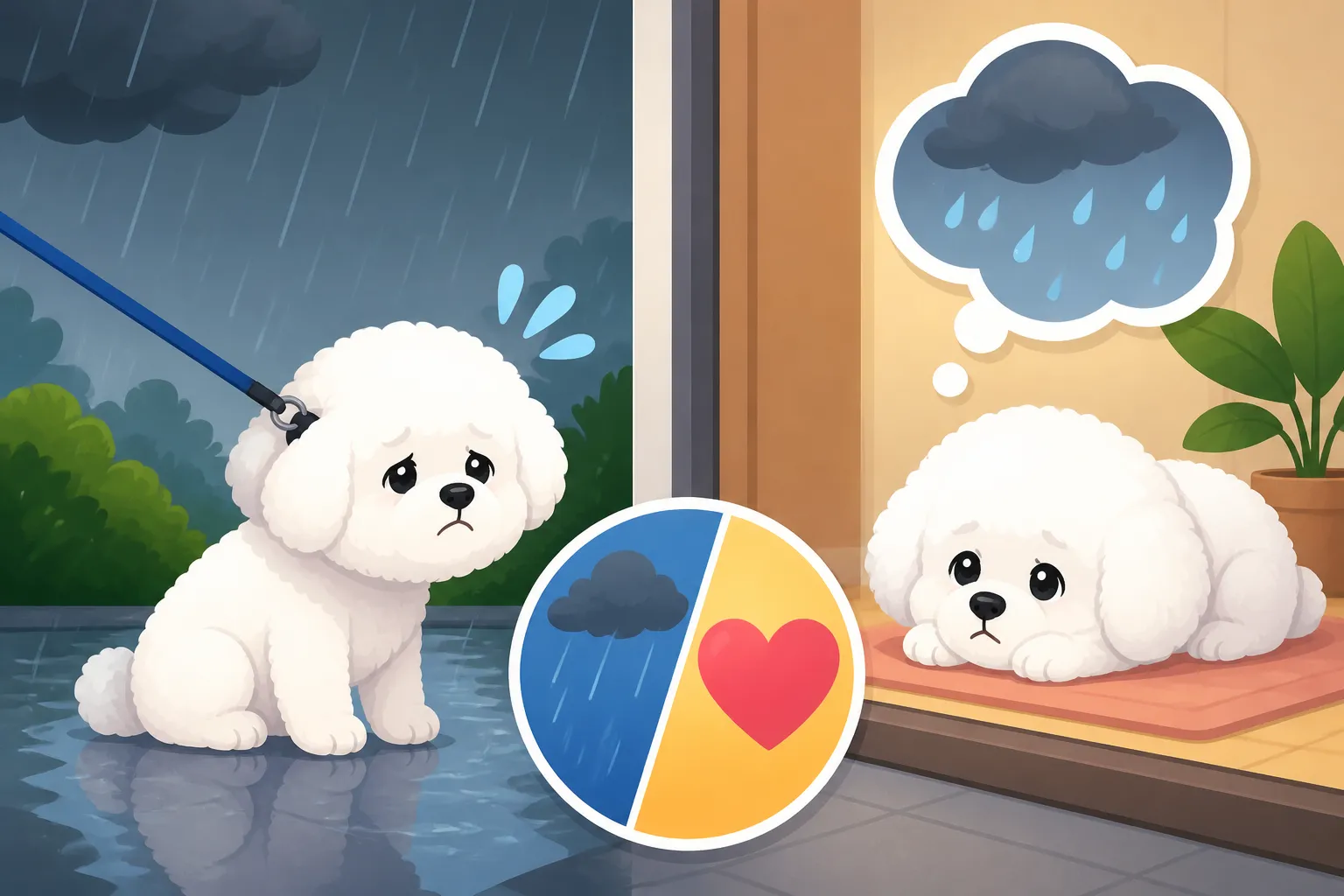
Whether a Bichon Frise Refuses to Go Out in Rain
It’s a tale as old as time for many Bichon Frise owners: the sky opens up, a gentle drizzle begins, and suddenly your otherwise cheerful, outgoing little fluff ball transforms into a statue, glaring at the door as if it leads to an alien planet. You know they need to go, they know they need to go, but neither coaxing, pleading, nor even gentle nudges seem to work when the rain starts falling. This guide is all about tackling that particular canine conundrum, understanding why your Bichon might be so averse to wet weather, and arming you with practical strategies to help them brave the elements and do their business, rain or shine.
Understanding the Bichon Frise's Unique Relationship with Rain
Let's be honest, it's not just a "cute quirk" when your Bichon Frise refuses to step foot outside in the rain; it's a genuine problem that can lead to frustration, accidents, and even health concerns if they hold it too long. There are several reasons why these adorable little cloud dogs might have such a strong aversion to getting wet, and understanding them is the first step toward finding solutions.
The Sensitivity of Their Glorious Coat
One of the most defining characteristics of a Bichon Frise is their magnificent, double-layered coat. It's what makes them look like a little cotton ball, after all! This coat is designed to be soft, dense, and provide insulation. However, when it gets wet, it can become a heavy, matted mess in a flash. Imagine wearing a heavy wool sweater that instantly absorbs water and becomes twice its weight, clinging uncomfortably to your skin. That's a bit like what a Bichon experiences.
The outer coat is curly and coarse, while the undercoat is soft and dense. This combination, while great for trapping warmth, is also fantastic at trapping water. Once wet, it takes a long time to dry, and if not dried properly, it can lead to uncomfortable dampness against their skin, which can cause irritation or even lead to skin issues. Furthermore, that beautiful white coat can quickly become stained and muddy, which, while perhaps not a conscious thought for your dog, certainly isn't pleasant for them. The feeling of heavy, soggy fur can be profoundly uncomfortable and disorienting for a small dog accustomed to feeling light and airy.
Sensory Overload and Comfort Preferences
Bichon Frises are known for their lively, cheerful dispositions, but they can also be quite sensitive creatures. Rain isn't just "wet" to them; it's a sensory experience that can include chilly drops, uncomfortable dampness, and even different sounds and smells. The pitter-patter of rain on a roof or concrete might be amplified for their sensitive hearing, and the change in air pressure can feel odd. For a dog that thrives on comfort and predictability, a sudden downpour can disrupt their entire sense of security.
They are, after all, companions who love being clean and cozy. Their history as pampered lapdogs and circus performers means they were bred more for companionship and presentation than for rugged outdoor adventures. They appreciate a soft bed, a warm lap, and a pristine appearance. When the world outside turns wet and muddy, it goes against their very nature of seeking comfort and cleanliness. It's not just about getting wet; it's about the entire sensory experience being unpleasant and disrupting their preferred state of cozy contentment. This desire for comfort often outweighs their natural instinct to relieve themselves immediately.
Common Scenarios and Owner Frustrations
When your Bichon Frise digs their heels in and refuses to go out in the rain, it's not just a minor inconvenience; it can create a cascade of problems and real frustration for you, the devoted owner. You want your furry friend to be healthy and happy, but how can they be if they're holding their bladder for hours or having accidents indoors?
The Indoor Accident Dilemma
This is perhaps the biggest headache for owners. You know your Bichon needs to go. They might even give you all the typical signs – sniffing, circling, heading towards the door, or perhaps even a subtle whine. But the moment they see or feel the rain, it’s a hard stop. Then, inevitably, a few minutes or hours later, the unthinkable happens: an accident on your rug, your hardwood floors, or heaven forbid, your new carpet. Whether a Housetrained Bichon Frise Suddenly Starts Leaking often has a clear environmental trigger like rain, rather than a training lapse.
These accidents are frustrating because they feel like a step backward in housetraining, and they can lead to a cycle of stress. You get frustrated, your Bichon senses your frustration, which might make them even more anxious about going outside or having an accident. It's a lose-lose situation that chips away at the bond you share and makes keeping your home clean a constant battle. The fear of another accident can make you dread rainy days, transforming a simple walk into a high-stakes negotiation.
Delayed Potty Breaks and Health Concerns
Beyond the immediate mess, a Bichon's refusal to go out in the rain can lead to them holding their urine or feces for extended periods. This isn't just uncomfortable for them; it can pose significant health risks. Holding urine for too long can increase the likelihood of urinary tract infections (UTIs) and, for Bichons, who are unfortunately predisposed, bladder stone formation. Whether Holding Urine Raises a Bichon Frise's Risk is a very real concern for this breed. These little guys are already prone to certain health issues, and adding prolonged urine retention to the mix is asking for trouble.
As owners, we worry about their well-being. Watching your dog pace, clearly uncomfortable, but still unwilling to step outside is heartbreaking. You want them to be healthy, and you know that regular elimination is a key part of that. The internal conflict of wanting them to go but not wanting to force them into a terrifying (to them) downpour is a heavy burden. It underscores the importance of finding a solution that works for both of you.
Strategies for Encouraging Rain Potty Breaks
Okay, so we understand why they might be averse to rain. Now, let's talk about what we can actually do about it. Getting your Bichon Frise to embrace (or at least tolerate) rainy day potty breaks requires a mix of patience, preparation, and positive reinforcement.
Creating a Designated, Covered Potty Area
One of the most effective strategies is to create a specific, sheltered spot where your Bichon can relieve themselves without getting drenched. This doesn't have to be anything elaborate or expensive. It could be as simple as an overhang from your roof, a patio cover, a pop-up tent, or even a large umbrella strategically placed over a patch of grass or a designated potty patch. The key is to provide a dry space where they feel secure and won't have the sensation of rain hitting their delicate fur.
Start by introducing your Bichon to this area on dry days, making it their go-to spot. Take them there every time they need to go out, even when it's sunny. Reward them lavishly with praise and high-value treats every single time they successfully potty in this spot. When the rain comes, lead them directly to this covered area. The familiarity and the dry environment will significantly reduce their anxiety. You might even consider having a small patch of artificial turf or a Whether an Indoor Grass Patch Suits a Bichon Frise option for extra appeal under the cover. This simple setup can make a world of difference, turning a stressful outdoor ordeal into a manageable routine.
The Power of Positive Reinforcement
Bichons are smart and eager to please, especially when there's a tasty reward involved! Positive reinforcement is absolutely crucial when teaching your Bichon to accept rainy potty breaks. Never, ever punish them for hesitating or for having an accident indoors. That will only create fear and make the problem worse. Instead, focus on making the outdoor experience as pleasant and rewarding as possible.
When it's raining, if your Bichon even takes one step outside, offer praise. If they manage to walk a bit further, even better! The moment they potty outside, throw a party! Use their absolute favorite, high-value treat – something they don't get at any other time. Think tiny pieces of cooked chicken, cheese, or specialized training treats. Offer enthusiastic verbal praise ("Good potty!"), gentle petting, and make it clear they've done something wonderful. Keep these first rainy potty breaks short and sweet, returning inside immediately after they've done their business, so they associate going out in the rain with a quick, rewarding experience rather than a prolonged discomfort. Over time, they'll start to associate the rain (or at least enduring it briefly) with truly wonderful things. For more structured training, a resource like BAXTER & Bella's online training program could offer specific positive reinforcement techniques tailored to challenging behaviors.
Consistency and Routine are Key
Dogs thrive on routine, and Bichons are no exception. Sticking to a consistent potty schedule, regardless of the weather, is vital. If your Bichon typically goes out at 7 AM, noon, 5 PM, and before bed, try to maintain that schedule even when it's raining. This predictability helps them understand what's expected. A Written Toilet Schedule Helps a Bichon Frise by keeping you on track and consistent.
On rainy days, you might need to take them out slightly more frequently, especially if they are prone to holding it. Don't wait until they're desperate; offer opportunities before they reach that point. Each time you go out, use the same cues and follow the same routine to signal that it's potty time. If you sometimes let them go on a pad inside because of rain, and sometimes insist they go out, you're sending mixed signals. Decide on a strategy and stick to it, especially during the training phase. The more consistent you are, the faster your Bichon will understand what's required of them, even when the weather isn't ideal.
Training and Behavioral Approaches
Beyond specific potty strategies, there are broader training and behavioral adjustments that can help your Bichon become more confident and comfortable with the elements. This isn't just about going potty; it's about building their resilience.
Gradual Desensitization to Wetness
If your Bichon has a profound fear or dislike of rain, a gradual desensitization process can be incredibly helpful. This involves slowly introducing them to wet sensations in a controlled, positive way. Start small:
- Misty Sprays: On a dry day, use a fine misting bottle (like one for plants) and lightly spray a small area of their back for just a second. Immediately follow with a treat and praise. Repeat a few times, gradually increasing the duration or the area sprayed, always keeping it positive.
- Damp Towels: Gently rub a slightly damp cloth on their paws, then their legs, then their back, always pairing it with treats and praise.
- Short Walks in Light Drizzle: Once they tolerate the dampness indoors, try a very short walk in the lightest drizzle. Walk them to their covered spot, or just outside the door, let them do their business, reward, and bring them straight back in.
- Increasing Exposure: Over time, slowly increase the duration of their time outside in light rain. Never force them or make it a negative experience.
The goal is to reframe their association with wetness from something scary or uncomfortable to something neutral or even associated with good things (treats!). This takes time and immense patience, but it can be very effective in reducing their overall rain aversion.
Making Walks Fun, Even in the Rain
For many Bichons, walks are a highlight of their day. Don't let rain completely stop those joyful outings. While potty breaks might be quick, you can still find ways to incorporate fun. Think about sheltered areas for walks – perhaps a covered walkway, a large porch, or even a local pet store that welcomes well-behaved dogs for a quick browse. The point is to reinforce that "outside" isn't always terrible when it rains.
If your Bichon enjoys playing, try to integrate a quick game of fetch under a covered area, even if it's just for a minute. The Bichon Blitz and What It Means is often a sign of pent-up energy, which can be released even in short bursts. The joy of play can sometimes override their discomfort with the weather. Keep a stash of favorite toys near the door for quick rainy-day diversions. Remember, a stimulated Bichon is a happy Bichon, and sometimes distracting them with something they love can make them forget their woes about the wet weather.
Equipment and Gear That Can Help
Sometimes, a little bit of practical help in the form of gear can make all the difference. While no equipment is a magic bullet, these items can significantly improve your Bichon Frise's rainy day experience.
Raincoats and Waterproof Attire
This might seem obvious, but a well-fitting raincoat can be a game-changer for a Bichon. Look for one that covers their back and ideally their belly, preventing their coat from getting soaked and heavy. Many brands offer stylish and practical rain gear on platforms like Amazon. The key is finding one that is lightweight, truly waterproof, and doesn't restrict their movement.
Introduce the raincoat slowly, even on dry days. Let them wear it for short periods indoors, paired with treats and praise, so they associate it with positive experiences. Don't just spring it on them when it's pouring rain. A comfortable raincoat minimizes the sensation of cold, wet fur clinging to their skin, which is a major deterrent for many Bichons. While it won't keep every single hair dry, it can greatly reduce the overall discomfort and make them more willing to venture out. Whether a Bichon Frise Needs a Coat in Winter for cold weather is one thing, but a waterproof coat is essential for rain.
Protective Paw Wear
Wet paws can be just as off-putting as a wet coat, especially if the ground is cold or muddy. Dog boots or paw protectors can help keep their paws dry and warm. Again, gradual introduction and positive reinforcement are vital when training your Bichon to wear boots. Start with one boot for a minute, then two, always with treats and praise.
While some dogs take to boots readily, others find them incredibly awkward. If full boots are a no-go, consider paw wax or balms that create a protective barrier against moisture and cold, though these won't keep paws completely dry. The goal is to make their contact with the wet ground less unpleasant. Experiment with different styles and materials available online to find what your Bichon tolerates best.
Indoor Potty Solutions
Sometimes, despite your best efforts, there will be days when the rain is simply too intense, or your Bichon's aversion is too strong for them to go outside. Having an indoor potty solution can be a lifesaver in these situations. This could be a traditional pee pad, an artificial grass potty system, or even a litter box designed for dogs. Whether a Bichon Frise Learns to Use a Pad is certainly possible with consistent training.
The trick here is to be consistent with its use only during bad weather, if possible, to avoid confusing your outdoor housetraining. Place the indoor potty system in a consistent, easy-to-access location away from their food and sleeping areas. Reward them enthusiastically every time they use it. This provides a safe, dry alternative and prevents accidents, which reduces stress for both you and your Bichon. While it's not ideal for every potty break, having it as a backup for truly awful weather is a practical solution.
Addressing Underlying Issues
While rain aversion often stems from comfort and sensory preferences, sometimes there can be underlying factors contributing to your Bichon Frise's reluctance. It's always a good idea to rule out medical issues and consider their broader training.
Ruling Out Medical Conditions
If your previously rain-tolerant Bichon suddenly develops an extreme aversion, or if their reluctance is accompanied by other changes in behavior (like increased frequency of urination attempts indoors, straining, or discomfort), it's crucial to consult your veterinarian. Urinary tract infections (UTIs) or bladder stones can cause discomfort during urination, which might be exacerbated by the already unpleasant sensation of rain. A dog experiencing pain might associate outdoor potty breaks with that pain, further discouraging them from going out.
Your vet can perform a physical examination, urinalysis, and possibly imaging like an X-ray or ultrasound to check for bladder stones. How a Vet Confirms Stones in a Bichon Frise involves these diagnostic steps. Addressing any underlying medical issues is paramount, as no amount of training or gear will solve a problem rooted in physical discomfort. Once any health concerns are managed, you can then proceed with behavioral strategies with greater confidence.
Reinforcing General Housetraining
A strong foundation in housetraining makes dealing with challenging situations like rain much easier. If your Bichon's general housetraining isn't rock-solid, rain aversion can highlight those weaknesses. The Toilet Routine That Finally Works on a Bichon Frise is usually one built on consistency, positive reinforcement, and clear communication. Make sure your Bichon understands that "potty outside" is the rule, not the exception.
Even if they are generally housetrained, revisit the basics. Use a specific verbal cue ("go potty," "do your business") every time you take them out. Reward them every single time they eliminate outside, even if it's just a small pee. This consistent reinforcement strengthens the association between the cue, the outdoor location, and the reward. If you've been lax with rewards, rainy days are the time to bring them back with full force. For a comprehensive approach to general puppy training, including housetraining, a resource like BAXTER & Bella's online training course can provide structured guidance and support.
Mental Stimulation on Rainy Days
Sometimes, a Bichon's reluctance to go out is compounded by boredom or lack of mental stimulation. If they're feeling cooped up and under-exercised, they might be more prone to anxiety or clinginess, making them even less willing to face the rain.
On rainy days when outdoor exercise is limited, focus on indoor games and activities that tire their minds. Puzzle toys, KONGs stuffed with treats, scent games (hiding treats around the house for them to find), or learning new tricks can be fantastic outlets. Even short indoor training sessions can burn mental energy. A mentally satisfied Bichon is often a more resilient and adaptable one. If they've had their mental "fix" indoors, they might be more willing to quickly pop out for a necessary potty break, knowing they can return to their cozy activities.
Conclusion
Dealing with a Bichon Frise who refuses to go out in the rain is a common, and often maddening, challenge for owners. But it’s not insurmountable. By understanding their sensitivities, preparing with the right gear, implementing consistent positive reinforcement, and addressing any underlying issues, you can help your fluffy companion overcome their aversion. Remember, patience is your greatest tool. It might take time, but with kindness and persistence, you can teach your Bichon that a little rain won't wash away their world, and that doing their business outside, even in a drizzle, leads to wonderful rewards and a happy, healthy life.
Disclaimer
This article is for general informational purposes only and does not constitute professional advice. Laws, prices and regulations vary by location and change over time. Consult a qualified professional for guidance on your specific situation.