Whether a Bichon Frise Should Wear a Harness Not a Collar
One of the most common dilemmas I hear from new and seasoned Bichon Frise owners alike revolves around their walking gear: should your fluffy companion wear a collar or a harness? It's a question that often comes with a lot of conflicting advice, and the truth is, a simple leather collar or a standard nylon harness might not be the best fit for every Bichon. This guide will dive deep into the specific needs of our charming white dogs, exploring the pros and cons of each option so you can make an informed decision for your beloved pet's comfort and safety.
Understanding Your Bichon Frise's Delicate Build
Before we even get into the specifics of collars versus harnesses, it's crucial to understand the unique physical characteristics of a Bichon Frise that make this decision so important. These aren't large, robust dogs built for pulling carts. They are small, light-boned, and possess a delicate neck structure that requires careful consideration when it comes to any pressure around their throat.
The Fragile Neck and Trachea
Bichon Frises, like many other toy and small breeds, are unfortunately predisposed to certain health conditions that directly impact their neck and respiratory system. One of the most significant concerns is tracheal collapse. Imagine your dog's windpipe (trachea) as a series of C-shaped cartilage rings. In dogs prone to tracheal collapse, these rings can weaken and flatten, making it difficult for air to pass through.
Applying pressure to the neck with a traditional collar can put immense strain on this already vulnerable area. Every time your Bichon pulls on the leash, even slightly, that pressure compresses the trachea, potentially exacerbating an existing condition or contributing to its development. Owners often describe a honking cough, especially during excitement or after pulling on the leash, which can be a tell-tale sign of tracheal irritation or collapse. It's heart-wrenching to witness, and knowing that your choice of walking gear could play a role in preventing or worsening this discomfort is vital. For more on this, you might find Whether a Bichon Frise Gets a Collapsing Trachea insightful.
Avoiding Strain During Walks
Beyond tracheal concerns, the general delicate nature of a Bichon Frise means any sudden jerks or sustained pulling on a collar can lead to other forms of strain or injury. Their small cervical vertebrae and neck muscles are simply not designed to withstand concentrated force. Even a seemingly minor tug can cause discomfort, muscle strain, or even nerve damage over time.
Think about a typical walk. Perhaps your Bichon sees a squirrel, a friendly face, or gets a burst of energy – often known as "the Bichon Blitz" – and suddenly lunges forward. If they're wearing a collar, that entire force is absorbed by their neck. Over weeks, months, or years, this repetitive trauma can accumulate, leading to chronic pain or stiffness. It can also make walks less enjoyable for your dog, turning an exciting outing into a potentially painful experience. We want our Bichons to love their walks, exploring the world around them without fear of injury. Considering how active and playful these little dogs can be, even into old age, protecting their physical well-being during daily exercise is paramount.
The Compelling Case for a Harness
Given the vulnerabilities of a Bichon Frise's neck, it becomes clear why a harness is so often recommended as the superior choice for walking and training. Harnesses offer a multifaceted approach to safety, comfort, and control, addressing many of the concerns raised by traditional collars.
Superior Comfort and Safety
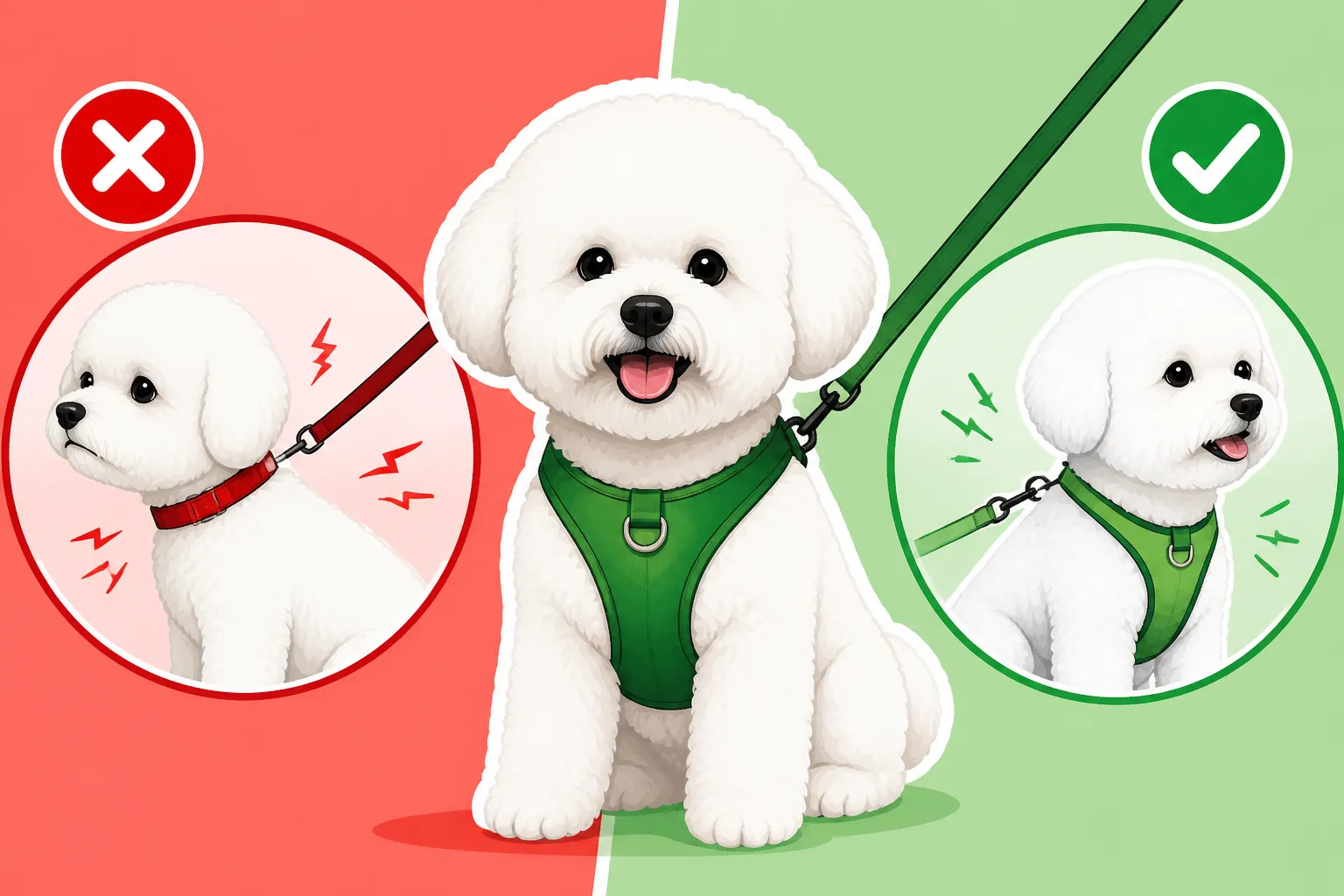
The primary advantage of a harness lies in its design to distribute pressure evenly across your dog's body. Instead of concentrating force on the delicate throat area, a well-fitting harness spreads any pulling pressure across the chest, shoulders, and back. This significantly reduces the risk of tracheal collapse, neck strain, and other injuries associated with collar use, especially for enthusiastic pullers or reactive dogs.
Imagine your Bichon encountering a new smell or seeing a friendly dog across the street. Their natural instinct might be to pull or lunge forward. With a harness, this instinctual movement doesn't result in a choke or gag; instead, the pressure is safely dissipated. This makes walks not only physically safer but also more enjoyable for your dog, as they can explore and react within reasonable limits without experiencing discomfort. Many owners report a noticeable difference in their Bichon's willingness to walk and overall demeanor once they switch from a collar to a harness.
Enhanced Control for Both of You
For owners, harnesses often provide a much greater sense of control and security during walks. A Bichon Frise is small and surprisingly quick, and a determined puller can sometimes slip out of a loose collar. A properly fitted harness, however, offers a more secure fit around the body, making it much harder for your nimble companion to escape, even if they try to back out of it. This added security is invaluable, especially when walking near busy roads or in crowded areas.
Furthermore, harnesses can be a godsend for managing a spirited Bichon who likes to pull. While a harness won't magically stop pulling, it can make it much more manageable without harming your dog. Certain types, like front-clip harnesses, are specifically designed to redirect a dog's forward motion, gently turning them to the side when they pull. This can be a very effective, humane tool for teaching your Bichon to walk calmly on a loose leash. Whether a Bichon Frise Walks on a Loose Leash is a common concern, and a harness can be a key part of the solution.
Supporting Positive Training
Harnesses are not just about safety and control; they also play a vital role in positive reinforcement training methods. When a dog experiences pain or discomfort from a collar being yanked, it can create negative associations with walks and even with their handler. This can hinder training progress and erode trust. With a harness, especially one that doesn't put pressure on sensitive areas, your Bichon is free to learn without fear of unpleasant sensations.
Many online resources, including comprehensive puppy training programs like BAXTER & Bella, advocate for starting puppies on harnesses from an early age. This approach helps establish good leash manners from the outset, without the risk of injury or creating a dog who associates walking with choking. It encourages a more confident and relaxed dog, which in turn makes them more receptive to learning. Whether you're teaching basic commands, working on loose leash walking, or just trying to navigate the energetic "Bichon Blitz," a harness ensures that your training efforts are built on a foundation of comfort and positive association. During The First Year With a Bichon Frise Puppy, getting this foundation right is incredibly important.
When a Collar Still Has Its Place
Despite the strong arguments for harnesses, collars still have a significant, albeit more limited, role in a Bichon Frise's life. It's not necessarily an "either/or" situation, but more about understanding the primary functions of each piece of equipment.
The Essential Role of Identification
Perhaps the most crucial function of a collar for any dog, including a Bichon Frise, is to serve as a constant holder for their identification tags. Even the most well-behaved and contained dogs can, in rare circumstances, get separated from their owners. An ID tag with your contact information, microchip registration, and perhaps even a rabies tag is your dog's ticket home.
Leaving your Bichon without an ID tag, even if they are microchipped, leaves a gap in their safety net. Not everyone who finds a lost dog will immediately take them to a vet or shelter to scan for a microchip. A visible ID tag allows for immediate contact, significantly increasing the chances of a swift reunion. So, even if your Bichon wears a harness for walks, a lightweight, comfortable flat buckle collar, worn loosely enough to not restrict movement or put pressure on the trachea, is still an essential piece of their everyday attire for identification purposes. Think of it as their permanent necklace with all their vital stats.
Supervised Short-Term Use
There might be occasions when a collar is perfectly acceptable for very short-term, supervised use. For example, if you're just taking your Bichon from the house to the car for a vet visit, or for a quick potty break in a securely fenced yard, a collar might be used for a momentary grab. In these scenarios, the risk of sustained pulling or neck strain is minimal.
However, it's critical that even for these brief moments, you remain vigilant and avoid any situation where your Bichon might pull or yank on the leash attached to their collar. The emphasis here is on supervised and short-term. Never use a collar as the sole walking equipment for a stroll around the neighborhood, a trip to the park, or any activity where sustained leash pressure or sudden movements are likely. It's about risk management and prioritizing your Bichon's long-term health and comfort.
Selecting the Perfect Harness for Your Bichon
Once you've decided a harness is the way to go, the next challenge is navigating the overwhelming array of options available. Finding the right harness for your Bichon Frise is key to maximizing its benefits. A poorly fitting harness can be just as uncomfortable and ineffective as a collar. You can find a vast selection of options on platforms like Amazon, allowing you to compare styles and features from many brands.
Navigating Harness Styles
There are several main types of harnesses, each with its own design and benefits:
- Step-in Harnesses: These are often easy to put on and take off. Your Bichon steps into two leg holes, and the harness clips over their back. They are generally comfortable for dogs who don't pull excessively.
- Vest Harnesses: These are often made of softer fabric and cover a larger area of the dog's chest and back, providing maximum comfort and distributing pressure very broadly. They can be great for dogs with sensitive skin or those who prefer a more secure, swaddling feel.
- Y-Front Harnesses: These harnesses have straps that go around the chest and belly, with a "Y" shape over the chest bone. They are designed to avoid putting pressure on the throat and allow for a natural range of shoulder movement. Many consider these to be among the most anatomically sound choices for small dogs.
- Back-Clip Harnesses: The leash attachment ring is on the dog's back. These are very common and provide good control for dogs who don't pull too hard. However, for a strong puller, they can still allow the dog to gain leverage.
- Front-Clip Harnesses: The leash attachment ring is on the dog's chest. These are excellent for dogs who pull, as they gently steer the dog to the side when they pull forward, making it harder for them to continue forging ahead. This can be a very effective training aid.
For a Bichon Frise, a Y-front or vest harness with either a back or front clip (depending on their pulling tendencies) is often the best choice, as these styles minimize pressure on the neck and allow for free shoulder movement. You might want to explore What a Harness for a Bichon Frise Costs to help budget for this essential equipment.
Mastering the Fit for Comfort and Security
A harness is only as good as its fit. An ill-fitting harness can chafe, restrict movement, or allow your dog to slip out. Here's how to ensure a proper fit:
- Measure Your Bichon: Before buying, measure your dog's chest girth (the widest part of their rib cage, behind their front legs) and their neck circumference (where a collar would sit). Compare these measurements to the manufacturer's size chart.
- Adjust the Straps: Once you have the harness, put it on your Bichon and adjust all the straps so that it's snug but not tight. You should be able to comfortably slide two fingers underneath all the straps.
- Check for Gaps: Ensure there are no large gaps around the neck or armpits where your Bichon could potentially wiggle out.
- Observe Movement: Take your Bichon for a short walk in the harness. Watch how they move. Does it chafe their armpits? Does it restrict their shoulder movement? Does it shift or rotate excessively? The harness should stay relatively in place without rubbing.
- Look for a "Y" or "V" shape: Ideally, the chest strap should form a "Y" or "V" shape in front, resting on their sternum, well away from their throat. This ensures no pressure is applied to the trachea.
It might take trying a couple of different styles and brands to find the perfect match for your individual Bichon's body shape. Patience here pays off in long-term comfort and safety.
Material Matters for Sensitive Skin
Bichons have beautiful, fluffy coats and often sensitive skin, especially if they have allergies like atopic dermatitis. The material of the harness can make a big difference in their comfort. Look for:
- Soft, Breathable Fabrics: Nylon and polyester are common, but ensure they are soft and have padded areas, especially in places that might rub, like the armpits or chest. Mesh materials can be good for breathability.
- Minimal Seams and Edges: Hard seams or rough edges can rub and cause irritation, leading to hot spots or matting, particularly in their dense coat.
- Hypoallergenic Options: If your Bichon has known skin sensitivities, look for harnesses made from materials less likely to cause irritation.
- Easy to Clean: Given their white coats, a harness that can be easily hand-washed or machine-washed is a bonus for keeping it fresh and clean.
Remember, a harness needs to be part of your Bichon's daily wear, so comfort is paramount. Inspect the harness regularly for signs of wear and tear, and also check your Bichon's skin and coat underneath for any redness, chafing, or matting.
Here's a quick comparison of collars and harnesses for your Bichon Frise:
| Feature | Collar (Traditional Flat Buckle) | Harness (Well-Fitted, Y-Front/Vest) |
|---|---|---|
| Primary Purpose | Identification, minor restraint (supervised) | Walking, training, safety, identification |
| Pressure Distribution | Concentrated on neck/trachea | Distributed across chest, shoulders, back |
| Risk of Injury | Higher (tracheal collapse, neck strain) | Lower (when fitted correctly) |
| Control for Owner | Moderate (can lead to pulling/choking) | High (better leverage, prevents pulling with front-clip) |
| Escape Risk | Higher (can slip out if not snug) | Lower (secure fit around body) |
| Comfort for Dog | Variable (can be uncomfortable with pulling) | High (allows natural movement, no choking) |
| Ideal Use | Holding ID tags, very brief, supervised transitions | Daily walks, training, car safety, preventing escape |
In conclusion, while a collar serves its purpose for identification, for the general safety, comfort, and effective training of your beloved Bichon Frise, a well-fitting harness is almost always the superior choice for walks and active outings. Protecting their delicate neck and ensuring a positive experience on the leash means investing a little time in finding the right harness. Your happy, healthy, and enthusiastically exploring Bichon will thank you for it!
Disclaimer
This article is for general informational purposes only and does not constitute professional advice. Laws, prices and regulations vary by location and change over time. Consult a qualified professional for guidance on your specific situation.