Whether a Bichon Frise Has Excitement Wetting
It can be incredibly disheartening, not to mention confusing, when your fluffy Bichon Frise, who you thought was perfectly housetrained, suddenly has an accident right at your feet or when a guest arrives. This isn't usually a sign of spite or a forgotten lesson, but rather a common, involuntary response known as excitement wetting. This guide will delve into what excitement wetting truly is, why your Bichon might be prone to it, and practical strategies to manage it, helping you and your beloved companion navigate this sometimes messy challenge.
Understanding Excitement Wetting in Bichon Frises
Excitement wetting is one of those behaviors that can leave you scratching your head, wondering if your dog is deliberately trying to defy you. Rest assured, it’s almost never malicious. It's a physiological response that many small, emotionally sensitive breeds like the Bichon Frise experience. Knowing what it is and why it happens is the first step toward managing it effectively and reducing frustration for everyone involved.
What Excitement Wetting Actually Is
At its core, excitement wetting is an involuntary leakage of urine, often in small amounts, that occurs when a dog becomes overly stimulated or excited. Think of it less like deliberate urination and more like a hiccup or a sneeze – something that just happens without conscious control. The bladder muscles relax momentarily due to an overwhelming surge of emotions, leading to a small puddle. It’s not about marking territory, nor is it usually a sign of improper housetraining in the typical sense. It’s a momentary loss of bladder control that often clears up as a dog matures and learns to regulate its emotions better, though some may carry it into adulthood.
Imagine walking through your front door after a long day at work, and your Bichon Frise is practically vibrating with joy. Their tail is a blur, they're bouncing on their front paws, and then, drip. A small puddle appears. This is a classic scenario of excitement wetting. It's the sheer elation of your return, the intense focus on your presence, that momentarily overpowers their bladder control. It’s usually a small volume, unlike a full bladder emptying, and often happens when they're actively moving, wiggling, or greeting. This behavior can feel particularly frustrating because it seems so out of character for a dog that is otherwise clean indoors.
Why Bichon Frises Are Prone to It
Bichon Frises, with their effervescent personalities and deep affection for their families, are naturally highly sensitive and emotionally demonstrative dogs. They wear their hearts on their fluffy sleeves! This intense emotional capacity, while endearing, can also be a contributing factor to excitement wetting. Their joy, anticipation, or even mild anxiety can manifest physically, and their small stature often means they have smaller bladders to begin with, making them more susceptible to these involuntary releases.
Consider the typical Bichon Frise greeting: a flurry of happy barks, a full-body wiggle, frantic tail wags, and an insistent desire to be as close to you as possible. This explosion of emotion can trigger the bladder release. Additionally, some theories suggest there might be a genetic component to this sensitivity, making certain lines of Bichons more predisposed. Their diminutive size also means less muscle to hold urine under pressure, and when that emotional surge hits, it’s simply too much for their tiny urinary system to contain. This is somewhat related to Whether a Bichon Frise's Small Bladder Is the Problem, which explores how their physical build can impact their housetraining journey.
The Difference Between Excitement Wetting and Other Accidents
Distinguishing excitement wetting from other types of accidents is crucial for effective management and for ruling out underlying health issues. While they all result in urine on the floor, their causes and implications are vastly different. Misidentifying the problem can lead to ineffective solutions or, worse, delaying necessary veterinary care.
Here’s a quick breakdown to help differentiate:
| Type of Accident | Common Triggers | Key Characteristics | What It Might Indicate |
|---|---|---|---|
| Excitement Wetting | Greetings, play, new visitors, high energy | Small puddles, happens during intense joy/stimulation, dog is often wiggling/active | Emotional sensitivity, immature bladder control |
| Submissive Urination | Scolding, dominant posture, fear, loud noises | Small puddles, dog often cowers, avoids eye contact, rolls over, may lick lips | Fear, anxiety, submission, insecurity |
| Lack of Housetraining | No regular schedule, punishment for accidents, unclear expectations, indoor access too soon | Various sizes of puddles, happens randomly, dog may just walk and pee without urgency | Inconsistent training, unclear communication |
| Medical Issue | Sudden change in habits, increased frequency, straining, pain | Varies, can be large or small volume, frequent urination, dribbling, inappropriate locations | UTI, bladder stones, diabetes, kidney disease, Cushing's |
- Submissive Urination: This is often confused with excitement wetting, but the context is key. Submissive urination happens when a dog feels threatened, fearful, or is trying to appease. You might see it if you loom over your Bichon, scold them harshly, or if another dog asserts dominance. The body language will be one of submission – lowered head, tucked tail, avoiding eye contact, perhaps rolling onto their back. Unlike excitement wetting, which is pure unbridled joy, submissive urination is rooted in anxiety or fear.
- Lack of Housetraining: If your Bichon Frise is simply having accidents because they haven't learned where to go, or your schedule is inconsistent, it's a training issue. These accidents often happen without any specific emotional trigger and might be larger in volume. They might just wander off and relieve themselves. This is why a consistent toilet routine, as discussed in Whether a Written Toilet Schedule Helps a Bichon Frise, is so vital, especially for a breed known to be a bit challenging in this department.
- Medical Issues: This is the most important distinction. Conditions like urinary tract infections (UTIs), bladder stones, or even diabetes can cause a dog to lose bladder control or feel an intense urge to urinate more frequently. If your Bichon suddenly starts wetting themselves, regardless of excitement, or shows other symptoms like straining, blood in the urine, excessive drinking, or changes in appetite, it's a medical emergency. The First Signs a Bichon Frise Has Stones and Whether Blood in a Bichon Frise's Urine Means Stones offer more insights into identifying stone-related issues, which are unfortunately common in Bichons. Always consult your vet if you suspect a medical cause.
Managing and Minimizing Excitement Wetting
Dealing with excitement wetting can be a test of patience, but there are many proactive steps you can take to help your Bichon Frise learn to manage their emotions and reduce these accidents. The goal isn't to suppress their joyful nature, but to help them channel it in a more controlled way.
Creating a Calm Greeting Routine
The biggest trigger for excitement wetting is often the intense emotional buildup around greetings. Whether it's you coming home, a family member returning, or guests arriving, the surge of joy can be too much. The key is to de-escalate these moments and teach your Bichon that calm behavior gets attention, not frantic excitement.
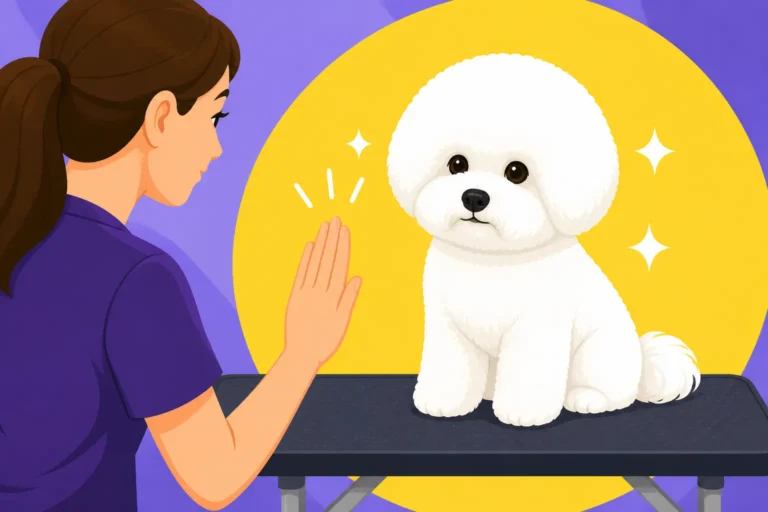
When you arrive home, try to avoid an immediate, enthusiastic greeting. Instead, walk in calmly, ignore your dog for the first few minutes, and put your things down. This doesn't mean you don't love them! It simply prevents that initial explosion of joy that can lead to an accident. Once they've settled a little – perhaps they're no longer jumping or wiggling quite so intensely – then you can quietly go over and offer a gentle, calm pet. Keep your voice low and soothing. If they start to get too worked up, stand up and turn away, only resuming attention when they're calmer. This teaches them that a calm demeanor is what earns your affection.
The same principle applies to guests. Ask visitors to initially ignore your Bichon Frise. No bending down, no excited squeals, no reaching out. This can feel counterintuitive, especially for dog lovers, but it’s crucial. Explain to them that your dog is prone to excitement wetting and that a calm approach helps prevent accidents. Once your Bichon has had a chance to sniff around, settle down, and get over the initial burst of newness, your guests can then offer a calm pet, perhaps while your Bichon is sitting or lying down. You might even have your dog on a leash for greetings, allowing you to maintain a bit more control over their enthusiasm and redirect them to a sit or down command.
Environmental Adjustments and Training Techniques
Beyond calm greetings, you can make specific adjustments to your environment and incorporate training techniques to help manage excitement wetting. These strategies aim to set your Bichon up for success and reinforce desired behaviors.
Designating a "greeting zone" can be incredibly helpful. This is an area with easy-to-clean flooring, like tile or hardwood, where initial greetings take place. If an accident does occur, it's much easier to clean up than from carpet. You can also place a washable rug or a puppy pad in this spot during high-excitement times, though the long-term goal is to reduce the need for pads. Speaking of puppy pads, while they can be a temporary solution for certain scenarios, be mindful that prolonged use can sometimes slow down outdoor housetraining progress, as explored in articles like Whether a Bichon Frise Learns to Use a Pad. Using an enzymatic cleaner, which you can easily find on Amazon, is vital for cleaning up accidents thoroughly. This removes the scent that might draw your Bichon back to the same spot.
Training also plays a role. Reinforce basic commands like "sit" and "stay" in increasingly distracting environments. If your Bichon can sit calmly for a few seconds when a guest arrives, they're less likely to be jumping and wiggling – and thus less likely to wet themselves. Reward calm behavior heavily with quiet praise and small, low-value treats. Some owners find that online dog training platforms, like those offered by BAXTER & Bella, provide structured lessons that can help with impulse control and emotional regulation, which are key to managing excitement. These programs often break down complex behaviors into manageable steps, making it easier for owners to implement consistent training at home.
The Role of Potty Breaks and Hydration
Sometimes, even with the best intentions and calm greetings, a full bladder simply can't hold up under a sudden rush of excitement. This is where strategic potty breaks come in.
The most straightforward way to prevent excitement wetting is to ensure your Bichon Frise has an empty bladder before any potentially exciting event. If you know guests are coming over, or if you're about to arrive home, take your dog out for a potty break just beforehand. A quick trip outside, even if they just go for a tiny tinkle, can make all the difference. This proactive approach significantly reduces the volume of urine that could be released during an excited moment. For example, before you leave for work, take them out. When you get home, before you even say hello, take them straight outside. This helps your Bichon associate going outside with these transition times.
Regarding hydration, it's a bit of a balancing act. You always want your Bichon Frise to be well-hydrated for their overall health. Ensuring they have fresh water available constantly is important, and for dogs prone to stones, encouraging water intake is critical. Getting Enough Water Into a Bichon Frise offers excellent tips on this. However, just like with people, if they've guzzled a large amount of water right before a high-excitement period, they'll have more urine in their bladder. While you shouldn't restrict water, being mindful of when they drink a lot can help you plan potty breaks accordingly. For example, if you know a friend is popping over, and your Bichon just had a big drink, a quick potty trip moments before the doorbell rings could save you a cleanup. Also, remember that Whether Frequent Urination Protects a Bichon Frise highlights the general benefit of diluted urine, which is often promoted by good hydration.
When to Seek Professional Help and Vet Advice
While excitement wetting is often a behavioral issue that can be managed with patience and training, it's vitally important to rule out any underlying medical conditions. Sometimes, what looks like excitement wetting can be a symptom of something more serious.
Recognizing When It's More Than Excitement
If the accidents are becoming more frequent, larger in volume, or happening even when your Bichon Frise isn't particularly excited, it's time to take note. Look for other changes in behavior as well. Is your dog drinking more water than usual? Are they straining to urinate, or do they seem uncomfortable when they go? Is the urine discolored, cloudy, or does it have an unusually strong odor? These are all red flags that point away from simple excitement wetting and toward a potential medical problem.
For instance, if you notice your Bichon is constantly licking their genital area, having small, frequent dribbles throughout the day, or suddenly seems to have forgotten all their housetraining, it could be a urinary tract infection. Blood in the urine, even a faint pink tinge, or obvious straining to pass urine, particularly in a breed prone to bladder stones like the Bichon Frise, should send you straight to the vet. Whether Frequent Squatting Means Stones Not Training further explains that what appears to be a training setback might be a physical discomfort or blockage. Don't dismiss these signs; they warrant immediate investigation.
Consulting Your Veterinarian
If you observe any of the concerning signs mentioned above, or if your attempts to manage excitement wetting aren't yielding any results, a trip to your veterinarian is the absolute next step. Your vet will perform a thorough physical examination and likely recommend some diagnostic tests to rule out common medical causes of incontinence or increased urination.
Typical tests might include a urinalysis, which checks for infection, crystals, or other abnormalities in the urine. They might also suggest a urine culture to identify specific bacteria if an infection is suspected. For breeds prone to bladder stones, like the Bichon Frise, X-rays or an ultrasound of the bladder might be recommended to visualize any stones or other structural issues. How a Vet Confirms Stones in a Bichon Frise details the diagnostic process, and it's a conversation you'll want to have with your vet if you have concerns. Regular check-ups, even if you just perform Whether a Bichon Frise Should Be Urine Tested Yearly, can catch some issues early. Don't be shy about discussing your concerns; your vet is there to help rule out serious conditions and provide peace of mind.
Working with a Professional Dog Trainer or Behaviorist
Once medical causes have been definitively ruled out by your veterinarian, and if you're still struggling to manage excitement wetting, it might be time to enlist the help of a professional dog trainer or a certified veterinary behaviorist. They have specialized knowledge and experience in addressing behavioral issues and can provide a tailored plan for your unique situation.
A professional trainer can assess your Bichon's specific triggers and reactions, then work with you to implement targeted behavior modification techniques. This might involve structured desensitization exercises to help your dog become less overwhelmed by exciting situations, or more advanced impulse control training. They can help you refine your calm greeting routine and teach your Bichon alternative, more appropriate behaviors when excited, such as a "go to mat" command. This structured support can be invaluable, especially if you feel like you've tried everything and are still seeing little progress. They can also recommend specific training aids or tools, readily available on platforms like Amazon, that might assist in the process, such as calming pheromone diffusers or interactive toys to redirect energy. The goal is always to reduce stress and build confidence in your dog, helping them develop better emotional regulation skills for a happier, dryer home.
Disclaimer
This article is for general informational purposes only and does not constitute professional advice. Laws, prices and regulations vary by location and change over time. Consult a qualified professional for guidance on your specific situation.