What Merry Means in the Bichon Frise Standard
The merry temperament of the Bichon Frise defines the breed standard, reflecting centuries of companionship and joyful daily behaviors.
The merry temperament of the Bichon Frise defines the breed standard, reflecting centuries of companionship and joyful daily behaviors.
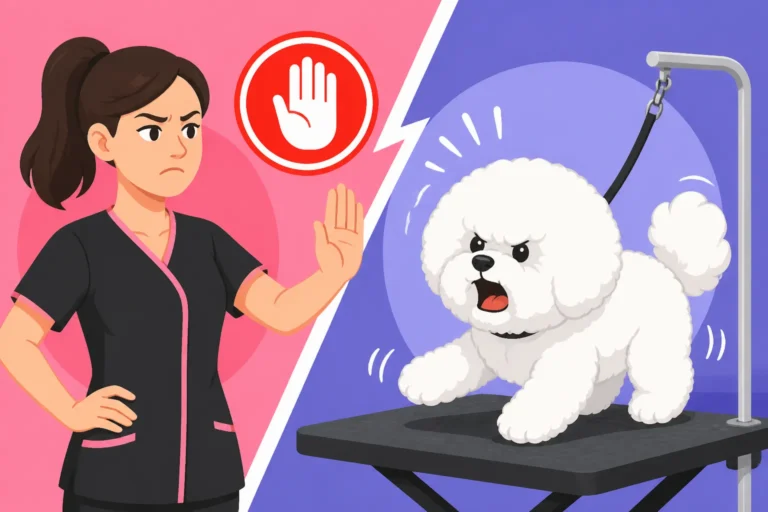
Difficult Bichon Frise grooming behaviors lead to service refusals for safety, explaining why groomers refuse dogs and solutions.
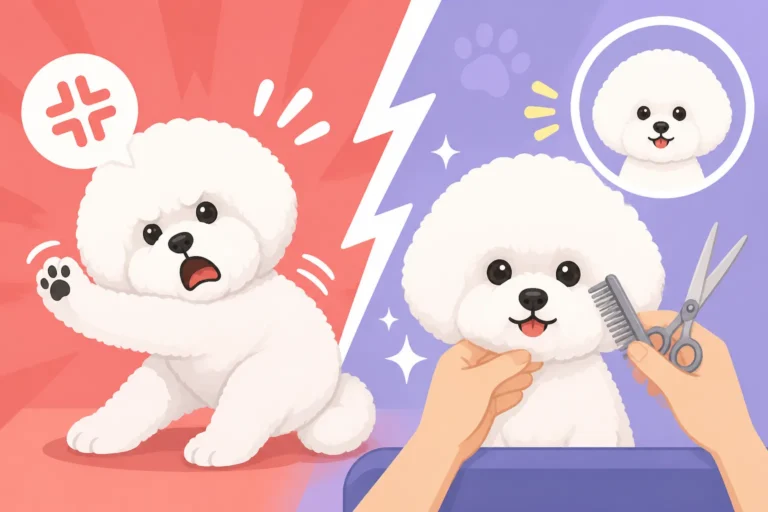
Bichon Frise facial grooming resistance stems from sensitive features and discomfort, explaining why dogs fight face trims.
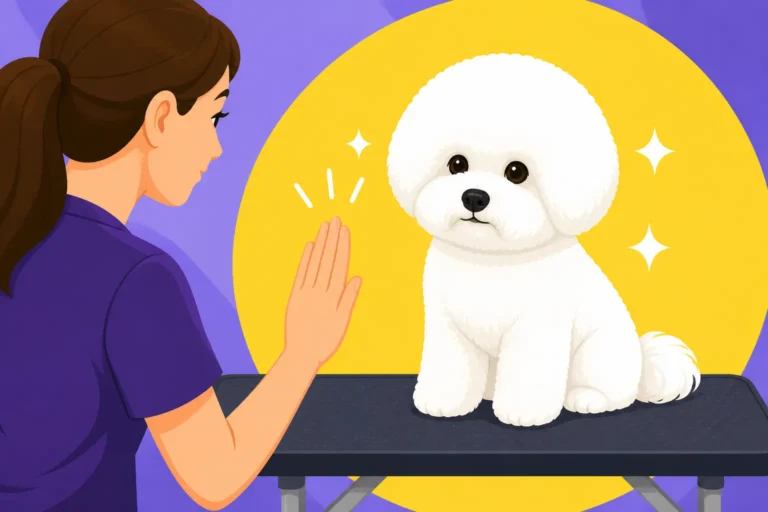
Bichon Frise grooming training explains how to patiently teach a puppy to stand still on a grooming table and accept daily brushing.
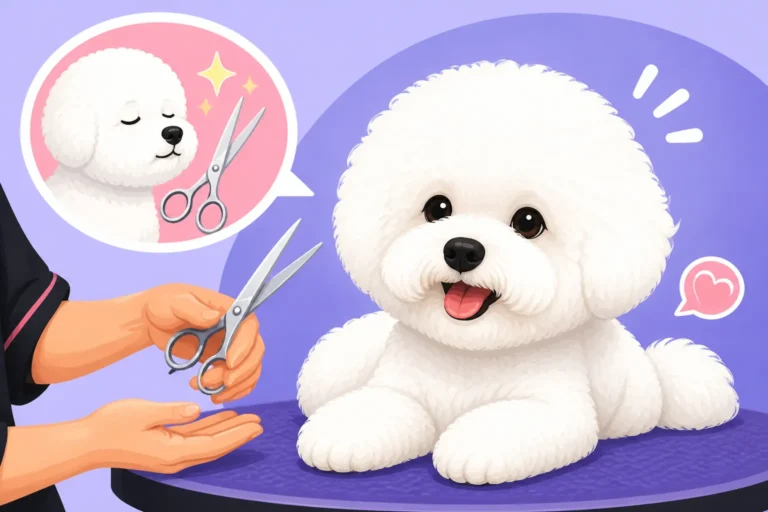
Bichon Frise scissor training helps dogs tolerate face, paw, and tail coat trimming without stress or fear during grooming.

Bichon Frise dogs wearing recovery cones experience disorientation, anxiety, and behavioral changes during their post-vet recovery period.

Bichon Frise dogs with itchy skin conditions can learn to tolerate medicated baths, specialized shampoos, and grooming routines.
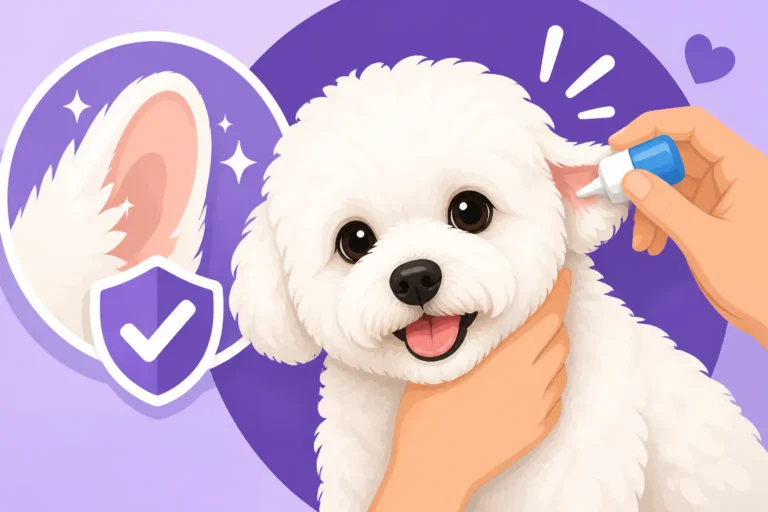
Bichon Frise ear treatment strategies help dogs accept routine cleaning, prevent painful infections, and manage unique ear anatomy.
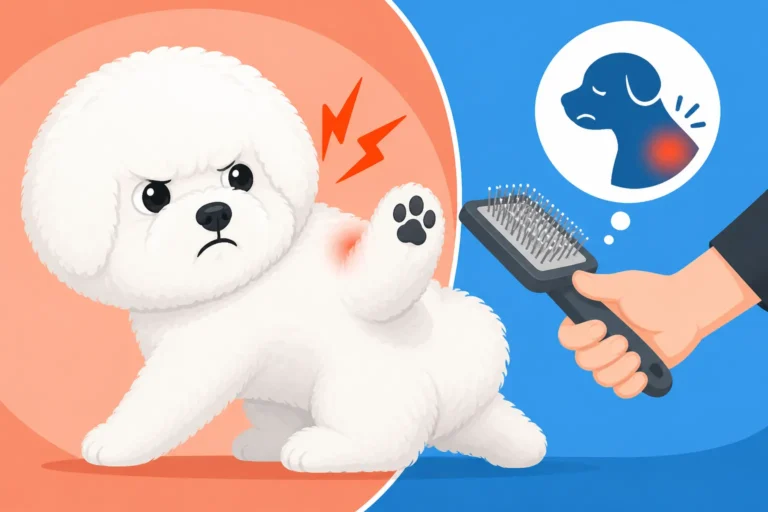
Physical pain from skin allergies, ear infections, or slipping kneecaps causes a sore Bichon Frise to refuse grooming.
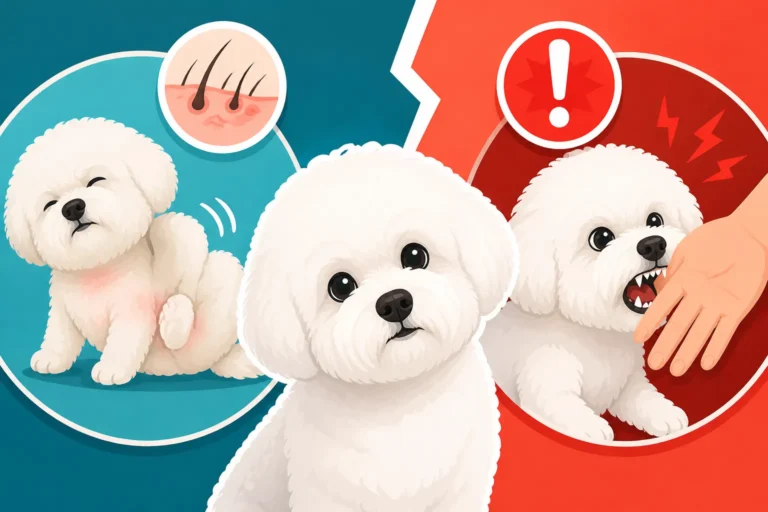
An itchy Bichon Frise biting when handled stems from physical pain, skin irritation, and instinctive defensive reactions.