The Year the Bichon Frise Standard Was Written
It's quite easy to look at a fluffy, white Bichon Frise today and take their charming appearance and delightful personality for granted. But behind that innocent, cotton-ball exterior lies a rich, often dramatic history, culminating in a specific moment when enthusiasts officially decided what a Bichon should be. This guide will take you through the fascinating journey that led to the creation of the breed standard, explaining its importance and what it means for every Bichon Frise owner.
The Road to Recognition: A Breed's Journey Through History
Before any breed can have an official standard, it needs a history – a story of how it came to be, how it traveled, and how people fell in love with it. The Bichon Frise's story is particularly colorful, stretching back centuries and crossing continents, moving from humble beginnings to the laps of royalty and back again. Understanding this journey helps us appreciate the deliberate steps taken to formalize the breed.
From Ancient Sailors to Noble Laps: Early Ancestry and Spread
The roots of the Bichon Frise family tree, often referred to as the Barbichon family, reach far back into antiquity. Imagine ancient Mediterranean seafarers, their ships laden with goods, also carrying small, charming white dogs that served as companions and perhaps even rodent control. These dogs were likely the ancestors of many modern small white breeds. They traveled along trade routes, spreading from port to port, their winning personalities making them welcome additions wherever they went. It's truly fascinating to think that the same kind of dog that might have snuggled with a Roman merchant could eventually charm its way into the French court. These little dogs were hardy, adaptable, and their delightful disposition ensured their survival across different cultures and classes.
As these dogs spread, they naturally began to evolve, influenced by local preferences and breeding practices. In time, distinct types began to emerge. The Bichon Frise, specifically, is believed to have developed from a water spaniel-like breed, eventually leading to the Barbichon group, which also includes the Maltese, Bolognese, and Havanese. These dogs were prized for their small size and affectionate nature, making them ideal companions in a world where larger working dogs were the norm. The Canary Island the Bichon Frise Is Named After is a testament to how specific locations became intertwined with the breed's emerging identity.
The Tenerife Dog: A Name Rooted in Maritime Trade
One of the most enduring historical names for the Bichon Frise is the "Tenerife Dog." This isn't just a quaint historical footnote; it speaks volumes about the breed's origins and how it found its way to prominence. Tenerife, one of the Canary Islands, served as a crucial port in the Atlantic trade routes. Spanish sailors, known for their extensive maritime travels, are credited with bringing these charming little white dogs from the Mediterranean basin to the Canary Islands. From there, Italian sailors, captivated by their playful spirit and elegant appearance, likely brought them back to continental Europe in the 14th century.
It’s easy to picture these little dogs, perhaps curled up on a sailor's bunk or playfully scampering on deck, becoming cherished mascots on long voyages. Their resilience and ability to adapt to life aboard a ship would have been as valued as their companionship. This period established the Bichon as a well-traveled, highly sought-after companion, setting the stage for its eventual rise in popularity among European aristocracy. The name "Tenerife Dog" lingered for centuries, a charming echo of their island origins and the voyages that brought them to a wider world.
European Courts and Circus Tents: The Breed's Diverse Past
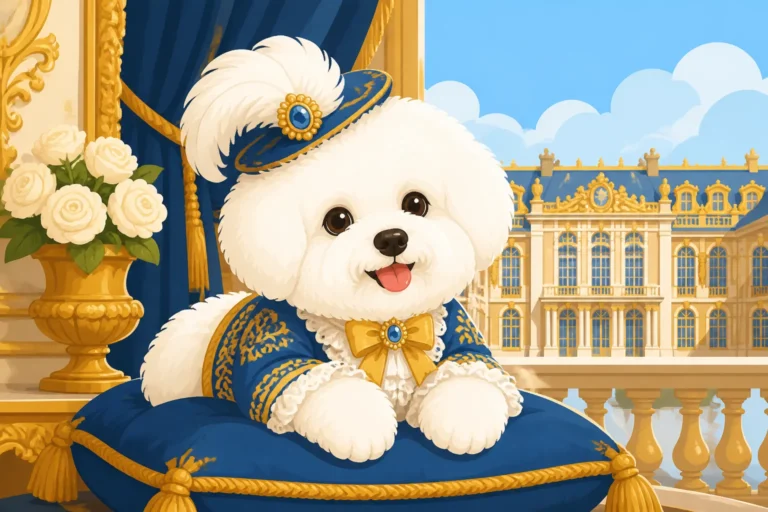
Once in Europe, particularly in Italy and then France, the Bichon Frise quickly captured the hearts of the nobility. During the Renaissance, Italian aristocrats were enamored with these dogs, often grooming them elaborately and carrying them in baskets wherever they went. Later, in the 16th century, the breed made its grand entrance into the French court, particularly during the reign of King Henry III, who was famously devoted to his Bichons. They became symbols of luxury and status, living lives of pampering and privilege. The French Court That Made the Bichon Frise Fashionable details this era of extreme popularity.
However, the breed's fortunes shifted dramatically with the French Revolution. As the aristocracy fell, so too did many of their beloved pets. The Bichon Frise found itself out of the palace and onto the streets. But rather than disappearing, these resilient dogs adapted once more. Their intelligence, eagerness to please, and innate charm made them perfect candidates for street performers and circus acts. They learned tricks, charmed crowds, and continued to survive, demonstrating a versatility that belied their delicate appearance. This period of performing, though a far cry from courtly life, proved the breed's enduring appeal and intelligence, qualities that would later be enshrined in its official standard.
The French Connection: Forging the Modern Bichon Frise
After its roller-coaster journey through history, the early 20th century brought a renewed focus on preserving and standardizing the Bichon Frise. This era was critical in defining the breed we know and love today, largely thanks to dedicated enthusiasts in France and Belgium who saw the inherent value and charm of these little dogs.
Rescuing a Breed: Post-War Efforts and Revival
The early 20th century, particularly the period following the two World Wars, was a challenging time for many dog breeds across Europe. Economic hardship and societal upheaval meant that preserving pedigree lines was often a low priority. The Bichon Frise, despite its rich history, was no exception. Its numbers dwindled, and the distinct characteristics that defined it began to blur as breeding became less formal. This was a critical juncture where the breed could have easily faded into obscurity, its unique traits lost forever.
Fortunately, a dedicated group of French and Belgian fanciers recognized the imminent danger. They deeply appreciated the breed's joyful temperament, distinctive appearance, and historical significance. These passionate individuals took it upon themselves to gather the remaining examples of the breed, carefully selecting dogs that best represented the ideal type. Their efforts were truly a rescue mission, driven by a love for the Bichon Frise and a desire to ensure its survival for future generations. Without these diligent efforts, it's quite possible the fluffy white companion we adore might not exist today in its recognizable form.
The Birth of the Official Standard: Setting the Benchmark
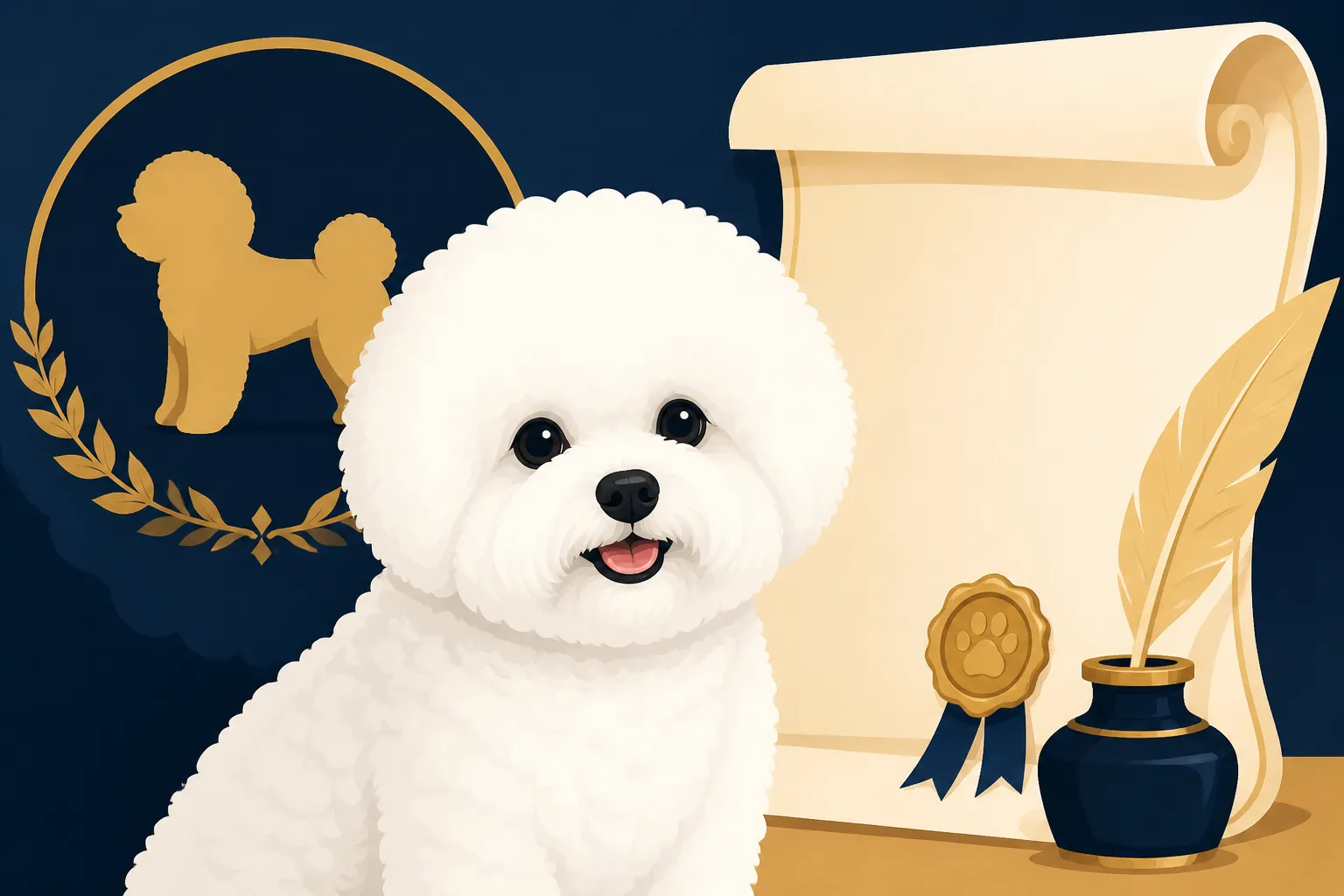
It was amidst these revival efforts that the crucial step of establishing an official breed standard took place. In 1933, the French Kennel Club (Société Centrale Canine) formally recognized the Bichon Frise and established its official breed standard. This was a monumental moment for the breed. A breed standard is essentially a written blueprint, a detailed description of the ideal specimen, covering everything from physical characteristics like size, coat type, eye color, and tail carriage, to more abstract qualities like temperament and gait.
The creation of this standard provided a clear goal for breeders. It ensured that future breeding efforts would aim for consistency, preserving the unique traits that define a Bichon Frise. This document was not just a historical marker; it was a living guide that helped solidify the breed's identity and prevented it from diverging into various unrecognised types. It was the moment the Bichon Frise, as a distinct and defined breed, was truly born in the modern sense, ensuring its characteristics would be maintained for generations to come. The Year the Bichon Frise Got Its Modern Name also played a key role in this formalization.
Naming the Breed: From "Tenerife" to "Bichon à Poil Frisé"
Along with the official recognition and the establishment of its standard in 1933, the breed also received its definitive name: "Bichon à Poil Frisé." This name, which translates to "curly-haired Bichon," perfectly encapsulates one of the breed's most iconic features – that soft, curly, powder-puff coat. Prior to this, as we've discussed, the breed was often referred to by its historical moniker, the "Tenerife Dog," or simply "Bichon," which itself is believed to be a diminutive of "Barbichon," referencing small, long-haired dogs.
The official adoption of "Bichon à Poil Frisé" marked a symbolic transition. It moved the breed from its historical and regional identifiers to a descriptive, formal name that would be recognized globally. This standardization of the name, much like the breed standard itself, brought clarity and consistency. It allowed the breed to be uniformly identified and understood across different countries and kennel clubs, further solidifying its identity and ensuring that everyone was talking about the same beloved curly white dog. This clarity was essential for tracking pedigrees, organizing dog shows, and promoting the breed effectively.
Deconstructing the Standard: What It Actually Means for the Bichon
A breed standard isn't just some dusty old document; it's a vibrant, living guide that influences every aspect of the breed, from appearance to temperament. For the Bichon Frise, its standard is particularly important because it defines those characteristics that make it so distinctly lovable. When you see a Bichon, you're seeing generations of careful breeding guided by this foundational text.
The Blueprint for Perfection: Appearance and Temperament
The Bichon Frise standard, drafted with such care in 1933 and subsequently adopted by various international kennel clubs (often with slight variations but retaining the core essence), meticulously describes the ideal Bichon. It's a comprehensive blueprint. For appearance, it details the preferred size – typically a small, compact dog, neither too tiny nor too large. It specifies the skull shape, muzzle length, nose pigmentation (always black, please!), eye shape and color (dark, round, and alert), and ear set (dropped, covered with long, flowing hair). The tail is described as carried gaily, curving over the back, but not tightly curled or touching the back. The Powder Puff Outline the Bichon Frise Standard Describes is all about this visual ideal.
Beyond the physical, the standard also defines the ideal temperament, which is just as crucial. A Bichon Frise should be cheerful, lively, playful, and affectionate. They're meant to be outgoing, friendly, and possess that famous "merry" disposition. There's no room in the standard for shyness, aggression, or excessive timidity. Breeders strive to produce dogs that embody this joyous spirit, recognizing that while looks are important, the Bichon's personality is what truly captivates hearts. This combination of defined physical traits and a charming demeanor is what makes a Bichon Frise so unique and instantly recognizable.
Why the White Coat and Powder Puff Matter
Perhaps the most striking and iconic feature of the Bichon Frise, explicitly called out in the standard, is its pure white, soft, curly coat. The standard dictates that the coat should be double-layered, with a soft, dense undercoat and a coarser, curly outer coat that gives it a distinctive "powder puff" appearance. This isn't just about aesthetics; it’s a defining characteristic that sets the Bichon apart. While some Bichon Frise puppies may be born with slight cream or apricot markings, the standard expects these to fade to pure white as the dog matures.
The texture and volume of the coat are also critical. It should stand off the body, creating that round, cloud-like silhouette that judges look for in the show ring and that owners adore. This particular coat, however, comes with its own set of responsibilities. It requires consistent grooming to prevent matting and maintain its pristine white color. Many Bichon owners know the struggle of keeping their pet looking show-ready, often turning to special shampoos or professional groomers. Products found on sites like Chewy are often specifically formulated to help maintain that brilliant white. Keeping a White Bichon Frise Actually White is a constant challenge, but one that is central to the breed's identity.
Health Considerations Within the Standard's Guidelines
While a breed standard primarily focuses on appearance and temperament, it indirectly touches upon health by promoting responsible breeding and preserving sound genetic lines. A good standard implicitly encourages traits that contribute to a dog's overall well-being and longevity. For instance, requiring specific eye and nose pigmentation can sometimes be linked to overall genetic health, as poor pigment can sometimes indicate other underlying issues. A sound structure, described in the standard, directly impacts a dog's ability to move comfortably and reduces the likelihood of skeletal problems.
However, it's also true that focusing solely on aesthetics can, at times, inadvertently lead to health challenges if not balanced with careful genetic screening. In the case of the Bichon Frise, like many purebreds, certain predispositions exist. For example, some individuals may be prone to specific urinary tract issues or certain eye conditions. Responsible breeders, while adhering to the standard, also incorporate health testing into their programs to ensure they are producing healthy puppies. They understand that a beautiful dog isn't truly ideal if it's not also healthy and happy. The standard serves as a guide, but a conscientious breeder looks beyond it to safeguard the breed's future health.
Impact and Evolution: How the Standard Shapes the Bichon Frise Today
The standard, established decades ago, continues to be a profound influence on the Bichon Frise breed. It’s the invisible hand guiding breeders, judges, and even owners, ensuring the consistency and recognition of this beloved companion across the globe.
The Role of Breed Clubs and Breeders in Upholding the Standard
Breed clubs around the world, such as the Bichon Frise Club of America, are the custodians of the breed standard. Their primary mission is to protect and promote the breed according to this blueprint. They organize events, provide educational resources, and support responsible breeding practices. For breeders, the standard is their bible. They study it meticulously, striving to produce puppies that not only meet but ideally exemplify every aspect described. This involves carefully selecting breeding pairs, scrutinizing pedigrees, and assessing each puppy for conformation to the standard. It's a challenging and often expensive endeavor, requiring deep commitment and knowledge.
Breeders committed to the standard understand that they are stewards of the breed's future. They don't just breed for profit; they breed to improve the line, aiming for that perfect balance of health, temperament, and appearance. They often mentor new breeders, sharing their knowledge of the standard's nuances and the practicalities of adhering to it. This dedication is what ensures that when you adopt a Bichon Frise, you're getting a dog with predictable characteristics – that cheerful personality, that iconic coat, and a generally robust constitution, all thanks to generations of breeders working towards a common, standardized goal.
Judging a Bichon: The Show Ring and Its Influence
The dog show ring is where the breed standard truly comes to life. Judges, who are extensively trained in the specifics of the Bichon Frise standard, evaluate each dog against this ideal. They're looking for correct head shape, eye placement, pigmentation, bite, coat texture and presentation, body proportions, tail carriage, and, critically, temperament and gait. Every aspect described in the standard is assessed, and deviations from it can result in lower placings. The show ring, therefore, acts as a critical mechanism for validating breeding choices and reinforcing the importance of the standard.
Winning in the show ring isn't just about bragging rights; it validates a breeder's program and indicates that their dogs closely conform to the breed's ideal. This, in turn, influences future breeding decisions, as champion dogs are often sought after for their proven ability to produce offspring that also meet the standard. While not every Bichon Frise owner is interested in showing, the discipline and attention to detail required in the show ring indirectly benefit all Bichons by promoting a consistent and healthy breed type. It's a public display of the ideal, constantly reminding enthusiasts of what a Bichon Frise should embody.
How Standards Protect Breed Integrity (and Sometimes Spark Debate)
The breed standard is ultimately a powerful tool for maintaining the integrity and distinctiveness of the Bichon Frise. Without it, the breed could easily splinter into different types, lose its defining characteristics, or become susceptible to fads and irresponsible breeding. It provides a common language and a shared vision for everyone involved with the breed. This protection extends to health, as sound structural descriptions and temperament requirements generally contribute to a more functional and robust dog. For example, Whether the Bichon Frise Should Be Bred Away From Stones is a conversation that often references the standard's underlying goal of a healthy dog.
However, standards are not without their debates. Sometimes, a strong emphasis on certain aesthetic traits can lead to unintended consequences, especially if those traits become exaggerated or inadvertently linked to health issues. Discussions can arise about whether the standard adequately addresses modern health concerns or if interpretations of the standard have shifted too much towards superficial qualities. It's a delicate balance to uphold tradition while also ensuring the long-term health and well-being of the breed. Ultimately, breed clubs and dedicated fanciers continue to revisit and interpret the standard, striving to ensure it serves the best interests of the Bichon Frise as a whole.
Beyond the Standard: Living with a Real-Life Bichon
While the breed standard defines the ideal, living with a Bichon Frise is about so much more than meeting a set of criteria. It’s about unconditional love, playful antics, and the daily joys and challenges of sharing your life with one of these enchanting dogs.
Your Pet Bichon: Loved Regardless of "Perfection"
For most of us, our Bichon Frise isn't a show dog, nor do we scrutinize them against every line of the breed standard. Our pet Bichons are family members, cherished for their individual personalities, quirky habits, and unwavering affection. Whether they have a slightly longer leg than the standard recommends, or their tail curls a little too tightly, none of it diminishes the joy they bring into our lives. A pet Bichon is loved for who they are, not how perfectly they conform to a historical document.
This is the beautiful reality of pet ownership. While the standard is vital for the preservation and guidance of the breed, it takes a backseat to the bond you share with your furry companion. Perhaps your Bichon is a bit more mischievous than the "merry" description suggests, or a touch lazier, but these are the very things that make them uniquely your dog. The standard gives us an appreciation for the breed's heritage, but the everyday life with a Bichon is where the real magic happens, filled with cuddles, playtime, and endless loyalty.
The Practicalities of Maintaining the Bichon Frise Look
Even if your Bichon isn't gracing the show ring, the breed standard indirectly influences the care you provide, especially when it comes to grooming. That iconic white, powder-puff coat, described so precisely in the standard, demands significant upkeep. It’s not a wash-and-wear kind of coat! Regular brushing, often daily, is essential to prevent matting, which can quickly become painful for your dog. A good slicker brush and metal comb are indispensable tools. Products like de-matting sprays, often found on Chewy, can be lifesavers.
Beyond brushing, Bichons require frequent bathing to keep that white coat pristine. Many owners opt for professional grooming every 4-6 weeks to maintain the breed's signature round head and overall fluffy silhouette. Learning How Often a Bichon Frise Needs Grooming is key to preventing discomfort. Without this dedicated care, the coat can become a tangled, uncomfortable mess, leading to skin issues and even infections. It's a commitment, for sure, but one that ensures your Bichon stays comfortable, healthy, and looking their best.
Understanding Health Predispositions in a Standardized Breed
While the standard aims for overall soundness, all purebred dogs, including the Bichon Frise, can have certain health predispositions. Being aware of these common health concerns isn't about fear; it's about being an informed and proactive owner. For Bichons, some of the conditions seen more frequently include bladder stones (particularly calcium oxalate stones), allergies, luxating patellas (slipping kneecaps), and dental disease. Knowing these possibilities can help you work with your vet to monitor for early signs and implement preventative care.
For instance, if your Bichon is genetically prone to stones, your vet might recommend a special diet, much like the ones available through pet suppliers like Chewy, to help manage urinary health. Regular vet check-ups, monitoring your dog's eating and drinking habits, and being vigilant about any changes in behavior are all crucial. Understanding these predispositions, which are sometimes unintended consequences of generations of breeding within a defined standard, empowers you to provide the best possible care for your individual Bichon Frise, ensuring they live a long, happy, and healthy life, regardless of how perfectly they match the historical blueprint.
Disclaimer
This article is for general informational purposes only and does not constitute professional advice. Laws, prices and regulations vary by location and change over time. Consult a qualified professional for guidance on your specific situation.