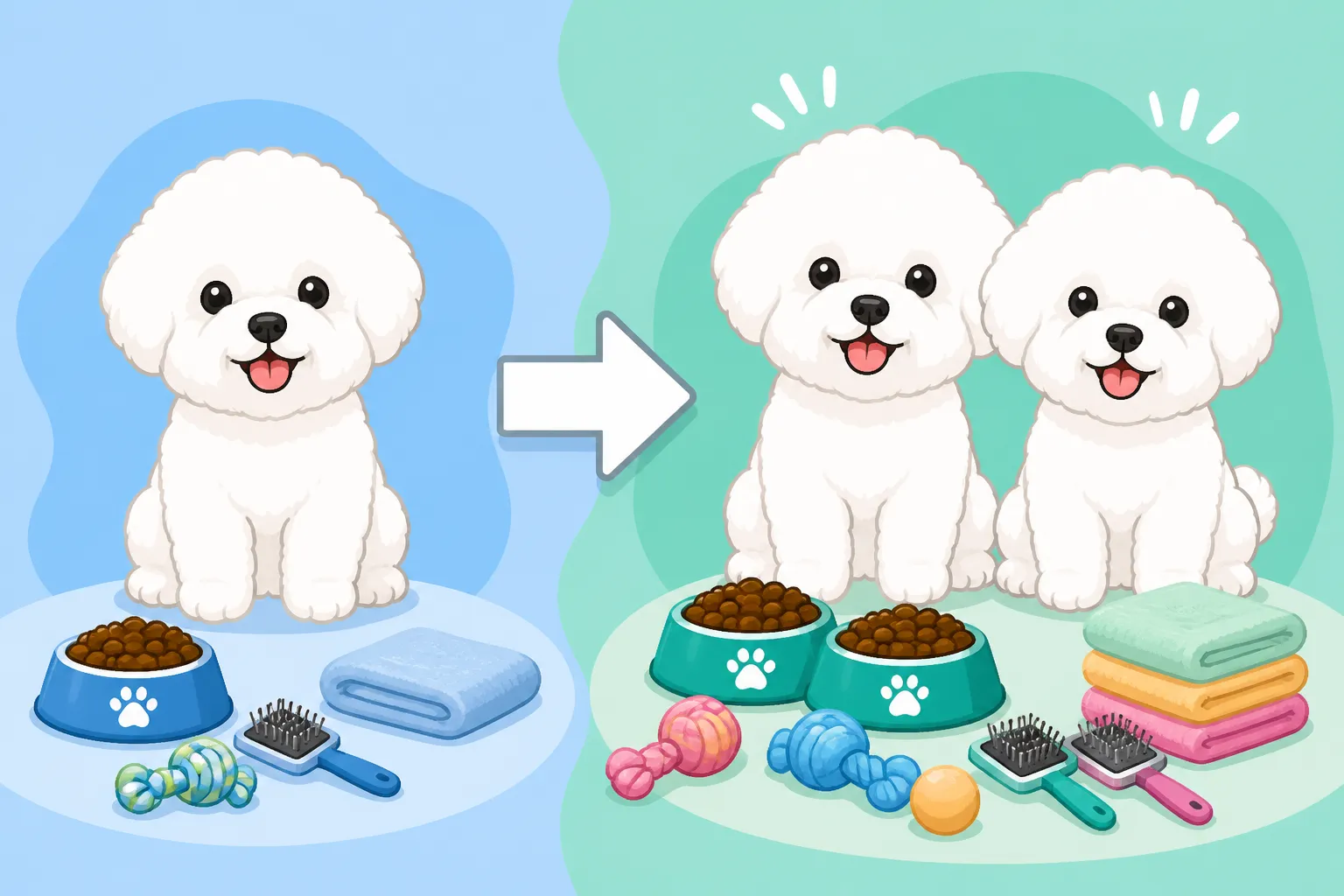
What a Second Bichon Frise Adds Monthly
Bringing a second Bichon Frise into your home is often a dream come true for many owners, picturing twice the fluffy joy and companionship. But let's be real – that initial excitement can quickly turn to a little financial anxiety when you start to wonder if all your existing dog expenses are just going to completely double. It’s a common and very valid concern, and this guide is here to help you realistically break down what a second Bichon Frise truly adds to your monthly budget, so you can plan with confidence.
The Initial Mental Math: Why "Doubling" Isn't Quite Right
When you first think about adding another dog, it’s natural to just multiply every single expense by two. Your mind probably jumps straight to "if food costs X for one, it'll cost 2X for two." While some costs do follow that linear path, many don't, and some expenses you're already covering might not increase at all. It's not as simple as flipping a switch and suddenly everything is double. There's a nuanced interplay between fixed costs and variable costs, and recognizing this can really ease the financial burden perception.
Fixed vs. Variable Costs in a Multi-Bichon Household
Think of it this way: you already have dog beds, a crate, leashes, bowls, and a whole assortment of toys, right? While you might need to buy a second set of bowls or a new leash, you probably won't need two of everything. For example, if you already have a big, comfy dog bed that both Bichons could technically squeeze into for a nap, you might only need to add one more, or perhaps upgrade to an even larger single bed. These are what we call "fixed" or semi-fixed costs – they don't necessarily scale directly with each additional pet. You've already got the basic infrastructure for dog ownership in place.
However, "variable" costs are those that absolutely will go up with each additional dog. Food is the most obvious example. Each dog needs to eat, and two dogs will consume roughly double the amount of food. Medications are another clear variable cost – if your current Bichon needs a monthly flea and tick preventative, your second one will too. Understanding this distinction is key to accurately budgeting, as it prevents you from overestimating the total increase in your monthly outflow. It's about smart resource allocation and identifying true per-dog necessities.
The Hidden "Economy of Scale" in Owning Two
Believe it or not, there's a certain "economy of scale" that comes with owning more than one pet, even with small dogs like Bichons. For instance, grooming supplies you already own, like brushes, combs, and perhaps even clippers for touch-ups, can be used for both dogs. You might need to buy shampoo a bit more often, but the initial investment in grooming tools doesn't double. Similarly, while you'll certainly buy more toys, many can be shared, and the sheer volume of new toys you need doesn't always double. The initial cost of a Home Grooming Kit Costs a Bichon Frise Owner doesn't need to be bought twice.
Even things like pet sitting or dog walking might not double. Many sitters charge a slightly higher rate for a second dog, but it's often not twice the single-dog rate because they're already there, performing the same basic tasks. You're already making a trip to the pet store for supplies, so picking up double the food doesn't add a second trip. There are subtle efficiencies in managing two dogs that temper the idea of a simple "doubling" of all expenses. You're already in the dog-owner mindset, and many household items or routines can accommodate an extra furry friend with minimal additional overhead.
Core Monthly Expenses: Where the Numbers Really Climb
While some costs might not double, there are undeniable areas where a second Bichon Frise will significantly increase your monthly spending. These are often the most predictable and substantial increases you’ll see. It’s important to be realistic about these categories, as they form the backbone of your ongoing pet care budget.
Food and Dietary Needs
This is perhaps the most straightforward increase. Each Bichon Frise needs its own food, and unless you have a particularly small second dog or a very large first one, you're essentially going to double your monthly food bill. If one of your Bichons is on a specialized diet, perhaps for urinary health because Bichons are notoriously prone to bladder stones, then you'll need to consider if the second dog also requires that same diet, or if you'll be feeding two different foods. What Prescription Urinary Food Costs a Bichon Frise Owner can be significantly more than regular kibble, so if both dogs end up on it, that’s a big jump.
You'll need to purchase food more frequently or buy larger bags, which can sometimes offer a slight cost saving per pound, especially if you shop at places like Chewy. However, the overall volume will increase. If your dogs are also particular eaters, which Bichons can sometimes be – Whether a Bichon Frise Is a Fussy Eater is a common concern – then finding two foods they both love, or managing two distinct feeding routines, can add another layer of complexity and potentially cost if you're trying out different brands or types. Companies like Ollie offer premium fresh food options, which are fantastic for health but definitely represent a higher price point per dog than conventional kibble.
Grooming and Coat Care
The Bichon Frise's iconic powder puff coat is beautiful, but it's also high-maintenance. Each dog will require regular professional grooming, and this is almost always a per-dog service. So, if you're sending your current Bichon to the groomer every six to eight weeks, you can expect to pay for two grooms at that same frequency. This means your monthly average for grooming essentially doubles. How Often a Bichon Frise Needs Grooming is non-negotiable for keeping their coat healthy and mat-free.
Even if you tackle some grooming at home, you'll be using more shampoo, conditioner, and potentially needing to replace worn-out brushes or scissors more often. The time commitment for home grooming also doubles, as each dog needs thorough brushing, bathing, and drying to maintain that pristine white coat and prevent matting. For professional grooming, What a Full Bichon Frise Groom Costs can be a significant chunk of your budget, and having two means managing twice that expense or dedicating twice the time if you do it yourself.
Preventative Healthcare and Medications
Routine vet visits for wellness checks, vaccinations, and parasite prevention are absolutely per-dog costs. You'll need two sets of annual exams, two doses of monthly flea, tick, and heartworm medication, and potentially two dental cleanings over time. If your existing Bichon has an ongoing condition, like allergies or Cushing's disease, and your second dog develops something similar – or even something completely different – those medication costs will add up. What Allergy Medication Costs a Bichon Frise Owner or What Cushing's Medication Costs a Bichon Frise Owner Monthly can be substantial on their own, and having two dogs with chronic conditions could be a serious financial strain.
Even if both dogs are perfectly healthy, the basic preventative care itself is a significant monthly addition. These aren't areas where you can cut corners without potentially risking your pets' health. It’s crucial to factor in that second set of routine medical expenses when considering the financial impact of another Bichon Frise.
Beyond the Basics: Understanding Incidental Monthly Costs
Beyond the most obvious expenses, there are other recurring costs that will see an uptick with a second Bichon. These might not be as predictable as food, but they are still essential parts of responsible pet ownership and contribute to the overall monthly spend.
Pet Insurance Premiums
This is a big one that often gets overlooked in the initial excitement of getting a second dog. Just like with human health insurance, each dog needs its own separate pet insurance policy. You can't just add a second dog to an existing policy for a small fee. Each Bichon Frise will have its own premium, deductible, and coverage limits. If you have a reputable provider like Healthy Paws, you'll be paying a separate monthly premium for each pet. These premiums can vary greatly based on the dog's age, breed, and your location. What Insuring a Bichon Frise Runs Monthly for one dog can be substantial, and for two, it will certainly double in this category.
It's wise to research different providers and plans, but remember that pre-existing conditions won't be covered if your second dog comes with any health issues already diagnosed. Even healthy puppies will have a premium that steadily increases with age. Having two policies means you'll have two sets of paperwork, two deductibles to meet, and potentially two reimbursement claims to manage if both dogs require veterinary care. This is a critical budget item that truly doubles with an additional furry family member.
Toys, Treats, and Enrichment
While some toys can be shared, and indeed, two Bichons might even enjoy playing tug-of-war with the same toy, you'll still find yourself buying more. Toys wear out faster with two dogs, and the sheer joy of watching them each get a new treat or toy is hard to resist. Treats are almost always a per-dog expense, especially if you use them for training or daily rewards. So, your monthly treat budget will likely double.
Beyond physical items, think about enrichment activities. You might invest in more puzzle toys, chews, or even consider dog-friendly outings that have an admission fee per dog. The costs for these small extras can slowly accumulate over a month. While individually small, collectively they add up to a noticeable increase in your overall monthly spending. You might even find yourself enrolling them in Puppy Class Costs a Bichon Frise Owner, which would be a separate fee for each dog.
Unexpected Vet Bills and Emergency Funds
This is where the statistical probability comes into play. With two dogs, the chances of somebody needing an unexpected vet visit or facing an emergency situation naturally increases. While you ideally have pet insurance to help mitigate the costs of major events, you still need to budget for deductibles, co-pays, and conditions that might not be covered. This could be anything from a sudden upset tummy requiring a vet visit to a minor injury.
Some owners prefer to maintain an emergency fund specifically for pet care, and with two dogs, that fund should ideally be larger. While not a direct monthly "cost" in the traditional sense, preparing for these possibilities means setting aside more money each month into savings. It’s about being prepared for life's curveballs, which are statistically more likely to happen when you have two beloved pets.
The Priceless "Cost" and Reward of Two Bichons
While we've focused heavily on the financial aspects, it's impossible to talk about the added "cost" of a second Bichon Frise without acknowledging the invaluable rewards. Some of the biggest investments you'll make aren't monetary at all, but they are just as important.
The Companionship Factor
This is often the primary reason people get a second dog: companionship, not just for themselves, but for their existing pet. Bichons are known for their merry temperament and love of company, and two Bichons can provide endless entertainment and comfort for each other. You'll often see them playing together, curling up for naps, and even just following each other around the house. This can be especially beneficial if you work outside the home, as they'll have a playmate during the day. Whether Two Bichon Frises Are Easier Than One is a question many owners ponder, and for many, the answer is "yes" when it comes to companionship.
The joy of watching two fluffy white dogs frolic and interact is truly priceless. It fills your home with more laughter, more cuddles, and more unconditional love. The mental and emotional enrichment they provide for each other can even lead to fewer behavioral issues stemming from boredom or loneliness, potentially saving you from future training costs or destructive habits. This deep bond between two dogs is a reward that far outweighs any numerical expense.
Time and Energy Investment
While not a direct monetary cost, the investment of your time and energy significantly increases with a second Bichon. You'll have double the walks, double the playtime, double the brushing sessions, and double the cuddles. Training a second puppy from scratch requires considerable effort, even if you’re an experienced owner. Potty training, socialization, and basic obedience all need dedicated time. The Toilet Routine That Finally Works on a Bichon Frise will need to be applied to two dogs.
Even with an older second dog, integrating them into your existing routine and ensuring both dogs feel equally loved and attended to takes energy. There's also the mental load of managing two different personalities, two sets of health needs, and two unique sets of preferences. This "cost" in terms of your personal bandwidth is substantial, but for most Bichon owners, it’s a joyful and willingly made investment. The return on that investment is double the love, double the laughs, and double the pure Bichon bliss.
A Realistic Monthly Cost Table
Here's a simplified table to illustrate how some monthly costs might increase with a second Bichon Frise. Remember, these are examples and actual figures vary wildly based on location, brand choices, and individual dog needs.
| Expense Category | For One Bichon Frise (Example Range) | For Two Bichon Frises (Example Range) | Notes |
|---|---|---|---|
| Food (Standard Kibble) | Moderate | High | Generally doubles. Premium or prescription diets (e.g., for The Diet a Bichon Frise Stays On for Life) will be significantly higher for both. Chewy offers bulk savings. |
| Treats | Low to Moderate | Moderate to High | Usually doubles, especially if used for training or frequent rewards. |
| Grooming (Professional) | High (every 6-8 weeks) | Very High (every 6-8 weeks) | Absolutely a per-dog cost, doubling your outlay. Home grooming supplies (shampoo, brushes) will be used up faster. |
| Flea/Tick/Heartworm Meds | Moderate | High | Essential preventative care, strictly per dog. |
| Routine Vet Visits | Low (averaged monthly) | Moderate (averaged monthly) | Two annual exams, vaccinations, etc. Spreading the yearly cost across 12 months. |
| Pet Insurance Premiums | Moderate | High | Each dog requires a separate policy. Premiums vary by age, breed, and coverage. Healthy Paws is a popular option. |
| Toys/Chews | Low | Low to Moderate | Some toys can be shared, but consumption/wear increases. |
| Misc. (Bags, Cleaners) | Low | Low | Only slight increase, as basic supplies like poop bags or cleaning solutions are used for the household, not strictly per dog. |
| Potential Emergency Fund | Recommended | Highly Recommended | While not a direct monthly cost, the need for a buffer increases with more pets, covering unexpected illnesses or injuries. |
| Total Monthly Increase | N/A | Significant Increase | While not exactly double your original costs, expect a substantial rise in expenses due to per-dog necessities like food, grooming, vet care, and insurance. The emotional rewards, however, are immeasurable. |
In the end, deciding to bring a second Bichon Frise into your life is a deeply personal choice. While the financial commitment is undoubtedly larger, it's often not a simple doubling of every single bill. By understanding which costs truly increase and which offer a bit of an "economy of scale," you can budget more effectively and prepare for the wonderful chaos and double the joy that two fluffy companions bring. The happiness and companionship they offer each other, and you, often prove to be worth every penny.
Disclaimer
This article is for general informational purposes only and does not constitute professional advice. Laws, prices and regulations vary by location and change over time. Consult a qualified professional for guidance on your specific situation.