Whether a Bichon Frise Gets Yeast on Its Skin
Oh, the infamous Bichon Frise itch! If you’ve got a Bichon who constantly licks their paws, shakes their head, or has developed a rather peculiar, almost Frito-like smell, you’re likely already battling some form of skin trouble. One of the most common culprits behind these frustrating symptoms, especially that distinct odor and greasy feel, is a yeast infection. This guide is all about helping you understand why your fluffy companion might be struggling with yeast on their skin, how to spot it, and what steps you can take to get them back to being comfortable and smelling sweet again.
Understanding Yeast Infections in Bichon Frises
It’s heartbreaking to see your happy-go-lucky Bichon transform into an itchy, irritated mess. And when that tell-tale yeasty smell starts to creep in, you know something isn't quite right. Understanding what's going on under all that beautiful white fur is the first step to finding relief for your beloved pet.
What Yeast Looks Like and Feels Like on a Bichon's Skin
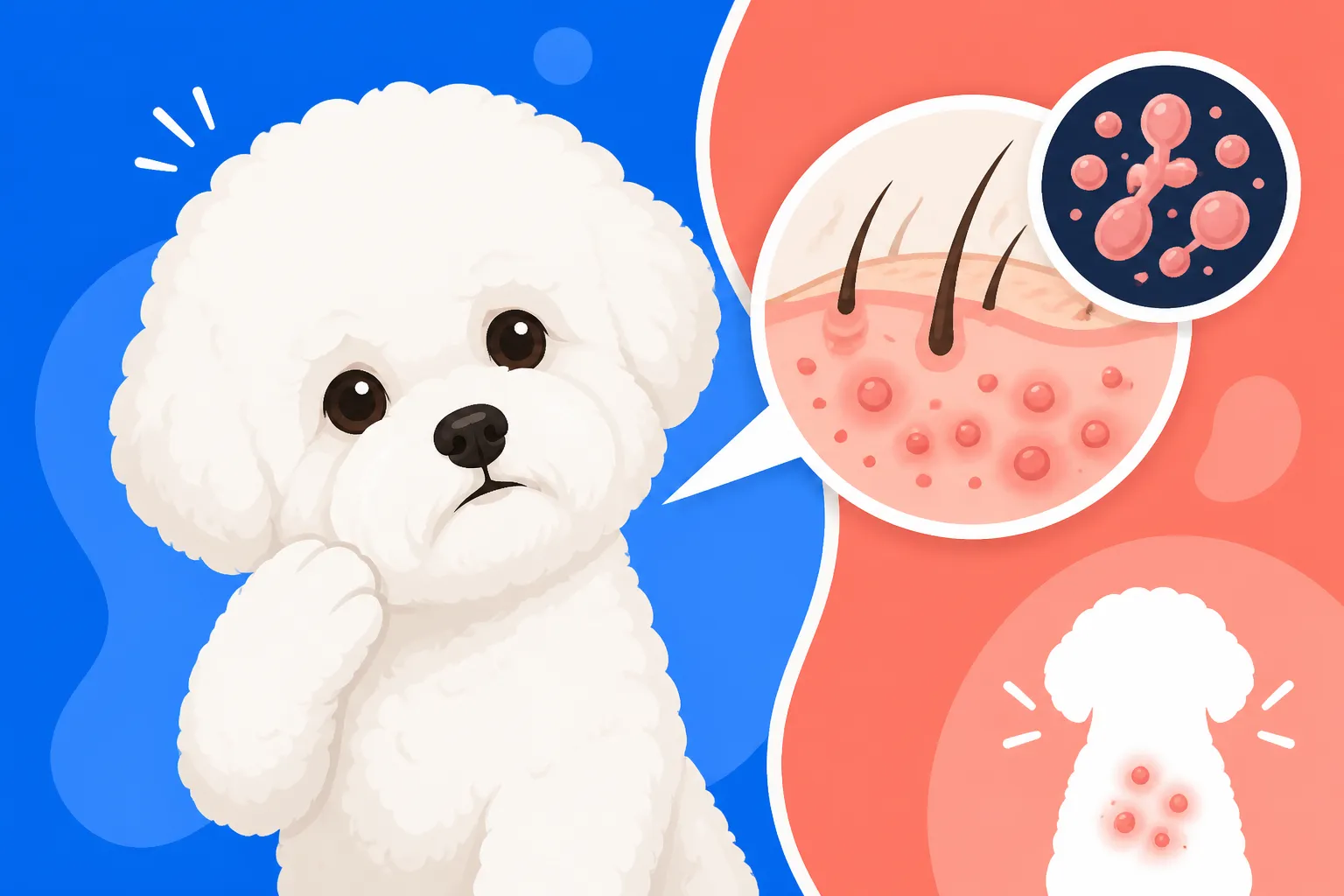
When we talk about yeast infections in dogs, we're almost always referring to an overgrowth of Malassezia pachydermatis, a type of yeast that naturally lives on your dog’s skin in small amounts. It’s when conditions become favorable for this yeast to multiply out of control that problems arise. For a Bichon Frise, whose pristine white coat often highlights skin issues more dramatically, the signs can be quite visible, even if initially obscured by fur.
You might first notice that your Bichon's skin, especially in areas like their armpits, groin, belly, between their paw pads, or inside their ear flaps, looks red and inflamed. As the infection progresses, the skin can start to thicken, taking on a leathery, almost elephant-like texture. This thickening, known as lichenification, often appears darker than the surrounding skin, sometimes even gray or black, which can be quite startling against a white coat. The skin might also feel greasy or oily to the touch, and you'll definitely notice the smell—a strong, musty, often described as "corn chip" or "yeasty bread" aroma. Imagine trying to sleep next to a warm loaf of sourdough bread, but not in a pleasant way. Your poor Bichon will also be miserably itchy, constantly licking, chewing, rubbing, or scratching at the affected areas, sometimes even to the point of causing secondary trauma or hair loss.
Why Bichon Frises Are So Prone to Yeast
It’s not just bad luck that your Bichon seems to attract yeast infections more than other breeds. There's a biological reason woven into their very DNA. Bichon Frises, unfortunately, are genetically predisposed to developing allergies, particularly a condition called atopic dermatitis. If you've ever heard of The Atopic Skin a Bichon Frise Is Born With, you'll know this is a common challenge for the breed. This underlying allergic tendency is the primary driver behind recurrent yeast infections.
Think of it this way: a healthy dog's skin has a strong barrier that acts like a shield, protecting against environmental irritants and keeping the natural flora (including yeast) in check. When a Bichon has allergies, this skin barrier becomes compromised and inflamed. The inflammation creates a warm, moist, and often damaged environment that is absolutely perfect for yeast to proliferate. It’s like throwing a party for Malassezia! Additionally, the Bichon's dense, curly coat, while beautiful, can trap moisture and heat against the skin, especially in areas like the ears, armpits, and groin, further exacerbating the issue. This creates an ideal breeding ground where yeast can really take hold. So, while yeast is the visible problem, allergies are often the root cause that needs to be addressed for long-term relief. Understanding What Atopic Dermatitis Does to a Bichon Frise can really shed light on the deeper issues at play.
Recognizing the Signs and Symptoms
Catching a yeast infection early can make a world of difference in your Bichon's comfort and the ease of treatment. It's not always obvious, especially with all that fluff, but knowing what to look for can help you intervene quickly.
Common Areas Affected by Yeast on a Bichon
Yeast infections don't typically spread uniformly across the entire body in the initial stages. Instead, they tend to set up shop in warm, moist, and often hidden spots where they can thrive. For Bichon Frises, some areas are particularly vulnerable due to their anatomy and grooming needs.
The paws are a major hot zone. You might notice your Bichon constantly licking, chewing, or even gnawing at their feet, especially between their toes and on the paw pads. The fur in these areas can appear stained reddish-brown from saliva and the skin underneath will be red, greasy, and emit that distinct yeasty odor. This can lead to raw, painful spots if left unchecked. Ears are another prime target. Recurrent ear infections are incredibly common in Bichons, and yeast is often a significant component. You might see your dog shaking their head frequently, scratching at their ears, or notice a dark, waxy, smelly discharge when you peek inside. This often means your Bichon is dealing with Recurrent Ear Infections in a Bichon Frise. Other common areas include the armpits, groin, and abdominal folds, where skin-on-skin contact creates persistent moisture. The muzzle and around the lips can also be affected, leading to red, irritated skin and brownish staining from licking. Any skin fold, really, is a potential yeast haven. It’s a relentless cycle of itching and irritation that can really impact your dog's quality of life, especially if they are already prone to Whether a Bichon Frise Licks Its Paws Raw.
Distinguishing Yeast from Other Skin Issues
It’s easy to look at an itchy dog with red skin and assume it’s all the same problem, but accurate diagnosis is crucial because treatment for yeast is different from, say, a bacterial infection or purely environmental allergies. While many skin conditions share symptoms like redness and itching, there are key differences that can help you and your vet narrow down the cause.
Yeast infections, as mentioned, are characterized by that greasy feel, thickened, often hyperpigmented (darkened) skin, and the unmistakable musty, sweet, or Frito-like smell. Bacterial skin infections (pyoderma), on the other hand, often present with pustules (little pus-filled bumps), crusts, scabs, and sometimes focal hair loss. The smell can be strong and unpleasant, but it typically isn't the distinct "yeasty" smell. Pure allergic reactions, without secondary infection, might just show as diffuse redness, itching, and hair loss from self-trauma, but usually without the greasiness or strong odor. However, it's important to remember that these conditions often occur together. An underlying allergy (environmental or food-related, like Whether a Bichon Frise's Itching Is Food or Pollen) can lead to skin inflammation, which then paves the way for both yeast and bacterial overgrowths.
Here’s a quick overview of some common skin issues and their typical signs in Bichon Frises:
| Symptom / Condition | Yeast Infection | Bacterial Infection (Pyoderma) | Allergic Dermatitis (Primary) |
|---|---|---|---|
| Primary Itch | Moderate to Severe | Mild to Moderate (can increase with severity) | Severe, intense itching |
| Skin Appearance | Redness, greasy feel, thickened/darkened (lichenified), brown staining | Redness, pustules, crusts, scabs, focal hair loss | Redness, mild scaling, hair loss from scratching |
| Odor | Distinctive "yeasty," "corn chip," or "sourdough" | Often pungent, but not typically "yeasty" | Generally no distinct odor, unless secondary infection |
| Common Locations | Paws, ears, armpits, groin, skin folds, muzzle | Anywhere on the body, often belly, groin, armpits | Ears, paws, face, belly, flanks, inner thighs |
| Primary Cause | Opportunistic overgrowth, usually secondary to allergy | Opportunistic overgrowth, often secondary to allergy or trauma | Environmental allergens (pollen, dust mites) or food allergens |
Because these conditions can overlap and mimic each other, self-diagnosis can be tricky. Always consult with your veterinarian for an accurate diagnosis. They can perform simple tests like skin cytology (looking at skin cells under a microscope) or ear swabs to identify yeast and bacteria, ensuring your Bichon gets the right treatment.
Effective Management and Treatment Strategies
Dealing with a yeast infection, especially if it’s recurring, can feel like an uphill battle. But with the right approach and consistent care, your Bichon can find significant relief. The key is often a multi-pronged strategy that addresses both the active infection and its underlying causes.
Veterinary Diagnosis and Treatment Options
When you bring your Bichon to the vet with symptoms suggestive of a yeast infection, the first step is always diagnosis. Your veterinarian will likely perform some quick, non-invasive tests right there in the clinic. The most common is a skin cytology, which involves either pressing a piece of tape onto the affected skin (tape prep) or gently scraping a small sample, then staining it and examining it under a microscope. This allows them to see the characteristic peanut-shaped yeast organisms and any co-existing bacteria. For ear infections, an ear swab will be examined similarly. This rapid diagnosis helps ensure that the treatment prescribed is effective against the specific pathogens present.
Once yeast is confirmed, your vet will typically prescribe a combination of topical and/or oral antifungal medications. Topical treatments are usually the first line of defense and are incredibly important, especially for a breed like the Bichon with a dense coat. This might include medicated shampoos specifically formulated with antifungal ingredients like miconazole or ketoconazole. Your vet might also recommend antifungal wipes or sprays for easier application on specific, localized areas like paw pads or skin folds. For ear infections, antifungal ear drops are essential. For more severe or widespread infections, or those that aren't responding well to topical treatments alone, oral antifungal medications such as ketoconazole, fluconazole, or itraconazole may be prescribed. These work systemically throughout the body to combat the yeast.
It's crucial to remember that treating the yeast infection is often only half the battle. If an underlying allergy is the root cause, as is so common with Bichons, that allergy must also be managed. This might involve long-term allergy medications, dietary changes if food allergies are suspected, or even immunotherapy. Your vet might discuss options like Apoquel or Cytopoint injections, which help control the allergic itching that allows yeast to thrive. The costs associated with these treatments, including medications, medicated shampoos, and follow-up vet visits, can really add up. This is where having pet insurance like Healthy Paws can be a tremendous help, as it can cover a significant portion of these recurring expenses, easing the financial burden on you and allowing your Bichon to get the consistent care they need. Don't underestimate What Treating a Bichon Frise's Skin Costs Every Year and What Allergy Medication Costs a Bichon Frise Owner.
Home Care and Prevention Tips
Veterinary treatment is vital, but what you do at home day-to-day plays an equally critical role in managing and preventing yeast infections in your Bichon. Consistency is the name of the game!
Regular medicated bathing is perhaps the most important home care step. Your vet will instruct you on how frequently to bathe your Bichon with the prescribed antifungal shampoo, but it's often every few days initially, then tapering to once or twice a week for maintenance. It's essential to follow the instructions for lathering and contact time (often 10-15 minutes) to allow the medication to work. Make sure to rinse thoroughly to avoid skin irritation. If you're wondering Which Shampoo Suits an Itchy Bichon Frise or Whether Medicated Baths Help a Bichon Frise, your vet is your best resource. Beyond baths, keeping areas prone to yeast, like paws and skin folds, clean and dry is key. After walks, especially in damp weather, wipe your Bichon's paws with a damp cloth and dry them thoroughly. Regular ear cleaning with a vet-approved ear cleaner can also prevent yeast overgrowth in the ears.
Diet can also play a role, particularly if your Bichon has food allergies that exacerbate their skin condition. Your vet might recommend a prescription hypoallergenic diet or an elimination diet trial to identify and remove any dietary triggers. While supplements alone won't cure a yeast infection, certain omega-3 fatty acid supplements can support skin health and potentially reduce inflammation, making the skin less hospitable for yeast. Always discuss any supplements with your vet first. Finally, regular grooming appointments are crucial, not just for aesthetics but also for hygiene. Keeping the coat trimmed, especially around the face, paws, and sanitary areas, can improve air circulation and reduce moisture trapping. For long-term prevention, regular vet check-ups are important. These check-ups allow your vet to monitor your Bichon's skin health, catch any issues early, and adjust their ongoing allergy management plan. A good pet insurance policy, like one from Healthy Paws, can certainly give you peace of mind that you can afford these regular check-ups and any necessary preventative treatments, ensuring your furry friend stays as healthy and comfortable as possible.
Disclaimer
Please remember that the information provided in this article is intended for general knowledge and informational purposes only, and does not constitute medical advice for pets. Always consult with a qualified veterinarian for any health concerns or before making any decisions about your pet's health or treatment.