The Powder Puff Outline a Bichon Frise Is Scissored Into
Achieving that signature "powder puff" look for your Bichon Frise can feel like a daunting task, especially when you see those perfectly sculpted dogs at shows or in magazines. Many owners struggle to maintain the pristine white coat and rounded contours that make the breed so distinct, often leading to frustration with matting, uneven trims, or a loss of that fluffy silhouette. This comprehensive guide is here to walk you through everything you need to know about scissoring your Bichon Frise into its iconic powder puff outline, helping you understand the process, tools, and techniques for a beautiful and healthy coat.
Understanding the Iconic Powder Puff Look
The Bichon Frise's "powder puff" outline isn't just a cute nickname; it's a carefully crafted look that defines the breed. It's what makes a Bichon a Bichon, that unmistakable cloud-like appearance with soft, rounded edges. But it’s more than just aesthetics; this trim also helps maintain the health and cleanliness of their unique double coat.
What Defines the Bichon Frise Standard Outline
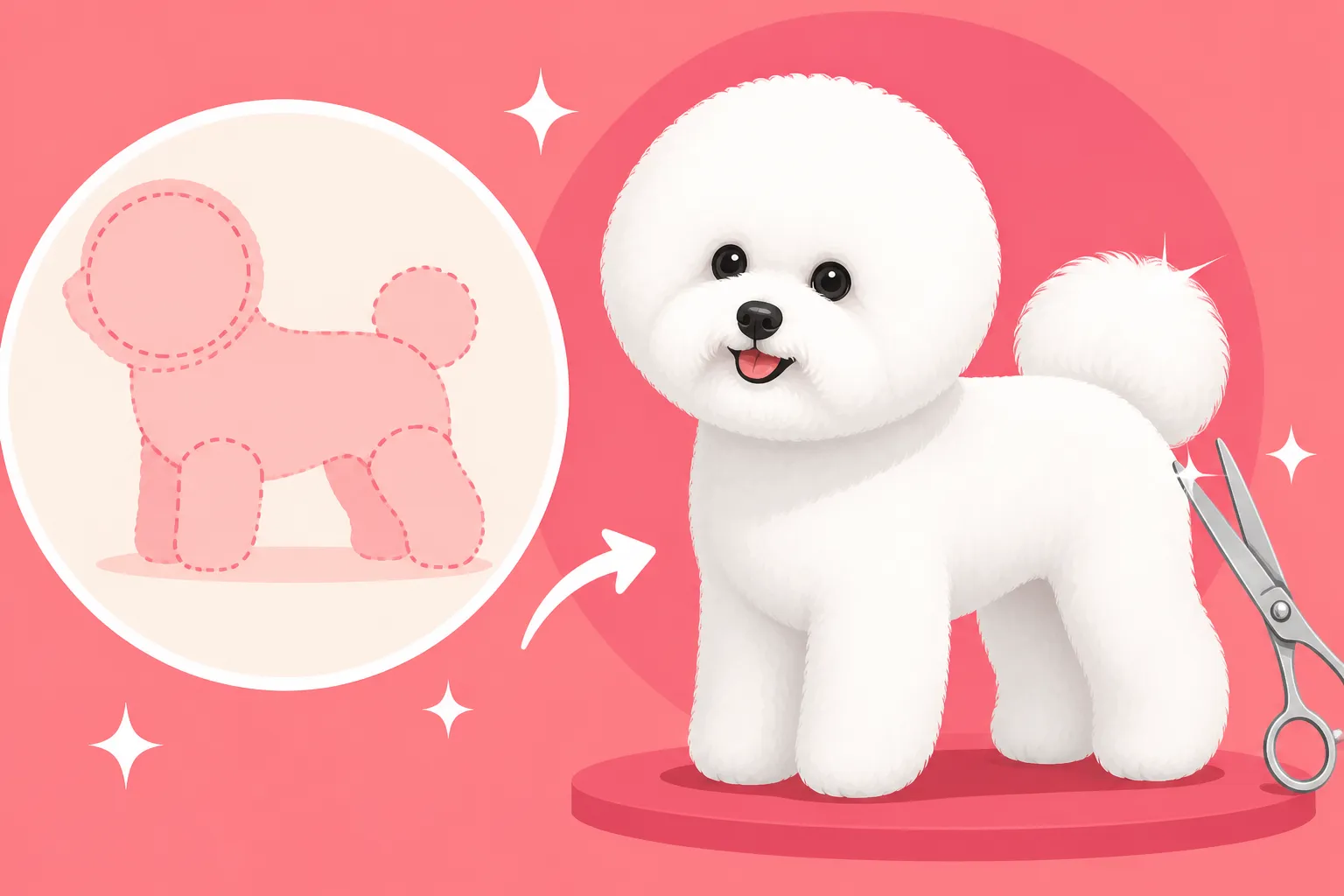
When we talk about the standard outline, we're referring to the ideal look as defined by breed clubs. Imagine a fluffy, rounded cloud with no harsh lines or sharp angles. The head is arguably the most recognizable feature, scissored into a perfectly round shape, often described as a chrysanthemum or a cotton ball. This isn't achieved by simply hacking away; it requires precision and an understanding of how the coat naturally falls and springs. The ears and skull blend seamlessly into this rounded head, and the muzzle is also kept full but neatly shaped to complement the overall roundness.
Moving down to the body, the standard dictates a soft, flowing silhouette. The body is kept relatively short, but not skin-tight, leaving enough coat to create a full, plush appearance. The legs are scissored into columns, again with soft, rounded transitions where they meet the body and the paws. The paws themselves are usually trimmed neatly round, resembling little snowballs. Even the tail, which typically arches over the back, is trimmed to fan out gracefully, maintaining the breed's light and airy feel. This entire outline works together to create an impression of joyous buoyancy, movement, and a perpetually cheerful expression. Understanding this vision is the first step towards achieving it, whether you're aiming for a show ring finish or simply a beautiful pet trim.
The Difference Between a Show Cut and a Pet Trim
While the underlying principles of the powder puff remain the same, there's a definite distinction between a show cut and a more practical pet trim. A show cut is an art form, meticulously sculpted to meet rigorous breed standards. This means every hair is often hand-scissored to perfection, creating the most voluminous and precise roundness possible. It requires an immense amount of time, skill, and dedication, often involving hours of precise scissoring to ensure symmetry, balance, and the exact proportions specified in the breed standard. The coat is left as full as possible, particularly on the head and legs, to maximize the "powder puff" effect. This level of detail also means that a show coat requires almost daily maintenance to prevent matting and keep it pristine, making it a significant commitment for any owner.
On the other hand, a pet trim takes the essence of the powder puff but adapts it for everyday life. Owners often opt for a slightly shorter, more manageable length throughout the body and legs. While the head still retains its signature round shape, it might not be quite as voluminous or perfectly spherical as a show cut. The goal here is practicality: to minimize matting, make bathing easier, and reduce the time spent on daily brushing, all while keeping that adorable Bichon look. A pet trim is often a compromise between the breed's aesthetic ideal and the owner's lifestyle. It's about maintaining a happy, healthy, and comfortable dog without the intense grooming demands of a show animal. A good groomer can still achieve a beautiful, rounded outline with a pet trim, making it a fantastic option for most Bichon owners who want their dog to look great without the endless upkeep. Whether a Pet Trim Suits a Bichon Frise is a common question, and for most, the answer is a resounding yes!
Why the Bichon's Unique Coat is Central to its Shape
The Bichon Frise coat is truly special, and it's absolutely fundamental to creating that distinctive powder puff outline. Unlike many breeds with shedding coats, the Bichon has a double coat that consists of a soft, dense undercoat and a coarser, curly outer coat. This combination is what gives it its springiness and volume. The outer coat, which is quite textured, stands away from the body, while the dense undercoat provides the necessary support to hold that shape. When properly groomed, this allows the coat to be scissored into those soft, rounded contours without falling flat.
This unique coat type is also why the Bichon is often considered "hypoallergenic" – it sheds very little, trapping loose hairs within the curls instead of releasing them into your home. However, this non-shedding quality is a double-edged sword. While great for allergy sufferers, it means that those trapped hairs don't fall out on their own; they must be brushed out regularly. If not, they quickly form mats and tangles, which can pull on the skin, cause discomfort, and completely ruin the powder puff shape. The texture and density of the coat allow for intricate scissoring and shaping, giving a skilled groomer the ability to sculpt the dog like a living work of art. Without this particular coat structure, the "powder puff" simply wouldn't be possible. Its ability to hold shape and volume is what makes scissoring, rather than clipping, the preferred method for maintaining the breed's iconic look.
Essential Tools for Achieving the Powder Puff
You wouldn't try to paint a masterpiece with a roller brush, and the same goes for grooming a Bichon Frise. Having the right tools isn't just about making the job easier; it's about achieving the desired outcome safely and effectively. Investing in quality equipment is key, whether you're tackling the grooming yourself or simply maintaining your dog's coat between professional visits.
The Importance of High-Quality Shears and Scissors
When it comes to scissoring a Bichon Frise, your shears are your most important instruments. You'll need a variety of types, each serving a specific purpose. Straight shears, typically 7-8 inches long, are your workhorse for most of the body shaping. Curved shears, with their gentle arc, are absolutely indispensable for creating those perfect rounded contours on the head, feet, and tail. These allow you to follow the natural curve of the desired shape without creating harsh lines or flat spots. Finally, thinning shears are crucial for blending different lengths and removing bulk, particularly on the head and any areas where the coat might appear too heavy.
Quality matters immensely here. Cheap scissors can pull hair, dull quickly, and make achieving a smooth, even cut nearly impossible. High-quality shears will be made of good steel, hold a sharp edge, and feel comfortable in your hand. They should be well-balanced and sharp enough to glide through the coat cleanly, without bending or snagging the hair. Think of them as an extension of your hand. When choosing, consider ergonomic designs to prevent hand fatigue during longer grooming sessions. While professional groomers might invest hundreds in their tools, a dedicated home groomer can find excellent quality shears from reputable brands on platforms like Chewy or Amazon without breaking the bank. Proper care, including cleaning and regular sharpening, will ensure your investment lasts for years. Why a Groomer Scissors a Bichon Frise Instead of Clipping It is often due to the superior finish and precision these tools provide.
Brushes, Combs, and the Role of a Force Dryer
Beyond scissors, a good set of brushes and combs are vital for proper Bichon grooming. A slicker brush, with its fine, wire bristles, is indispensable for thoroughly brushing through the coat, removing loose undercoat, and detangling small knots. You'll want a medium to firm slicker brush that can reach down to the skin without scratching. Following up with a metal comb, especially one with both wide and fine teeth, allows you to check for any missed tangles and ensure the coat is completely free of mats. This "line brushing" technique, where you brush in sections from the skin outwards, is crucial for preventing the dreaded matting that plagues the Bichon coat.
Now, let's talk about the force dryer. If you’ve ever tried to air-dry a Bichon, you know it quickly turns into a matted mess. A high-velocity force dryer is a game-changer. It blasts water out of the coat quickly and efficiently, drying the dog much faster than a standard human hairdryer. More importantly, it helps straighten and fluff the coat, making it much easier to brush and scissore. This is key to achieving that full, voluminous powder puff look. The air pressure helps to separate the individual hairs, making the coat stand out from the body and giving it body and spring. Without a force dryer, you'll struggle to get the coat truly straight and fluffy enough for precise scissoring, and you'll inevitably end up with a curlier, denser, and harder-to-manage coat. Whether a Bichon Frise Needs a Force Dryer is not just a preference, it's almost a necessity for proper grooming.
Grooming Tables and Restraints for Safety and Precision
Grooming a Bichon Frise, especially when you're scissoring, demands a stable and secure environment. Trying to trim a wiggly dog on the kitchen floor or a wobbly household table is not only frustrating but downright dangerous for both you and your pet. This is where a dedicated grooming table comes in. A good grooming table provides a non-slip surface at a comfortable working height, saving your back and ensuring your dog feels stable. Most grooming tables come with a grooming arm and loop, which is a gentle restraint that keeps your Bichon securely on the table. This isn't about punishment; it's about safety and control. It prevents your dog from jumping off, turning abruptly, or moving excessively while you're working with sharp scissors.
Imagine trying to sculpt a perfectly round head on a dog that keeps trying to lick your face or dash away – it's impossible and a recipe for accidental nicks. The grooming loop ensures your dog stands or sits still in a controlled position, allowing you to focus on precise cuts. It also helps teach your dog patience and acceptance during grooming sessions. Early introduction to the grooming table and loop, even just for short periods of brushing, can make a world of difference in developing a cooperative grooming partner. This investment, easily found on Amazon or Chewy, is crucial for turning grooming into a manageable and safe routine rather than a wrestling match.
The Step-by-Step Scissoring Process
Once you have your tools and your understanding of the desired look, it’s time to get down to the actual grooming. Remember, patience and practice are your best friends here. Don't expect perfection on your first try; consistency is what builds skill.
Pre-Grooming Preparation: Bathing and Drying
Before any scissoring can begin, your Bichon Frise must be impeccably clean and completely dry. This is non-negotiable. Attempting to scissor a dirty or damp coat is like trying to cut wet spaghetti – it won't cut cleanly, will dull your scissors instantly, and will lead to an uneven, choppy finish. Start with a thorough bath using a good quality dog shampoo and conditioner. Pay extra attention to rinsing every bit of product out of the coat, as residue can cause skin irritation and make the coat feel greasy or heavy. For keeping that signature white coat truly brilliant, you might even consider a whitening shampoo.
After bathing, towel dry your Bichon as much as possible, then move directly to the force dryer. This is where the magic happens for coat preparation. As mentioned earlier, the force dryer not only speeds up drying but also straightens and fluffs the coat. Use a slicker brush simultaneously with the dryer, brushing the hair against the direction it grows to lift it away from the skin. Work in sections, ensuring each part of the coat is bone-dry and fluffy before moving on. Any dampness left deep within the coat will cause it to curl and make scissoring incredibly difficult. The goal is a coat that stands out from the body, feeling light and airy, ready to be sculpted.
Mastering the Round Head and Face Trim
The head is the crowning glory of the Bichon Frise's powder puff look. Mastering this requires a steady hand and a good eye for symmetry. After your dog is bathed, dried, and thoroughly brushed, begin by combing all the hair on the head upwards and outwards. Start with the top of the skull, using your curved shears to create a rounded dome shape, blending it smoothly with the hair on the sides. Think of it as sculpting a perfect sphere. Next, move to the sides of the face, carefully scissoring to blend the cheeks into the skull, creating a continuous, soft curve.
The area around the eyes and muzzle is particularly delicate. Use smaller, blunt-nosed scissors or the tips of your straight shears with extreme caution to trim away any hair that could obstruct their vision or irritate their eyes. Keep the muzzle full and round, blending it seamlessly into the cheeks. A helpful trick is to imagine a continuous circle encompassing the top of the head, the ears, and the muzzle, and work to maintain that roundness. Remember, it's better to trim a little at a time and take off more if needed, rather than cutting too much at once. Take frequent breaks to step back and assess the symmetry from all angles. For a deeper dive, check out How the Round Head Is Scissored on a Bichon Frise.
Shaping the Body, Legs, and Paws
Once the head is perfected, you can move on to the body, legs, and paws, maintaining that consistent powder puff aesthetic. For the body, you'll generally aim for a relatively short, uniform length, perhaps 1-2 inches, using your straight shears. Again, comb the hair outwards and scissor against the growth, always striving for a smooth, even surface without choppy lines. The key is to make the body look plush and full, but not shaggy, allowing the overall shape to remain balanced. Remember, the The Powder Puff Outline a Bichon Frise Is Scissored Into is about soft curves, so avoid any harsh straight lines unless absolutely necessary for blending.
The legs should be scissored into cylindrical "columns," appearing full and straight. Comb the leg hair down, then use your straight shears to create that column shape, blending smoothly where the legs meet the body. For the paws, comb the hair downwards and around the foot, then use your curved shears to create neat, rounded "snowball" feet. Carefully trim the hair between the paw pads to prevent matting and improve traction. Finally, the tail should be trimmed to fan out beautifully over the back, maintaining its plumed appearance while keeping its length appropriate to the overall balance. Regularly stepping back and looking at your Bichon from different angles will help you achieve a harmonious and symmetrical final look. Teaching a Bichon Frise to Stand for an Hour of Scissoring is vital here for success.
Maintaining the Powder Puff Between Professional Grooms
The beautiful powder puff doesn't just happen; it requires ongoing commitment. Even if your Bichon sees a professional groomer regularly, what you do at home between appointments is absolutely critical for maintaining their coat health and keeping that fluffy look intact. Neglect during this period is the quickest way to end up with a matted, uncomfortable dog.
Daily Brushing Techniques to Prevent Matting
Daily brushing isn't just a recommendation for a Bichon Frise; it's a fundamental necessity. Their non-shedding, curly double coat is a mat magnet, and skipping even a few days can lead to serious tangles and discomfort. The most effective technique is "line brushing." This involves parting the coat horizontally, section by section, and brushing from the skin outwards. Start at the bottom of a leg, for example, and hold the hair above your brushing line out of the way. Use your slicker brush to brush downwards, ensuring you reach all the way to the skin. Once a section is knot-free, move the next line of hair down and repeat.
Always follow the slicker brush with a metal comb to confirm that no small tangles have been missed. If the comb glides smoothly through the entire section, from root to tip, you're good. Pay extra attention to high-friction areas: behind the ears, under the armpits, inside the legs, and where a harness might sit. These are prime matting zones. Developing a consistent daily routine, even if it's just 10-15 minutes, will make a world of difference. Not only does it prevent mats, but it also helps distribute natural oils, keeping the coat healthy and shiny. Whether Home Brushing Makes Salon Visits Easier is undoubtedly true, as it prevents major dematting fees and discomfort for your dog.
The Role of Regular Baths and Conditioning
While daily brushing is paramount, regular bathing also plays a crucial role in maintaining the Bichon's coat and skin health. Generally, a bath every 2-4 weeks is ideal, depending on your dog's activity level and how quickly their coat gets dirty. However, it’s vital to ensure that before every bath, your dog is completely free of tangles and mats. Washing a matted coat will only tighten the mats, making them nearly impossible to remove without shaving.
When bathing, use a high-quality dog shampoo designed for white coats or sensitive skin, and always follow with a good conditioner. Conditioner helps to moisturize the coat, making it softer, more manageable, and less prone to tangling. As with pre-scissoring, thorough rinsing is essential to prevent residue buildup. After the bath, always use your force dryer (or a regular hairdryer on a cool setting, brushing constantly) to dry the coat completely and fluff it out. This post-bath drying and brushing routine is just as important as the bath itself in maintaining the powder puff shape and preventing mats. Think of the bath and dry as a reset button for their coat, preparing it for another cycle of daily brushing.
Addressing Common Grooming Challenges at Home
Even with the best intentions and tools, you'll encounter grooming challenges. Tear staining is a classic Bichon issue, leaving reddish-brown streaks under their eyes and around their muzzle. Daily wiping with a damp cloth or a gentle, dog-safe tear stain remover can help minimize this. For products, check out options on Ollie or Amazon. Remember, persistence is key. The Tear Stains Under a Bichon Frise's Eyes are a constant battle for many owners.
Another common problem is paw staining, often from saliva or grass, turning those pristine white paws a muddy brown. Regular cleaning of the paws after outdoor excursions can help. Matted ears or armpits are also frequent culprits due to friction and moisture. If you find a small mat, try to work it out gently with your fingers and a comb after applying a detangling spray. Never pull harshly. If a mat is too tight or large, do not attempt to cut it out with scissors yourself, as it's incredibly easy to cut the skin. Instead, contact a professional groomer or veterinarian. Dealing with these small issues proactively at home can prevent them from becoming larger, more expensive, and more painful problems down the line.
The Financial and Time Investment of the Powder Puff
Maintaining the Bichon Frise's signature powder puff look is not a low-maintenance endeavor. It requires a significant investment of both time and money, whether you opt for professional grooming or decide to tackle most of it yourself. Understanding these costs upfront can help you budget and plan appropriately.
Cost of Professional Grooming vs. DIY
Professional grooming for a Bichon Frise typically involves a full bath, dry, brush-out, nail trim, ear cleaning, and, of course, the intricate scissoring to achieve that powder puff outline. These services are often required every 4-6 weeks to prevent severe matting and maintain the desired look. The cost can vary widely depending on your location, the groomer's experience, and the specific services included. While specific prices are out of scope, know that this is an ongoing expense that adds up over the year. When you consider the skill involved, the specialized tools, and the time commitment (often 2-3 hours per dog), professional grooming is a valuable service. What a Full Bichon Frise Groom Costs can be a significant part of their overall care budget.
The DIY approach certainly saves on professional fees, but it's not "free." You'll need to invest in a quality set of tools: shears, slicker brushes, combs, a force dryer, grooming table, and various shampoos and conditioners. This initial outlay can be substantial. Beyond the tools, you're investing your own time. A full groom at home, done properly, can easily take 3-4 hours, especially when you're still learning. This doesn't include the daily 15-minute brushing sessions. While DIY can save money in the long run, it demands a significant personal commitment and a learning curve. Many owners find a hybrid approach works best: professional grooms every few months with diligent home maintenance in between.
Time Commitment for At-Home Maintenance
Let's be realistic about the time commitment for at-home Bichon grooming. If you want to keep that powder puff look intact and avoid mats, it's not a once-a-week chore; it's practically a daily ritual. A minimum of 10-15 minutes of thorough line brushing every single day is essential. This includes checking all the "hot spots" for mats like behind the ears, under the legs, and around the collar. If you skip days, you'll find yourself needing longer, more arduous brushing sessions to detangle, which can be uncomfortable for your dog and frustrating for you.
Beyond daily brushing, factor in bath time every 2-4 weeks. This isn't just a quick dunk; it involves a pre-bath brush, thorough shampooing and conditioning, and then the all-important, time-consuming force drying and fluffing. This whole process can easily take 1-2 hours or more, depending on your dog's size and cooperation level. If you're doing full scissoring at home, that's another 2-4 hours, depending on your skill and the length you're maintaining. Over a week, you could be looking at several hours dedicated to grooming. This commitment is why The Six Week Bichon Frise Groom That Never Stops truly applies—the work is constant, not just periodic. This breed thrives on attention to its coat, and failing to provide it can lead to skin issues, discomfort, and costly professional dematting.
When to Seek Expert Help and Why
Knowing when to call in the professionals is a sign of a responsible pet owner, not a failure. If your Bichon's coat is severely matted, attempting to demat it yourself can cause significant pain and skin damage. Tight mats pull on the skin, and trying to brush them out harshly can lead to bruising or even tearing. In these cases, a professional groomer has the tools and expertise to safely remove mats, often requiring a full shave-down underneath the matting. While this means losing the powder puff for a while, it's the kindest solution for your dog.
Additionally, if you're struggling to achieve the desired look, or if your dog is becoming overly stressed or aggressive during home grooming sessions, it's time to seek expert help. A professional groomer can often work wonders with a difficult dog due to their experience and specialized handling techniques. They can also offer advice and demonstrations to improve your home grooming skills. Some parts of grooming, like anal gland expression or detailed nail trims on dark nails, are also best left to professionals or veterinarians. Don't hesitate to consult your groomer or vet if you notice any skin issues, excessive itching, or unusual lumps and bumps while grooming, as early detection is always best. A good groomer is an invaluable partner in your Bichon's care.
Common Mistakes to Avoid When Scissoring a Bichon Frise
Scissoring a Bichon Frise requires a delicate touch and a keen eye. It's easy to make mistakes, especially when you're new to it. Knowing what pitfalls to avoid can save you time, frustration, and ensure your Bichon looks its best without any mishaps.
The Dangers of Clipping Instead of Scissoring
One of the biggest mistakes, particularly for those trying DIY grooming, is relying solely on clippers instead of scissoring. While clippers are faster and can achieve a uniform length quickly, they simply don't produce the same soft, rounded, and natural-looking finish that defines the Bichon's powder puff. Clippers tend to create harsh lines and a flatter, less voluminous coat, often leaving the hair looking more utilitarian than fluffy. The texture of the Bichon's coat also makes it prone to "clipper marks" if not done perfectly, where uneven lines or patches are visible due to the way the hair is cut.
More importantly, consistently clipping a Bichon's coat, especially with very short blades, can sometimes damage the delicate double coat. It can lead to "clipper alopecia" or a "coat change," where the texture changes permanently, becoming softer, cotton-like, and even more prone to matting. In some cases, the coat might not grow back properly or at all. This is why Why a Groomer Scissors a Bichon Frise Instead of Clipping It is so crucial; scissoring preserves the natural spring and integrity of the coat, allowing it to grow back with its characteristic volume and texture. While clippers can be used for initial length reduction on the body or for sanitary trims, the finish work for the classic Bichon outline should always be done with shears.
Over-Trimming and Uneven Cuts
It's a common fear among new groomers: accidentally taking off too much hair or ending up with an uneven, lopsided trim. Over-trimming is particularly easy to do on a Bichon, especially around the delicate areas like the face and ears. Once the hair is gone, it's gone, and you'll have to wait for it to grow back, which can take weeks or even months to achieve the full powder puff again. This is why the "trim a little, check a lot" mantra is so important. Work slowly, comb the hair out frequently, and step back often to assess your progress from different angles.
Uneven cuts are usually a result of rushing, not thoroughly brushing and drying the coat (which leaves some hair curled and appearing shorter than it is), or not keeping the dog still. Imagine trying to cut a perfect circle if your canvas is constantly moving! This is where a grooming table and loop truly pay off. If you do end up with an uneven spot, try to blend it in using thinning shears rather than trying to take more off with straight shears, which can worsen the problem. Remember, practice makes perfect, and minor imperfections are part of the learning process. Your Bichon won't mind a slightly lopsided ear if they're comfortable and loved.
Neglecting Undercoat Care and Skin Health
Many owners focus solely on the topcoat, trying to achieve the perfect length and shape, but completely overlook the crucial undercoat. Neglecting the undercoat is one of the most detrimental mistakes you can make for a Bichon's health and the integrity of its powder puff. The undercoat is dense and soft, and if not thoroughly brushed out regularly, it will pack down, mat against the skin, and eventually form large, painful pelts. These mats prevent air circulation, trapping moisture and creating a breeding ground for bacteria and yeast, leading to severe skin infections, hot spots, and general discomfort.
Always ensure your brushing routine reaches all the way to the skin. You should be able to feel the bristles of your slicker brush gently stimulating the skin as you brush. If you only brush the surface, you're merely "patting" the topcoat, while mats are silently forming underneath. Furthermore, always check the skin for any redness, irritation, dandruff, or unusual lumps and bumps during grooming. The grooming process offers a fantastic opportunity for a full-body health check. Healthy skin is the foundation of a healthy, beautiful coat, and a comfortable Bichon. Ignoring the undercoat is a shortcut to serious problems, undermining all your efforts to maintain that lovely powder puff.
The Psychological Impact of Grooming on Your Bichon Frise
Grooming isn't just about appearance; it has a significant psychological impact on your Bichon Frise. A positive grooming experience can strengthen your bond and make the process stress-free for both of you, while negative experiences can lead to fear, anxiety, and behavioral issues around handling.
Building a Positive Grooming Experience
From the moment you bring your Bichon Frise puppy home, start building positive associations with grooming. Make every session short, positive, and filled with praise and high-value treats. Introduce tools gradually: let them sniff the brush, touch it to their fur for a second, then reward. Don't rush into full grooming sessions. Start with just a few strokes, then stop and reward. Over time, gradually increase the duration and intensity. This desensitization process is key.
Make grooming a calm, quiet activity. Use a soft, reassuring voice. If your dog shows signs of stress or fear, stop, comfort them, and try again when they are relaxed. Never punish or scold your dog for being squirmy or uncooperative during grooming, as this will only exacerbate their fear. Instead, calmly re-position them and reward calm behavior. Creating a routine, such as brushing every evening while watching TV, helps your Bichon understand what to expect. Think of it as a special one-on-one bonding time, not a dreaded chore. A positive early experience can make a lifetime of difference in how your Bichon perceives grooming. How Early a Bichon Frise Should Meet a Groomer is an important consideration to begin this positive association.
Handling a Sensitive or Anxious Bichon
Some Bichons are naturally more sensitive or can develop anxiety around grooming due to previous negative experiences. For these dogs, extra patience and specialized techniques are necessary. If your Bichon is particularly fearful, break down grooming into even smaller, more manageable steps. Perhaps on day one, you only handle their paws and reward. Day two, you brush their back. Day three, you touch their ears. Build up gradually, never pushing them past their comfort level. Use extremely high-value treats – something they rarely get, like small pieces of cooked chicken or cheese – to reinforce calm behavior.
Consider using calming aids if anxiety is severe. This could be a thundershirt, calming pheromone sprays, or even consulting your vet about veterinarian-prescribed anti-anxiety medication for particularly stressful sessions, like professional grooming appointments. Create a quiet, enclosed space for grooming where they feel secure. If you're doing home grooming, ensure the grooming table is stable and they are securely but comfortably restrained. If your Bichon struggles with specific tools, like the force dryer, re-introduce it slowly, perhaps just turning it on in another room initially, then gradually closer, always pairing it with treats and praise. For a truly anxious dog, a professional groomer experienced in handling sensitive pets might be the best option, as they have the expertise to make the experience as gentle as possible.
The Link Between Grooming and Overall Well-being
It might seem superficial, but proper grooming is deeply intertwined with your Bichon Frise's overall physical and mental well-being. A well-groomed Bichon is a comfortable Bichon. Mats are incredibly painful, pulling on the skin and restricting movement. They can cause skin infections and hide underlying issues. Imagine trying to move around with your hair constantly pulling at your scalp – it's no fun. A clean, tangle-free coat allows the skin to breathe, regulates body temperature, and helps prevent discomfort from skin irritations.
Beyond the physical, grooming sessions offer valuable one-on-one interaction. For social dogs like Bichons, this attention can be a positive bonding experience, reinforcing their sense of security and belonging. A Bichon that is regularly handled and groomed is also more likely to be comfortable with veterinary exams, making vet visits less stressful. Conversely, a matted, uncomfortable dog might be withdrawn, irritable, or even aggressive due to chronic pain. Investing time and effort into your Bichon's grooming is an investment in their happiness, health, and a stronger relationship between you and your cherished companion. The Merry Temperament the Bichon Frise Standard Demands is best supported by a comfortable, well-cared-for coat.
Comparative Look: Essential Grooming Tools
To help you get started or upgrade your grooming kit, here's a comparison of some essential tools for maintaining the Bichon Frise's powder puff.
| Tool Type | Purpose | Key Features | What to Look For |
|---|---|---|---|
| Straight Shears | Body shaping, initial trimming | 7-8 inch blades, sharp edge | Good balance, comfortable grip, high-quality steel |
| Curved Shears | Head, feet, rounding, blending | 7-8 inch blades, gentle curve | Smooth cutting action, ergonomic handle, rust-resistant |
| Thinning Shears | Blending, removing bulk, softening lines | Single or double-sided serrated blades | Sharp teeth, good blending ratio, non-pulling action |
| Slicker Brush | Detangling, removing loose undercoat, fluffing | Fine, wire pins, rubberized handle | Pins that reach skin, sturdy construction |
| Metal Comb | Checking for mats, finishing, styling | Combination wide/fine teeth, stainless steel | Smooth teeth, comfortable in hand, durable |
| Force Dryer | Rapid drying, coat straightening, fluffing | High velocity, variable speed/heat settings | Powerful motor, quiet operation (if possible), durable hose |
| Grooming Table | Stable work surface, safe positioning | Non-slip surface, adjustable height, grooming arm and loop | Sturdy construction, easy to clean, appropriate size |
Remember, while specific brands and prices fluctuate, prioritizing quality and functionality will always serve you best in the long run. Many of these tools can be found on online retailers like Chewy or Amazon, offering a wide range of options for every budget and skill level.
Disclaimer
This article is for general informational purposes only and does not constitute professional advice. Laws, prices and regulations vary by location and change over time. Consult a qualified professional for guidance on your specific situation.