Why a Bichon Frise Coat Grows Forever
If you have ever found yourself pulling a mass of curly, white fluff out of a slicker brush for the third time in a week and wondered if your dog is secretly powered by a carpet factory, you are not alone. That iconic, soft, cloud-like coat seems to grow at an impossible rate, never stopping, never blowing out seasonally, and never taking a break. This guide unpacks the science of hair growth cycles, explains why your pup’s hair behaves more like human hair than traditional dog fur, and gives you actionable strategies to keep that glorious coat healthy, clean, and mat-free.
The Genetics and Biology of Ever-Growing Canine Hair
To understand why your companion seems to be in a constant state of coat expansion, we have to look closely at the mammalian hair growth cycle. Most dogs have fur that grows to a genetically predetermined length, stops, dies, and falls out in large seasonal waves. This process is governed by specific biological signals that tell the hair follicle when to rest and shed. In contrast, the coat of a Bichon Frise operates under a completely different cellular schedule, which is why Why a Bichon Frise Coat Grows Forever is a central topic for anyone sharing a home with this charming breed.
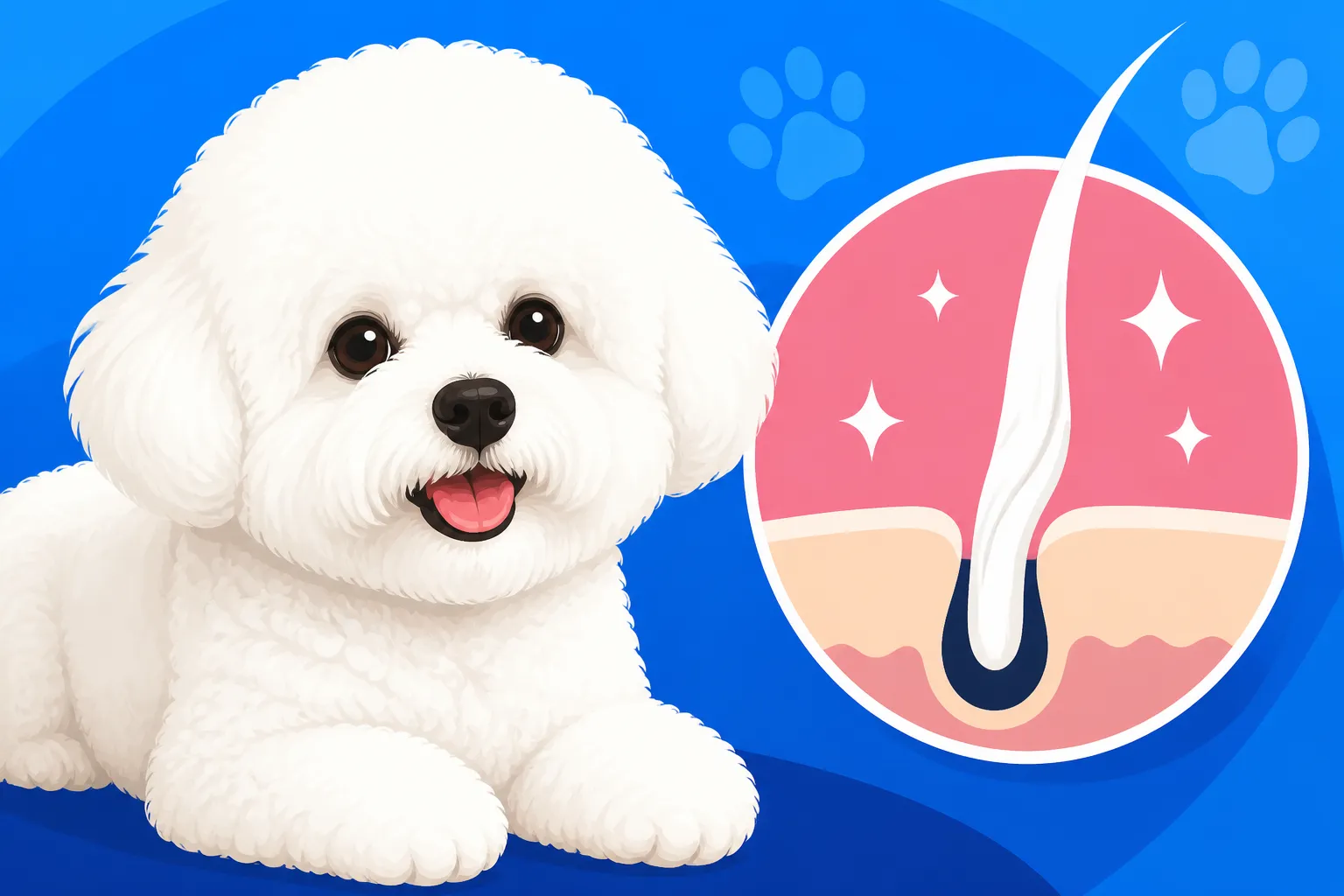
The canine follicle undergoes four main phases: anagen (active growth), catagen (transition), telogen (resting), and exogen (shedding). In typical double-coated or fur-bearing breeds like Golden Retrievers or Huskies, the telogen resting phase dominates most of the year, followed by a rapid exogen phase where the hair releases from the follicle. In your white pup, however, the growth signaling pathway is mutated in a way that locks the follicles into an extended, continuous state.
Understanding this biological quirk helps explain why skipping even a single week of thorough combing can lead to a tangle crisis. The coat is not just sitting there looking pretty; it is actively pushing outward from the dermis every single day. Because the shaft never receives a genetic cue to stop elongating, the hair will simply keep growing longer, denser, and curlier until human hands intervene with a pair of shears or clippers.
Anagen Phase Dominance in the Bichon Coat
The primary reason behind this continuous growth lies in the prolonged anagen phase of the coat’s hair follicles. While a typical dog’s hair follicle spends only a few weeks growing before entering a long resting phase, a Bichon’s hair follicle remains in active anagen growth for months or even years at a time. This biological trait is remarkably similar to human scalp hair, which grows continuously rather than dropping out at a short, fixed length.
During this extended active phase, the hair shaft is continuously fed by tiny blood vessels at the base of the follicle. Cells divide rapidly in the hair bulb, pushing older cells upward where they harden into the keratinized structure we feel as soft hair. Because thousands of follicles are firing off protein cells simultaneously without entering a synchronization loop for shedding, the sheer volume of coat produced every month is astounding.
This relentless follicle activity requires a constant supply of metabolic energy and nutritional building blocks. If your dog experiences a sudden drop in coat quality or growth rate, it is often a direct reflection of internal health or systemic stress, because the body prioritizes vital organs over hair production. When everything is functioning normally, however, that anagen engine runs at full throttle day in and day out.
Single-Coat vs. Double-Coat Dynamics and Non-Shedding Myths
There is a common misconception in the dog world that this breed is entirely “non-shedding” or possesses a single coat like a Poodle. In reality, the breed possesses a soft, dense undercoat combined with a coarser, curly outer coat, creating a true double-coat structure. The crucial difference is that when the inner coat hairs occasionally reach the end of their telogen cycle and detach, they do not drop onto your rug or sofa.
Instead, the soft, shed hairs become caught in the springy, corkscrew waves of the surrounding outer guard hairs. This mechanism is why people often claim these dogs do not shed at all; the shed hair simply stays trapped against the skin rather than shedding onto your hardwood floors. If you want to dive deeper into this specific biological mechanism, you can read more about Why a Bichon Frise’s Shed Hair Stays in the Coat.
When these loose, dead undercoat fibers remain trapped inside the dense outer coat, they act like tiny hooks. Every time your dog moves, lies down, or rolls around on the carpet, those loose hairs twist together with the living, growing hairs. Without regular human intervention to lift those trapped fibers out, this continuous buildup forms dense, felting mats right against the surface of the skin, obstructing airflow and creating a breeding ground for localized bacterial or fungal skin infections.
Follicular Density and the Trapped Hair Dilemma
Beyond the prolonged growth phase, the sheer density of hair follicles per square centimeter of skin on this breed is extraordinarily high. Compound follicles produce multiple hair shafts from a single pore, creating a dense, velvety canopy that protects the skin from physical abrasion and environmental elements. However, this high follicular density creates a mechanical challenge when combined with non-stop growth.
As individual shafts elongate, they naturally rub against adjacent shafts. The outer cuticle of each hair shaft is covered in microscopic, shingle-like scales. When hair is healthy and hydrated, these scales lie flat, allowing individual hairs to slide past one another. However, as hair grows longer and experiences environmental wear, friction, or dryness, those microscopic scales pop open, locking adjacent strands together like velcro.
This mechanical locking is the true culprit behind the dreaded “undercoat mats” that seem to appear out of nowhere overnight. The long hair near the tips may look perfectly fluffy and brushed out, while down at the skin level, a solid felt blanket of trapped hair is quietly forming. This is why superficial surface brushing with a soft brush is ineffective; maintenance requires getting down to the dermis to clear the follicle openings.
CANINE COAT GROWTH COMPARISON
| Breed Group | Primary Growth | Shedding Pattern | Grooming Frequency |
|---|---|---|---|
| Phase Dominance | Requirement | ||
| Fur-Bearing | Telogen | Seasonal Blow-out | Weekly brushing; |
| (e.g., Husky) | (Resting) | (Heavy seasonal) | Rare trimming |
| Wire-Coated | Balanced Anagen | Hand-stripped or | Every 6-8 weeks |
| (e.g., Terrier) | & Telogen | blown manually | stripping/clipping |
| Barbichon Family | Anagen | Trapped internally; | Daily brushing; |
| (e.g., Bichon) | (Active Growth) | Minimal external | 4-6 week trimming |
| Silky Single-Coat | Extended Anagen | Minimal undercoat; | Daily combing; |
| (e.g., Maltese) | (Active Growth) | Trapped lightly | Regular trimming |
How the Bichon Frise Compares to Other Breeds
To fully appreciate the unique care demands of this coat, it helps to contextualize it within the broader canine spectrum. Dog coats are generally categorized into fur, wire, silky, wool, or hair types. While we often use the words “fur” and “hair” interchangeably in conversation, chemically they are composed of the same keratin proteins. Thermally and structurally, however, their growth behavior sets them miles apart.
Understanding where your dog fits within the ancestral lineage of white Mediterranean lapdogs clarifies why their grooming routine is so non-negotiable. It isn’t just about fashion or vanity; it is about protecting the structural integrity of a coat that was artificially selected over centuries of specialized breeding to be continuously dense, soft, and voluminous.
Knowing how this coat differs from that of a Labrador, a Terrier, or even a cousin like the Maltese enables you to select the correct grooming tools, set realistic care schedules, and prevent the painful health complications associated with pelted hair.
Bichon Frise vs. Fur-Bearing Dogs
The most dramatic contrast exists between your white fluffball and traditional fur-bearing dogs like German Shepherds, Beagles, or Labradors. Fur-bearing dogs possess short, fixed growth cycles. Their hair grows to a genetically coded length—usually between half an inch to two inches—and then immediately enters the telogen resting phase. Once the resting phase ends, the follicle releases the shaft, causing the dog to shed visibly over your clothes and furniture.
Because fur-bearing dogs shed their dead hair outward into the environment, they rarely develop the massive, structural mats that plague continuous-growth breeds. They require brushing primarily to pull out loose hair and manage dander, not to maintain structural length or prevent severe skin strangulation. Their coat self-regulates its length, meaning a fur-bearing dog never needs a haircut to stay clean and comfortable.
Your dog, on the other hand, lacks this self-regulating length cap. Left entirely untrimmed, the coat will continue to grow outwards, eventually trailing on the ground, collecting mud, twigs, and burrs, and obscuring the eyes, ears, and sanitary regions. The burden of regulating coat length shifts completely from the dog’s genetics onto your shoulders.
The Barbichon Family Tree and Hair Texture Differences
The breed belongs to an ancient family of dogs known as the Barbichon group, which includes the Maltese, Havanese, Bolognese, and Coton de Tulear. While all these breeds share historical roots in the Mediterranean basin and possess coats dominated by extended anagen growth phases, their hair textures vary significantly due to selective breeding for distinct coat aesthetics.
The Maltese, for instance, possesses a single coat with no undercoat, producing flat, silky, straight hair that hangs straight down toward the ground like a gleaming mantle. The Havanese features a double coat, but the texture is soft, wavy, and lightweight, giving it a springy, tossed look. The Coton de Tulear has a unique, cotton-like texture that feels light, airy, and slightly windblown.
In contrast, our featured breed was intentionally bred for a dense, plush, springy texture that stands off from the body. The combination of a soft, dense undercoat and a resilient, curly outer coat creates a mechanical spring action. When pressed down, a healthy coat immediately springs back into shape. This unique texture makes the breed ideal for sculpting into classic geometric shapes, but it also means the hair tangles far more aggressively than the flat, silky hair of a Maltese.
Managing Continuous Coat Growth in Daily Life
Living with a dog whose coat never stops growing requires establishing a predictable, calm, and structured maintenance routine. When owners treat grooming as an occasional weekend chore rather than an ongoing lifestyle habit, the coat quickly becomes unmanageable. Matting does not wait for a convenient time; it develops silently every hour of the day as your dog moves, plays, sleeps, and interacts with their environment.
Establishing a routine requires the right physical environment, appropriate high-quality tools, and a solid understanding of dog behavior. Turning grooming into a bonding ritual filled with rewards and praise ensures that your dog remains a cooperative partner on the grooming table, rather than a wriggling, stressed participant trying to escape the slicker brush.
By mastering fundamental daily and weekly maintenance tasks at home, you protect your pet from physical discomfort, save hundreds of dollars in professional grooming fees, and prevent the heartbreaking scenario of having your dog completely shaved down due to severe pelting.
Essential Tools for Constant Maintenance
Attempting to maintain a continuously growing coat with cheap, generic grocery-store pet supplies is a recipe for frustration. Because the coat is dense, curly, and deep, specialized tools designed to handle high-density curly hair are required. Investing in professional-grade equipment will cut your grooming time in half while yielding far better results for your dog’s skin and coat.
Your baseline kit must include a high-quality, long-pinned slicker brush. The pins must be firm enough to penetrate through the dense outer guard coat all the way to the dermis, but smooth and polished on the tips so they do not scratch or scrape the delicate skin. You can easily find professional slicker brushes online through retailers like Amazon or Chewy, where a wide variety of pin lengths and flexibilities are available to suit your dog’s specific coat density.
In addition to a slicker brush, a stainless steel greyhound comb—featuring both fine and coarse pin spacing—is non-negotiable. The brush fluffs and separates the hair, but only the comb can detect hidden tangles lurking deep near the skin. A bottle of leave-in conditioning spray or dematting slicker spray is also critical; brushing dry, fragile hair causes microscopic breakage, roughening the cuticle and making future tangles form even faster.
ESSENTIAL HOME GROOMING TOOLKIT
| Tool Name | Primary Function | Target Area |
|---|---|---|
| Long-Pin Slicker | Penetrates dense outer coat; | Full body, legs, |
| Brush | separates curly fibers | and torso |
| Stainless Steel | Locates deep skin-level mats; | Behind ears, armpits, |
| Greyhound Comb | verifies complete brush-out | face, and tail |
| Hydrating Conditioning | Lubricates hair shaft; prevents | Applied before any |
| Spray | friction and static breakage | brushing session |
| Blunt-Ended | Safe precision trimming around | Eyes, foot pads, and |
| Detailing Scissors | delicate anatomical zones | sanitary regions |
| High-Velocity | Blasts trapped water; straightens | Full body after |
| Pet Dryer | curls into plush canopy | bathing session |
Brushing Techniques to Prevent Severe Matting
Owning the right tools is only half the battle; technique is what separates a beautifully maintained coat from a matted mess hidden under a fluffy exterior. Simply dragging a slicker brush over the surface of your dog’s back is known as “top brushing.” Surface brushing makes the dog look clean and fluffy from a distance, but it pushes all the loose undercoat down against the skin, accelerating severe pelting.
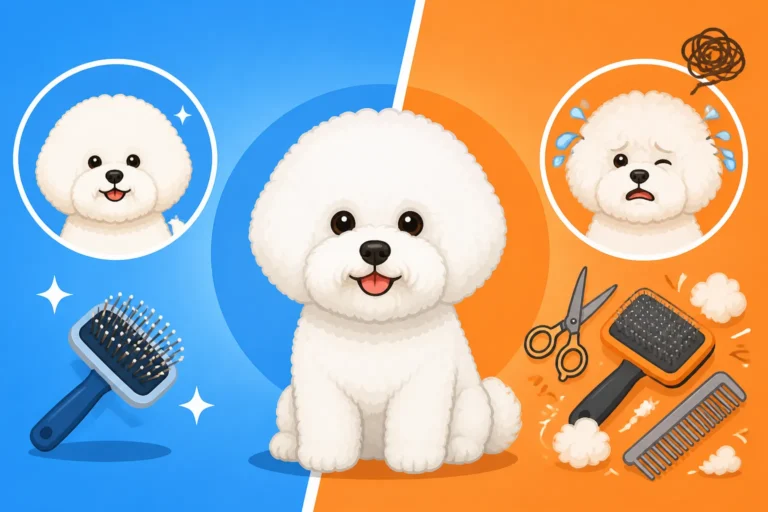
The gold standard for maintaining a dense, ever-growing coat is a technique known as “line brushing.” Working systematically in small sections, you use one hand to lift the coat upward, exposing a clean line of pink skin. With your other hand, you use the slicker brush to gently stroke a small ribbon of hair downward from the skin to the tips. Once that line is completely tangle-free, you move up half an inch, expose a new line of skin, and repeat the process.
After slicker brushing a section using line brushing, you must follow up by sliding your metal greyhound comb through that exact same hair from skin to tip. If the comb glides through cleanly without catching, that section is truly tangle-free. If the comb sticks, stop immediately! Do not pull or rip through the knot with force. Instead, mist the area with leave-in conditioner, isolate the knot with your fingers, and gently pick it apart using the end teeth of your comb or the edge of your slicker brush. For details on budgeting for these essential items, check out What a Home Grooming Kit Costs a Bichon Frise Owner.
If you notice your dog becoming restless, irritated, or sensitive during these sessions, it is crucial to pay attention to their body language. Understanding Whether an Itchy Bichon Frise Bites When Handled can help you recognize when discomfort is driving behavioral reactions, allowing you to pause, adjust your technique, and keep the experience stress-free.
The Role of Bathing, Blow-Drying, and High-Velocity Dryers
Bathing a dog with a coat that grows continuously requires a strict protocol. A major mistake home groomers make is putting a dog with hidden mats straight into the bathtub. Water acts as a natural binder for tangled hair fibers; wetting a knot causes the hair shaft to swell and then shrink tightly as it dries, locking mats into dense, hard felt blocks that are almost impossible to reverse without shaving.
Always ensure the coat is 100% free of mats using the line-brushing and combing technique before turning on the bath faucet. Once the dog is thoroughly washed with a gentle, moisturizing shampoo and conditioned with a rich coat mask, drying technique becomes paramount. Allowing this coat type to air-dry at room temperature is disastrous. Air drying allows the natural corkscrew curls to snap back tightly against the skin, trapping moisture, encouraging matting, and leaving the coat flat, stringy, and wavy.
To achieve that classic cloud-like aesthetic, you must perform a proper blow-dry while actively brushing the hair. Utilizing a high-velocity pet dryer forces trapped water droplets off the hair shaft while blowing the soft curls perfectly straight from root to tip. This process, often referred to as fluff drying or stretch drying, straightens the hair so that it can be evenly cut and scissored by a groomer. If you want to learn the exact steps to achieve this salon finish, read Drying a Bichon Frise Into the Powder Puff Shape.
Nutritional Influences on Hair Growth and Coat Health
Because the coat is in a constant state of rapid cellular division, it places unique metabolic demands on your dog’s body. Up to 30 percent of a dog’s daily dietary protein intake can be consumed solely by the process of growing skin and hair! When dietary intake lacks essential amino acids, healthy lipids, or vital micronutrients, the body compensates by diverting nutrients away from hair production to vital organ functions.
A malnourished or nutritionally deficient dog will show signs in their coat almost immediately. The hair becomes brittle, dry, and prone to snapping, the vibrant white color can dull or turn yellow, and the growth rate slows down or becomes patchy. Providing optimal nutrition ensures that each continuously growing hair shaft emerges from the follicle strong, elastic, and properly pigmented.
Evaluating your pet’s diet involves looking beyond basic calorie counts to examine protein sources, fatty acid profiles, and overall digestibility. Feeding high-quality, bioavailable ingredients directly impacts how soft, resilient, and easy to brush that ever-growing coat will be.
Essential Fatty Acids and Protein Requirements
Hair is constructed almost entirely from keratin, a tough fibrous protein made up of complex chains of amino acids, particularly sulfur-containing amino acids like methionine and cysteine. If a dog’s diet is low in high-quality animal proteins, hair shafts become weak, thin, and prone to split ends, which increases friction and leads to rapid matting. High-grade animal proteins like poultry, beef, lamb, and fish provide the ideal amino acid building blocks required to sustain intense follicle activity.
Equally critical to coat structural integrity are essential fatty acids, specifically Omega-3 and Omega-6 fatty acids. Omega-6 fatty acids nourish the epidermal layer and strengthen the intercellular lipid barrier of the skin, keeping moisture locked inside the tissue. This prevents dry skin, dandruff, and dull hair. Meanwhile, Omega-3 fatty acids (specifically EPA and DHA derived from marine oils like salmon, krill, or ocean fish) act as natural anti-inflammatory agents, soothing itchy skin and preventing systemic inflammation that damages hair follicles.
Adding a dedicated fish oil supplement or selecting foods fortified with balanced Omega-3 and Omega-6 fatty acids can dramatically transform coat texture. Smooth, flexible hair shafts slide past one another effortlessly during daily play, drastically reducing the formation of friction knots behind the legs and under the collar.
Moisture and Hydration’s Impact on Hair Elasticity
Hydration is a frequently overlooked factor in hair health. A dehydrated body pulls moisture from secondary tissues, leaving the hair shafts dry, hollow, and brittle. Brittle hair lacks natural elasticity; when subjected to the tension of daily combing or brushing, dry hair snaps halfway down the shaft rather than bending cleanly.
These jagged, broken ends act like tiny microscopic fishhooks, tangling with adjacent strands and creating stubborn split-end mats. Furthermore, chronic mild dehydration leads to dry, flaky skin, encouraging your dog to scratch furiously with their back claws. This scratching mechanical action shreds the coat, packing dead hair, dander, and torn fibers into tight skin-level knots.
Encouraging healthy water intake is essential. Always provide access to clean, fresh water in stainless steel or ceramic bowls. For dogs that are reluctant drinkers, adding warm water or low-sodium bone broth to their daily kibble can significantly boost overall fluid consumption, protecting skin barrier function and keeping hair strands supple and elastic.
Dietary Shifts and Fresh Food Options
In recent years, many dedicated owners have moved away from traditional dry kibble in favor of minimally processed, fresh food diets to optimize coat health and manage systemic allergies. Fresh food options feature high bioavailability, meaning the dog’s digestive system can easily break down, absorb, and utilize the vitamins, minerals, and proteins present in the food.
Custom meal delivery services like Ollie offer human-grade, gently cooked food tailored to your dog’s specific weight, activity level, and coat needs. These recipes feature real muscle meats, nutrient-dense organ meats, and healthy fats without fillers, artificial dyes, or low-quality byproduct meals that can contribute to skin inflammation and tear staining.
COAT NUTRITION NUTRIENT GUIDE
| Key Nutrient | Biological Role in Hair Growth | Top Dietary Sources |
|---|---|---|
| Sulfur Amino Acids | Constructs keratin protein chains; | Chicken, turkey, beef, |
| (Methionine/Cysteine) builds strong hair shafts | eggs, fish | |
| Omega-6 Fatty | Maintains dermal moisture barrier; | Chicken fat, sunflower |
| Acids | prevents dry, brittle hair | oil, flaxseed |
| Omega-3 Fatty | Reduces skin inflammation; | Salmon oil, krill oil, |
| Acids (EPA/DHA) | smooths cuticle scale layers | sardines, ocean fish |
| Zinc & Biotin | Supports rapid cell division in | Liver, eggs, fresh muscle |
| active hair bulbs | meats, whole grains |
When switching to a fresh food routine or adding targeted coat supplements, consistency is key. Because hair grows from the root outward, you will not see instant results on the tips of the coat overnight. It takes approximately six to eight weeks of elevated nutritional support to see gleaming, healthy, elastic new growth emerge at skin level.
Grooming Schedules and Trimming Strategies
Because hair grows continuously, establishing a strict grooming schedule is essential. Allowing your dog to go months without a trim inevitably leads to a coat that is overgrown, dirty, severely matted, and physically uncomfortable. Regular hair removal is not just a cosmetic choice; it is vital hygiene that maintains clean line-of-sight vision, keeps paws traction-ready, and protects sanitary areas from urine and fecal contamination.
Most owners quickly realize that managing an ever-growing coat requires a clear strategy: deciding between a full, high-maintenance traditional show coat trim or a functional, manageable pet trim. Both approaches require regular maintenance, but they demand vastly different commitments of time, energy, and financial resources.
By establishing a predictable rhythm with a professional groomer or investing time in mastering home haircut techniques, you can keep your dog looking sharp, comfortable, and healthy all year long.
Scissoring vs. Clipping: Preserving the Iconic Silhouette
The classic visual trademark of this breed is a plush, rounded, perfectly balanced silhouette often referred to as the “powder puff” look. Achieving this iconic shape requires a skilled combination of electric clipper work and extensive hand-scissoring. Understanding the difference between these two techniques helps you communicate effectively with your professional groomer.
Electric clippers use motor-driven blades to cut hair down to a uniform, short length quickly. Clippers are commonly used on the dog’s sanitary zones, foot pads, belly, and occasionally over the body for pet trims. However, relying solely on short clipper blades over the entire body can crush the soft undercoat and cause the springy hair texture to lie flat over time.
Hand-scissoring, on the other hand, involves using straight, curved, and thinning shears to individually shape the coat into balanced geometric angles, creating a soft, plush cushion that accentuates the dog’s natural conformation. Scissoring requires immense skill, patience, and time, which is why hand-scissored trims cost significantly more than simple clipper trims. To understand the artistic and functional reasons behind hand-shaping this coat, read Why a Groomer Scissors a Bichon Frise Instead of Clipping It and explore The Powder Puff Outline a Bichon Frise Is Scissored Into.
The Transition from Puppy Coat to Adult Density
One of the most challenging phases every owner faces occurs when their puppy transitions from their soft, easy-to-manage puppy coat into their dense, double adult coat. This transitional phase typically begins around eight to ten months of age and can last anywhere from four to six months.
During this transition, the puppy’s fine, wispy baby coat begins to shed rapidly from the follicle, while thick, coarse, curly adult guard hairs begin pushing through the skin simultaneously. The combination of falling puppy hair mixing with newly emerging, springy adult hair creates an absolute storm for severe matting. You can learn more about what to expect during this stage by reviewing The Months a Bichon Frise Puppy Coat Changes.
During these critical transition months, daily line brushing and combing become mandatory. Coat that seemed impossible to tangle at five months of age suddenly turns into tight, felted knots overnight at nine months. Owners who are unprepared for this coat change often panic, but maintaining a rigorous brushing schedule will see your dog through to the other side with their gorgeous adult coat intact.
Professional Care vs. Home Grooming Maintenance
Maintaining an ever-growing coat requires deciding how to split labor between professional pet salons and home maintenance. Because the coat elongates continuous week after week, professional groomers generally recommend scheduling full grooming visits every four to six weeks without exception.
A typical professional session includes a thorough brush-out, double bath, fluff-dry, ear cleaning, nail trim, pad shaving, sanitary trim, and full-body hand-scissoring or styled clipping. To learn more about setting appropriate care intervals for your household routine, explore How Often a Groomer Recommends a Full Groom.
PET SALON VS. HOME GROOMING ROUTINE
| Task Category | Recommended Frequency | Responsible Party |
|---|---|---|
| Line Brushing | Daily to every 2 days | Owner at Home |
| Deep Metal Combing | Daily to every 2 days | Owner at Home |
| Eye & Face Wipe | Daily | Owner at Home |
| Full Fluff Bath | Every 2 to 3 weeks | Owner or Professional |
| Sanitary & Pad | Every 3 to 4 weeks | Professional Groomer |
| Trim | ||
| Full Body | Every 4 to 6 weeks | Professional Groomer |
| Scissoring/Clip |
Between professional salon visits, your home role is maintenance and preservation. You must keep the hair clean, completely brush out tangles down to the skin, and keep sanitary areas clean. If you decide to handle full haircuts at home to save money, invest in high-quality professional grooming equipment, including electric clippers, detachable steel blades, and ergonomic scissoring shears. If you are unsure which clipper blades to buy, review Which Blade Length Suits a Bichon Frise before making your selection.
By pairing an understanding of your dog’s unique follicle biology with a dedicated home brushing routine, top-tier nutrition, and a regular trimming schedule, you can easily manage a coat that grows forever. Embrace the process as quality bonding time with your companion, and enjoy the stunning, fluffy result of your hard work!
Disclaimer
This article is for general informational purposes only and does not constitute professional advice. Laws, prices and regulations vary by location and change over time. Consult a qualified professional for guidance on your specific situation.