Whether Treats Ruin a Bichon Frise’s Stone Diet
Oh, the struggle is real, isn't it? You’re doing everything right, carefully measuring out that special prescription food, trying so hard to keep your adorable Bichon Frise on their stone prevention diet. Then those big, dark eyes look up at you, utterly innocent, as you reach for a snack, and your resolve just… crumbles. It's incredibly frustrating because you know how vital that diet is for their health, but it feels almost cruel to deny them every little pleasure. This guide is here to walk you through exactly how treats, even the smallest ones, can impact your Bichon Frise’s stone diet, and what you can do to navigate this tricky situation without compromising their well-being.
Understanding the Bichon Frise Stone Diet: More Than Just Food
When your veterinarian prescribed a special diet for your Bichon Frise to prevent bladder stones, it wasn't just a suggestion; it was a carefully calculated medical intervention. This isn't like cutting out a little sugar for yourself; for a breed predisposed to specific types of urinary stones, particularly calcium oxalate, the diet is a critical cornerstone of their ongoing health management. It's a precise balance of minerals, pH regulators, and moisture content designed to create an environment in the bladder where stones are less likely to form or grow.
The "Why" Behind the Strict Diet
Bichon Frises, unfortunately, are statistically much more prone to developing certain types of bladder stones, especially calcium oxalate stones. This predisposition is often rooted in genetics and their unique physiology. These aren't just uncomfortable; they can cause severe pain, recurrent infections, and in the worst cases, a life-threatening urinary blockage, particularly in male dogs. This is why when you hear about Why the Bichon Frise Tops the Stone Risk List, it's not an exaggeration. The primary goal of a stone prevention diet is to alter the urine chemistry to make it unfavorable for stone formation. This often means reducing the concentration of stone-forming minerals and maintaining a specific urine pH. Every ingredient, every nutrient, in that prescription bag has a purpose, aiming to keep your Bichon Frise's urinary tract healthy and clear.
Think of it like a delicate ecosystem in your dog's bladder. The right diet maintains balance. If you introduce outside elements, even seemingly innocent ones, you risk upsetting that equilibrium. This isn't about general healthy eating; it's about very specific targets for urinary health that commercial "regular" treats simply aren't formulated to meet. The frustration of trying to keep up with this, especially when you feel like you're constantly monitoring every morsel, is completely valid.
What the Stone Diet Aims to Achieve
The specialized diet prescribed for Bichon Frises with a history of calcium oxalate stones works on several fronts. Firstly, it typically controls the levels of calcium and oxalate, the building blocks of these stones. This means less of these substances are excreted into the urine. Secondly, these diets often aim to produce a more alkaline urine pH, as calcium oxalate stones are more likely to form in acidic urine. If you've ever heard of Whether a Bichon Frise Needs Urine pH Monitored, this is why; pH is a crucial factor. Thirdly, many stone prevention diets are formulated to encourage greater water intake, or they come in a wet food format, to promote more dilute urine. More dilute urine means that any stone-forming minerals present are less concentrated, making them less likely to crystallize. This is also why many vets suggest Whether Wet Food Suits a Bichon Frise Better for those prone to stones. The idea is to flush the system regularly and prevent those crystals from clumping together. Each kibble or morsel is calibrated to achieve these goals, day in and day out.
The Hidden Dangers of "Just One" Treat
It's so easy to think, "Oh, it's just a tiny piece of cheese," or "Just one little biscuit won't hurt, will it?" The truth is, when your Bichon Frise is on a stone prevention diet, even these seemingly harmless indulgences can have a disproportionately large impact. The efficacy of the specialized diet relies on consistency and the avoidance of ingredients that could counteract its delicate balance. It's a tough pill to swallow, especially when you just want to shower your furry friend with love, often expressed through food.
How Standard Treats Undermine the Diet
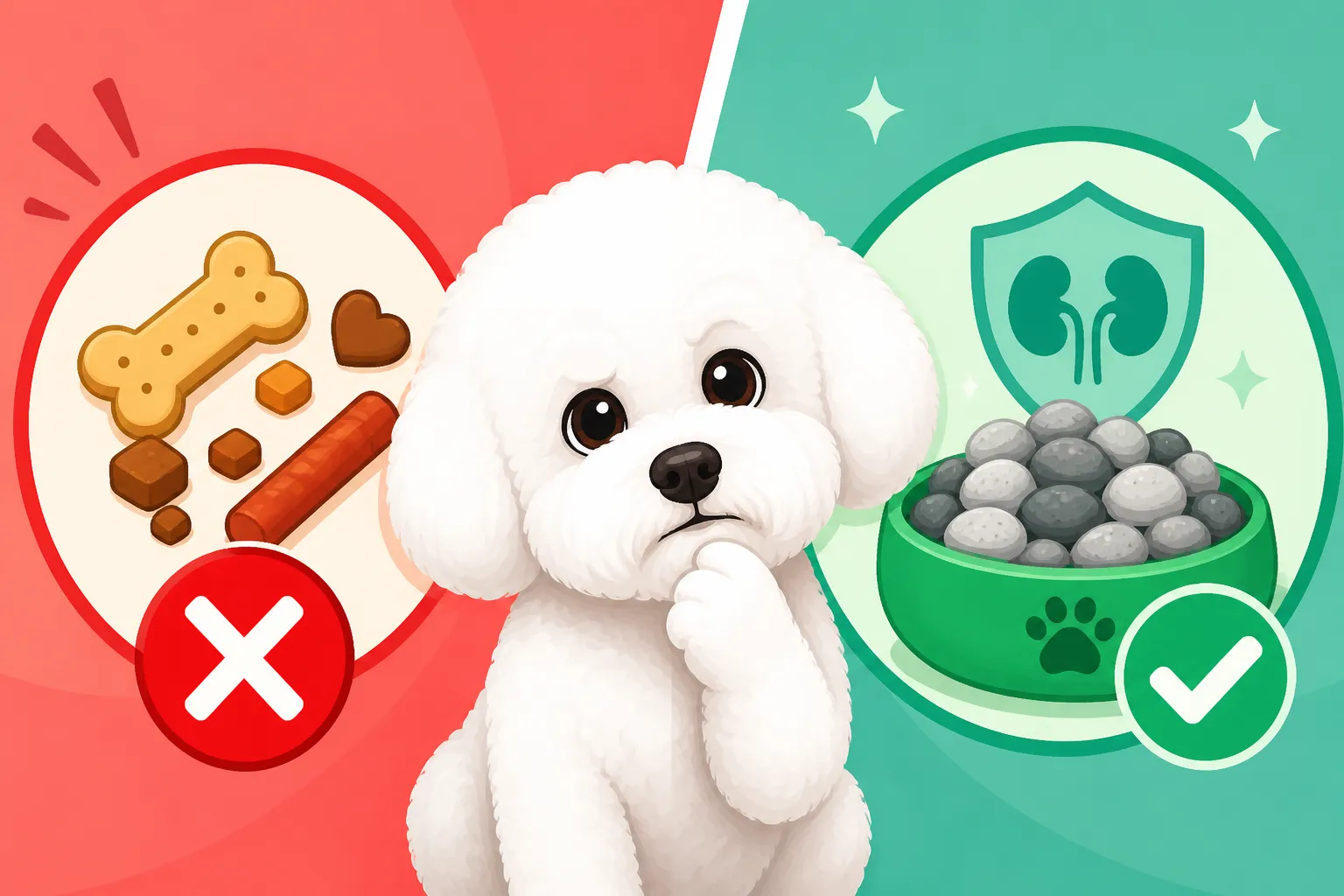
Most commercial dog treats are formulated for the average healthy dog, not one with specific dietary needs like stone prevention. This means they often contain ingredients that are precisely what your Bichon Frise's prescription diet is working to minimize or avoid. For instance, many treats are high in calcium, phosphorus, or certain proteins that can increase the risk of stone formation. They might also contain ingredients that alter urine pH in an undesirable direction, making it more acidic and thus more hospitable for calcium oxalate crystals. A common culprit is excessive sodium, which can lead to increased calcium excretion in the urine. Think about those crunchy dental treats or jerky sticks; while seemingly benign, they can be packed with hidden ingredients that are detrimental to a stone-prone Bichon Frise.
Even natural, human foods can be problematic. A bit of peanut butter, for example, is often high in oxalates. A piece of cheese, while small, introduces calcium that the diet is carefully limiting. This isn't about the quantity of the treat alone, but the quality of its ingredients in relation to the specific medical needs of your pet. It truly can feel like a minefield trying to figure out what's okay, and it's completely normal to feel overwhelmed by the sheer number of restrictions.
The Cumulative Effect of Small Indulgences
While "just one" treat might not immediately cause a new stone to form, the real danger lies in the cumulative effect. Imagine a leaky bucket: each small treat is a drip, and over time, those drips fill the bucket, undoing all the good work the prescription diet is doing. One treat today, another tomorrow from a well-meaning family member, a stolen crumb from the kitchen floor—it all adds up. The delicate balance of mineral content and pH that the prescription diet works so hard to maintain can be subtly, but consistently, disrupted. This disruption might not manifest as an immediate crisis, but rather as a slow, steady increase in the risk of stone recurrence. How Often a Bichon Frise's Stones Return is a question that weighs heavily on many owners, and these small, seemingly insignificant dietary slip-ups are often a major factor.
It's like trying to bail out a boat with a thimble while someone else is pouring water in with a cup. The effort feels wasted, and the risk remains. This is why strict adherence, though difficult, is so crucial. Every time your Bichon Frise gets a treat that isn't compatible with their diet, you're essentially providing the raw materials for new stones to form. This isn't to make you feel guilty, but to highlight the often unseen impact of those small, adorable moments of indulgence. Consistency is truly your Bichon's best defense against a painful recurrence.
Identifying "Safe" Treats for Your Bichon Frise
The good news is that "stone diet" doesn't have to mean "no treats ever." It simply means being incredibly discerning about what constitutes a treat. The key is to find options that align with the specific goals of your Bichon Frise's urinary health diet, rather than working against it. This might require a shift in perspective, but it ensures you can still show your love in treat form without risking their health.
Vet-Approved Prescription Treats
The absolute safest option for your Bichon Frise on a stone prevention diet is a treat specifically formulated to complement their prescription food. Many major veterinary diet brands, like Royal Canin or Hill's Prescription Diet, offer treats that are designed to be nutritionally consistent with their urinary care kibble or wet food. These treats will have the same controlled levels of minerals and pH-balancing properties, meaning they won't undermine the efficacy of the main diet.
It's vital to get these directly from your veterinarian or purchase them through trusted channels like Chewy with a vet authorization. This ensures you're getting the genuine article and not a look-alike. These treats might not be as widely available as typical commercial treats, and they might even come with a slightly higher price tag, but the peace of mind they offer is invaluable. Always confirm with your vet which specific prescription treats are appropriate for your Bichon's particular stone type and dietary needs. They are the best resource for guiding you through these choices.
Single-Ingredient, Low-Risk Options
Beyond prescription treats, there are a few very carefully selected human-grade, single-ingredient options that might be suitable in very small quantities, but always, always with your veterinarian's explicit approval first. The goal here is to find foods that are naturally low in oxalates, calcium, and phosphorus, and won't upset urine pH.
Here are a few examples that are sometimes given, but again, your vet is the final authority:
- Small pieces of cooked lean chicken or turkey breast: No skin, no seasoning, just plain boiled or baked meat. These are primarily protein and generally low in problem minerals.
- Green beans: Plain, cooked, or raw (if your dog likes them crunchy). They are low in calories and many minerals.
- Baby carrots: A small, occasional piece. Again, low calorie and generally safe.
- Apples: Small, skinless pieces (remove seeds, as they contain cyanide). Very low oxalate.
When considering these options, the preparation is key: absolutely no added salt, spices, fats, or oils. These additions can defeat the purpose of choosing a low-risk food. And remember, the portion size is minuscule. A single green bean, not a handful. A tiny sliver of chicken, not a chunk. You can often find single-ingredient freeze-dried chicken or liver on platforms like Amazon, but you still need to rigorously check the ingredients to ensure there are no hidden additives or high-risk components. Always choose brands that clearly state "single ingredient" and have no added anything. If you're exploring fresh food options from services like Ollie, it's paramount to involve your vet in evaluating whether specific recipes can be adapted or if their general formulas meet the strict requirements of a stone prevention diet.
The Importance of Moderation, Even with Safe Treats
Even with vet-approved or carefully vetted low-risk treats, moderation is absolutely non-negotiable. "Safe" doesn't mean "unlimited." Every single calorie and nutrient contributes to the overall dietary balance. Overfeeding even the best-intentioned treats can lead to weight gain, which itself can exacerbate other health issues. Furthermore, while a treat might be deemed "safe" in small amounts, large quantities could still introduce problematic levels of minerals or alter urine pH over time.
Think of it this way: your Bichon's daily caloric intake and nutrient balance are precisely calculated based on their prescription food. Any treat you give, no matter how "safe," takes away from that calculated balance. It's often recommended that treats make up no more than 10% of your dog's daily caloric intake, and for a stone diet, this percentage might even need to be lower, or the treats completely factored into the overall daily food allowance. Always discuss portion sizes for any treats with your veterinarian. They can help you integrate treats into the overall The Diet a Bichon Frise Stays On for Life plan without causing problems.
Navigating Treat-Giving in a Multi-Pet or Family Household
This is where things can get particularly challenging. It’s hard enough to stick to a strict diet for one dog, but when you have multiple pets, children, or even just well-meaning visitors, the risk of accidental dietary indiscretions skyrockets. The secret to success in these situations is clear communication, consistent rules, and proactive planning. It requires a village to keep a Bichon Frise on a stone diet truly safe.
Educating the Whole Family
Everyone in the household needs to be on the same page and understand the critical importance of your Bichon Frise's diet. This means sitting down and explaining why it's so important that Fido only eats his special food and approved treats. Don't just say "no treats"; explain the painful bladder stones, the emergency trips to the vet, and the discomfort your beloved pet experiences when the diet isn't followed. Children, especially, need clear and consistent rules, perhaps even a visual aid like a chart showing which treats are "yes" and which are "no."
For guests, a polite but firm explanation is often necessary. You might even have a small container of "approved" treats ready for them to offer, so they can still enjoy giving your Bichon some affection without undermining his health. A simple sign on the treat cupboard or fridge can also serve as a gentle reminder. It might feel like you're being overly strict, but the alternative—your Bichon suffering from stone recurrence—is far worse. This constant vigilance is part of What a Bichon Frise Needs Every Day.
Preventing Accidental Treat Sharing
Accidents happen, but with a bit of foresight, you can significantly reduce the chances of your Bichon Frise getting into unauthorized snacks.
Here are some practical strategies:
- Designated feeding areas: Feed your Bichon Frise and any other pets in separate areas to prevent food swapping. If you have another dog not on a stone diet, ensure their food and treats are completely out of reach of your Bichon.
- Secure storage: Keep all non-approved treats and human foods in sealed containers or high cupboards that your Bichon Frise cannot access. A curious Bichon can be surprisingly resourceful!
- Counter management: Make a habit of keeping kitchen counters clear of food when you're not actively preparing meals. Even a dropped crumb can be problematic.
- Training: Reinforce a "leave it" command with your Bichon Frise. This can be a lifesaver if they spot something tempting on the ground.
- Enrichment for other pets: Ensure other pets in the household have their own special treats and toys that keep them occupied, so they don't feel the need to share or guard their food.
- Supervision during mealtimes: This is particularly important with children. Teach kids not to feed the dog from the table and to clean up any dropped food immediately.
It's a constant effort, but establishing these routines early on can make a world of difference in preventing those small, unintentional dietary slip-ups that can lead to big problems.
Creative Ways to Reward Your Bichon Without Food
Let's face it, giving treats is often a way we show affection and reinforce good behavior. When food is restricted, it can feel like you're losing a valuable tool in your relationship with your Bichon Frise. However, there are countless non-food ways to reward and interact with your dog that are just as, if not more, meaningful and certainly much healthier for a stone-prone Bichon.
The Power of Play and Attention
For many Bichon Frises, attention and play are far more rewarding than any food item. They are incredibly people-oriented dogs who thrive on interaction.
Consider these non-food rewards:
- Enthusiastic praise: A happy, high-pitched "Good boy!" or "Good girl!" with plenty of ear scratches and tummy rubs can go a long way.
- Favorite toys: A squeaky ball, a soft plush toy, or a tug rope can be fantastic motivators. If your Bichon loves a particular toy, use it as a reward for successful training or just for being a good companion.
- Short play sessions: A quick game of fetch in the living room, a wrestling match with a favorite toy, or a game of hide-and-seek can be immensely satisfying for your Bichon.
- Cuddles and affection: For these devoted lap dogs, a session of snuggles on the couch or a good brush-down can be pure bliss. This directly ties into The Merry Temperament the Bichon Frise Standard Demands, as they truly live for companionship.
- New experiences: A walk in a new park, a car ride to see new sights, or a visit to a dog-friendly store can all be exciting rewards.
These types of rewards not only keep your Bichon Frise healthy but also strengthen your bond, showing them that your love isn't just tied to food. You'll be surprised how much joy you can bring them without a single calorie.
Training with Non-Food Reinforcers
Training doesn't always have to involve delicious, high-value treats. Many dogs, including Bichon Frises, respond wonderfully to other forms of positive reinforcement. You can use play, praise, and physical affection as powerful motivators during training sessions.
- Clicker training with play: If you use a clicker, pair it with a quick toss of a favorite toy or a game of tug instead of food. The click marks the desired behavior, and the toy is the reward.
- Verbal cues and affection: Teach your Bichon a new trick or reinforce an old one using only praise and gentle petting. Some dogs are incredibly eager to please their owners and will work hard just for a cheerful "Yes!"
- Environmental rewards: Use access to something your dog enjoys as a reward. For example, if your Bichon sits politely at the door, the reward is getting to go outside for a walk. If they come when called, the reward might be getting to run off-leash in a safe, fenced area.
- Puzzles and enrichment toys: While many puzzle toys involve food, you can also use them with small amounts of their regular prescription kibble to make mealtime more engaging. This isn't a "treat" in the traditional sense, but a way to make their approved food more exciting and mentally stimulating.
Remember, the goal is to find what truly motivates your individual Bichon Frise. Some might be ball fanatics, others might live for a good ear scratch. Experiment with different non-food rewards to discover what makes their tail wag the most. This way, you can continue to train, bond, and spoil your furry friend without ever putting their urinary health at risk.
| Treat Type | Risk Level for Stone Diet | Key Characteristics | Example (Always Vet-Approved) |
|---|---|---|---|
| Standard Commercial Treats | High | Often high in calcium, phosphorus, sodium, certain proteins; can alter urine pH; may contain hidden ingredients. | Biscuits, jerky, rawhide, dental chews (non-Rx), most soft chews |
| Human Food Snacks | High | Can be high in oxalates (peanut butter, spinach), calcium (cheese), fat, or problematic spices/seasonings. | Cheese, deli meat, sweet potato (if not low oxalate), most fruits/veg |
| Vet-Approved Prescription Treats | Low | Formulated to complement urinary diets; controlled mineral levels, pH-balanced; consistent with Rx kibble. | Hill's c/d Urinary Care Treats, Royal Canin Urinary S/O Treats |
| Single-Ingredient, Low-Risk (Vet Approved) | Low to Moderate | Plain, unseasoned lean protein (chicken breast); specific low-oxalate vegetables/fruits in tiny portions. MUST be approved. | Small piece of plain cooked chicken, single green bean, tiny apple slice |
This article is for general informational purposes only and does not constitute professional advice. Laws, prices and regulations vary by location and change over time. Consult a qualified professional for guidance on your specific situation.