Whether a Bichon Frise’s Paws Need Rinsing
Ah, the joys (and sometimes, the trials!) of living with a fluffy white cloud on four legs. If you're a Bichon Frise parent, you know the struggle is real when it comes to keeping those pristine paws actually pristine. One moment, your sweet pup is trotting through the house, a beacon of fluffy purity, and the next, they've tiptoed outside for a quick potty break, only to return with paws that look like they've single-handedly dug a trench. This guide isn't just about superficial cleanliness; it's about understanding why paw rinsing is often a non-negotiable part of daily Bichon care, protecting them from irritants, and keeping them comfortable and healthy.
The Unique Challenge of Bichon Frise Paws: Why They Get So Dirty
Let's be honest, part of the charm of a Bichon Frise is that dazzling white coat. It's like having a living, breathing cotton ball, right? But that same beauty presents a unique set of challenges, especially when it comes to their paws, which seem to attract every speck of dirt and debris like tiny, fluffy magnets.
The Bright White Canvas: Why Every Speck Shows
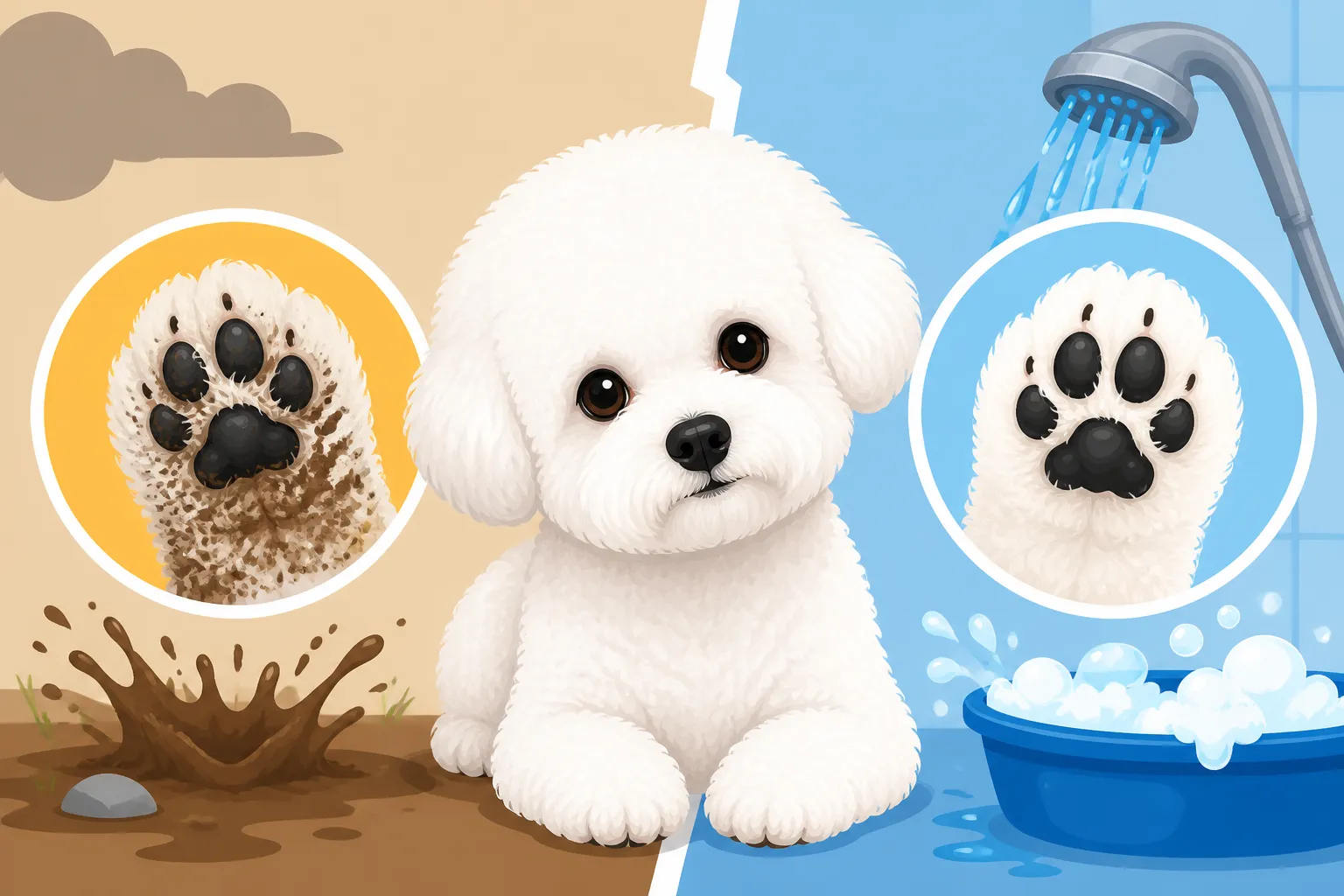
Imagine trying to keep a brand new white carpet spotless in a house with kids and pets – that's often what owning a Bichon Frise feels like! Their coats are a brilliant, unforgiving white, meaning that even the smallest amount of mud, dust, or grass stain stands out in stark contrast. While a darker-coated dog might come in with slightly muddy paws and you wouldn't notice until they'd tracked it across your clean floors, a Bichon's dirty paws are a flashing neon sign.
This isn't just about aesthetics, though that's certainly a big part of it. When their paws are visibly dirty, it's a clear indication that they're bringing outdoor elements inside. These elements aren't just dirt; they can be anything from microscopic allergens to irritating chemicals, all clinging to those beautiful white hairs. We want our Bichons looking their best, and that starts from the ground up, with clean, healthy paws.
Magnets for Muck: Textures, Pollen, and Irritants
It's not just the color, it's the texture! A Bichon's coat is soft, dense, and curly – perfect for trapping everything it touches. Their paws, in particular, have this wonderful, plush growth of hair between their paw pads. While this adds to their adorable "powder puff" look, it also creates an ideal trap for all sorts of outdoor invaders.
Think about a walk in the park: pollen from blooming flowers, tiny grass seeds, dust, small pebbles, even bits of decaying leaves can easily become embedded in that fluffy paw hair. If you live in an urban area, add road salt in winter, asphalt residue, or even tiny fragments of litter. When your Bichon comes inside, these aren't just going to magically fall off. Instead, they get transferred to your carpets, furniture, and eventually, if your dog licks their paws (which many do, especially when irritated), ingested. For Bichons prone to allergies, this is particularly important. Whether Pollen on the Coat Makes a Bichon Frise Itch is a common concern for many owners, and those allergens often hitch a ride on their paws. Regularly rinsing those paws can make a real difference in reducing their exposure to environmental triggers.
When and Why Rinsing is Absolutely Essential for Your Bichon
So, we've established that Bichon paws are dirt magnets. But when exactly does a simple wipe not cut it, and a full rinse becomes necessary? The answer often lies in their outdoor adventures and underlying health needs.
Post-Walk Rituals: Mud, Grime, and City Residue
Let's face it, our Bichons love their walks, rain or shine. But "shine" doesn't always mean clean and dry pavements!
- Muddy Adventures: This is perhaps the most obvious scenario. A romp through a damp park, a muddy trail, or even a soggy patch of grass in your backyard can turn those white paws into muddy brown stumps in seconds. A quick towel wipe might get the superficial mud, but the finer particles can remain, drying and caking between their pads, potentially leading to irritation or matting if not thoroughly removed.
- Rainy Day Rambles: Even if it's not overtly muddy, rain means puddles, and puddles mean splashing. Rainwater on streets and sidewalks can pick up all sorts of unsavory things – oil, antifreeze, street chemicals, and general urban grime. A thorough rinse after a rainy walk isn't just about cleanliness; it's about protecting your Bichon from licking off potentially harmful substances.
- Winter Woes: Oh, winter. While beautiful, it often brings salt, de-icers, and other harsh chemicals to sidewalks and roads. These substances are highly irritating to paw pads and can cause painful cracks or chemical burns. They also get stuck in the fur, and if ingested when your Bichon licks their paws, can cause digestive upset. A warm water rinse is crucial after any winter walk where these chemicals might be present.
- Rural vs. Urban: Whether you live in the countryside or the city impacts what kind of grime your Bichon picks up. Rural dogs might encounter more burrs, foxtails, and natural allergens, while city dogs face more chemical residues and hard-packed dirt. Both scenarios warrant a careful paw clean.
Allergy Relief: Washing Away Irritants
Many Bichon Frises, unfortunately, are prone to allergies, often manifesting as itchy skin and paws. This is where consistent paw rinsing moves from a cleanliness habit to a vital part of their health management. What Atopic Dermatitis Does to a Bichon Frise is a common condition where environmental allergens play a significant role.
When your Bichon walks outdoors, their paws literally collect airborne allergens like pollen, grass, and mold spores. These irritants then sit on their skin, causing itching. This leads to excessive licking, chewing, and biting at their paws, which only makes the problem worse, often resulting in red, inflamed skin, hot spots, or secondary yeast and bacterial infections. If you notice your Bichon constantly licking their paws after being outside, or if their paws appear red or irritated, a good rinse can offer immediate relief by washing away those irritating allergens. It's a simple, non-medicinal way to reduce their allergen load and break the itch-scratch cycle. Regular cleaning of paws is a proactive step in preventing these uncomfortable flare-ups.
Hygiene and Home Cleanliness: Protecting Your Living Space
Let's not forget the selfish reason (but a perfectly valid one!): keeping your home clean. A Bichon who regularly tracks dirt, mud, or even just outdoor dust into your home can leave a surprising trail. Imagine:
- Paw Prints Everywhere: Especially on hard floors, those tell-tale paw prints can appear in moments.
- Grime on Furniture: If your Bichon is allowed on the sofa or bed, any dirt on their paws will quickly transfer to your upholstery and bedding.
- Allergen Transfer: For human family members with allergies, bringing in outdoor allergens on dog paws can exacerbate symptoms.
By rinsing your Bichon's paws as part of their routine, you're not just caring for them; you're also maintaining a cleaner, healthier living environment for everyone in the household. It's about finding that balance between allowing your pup to enjoy the outdoors and protecting your home from the inevitable mess.
How to Effectively Rinse and Care for Your Bichon's Paws
Now that we know why we should be rinsing those adorable Bichon paws, let's talk about the how. It's a simple process, but doing it right makes all the difference for their comfort and your sanity.
Gathering Your Paw-Cleaning Arsenal
Before you even call your Bichon over, have everything ready. This makes the process smoother, quicker, and less stressful for both of you.
- Warm Water: A shallow basin, a dedicated paw washer, or a spray nozzle attached to your sink can work. The water should be comfortably warm, not hot or cold.
- Gentle Dog Shampoo or Paw Cleanser: For routine cleaning, a mild, tear-free dog shampoo is fine. If your Bichon has sensitive skin or allergies, consider a hypoallergenic or medicated paw cleanser recommended by your vet. You can find a vast array of options on platforms like Chewy or Amazon, from foaming cleansers to specialized washes. Remember to look for something gentle that won't strip their natural skin oils.
- Soft Towels: Lots of them! Bichon coats absorb water like sponges, and thorough drying is critical. Microfiber towels are excellent for wicking away moisture.
- Optional: Paw Wipes: For minor dirt or quick touch-ups when a full rinse isn't practical, high-quality, alcohol-free paw wipes are incredibly handy. These are great for when you're traveling or just need to freshen up between deeper cleans.
- Optional: Silicone Paw Washer: These clever devices are cups with soft silicone bristles inside. You add water (and a little shampoo if desired), insert your dog's paw, twist, and pull out a much cleaner paw. They're fantastic for really muddy situations and can be less messy than a full sink wash. Brands like MudBuster are popular and widely available.
- Treats: Always have some delicious, high-value treats on hand. Positive reinforcement makes the whole experience much more pleasant for your Bichon. Something small from Ollie that they adore could work wonders!
The Step-by-Step Paw Rinsing Process
Consistency and gentleness are key to making this a positive experience for your Bichon.
- Preparation is Key: Lead your Bichon to your designated paw-washing spot. This could be a utility sink, a small basin on the floor, or even just a designated spot in your bathroom. Have all your tools within reach.
- Wet the Paws: Gently wet one paw at a time with warm water. If using a paw washer, follow its instructions. If using a sink, you can use a small cup or a gentle stream from a sprayer. Focus on getting the hair between the paw pads thoroughly wet.
- Apply Cleanser (If Needed): If the paws are particularly dirty or you're addressing allergens, apply a small amount of dog shampoo or paw cleanser. Lather it gently, making sure to work it into the fur between the pads and toes. Be mindful not to get soap in their eyes or mouth.
- Rinse, Rinse, Rinse: This is the most crucial part. Rinse each paw thoroughly with clean, warm water until all traces of soap and dirt are gone. Soap residue can irritate their skin and attract more dirt. Pay extra attention to the areas between the pads, as shampoo can easily get trapped there. Just like Whether a Bichon Frise Needs Ear Drying After a Bath emphasizes thorough drying, thorough rinsing here is equally important to prevent irritation.
- Towel Dry Vigorously: Pat and rub each paw thoroughly with a clean, dry towel. Get in between the pads and toes. Bichon fur is dense, so moisture can linger, creating a breeding ground for yeast or bacteria. You want their paws to be as dry as possible.
- Repeat for All Paws: Work systematically through all four paws.
- Reward and Praise: Once all paws are clean and dry, give your Bichon lots of praise and a well-deserved treat. This reinforces that paw cleaning is a positive, rewarding experience.
Beyond the Rinse: Daily Paw Maintenance
Rinsing is excellent, but paw care doesn't stop there. Daily attention to their paws contributes significantly to their overall health and comfort.
- Regular Inspections: After rinsing (or even on days you just wipe them), take a moment to inspect their paws. Look for:
- Cuts, Scrapes, or Punctures: Small debris can cause minor injuries.
- Foreign Objects: Tiny stones, thorns, burrs, or even matted hair can get stuck between their pads.
- Redness or Swelling: Signs of irritation, infection, or an allergic reaction.
- Excessive Licking or Chewing: This is a clear indicator that something is bothering them.
- Trim Paw Hair: The fluffy hair between their pads can become long, making it easier to collect dirt, mat, and hide foreign objects. Regularly trimming this hair flush with their paw pads (using blunt-nosed scissors or small clippers) helps keep them cleaner and prevents painful matting. This also improves their traction on slippery floors. You might want to refer to Whether a Bichon Frise's Feet Need Trimmed Round for more grooming tips.
- Moisturize Dry Pads: Especially in harsh weather (hot pavement, cold ice), paw pads can become dry and cracked. A veterinarian-approved paw balm or moisturizer can help keep them supple and protected. Apply it after rinsing and drying, allowing it to absorb before your Bichon walks on carpets.
The Long-Term Benefits of Consistent Paw Care
It might seem like a small, routine task, but consistent and thorough paw care for your Bichon Frise offers a cascade of benefits that impact their health, happiness, and even your relationship with them.
Preventing Health Issues: From Skin Irritation to Infections
Neglecting paw hygiene can quickly escalate into uncomfortable and even painful problems for your Bichon. Those cute, fluffy paws are surprisingly vulnerable.
- Avoiding Dermatitis and Hot Spots: When dirt, chemicals, or allergens are left on the skin between the paw pads, they can cause irritation, leading to scratching, licking, and chewing. This self-trauma often results in acute moist dermatitis, commonly known as hot spots – red, oozing, painful skin lesions that require veterinary attention.
- Combating Yeast and Bacterial Infections: Moist, warm environments are perfect breeding grounds for yeast and bacteria. If paws aren't thoroughly dried after getting wet (whether from a walk, a rinse, or licking), or if debris causes microscopic breaks in the skin, infections can easily take hold. You might notice a reddish-brown staining, a foul odor, or excessive itching and discomfort. Whether a Bichon Frise Gets Yeast on Its Skin is a common problem, and good paw hygiene is a critical preventative measure. These infections can be persistent and require medicated soaks, topical treatments, or even oral medications from your vet.
- Early Detection of Injuries: Regular paw checks during rinsing make you intimately familiar with your Bichon's feet. This familiarity means you're much more likely to spot a small cut, a embedded thorn, a crack in a paw pad, or an unusual lump (like a tick!) before it becomes a major issue. Early detection often means easier and less costly treatment.
Strengthening Your Bond and Building Trust
Grooming, including paw care, isn't just a chore; it's an opportunity to build a deeper connection with your Bichon.
- Positive Handling Experiences: By making paw rinsing a gentle, routine, and rewarding experience, you teach your Bichon to tolerate and even enjoy being handled. This trust is invaluable for future vet visits, professional grooming sessions, or any time you need to examine them. If they learn that paw handling always leads to treats and praise, they'll be much more cooperative. Think of it like desensitization, similar to how you might Teaching a Bichon Frise to Accept Ear Treatment. Regular, calm paw handling makes other forms of care much easier.
- Comfort and Contentment: A dog whose paws are clean and free from irritation is a more comfortable dog. When they're not bothered by itchy feet, painful cracks, or annoying debris, they're generally happier, more relaxed, and more engaged with you. This enhanced comfort translates directly into a better quality of life and a more harmonious household.
A Happier, Healthier, and Cleaner Bichon
Ultimately, the consistent effort you put into rinsing and caring for your Bichon Frise's paws pays dividends in multiple areas. You get to enjoy a cleaner home, a dog that looks and feels their best, and the peace of mind knowing you're actively contributing to their well-being.
It might seem like a small detail in the grand scheme of dog ownership, but for a breed like the Bichon Frise, their paws are a gateway to both comfort and cleanliness. A few minutes of dedicated paw care after an outdoor excursion can prevent hours of itching, expensive vet visits, and endless vacuuming. It’s a habit that every Bichon owner should embrace for a happier, healthier life together.
Paw Cleaning Method Comparison
To help you decide which method is best for different situations, here's a quick comparison of common paw cleaning techniques for your Bichon Frise:
| Method/Tool | Pros | Cons | Best For |
|---|---|---|---|
| Warm Water Rinse | Simple, readily available, chemical-free, inexpensive. | Less effective for deeply embedded dirt or strong allergens. Can be messy without a dedicated setup. | Light dirt, quick refresh after a short walk, rinsing off salt/chemicals without heavy grime. |
| Paw Wipes | Quick, convenient, portable, good for on-the-go. | May not be thorough enough for heavy mud or sticky substances. Can leave residue if not high quality. | Quick clean-ups, travel, minor dirt, removing surface allergens, between full rinses. |
| Silicone Paw Washer | Provides a deeper clean than wipes, effectively removes embedded dirt. | Requires dog cooperation for insertion/twisting. Needs to be cleaned after each use. | Muddy paws, heavy grime, post-park visits, removing small debris like seeds or burrs. |
| Dog Shampoo & Tub | Most thorough cleaning, excellent for skin issues (with medicated shampoo). | Most time-consuming and can be the messiest. Requires a full drying process to prevent skin issues. | Very dirty paws, when addressing skin irritation or allergies, after prolonged outdoor exposure, full bath. |
Disclaimer
This article is for general informational purposes only and does not constitute professional advice. Laws, prices and regulations vary by location and change over time. Consult a qualified professional for guidance on your specific situation.