How Cushing’s Is Diagnosed in a Bichon Frise
It can be incredibly frustrating and nerve-wracking when your beloved Bichon Frise starts showing subtle, often vague symptoms that point to something serious, but you can't quite put your finger on it. Owners often notice increased thirst, a change in appetite, or thinning hair, only to find that diagnosing the underlying issue, like Cushing's disease, is far from straightforward. This comprehensive guide is here to walk you through the intricate process of how Cushing's is diagnosed in a Bichon Frise, from those initial worrying signs to the advanced tests your vet might recommend, helping you understand each step of the journey.
Understanding Cushing's Disease in Bichon Frises
Cushing's disease, or hyperadrenocorticism, is a condition where your Bichon Frise's body produces too much cortisol, a stress hormone. It's a common endocrine disorder in older dogs, and our fluffy friends, the Bichon Frises, are certainly not immune. The problem is, the symptoms can mimic many other age-related conditions, making it a real diagnostic challenge for both you and your veterinarian.
Recognizing the Subtle Early Signs
One of the trickiest things about Cushing's is that it often creeps up slowly, with symptoms that might initially seem like normal aging or other minor ailments. You might notice your Bichon Frise starting to drink water constantly, which we cover in more detail in our guide on Whether a Cushing's Bichon Frise Drinks Constantly. This isn't just a little more water than usual; we're talking about refilling the bowl multiple times a day, sometimes even leading to accidents indoors, even in a previously perfectly housetrained dog.
Beyond the thirst, an increase in appetite is common. Your once picky eater might suddenly become ravenous, begging for food constantly. Many owners also start to see changes in their Bichon's beautiful white coat. It might become thinner, duller, or even start falling out, especially on the flanks and body, leaving a very distinct pattern. You can learn more about this in Whether a Cushing's Bichon Frise Loses Its Coat. Another classic, yet often overlooked, sign is a "pot-bellied" appearance. Even if your Bichon isn't gaining much weight, their abdomen might seem distended, almost sagging, due to muscle weakness and redistribution of fat. Our article, Whether a Pot Belly Means Cushing's in a Bichon Frise, delves deeper into this particular symptom. These are just some of The Signs of Cushing's in a Bichon Frise that can indicate a problem.
Why a Diagnosis Can Be Tricky
The reason diagnosing Cushing's can feel like navigating a maze is multifaceted. First, as mentioned, the symptoms are often non-specific. Increased thirst could be diabetes, kidney disease, or even just habit. Hair loss could be allergies, skin infections, or hypothyroidism. Because Bichon Frises can be prone to various health issues like The Atopic Skin a Bichon Frise Is Born With or Why a Bichon Frise Forms Stones Twenty Times as Often, veterinarians often need to rule out several conditions before honing in on Cushing's.
Second, the diagnostic tests themselves aren't always a simple "yes" or "no." Cortisol levels fluctuate naturally throughout the day, and stress from a vet visit can significantly impact results, leading to false positives. Imagine your Bichon, already anxious about being at the clinic, having blood drawn – their stress response alone can spike cortisol. It's a dance between clinical signs and laboratory results, requiring careful interpretation and sometimes repeat testing. This is why having a vet who is experienced in endocrine disorders and understands the nuances of Bichon Frise health is so important.
The Initial Veterinary Consultation and Screening
When you first bring your concerns to your veterinarian, they'll embark on a systematic process to gather information and start narrowing down the possibilities. This initial phase is crucial, as it lays the groundwork for any further, more specialized testing.
Discussing Symptoms and Medical History
Your vet will begin by taking a detailed history. Be prepared to discuss everything you've observed, no matter how small or seemingly insignificant. This includes:
- Changes in thirst and urination: How much water is your Bichon drinking? How often are they asking to go outside? Are there any accidents?
- Appetite changes: Is your dog eating more, less, or behaving unusually around food?
- Weight fluctuations: Has your dog gained or lost weight? Do they look different, like the "pot belly" we discussed?
- Coat and skin changes: Any hair loss, thinning, poor coat quality, or recurrent skin infections?
- Activity level: Are they more lethargic, weak, or less interested in play?
- Any other general changes: Even minor behavioral shifts can be important.
It's helpful to keep a journal of these observations before your appointment. This detailed history, combined with a thorough physical examination (where the vet might feel for skin thickness, muscle wasting, or abdominal distension), helps your vet prioritize which conditions to investigate first. They'll also review your Bichon's existing medical records, noting any medications, especially steroids, as Whether Allergy Steroids Give a Bichon Frise Cushing's can sometimes present similarly.
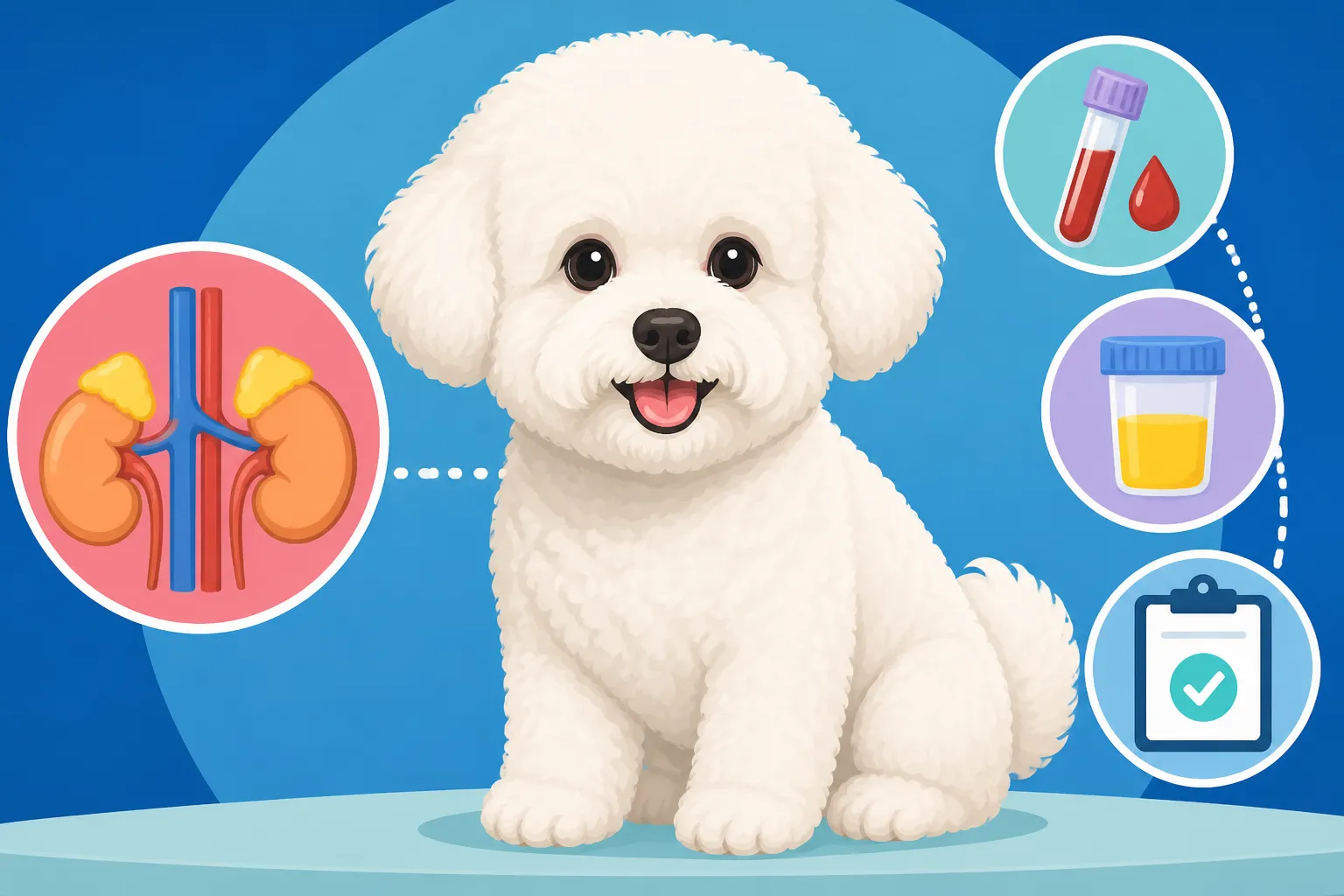
Basic Bloodwork and Urinalysis
After the initial discussion, your vet will likely recommend a baseline panel of diagnostic tests. These are standard screening tools that can point towards Cushing's or rule out other common diseases.
- Complete Blood Count (CBC): This evaluates red and white blood cells. In dogs with Cushing's, you might see an elevated white blood cell count (specifically neutrophils) and a decrease in lymphocytes, known as a "stress leukogram."
- Chemistry Panel: This looks at organ function and electrolyte balance. Common findings in Cushing's include elevated alkaline phosphatase (ALP), which is very sensitive but not specific to Cushing's, and sometimes elevated glucose, cholesterol, and liver enzymes.
- Urinalysis: This is incredibly important. A dog with Cushing's often has dilute urine (low specific gravity) because their kidneys struggle to concentrate urine due to the excess cortisol. They might also have protein in their urine or a urinary tract infection (UTI), as Cushing's can suppress the immune system, making them more susceptible to infections.
While these tests don't definitively diagnose Cushing's, they provide crucial clues. If several of these baseline results are abnormal and consistent with Cushing's, it strongly suggests the need for more specialized endocrine testing. A veterinary insurance plan, like one from Healthy Paws, can be incredibly helpful in managing the costs associated with these initial screenings and subsequent advanced diagnostics, giving you peace of mind during a stressful time.
Advanced Diagnostic Tests for Cushing's
Once initial bloodwork and clinical signs point towards Cushing's, your vet will usually recommend specific endocrine tests designed to measure cortisol levels more directly and assess the function of the adrenal glands. These tests are more involved and require careful timing.
Low-Dose Dexamethasone Suppression Test (LDDST)
This is often considered one of the most reliable screening tests for Cushing's disease. Here's how it generally works:
- Baseline Blood Sample: A blood sample is drawn to measure your Bichon Frise's resting cortisol level.
- Dexamethasone Administration: A small dose of dexamethasone, a synthetic corticosteroid, is given by injection. In a healthy dog, this should suppress the body's natural production of cortisol by signaling the pituitary gland to "turn off" the adrenal glands.
- Follow-up Blood Samples: More blood samples are drawn typically 4 hours and 8 hours after the injection to see if the cortisol levels have been suppressed.
In a dog with Cushing's, the adrenal glands continue to produce cortisol despite the dexamethasone, indicating that the normal feedback loop is broken. Elevated cortisol levels in the follow-up samples strongly suggest Cushing's. However, it's not foolproof. Other illnesses can sometimes cause abnormal results, so it's always interpreted in conjunction with your Bichon's clinical signs and other test findings.
ACTH Stimulation Test
The ACTH (Adrenocorticotropic Hormone) stimulation test is another key diagnostic tool, particularly useful for diagnosing iatrogenic Cushing's (caused by external steroid administration) and for monitoring dogs undergoing treatment for Cushing's.
- Baseline Blood Sample: Similar to the LDDST, a initial blood sample is taken to measure baseline cortisol.
- ACTH Administration: A synthetic form of ACTH is injected. ACTH is the hormone that normally stimulates the adrenal glands to produce cortisol.
- Follow-up Blood Sample: Approximately 1 to 2 hours after the injection, a second blood sample is drawn.
In a healthy dog, this injection will cause a modest increase in cortisol. In a dog with Cushing's, the adrenal glands are already overactive, and they will produce an exaggerated amount of cortisol in response to the ACTH. This test provides a snapshot of the adrenal glands' maximum cortisol production capacity. While it's excellent for confirming Cushing's and differentiating from iatrogenic causes, it's generally less sensitive than the LDDST for initial diagnosis of naturally occurring Cushing's. For many owners, understanding the costs involved with these advanced tests, such as What an ACTH Stimulation Test Costs on a Bichon Frise, highlights the value of pet insurance from providers like Healthy Paws.
Abdominal Ultrasound for Adrenal Glands
Beyond blood tests, an abdominal ultrasound can provide crucial visual information about your Bichon Frise's adrenal glands, which are tiny glands located near the kidneys. This imaging technique is non-invasive and provides real-time images.
During an ultrasound, the vet will be looking for:
- Adrenal Gland Size and Shape: In pituitary-dependent Cushing's (the most common form, where a tumor on the pituitary gland overstimulates the adrenals), both adrenal glands are typically enlarged. If it's adrenal-dependent Cushing's (where a tumor on one of the adrenal glands is causing the problem), one adrenal gland will be significantly enlarged, while the other might be atrophied (shrunken) due to suppression.
- Adrenal Masses: The ultrasound can detect any masses or tumors on the adrenal glands, which would point towards an adrenal-dependent form of the disease.
While an ultrasound doesn't measure cortisol directly, it offers invaluable anatomical information that helps to confirm the diagnosis and, importantly, differentiate between the two main types of Cushing's, which guides treatment decisions. This is an important step in fully understanding the scope of the disease in your Bichon.
Differentiating Between Types of Cushing's
Once Cushing's is confirmed, the next critical step is to determine which type of the disease your Bichon Frise has. This distinction is vital because the treatment approaches differ significantly.
Pituitary-Dependent vs. Adrenal-Dependent
There are two primary forms of naturally occurring Cushing's disease in dogs:
- Pituitary-Dependent Hyperadrenocorticism (PDH): This accounts for about 80-85% of cases. It's caused by a benign (usually) tumor in the pituitary gland, located at the base of the brain. This tumor overproduces ACTH, which then constantly stimulates both adrenal glands to produce excessive cortisol. Since the pituitary gland is telling the adrenals to work overtime, both adrenal glands tend to be enlarged. Our article, What Pituitary Cushing's Does to a Bichon Frise, explores this in more detail.
- Adrenal-Dependent Hyperadrenocorticism (ADH): This accounts for about 15-20% of cases and is caused by a tumor (which can be benign or malignant) on one of the adrenal glands itself. This adrenal tumor independently produces excessive cortisol, suppressing the pituitary gland's normal ACTH production. As a result, the affected adrenal gland is enlarged, while the other, healthy adrenal gland often shrinks due to lack of stimulation from the suppressed pituitary.
Differentiating these types is crucial. Pituitary tumors are usually managed medically, while adrenal tumors may sometimes be surgically removed if they are benign and detected early.
The Role of High-Dose Dexamethasone Suppression Test (HDDST)
To help distinguish between PDH and ADH, vets sometimes use a High-Dose Dexamethasone Suppression Test (HDDST). This test is similar to the LDDST, but a much larger dose of dexamethasone is administered.
- How it works: In dogs with PDH, the higher dose of dexamethasone is often enough to partially suppress the overactive pituitary gland, leading to a drop in cortisol levels, though not to normal levels.
- Interpreting results: If the cortisol levels do suppress with the HDDST, it strongly suggests PDH. If the cortisol levels do not suppress even with the high dose, it suggests ADH, as the adrenal tumor is acting independently and isn't influenced by the pituitary's signals.
However, the HDDST isn't always definitive, and its accuracy can vary. Often, a combination of the LDDST, ACTH stim test, and abdominal ultrasound findings (especially the appearance of the adrenal glands) is used to make the most accurate determination of the type of Cushing's.
Here's a quick comparison of the common diagnostic tests:
| Test | Purpose | Key Findings in Cushing's | Pros | Cons |
|---|---|---|---|---|
| CBC/Chemistry/Urinalysis (Initial) | General health screen, rule out other diseases | Elevated ALP, dilute urine, stress leukogram | Readily available, cost-effective screening | Not diagnostic on its own, many false positives |
| Low-Dose Dexamethasone Suppression Test (LDDST) | Primary screening for Cushing's | Lack of cortisol suppression | High sensitivity, good for initial diagnosis | Can have false positives, stress can influence results |
| ACTH Stimulation Test | Confirms Cushing's, differentiates iatrogenic | Exaggerated cortisol response | Excellent for monitoring treatment, less affected by stress | Lower sensitivity for spontaneous Cushing's, can be negative in early cases |
| Abdominal Ultrasound | Visualizes adrenal glands | Enlarged adrenals (both for PDH, one for ADH) or adrenal tumor | Identifies adrenal masses, helps differentiate PDH vs. ADH | Requires specialized equipment/expertise, doesn't measure cortisol |
| High-Dose Dexamethasone Suppression Test (HDDST) | Differentiates PDH vs. ADH | Partial cortisol suppression (PDH), no suppression (ADH) | Helps guide treatment, distinguishes between types | Not always definitive, some ADH cases may suppress |
What to Expect After a Diagnosis
Receiving a Cushing's diagnosis for your Bichon Frise can feel overwhelming, but it's important to remember that it's a manageable condition, and treatment can significantly improve your dog's quality of life.
Discussing Treatment Options
The treatment plan will largely depend on the type of Cushing's your Bichon has been diagnosed with:
- Medical Management for PDH: For pituitary-dependent Cushing's, the most common approach is medical management using medications that inhibit cortisol production. The most widely used medication is trilostane, sold under brand names like Vetoryl. This medication is given daily and works by blocking an enzyme involved in cortisol synthesis in the adrenal glands. It doesn't cure the pituitary tumor, but it controls the excess cortisol production, alleviating symptoms. Our guide, Whether Trilostane Works on a Bichon Frise, offers a deeper look into this treatment.
- Surgery for ADH: If an adrenal tumor is diagnosed, especially if it's benign and localized, surgical removal of the affected adrenal gland (adrenalectomy) might be an option. This can be curative, but it's a complex and high-risk surgery that requires a specialist veterinary surgeon. If the tumor is malignant or has metastasized, medical management might be the more practical approach.
- Radiation Therapy: In some rare cases, particularly with large or aggressive pituitary tumors, radiation therapy might be considered, but this is a specialized and costly treatment.
Your vet will discuss all suitable options, explaining the pros, cons, potential side effects, and expected outcomes for your individual Bichon Frise.
Managing the Condition Long-Term
Living with a Bichon Frise diagnosed with Cushing's disease means committing to long-term management and regular veterinary check-ups. It's a journey, not a sprint.
- Medication Adherence: If your Bichon is on medication like trilostane, consistent daily administration is crucial. Missing doses can lead to a return of symptoms.
- Regular Monitoring: Dogs on Cushing's medication require frequent monitoring, especially in the initial stages of treatment. This involves follow-up ACTH stimulation tests and bloodwork to ensure the medication dose is correct and that cortisol levels are within the target range. We explore this further in What Monitoring Cushing's Costs on a Bichon Frise. Too little medication means symptoms persist; too much can lead to an Addisonian crisis, where cortisol levels drop too low, which is a life-threatening emergency.
- Quality of Life: The goal of treatment isn't necessarily to achieve completely normal cortisol levels, but to alleviate clinical signs and improve your Bichon's quality of life. You should see a reduction in thirst, urination, appetite, and an improvement in coat and energy levels. While Cushing's itself can shorten a Bichon's lifespan, effective management can mean your dog can still enjoy a good quality of life for an extended period, as discussed in Whether a Bichon Frise With Cushing's Lives Long.
- Support: It's okay to feel overwhelmed. Connect with your veterinary team, consider online support groups for owners of dogs with Cushing's, and remember that you're doing your best for your furry family member. Pet insurance from providers like Healthy Paws can also offer ongoing financial support for the continuous medication and monitoring required, making the long-term management more feasible.
This journey requires patience, vigilance, and a close partnership with your veterinarian, but with proper diagnosis and management, your Bichon Frise can continue to bring joy and companionship to your life.
Disclaimer
This article is for general informational purposes only and does not constitute professional advice. Laws, prices and regulations vary by location and change over time. Consult a qualified professional for guidance on your specific situation.