Whether Crate Training Works on a Bichon Frise
The idea of crate training your sweet, fluffy Bichon Frise can sometimes feel a bit… well, cage-like, which is probably the last thing you want for your beloved companion. Many owners worry that it's cruel or that their sensitive little friend will hate it, leading to a lot of resistance and sometimes, a whole lot of housetraining headaches. But done right, crate training isn't about punishment; it's about providing a safe, comfortable den for your dog and can actually be one of the most effective tools for successful housetraining, managing separation anxiety, and ensuring their safety and your peace of mind. This guide will walk you through making the crate a positive, welcoming space for your Bichon, turning a potentially stressful experience into a beneficial one for both of you.
Understanding the Bichon Frise Temperament and Crate Training
Bichon Frises are known for their cheerful, intelligent, and affectionate nature. They thrive on companionship and can sometimes be quite sensitive. Understanding these core traits is key to approaching crate training in a way that resonates with your particular furry friend, ensuring it's a positive rather than a punitive experience.
Why Bichons Can Be Perceived as Challenging
Let's be real, while Bichons are generally a joy, they do come with a few quirks that can make certain aspects of training, like housetraining, feel like an uphill battle. Their strong desire for companionship means they can develop separation anxiety if left alone for extended periods without proper acclimatization. This isn't naughtiness; it's genuine distress, and it can manifest as whining, barking, or even accidents when you're not around. Their small bladders also play a role, making housetraining a more frequent, intense endeavor than with larger breeds. Because they are so attached to their humans, any training method that feels isolating or frightening can be counterproductive, leading them to resist rather than learn. It's often said that Why a Bichon Frise Is Famously Hard to Housetrain, and a lot of that comes down to their sensitive nature and their need for connection.
This isn't to say your Bichon is "difficult," but rather that they respond best to positive, patient, and consistent training. A harsh tone or a scary experience in the crate can set back progress significantly. Instead of forcing the issue, we want to create an environment where the crate is seen as a safe, cozy retreat. Their intelligence means they can learn quickly, but their sensitivity means how you teach them is paramount.
The Core Principles of Successful Crate Training for a Bichon
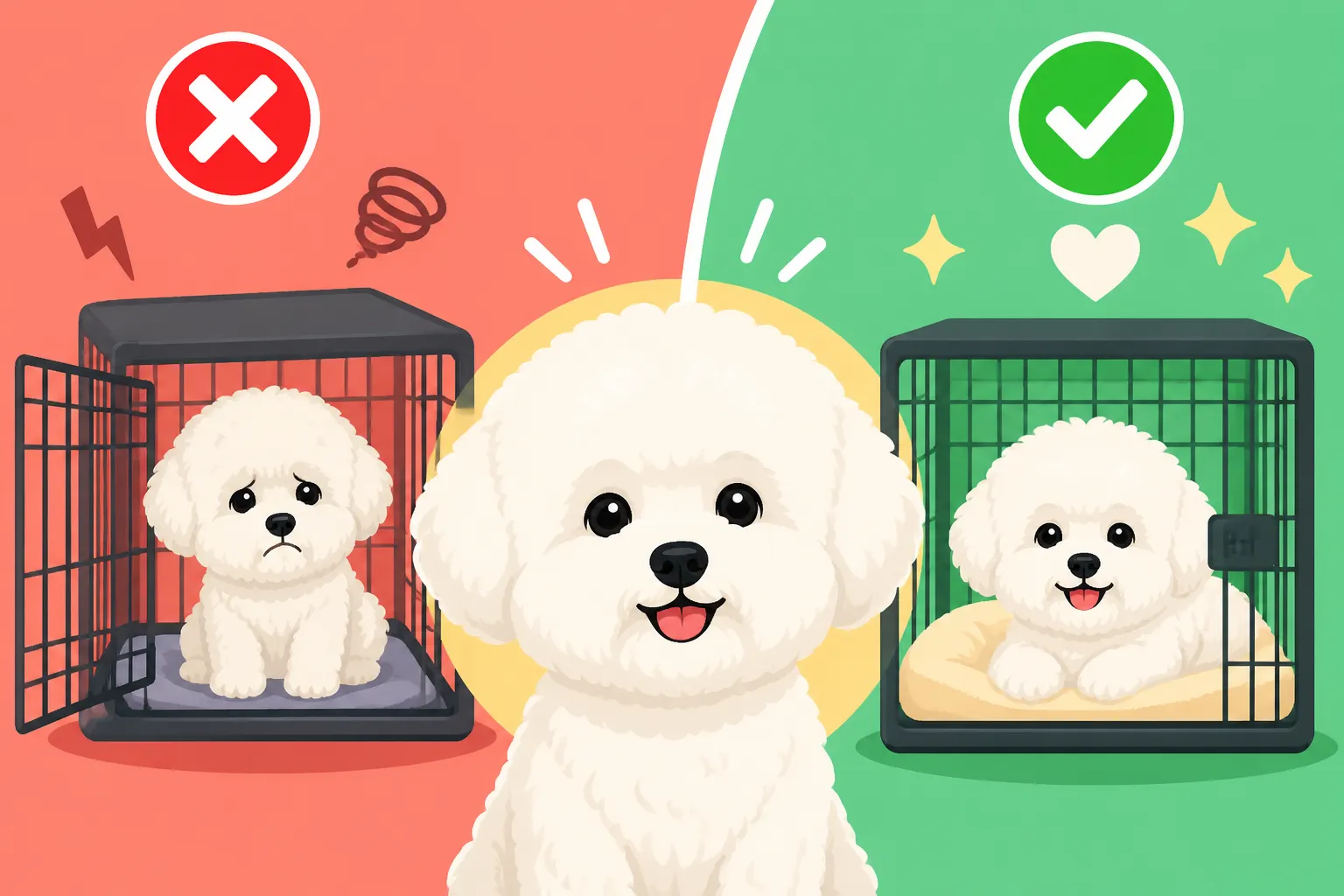
Successful crate training for a Bichon Frise hinges entirely on positive reinforcement and a gradual introduction. Think of the crate not as a jail, but as your dog's personal bedroom or den – a safe, comfortable space where they can relax, feel secure, and retreat when they need quiet time. This mindset shift for you, the owner, is the first critical step. Never use the crate as punishment; if they associate the crate with being "bad," all your efforts will be for naught.
The process involves making the crate a genuinely attractive place. This means luring them in with treats, feeding meals inside, and associating it with good things like their favorite toys or chew bones. Consistency is also paramount; a routine helps your Bichon understand what's expected of them and reduces anxiety. Resources like BAXTER & Bella offer comprehensive online puppy schools that often include detailed modules on crate training, providing structured guidance that aligns perfectly with a positive reinforcement approach, helping you navigate these steps with confidence.
Setting Up the Perfect Crate Environment
The physical setup of the crate itself plays a huge role in whether your Bichon embraces it as their safe haven or views it with suspicion. It's more than just a box; it's a personalized space designed for comfort and security.
Choosing the Right Crate Size and Type
Selecting the correct crate size is fundamental. A common mistake is getting a crate that's too large. While you might think more space is better, a crate that's too big allows your Bichon to potty in one corner and sleep in another, completely undermining its role in housetraining. The crate should be just large enough for your Bichon to comfortably stand up, turn around, and lie down. For puppies, a divider is incredibly useful. You can adjust the size of the usable space as they grow, ensuring it always meets the "just right" criteria.
There are generally two main types of crates: wire and plastic (often called "airline" or "travel" crates). Wire crates offer better ventilation and visibility, which some dogs prefer, and they often come with dividers. They can be found readily on platforms like Amazon, offering a wide variety of sizes and features. Plastic crates offer more of a den-like feel, providing a darker, more enclosed space that many dogs find inherently secure. They're also sturdier for travel. Both types have their merits, and the best choice often comes down to your individual Bichon's preference and your specific needs (e.g., if you plan to travel by air).
Making the Crate Inviting and Comfortable
Once you have the right size and type of crate, the next step is to make it as cozy and appealing as possible. This means soft, comfortable bedding. Old towels, soft blankets, or a specifically designed crate bed will work. Ensure the bedding is easily washable, especially during the housetraining phase, as accidents can happen. Placing a favorite, non-destructible chew toy or a puzzle toy stuffed with a high-value treat inside the crate can also make it a desirable destination. This transforms the crate from an empty box into a source of comfort and entertainment.
Consider the crate's location carefully. In the early stages, placing the crate in an area where your family spends a lot of time, like the living room, can help your Bichon feel less isolated. At night, it might be beneficial to have the crate in your bedroom or very close by. This proximity provides reassurance, especially for a breed that thrives on companionship, and helps prevent nighttime whining or distress. Once your Bichon is comfortable and secure in their crate, you can gradually move it to a more permanent spot if desired. Some owners even use a dedicated pet cam, also available on Amazon, to monitor their Bichon and ensure they are settling well in their crate.
The Step-by-Step Crate Training Process
Patience and consistency are your best friends during this process. Rushing can create negative associations, whereas a slow, positive approach builds trust and comfort.
Introducing Your Bichon to the Crate Gradually
The very first step is to make the crate a non-threatening, even exciting, object. Place the crate in an accessible area with the door open. Sprinkle high-value treats (think tiny pieces of cooked chicken or cheese) inside and around it. Let your Bichon explore it at their own pace. Don't force them in. The goal is for them to voluntarily enter.
Once they're comfortable walking in and out to get treats, start feeding them their meals inside the crate. Place their food bowl just inside the door, gradually moving it further back each day until they are fully inside to eat. While they're eating, gently close the door for a few seconds, then open it before they finish. Gradually increase the time the door is closed, always opening it before they show any signs of anxiety. The key here is to keep it positive and short. They should associate the crate with good things – food, treats, and quiet time – not with being trapped. This gradual approach is crucial, especially for The First Year With a Bichon Frise Puppy.
Extending Crate Time and Overnight Stays
After your Bichon is comfortable with short, closed-door sessions, you can start extending the time. Begin by closing the door and leaving the room for a few minutes. Return before they start to fuss. If they do start to whine, wait for a brief moment of silence before returning, otherwise, you'll inadvertently teach them that whining brings you back. Slowly increase the duration you're out of sight. Keep the departures and returns low-key, without excessive fanfare, to avoid creating drama around your absence.
For overnight stays, consistency is vital. Make the crate part of their bedtime routine. Take them out for a final potty break right before bed, then guide them into their crate with a treat. Place the crate in your bedroom initially so they can hear and smell you, providing comfort. If they whine, remember the "wait for silence" rule. If the whining persists, it might indicate they need another potty break, especially for young puppies. Puppies often cannot hold their bladder all night, and you might need to take them out once or twice. For guidance on appropriate duration, consider referring to resources like How Many Weeks a Bichon Frise Takes to Be Clean or Whether a Bichon Frise Needs Waking in the Night. As they mature and can hold their bladder for longer, you can gradually move the crate if you prefer.
Addressing Common Crate Training Challenges
It's rare for crate training to be entirely smooth sailing. You'll likely encounter some common hurdles. Whining and barking are probably the most frequent. As mentioned, resist the urge to immediately let them out when they fuss, as this teaches them that noise equals freedom. Wait for a lull in the noise, even just a few seconds of quiet, before opening the crate. This reinforces calmness. Ensure they've had sufficient exercise and a potty break before crating them, as pent-up energy or a full bladder can lead to discomfort and vocalization.
Accidents inside the crate are another challenge. If this happens, it's usually for one of two reasons: the crate is too big, allowing them to relieve themselves away from their sleeping area, or they weren't able to hold it (either due to a medical issue, insufficient potty breaks, or being left too long). Rule out medical issues first with a vet check. Then, re-evaluate crate size and potty schedule. Remember, the goal is to leverage their natural instinct not to soil their sleeping area. If accidents persist, it's a clear sign that adjustments are needed.
Crate Training for Housetraining Success
One of the most powerful benefits of successful crate training is its profound impact on housetraining, especially for a breed like the Bichon Frise. It provides structure and taps into their natural instincts.
How Crate Training Aids Housetraining
The fundamental principle behind crate training for housetraining is simple: most dogs instinctively avoid soiling their sleeping area. A correctly sized crate capitalizes on this natural aversion. When your Bichon is in their crate, they're much less likely to have an accident. This dramatically reduces the opportunities for them to practice "going" indoors, which is a huge step in breaking bad habits and establishing good ones.
By limiting their unsupervised freedom and using the crate, you create a structured routine of supervised playtime followed by a trip outside to their designated potty spot. Every time they're taken out of the crate, the first thing you do is take them directly outside. This reinforces the idea that "outside" is the place to relieve themselves. This disciplined approach is invaluable when you consider that a Bichon Frise is slower to housetrain than most due to their small size and perhaps less obvious cues. The crate acts as a silent partner in teaching bladder control and appropriate elimination habits.
Combining Crate Training with a Consistent Potty Schedule
Crate training is most effective for housetraining when combined with a strict, consistent potty schedule. For a young Bichon puppy, this means taking them out every 1-2 hours, immediately after waking up, after eating or drinking, and before going into their crate. Older puppies and adult Bichons can hold it for longer, but still benefit from a consistent schedule. For example, The Toilet Routine That Finally Works on a Bichon Frise often involves waking up, immediate potty break, breakfast, potty break, play, potty break, nap in crate, wake up, potty break, and so on.
When you take them out, stay with them and reward them enthusiastically with praise and a small treat the moment they go potty outside. This positive reinforcement solidifies the connection between going in the right place and receiving a reward. If they don't go, bring them back inside and put them back in the crate for 10-15 minutes, then try again. This teaches them that relief comes after going outside. Never scold them for accidents inside; simply clean them up thoroughly with an enzymatic cleaner to eliminate odors that might attract them back to the same spot. Consistency and patience here are key. Whether a Bichon Frise Learns to Use a Pad can be a tempting shortcut, but it can also slow down outdoor housetraining if not managed carefully alongside crate training.
Crate Training Beyond Puppyhood: When and Why to Continue
While often associated with puppyhood, crate training isn't just a phase; it can be a valuable tool throughout your Bichon's life, providing safety, security, and convenience in various situations.
Crate Training for Safety and Management
A well-adjusted adult Bichon who views their crate as a safe haven can benefit from it in many ways. It provides a secure place for them when you can't directly supervise them, preventing destructive chewing or getting into things that could harm them. If you have guests over who might not be comfortable with dogs, or if your Bichon gets overwhelmed, their crate offers a quiet retreat.
Crates are also invaluable for travel, making car rides safer and less stressful. They provide a familiar, secure space in new environments, like hotels or vacation rentals. In unforeseen circumstances, such as an emergency evacuation, having a dog accustomed to a crate can be life-saving. Furthermore, should your Bichon ever need surgery, like for Whether a Bichon Frise's Kneecap Needs Surgery or What Stone Surgery Involves on a Bichon Frise, being comfortable in a crate can greatly aid their recovery by providing a calm, contained space for rest and limited activity. This helps prevent them from overexerting themselves or licking surgical wounds excessively.
The Importance of Not Using the Crate as Punishment
This point cannot be stressed enough: never, ever use the crate as a form of punishment. If your Bichon does something naughty, scolding them and then putting them in their crate will destroy all the positive associations you've worked so hard to build. The crate should always be a place of safety, comfort, and positive experiences.
If you use the crate for punishment, your Bichon will quickly learn to fear or resent it, making all future crate training efforts incredibly difficult, if not impossible. Instead of seeing it as their den, they'll see it as a jail. This can lead to increased anxiety, resistance, and even behavioral problems down the line. If your Bichon misbehaves, redirect their energy, teach them an alternative behavior, or, if necessary, calmly remove them from the stimulating situation. The crate is a tool for management and comfort, not discipline.
Alternatives and Considerations for Crate Training a Bichon
While crate training is highly effective for many Bichons, it's not the only option, and it's important to recognize when it might not be the best fit for your individual dog or circumstances.
Playpens and Dog-Proofed Rooms
For some owners, or specific situations, a dog playpen or a dog-proofed room can be a good alternative or a complementary tool to a crate. A playpen offers more space than a crate, allowing for a bed, water, and some toys, without giving them free run of the house. This can be particularly useful for puppies who need more room to move but aren't quite ready for full house privileges, or for short periods when you just need to contain them safely. Many owners find playpens helpful for managing a Bichon when they're The First Year With a Bichon Frise Puppy.
Similarly, designating a dog-proofed room (like a laundry room or kitchen with a baby gate) can work. This means removing anything dangerous, valuable, or tempting to chew, and ensuring they have water, a comfortable bed, and toys. The downside of a playpen or room is that it doesn't leverage the dog's natural instinct not to soil their sleeping area as effectively as a crate, so housetraining might progress more slowly, or they might be more prone to accidents. However, for a Bichon with certain anxieties or a strong aversion to confinement, these options provide a compromise, offering containment without the full enclosure of a crate.
Understanding When Crate Training Might Not Be the Right Fit
Despite its many benefits, crate training isn't a universal solution for every single dog. Some Bichons, particularly those with severe separation anxiety, a history of trauma (especially if they were crated excessively or improperly in the past), or certain medical conditions, may struggle significantly. A dog with severe separation anxiety might injure themselves trying to escape the crate, making it unsafe and exacerbating their fear. For a Bichon who Whether a Bichon Frise Cries When You Leave relentlessly or panics in the crate, forcing the issue can do more harm than good.
In these cases, it's crucial to consult with a professional dog trainer or a veterinary behaviorist. They can help diagnose underlying issues, such as true separation anxiety, and recommend alternative strategies or behavioral modification plans. These might include desensitization and counter-conditioning techniques, or even medication in severe cases, to help your Bichon cope with being alone. While the goal is always a happy, well-adjusted pet, recognizing when a particular training method isn't working and seeking expert help is a sign of responsible pet ownership.
Here's a quick comparison of common confinement options:
| Feature | Crate (Properly Sized) | Playpen | Dog-Proofed Room |
|---|---|---|---|
| Purpose | Housetraining, safety, den, travel | Containment, safety, more space, short-term supervision | Containment, safety, extended unsupervised periods |
| Housetraining Aid | Excellent (leverages den instinct) | Fair (more space for accidents) | Limited (easy to have accidents away from sleeping area) |
| Space Provided | Minimal (just enough to stand, turn, lie down) | Moderate (room for bed, toys, movement) | Ample (full room access) |
| Portability | Good (some models fold down) | Moderate (can be bulky) | None (fixed location) |
| Anxiety Reduction | Excellent (if introduced positively, "den" effect) | Good (less confinement, but less "den-like" security) | Fair (can still feel isolated, less defined safe space) |
| Cost | Moderate | Moderate | Low (if you already have a suitable room/gate) |
| Supervision Required | Low (once comfortable for extended periods) | Moderate (need to ensure they don't climb/chew out) | Low (once fully dog-proofed) |
Disclaimer
This article is for general informational purposes only and does not constitute professional advice. Laws, prices and regulations vary by location and change over time. Consult a qualified professional for guidance on your specific situation.