Teaching a Bichon Frise to Hold Still on a Table
One of the trickiest parts of sharing your life with a delightful Bichon Frise is the grooming. Their beautiful, cloud-like coats are high-maintenance, and getting them to calmly accept regular brushing, clipping, and scissoring on a grooming table can feel like an Olympic sport for both of you. This guide is here to walk you through the process of patiently and positively teaching your Bichon Frise to stand still on a table, turning what can be a stressful chore into a manageable, even pleasant, routine for everyone involved.
Why Standing Still on a Table Can Be a Big Ask for Your Bichon Frise
Let's be honest, standing still on a raised surface while someone fiddles with your fur isn't exactly a natural canine instinct. For a small dog like a Bichon Frise, it can feel especially vulnerable. Understanding why your furry friend might resist is the first step toward effective training. It's rarely about them being "naughty" and almost always about their comfort, understanding, and past experiences.
The Fear Factor: Heights and Instability
Imagine yourself on a wobbly surface, perhaps a step stool, and someone is trying to give you a haircut. Even as a human, you'd likely feel a bit apprehensive, right? For a Bichon Frise, being lifted onto a table can trigger a natural fear of heights. Their instincts tell them that being elevated exposes them to potential falls or danger. If the table surface is slippery, or if they haven't been properly introduced to it, that instability only heightens their anxiety.
This isn't just a psychological hurdle; it's physical. A wobbly grooming table, or one without a good non-slip mat, can make your Bichon feel precarious. They might try to sit down, scrabble, or jump off simply because they don't feel secure. Creating a stable, safe environment is paramount to overcoming this initial fear and building trust.
Prior Negative Experiences or Lack of Exposure
Sometimes, our little Bichons have had less-than-ideal grooming experiences before they come to us, or perhaps their initial encounters with grooming were rushed or uncomfortable. A hurried brush, a painful mat removal, or even just being held too tightly can create negative associations with the grooming process, and by extension, with the grooming table itself. If every time they get on the table, something unpleasant happens, it's only natural for them to resist.
Even without explicitly negative experiences, a lack of early, positive exposure can be a problem. If a puppy isn't introduced to grooming tools and being handled on a table from a young age, it can be overwhelming for them later on. Suddenly, being placed on a strange, high surface and having unfamiliar tools used on them can be a sensory overload that leads to fear and resistance. This highlights the importance of starting early and making every interaction a positive one.
Laying the Groundwork: Early Socialization and Positive Associations
The secret to a calm Bichon on the grooming table often begins long before they ever step foot on one for a full groom. It's about building a foundation of trust, positive reinforcement, and gradual desensitization to handling and tools. Think of it as preparing them for success, rather than just expecting them to tolerate it.
Puppy Desensitization to Handling and Touch
From the moment you bring your Bichon Frise puppy home, you have an incredible opportunity to shape their future grooming behavior. Start by making gentle handling a regular, positive part of your daily routine. This means touching their paws, ears, tail, and face frequently, always pairing it with praise, gentle words, and tiny, high-value treats. Pick up their feet, separate their toes, look in their ears, and touch their muzzle. Do this briefly and often, not just when grooming is necessary.
The goal is to teach your puppy that being handled in these sensitive areas is a normal, pleasant experience. If they learn early that a gentle touch leads to a treat, they'll be far less likely to react negatively when those areas need attention during a groom. Consistency is key here; a few seconds of positive handling several times a day is much more effective than one long, overwhelming session. Consider an online puppy class like those offered by BAXTER & Bella, which often emphasize cooperative care and handling from a young age. This can provide structured guidance for these vital early lessons.
Positive Association with Grooming Tools and the Table Itself
Once your Bichon is comfortable with general handling, it's time to introduce the grooming tools. Lay out brushes, combs, clippers (turned off at first), and even the grooming table itself in a neutral, non-threatening way. Let your dog sniff them. Reward their curiosity with treats. Then, gently touch the tools to their body, again, paired with treats and praise. Start with the least invasive tools, like a soft brush, and gradually work up to others.
The grooming table should also be introduced positively. Start by placing it on the floor, letting your Bichon explore it. Toss treats on it, encourage them to stand on it, then step off, always with praise. Gradually, raise the table slightly, repeating the positive association. The idea is for them to see the table not as a scary pedestal of discomfort, but as a place where good things (treats, praise, gentle attention) happen. You might find sturdy, adjustable grooming tables and non-slip mats readily available on Amazon to help create this positive environment. Remember, the goal is to make these objects part of their normal, happy world, not something to be feared.
The Gradual Approach: From Floor to Table
Once your Bichon is comfortable with handling and the idea of grooming tools, it's time to translate that comfort to the grooming table itself. This isn't a one-and-done process; it's a series of small, manageable steps that build confidence and cooperation. Patience is your most important tool during this phase.
Introducing the Table and Short Sessions
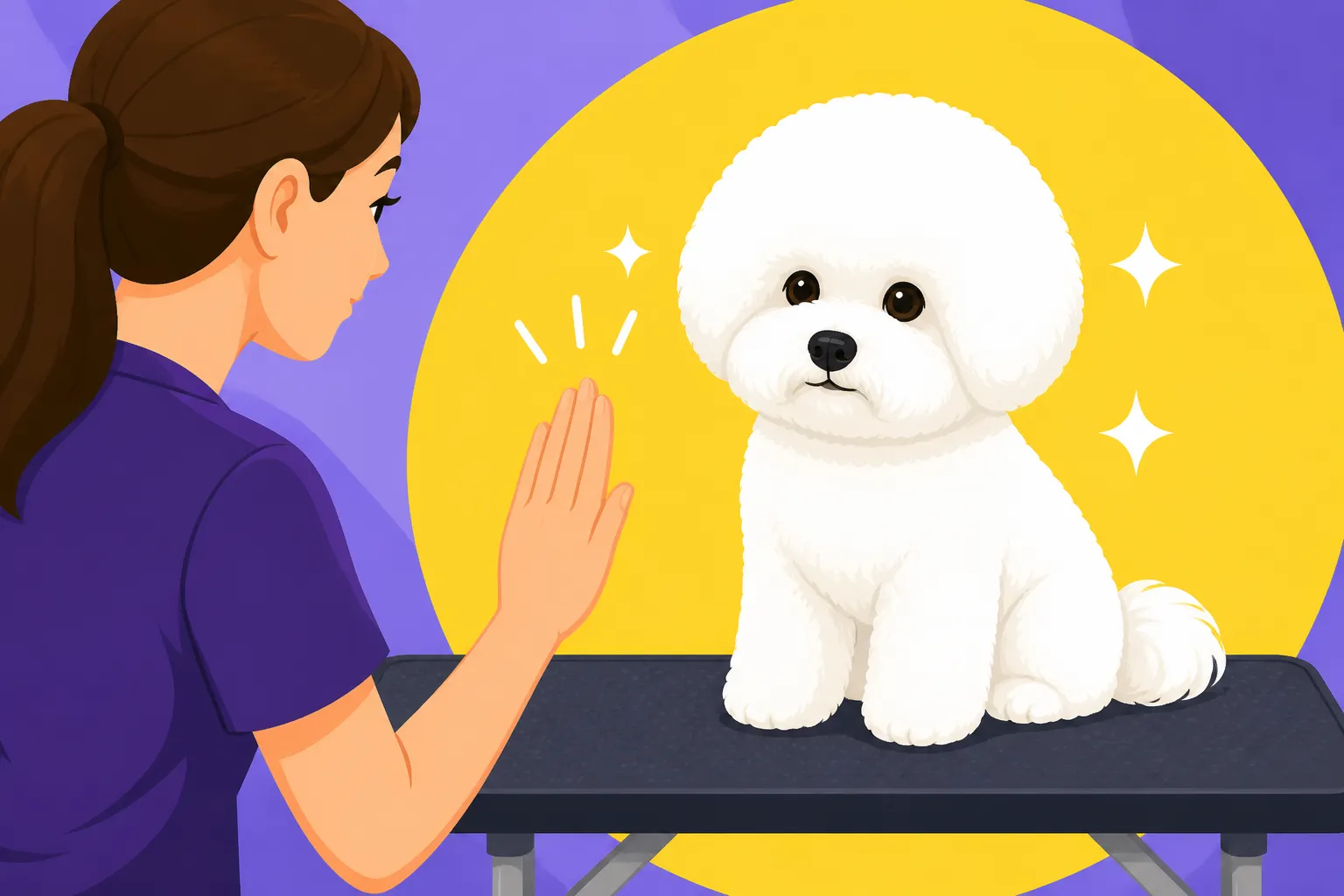
Before you even think about full grooming sessions, focus purely on getting your Bichon onto the table and having them stand calmly for a very short period. Begin with the table at a comfortable height for you, but one that your dog can safely get on and off with minimal stress, perhaps by using a ramp or lifting them gently. Place a non-slip mat on the table to ensure their footing. Reward them simply for being on the table. A little lick of peanut butter smeared on a silicone mat attached to the grooming arm can be a wonderful distraction and positive reinforcer.
Start with sessions lasting only 30 seconds to a minute. The moment your Bichon stands still, even for a few seconds, praise them lavishly and give a high-value treat, then let them off the table. Keep these initial sessions incredibly positive and end them before your dog gets restless or anxious. The idea is to make them think, "Wow, that was easy, and I got treats!" rather than "Ugh, finally I'm off that thing!" Gradually increase the duration by 15-30 seconds over several days or weeks, always observing their comfort level. This slow, steady progress builds their tolerance and trust.
Gradually Increasing Duration and Handling Specific Areas
As your Bichon becomes more accustomed to standing on the table for short bursts, you can slowly extend the time and introduce more specific handling. During these longer sessions, continue with positive reinforcement every few seconds they remain calm. Gently touch and brush different areas of their body: back, sides, tail, and eventually, their legs and feet. Always start with the least sensitive areas and move to the more challenging ones. If they become uncomfortable with a specific touch, go back a step to something they are comfortable with, and then try again more gently or for a shorter duration.
When working on sensitive areas like their face or paws, break it down into tiny steps. For the face, start by just touching their muzzle, then gradually introduce a comb around the eyes or a trimming motion with closed blunt-nosed scissors. For paws, lift one paw, touch a toe, then put it down and reward. This systematic approach ensures that each new sensation is associated with something positive. Remember that Getting a Bichon Frise Used to Scissors or addressing Whether a Bichon Frise Fights Having Its Face Done are often the trickiest parts, so these will require extra patience and positive reinforcement.
Essential Tools and Environment for Success
Having the right equipment and setting up an optimal environment can make a world of difference in your success. It’s not just about having a grooming table, but having the right one, and the accessories that promote safety and calm. Investing a little upfront in quality tools will save you a lot of frustration (and maybe even money on professional grooming) in the long run.
The Right Grooming Table and Restraint
A sturdy grooming table is non-negotiable. It needs to be stable, with no wobble, and preferably adjustable in height to save your back. Many excellent models are available, and you can often find them on Amazon or specialized pet supply retailers. Crucially, the table must have a non-slip surface or, at the very least, you need to place a thick, rubberized non-slip mat on top. This prevents your Bichon from feeling like they're on an ice rink, which can cause immense anxiety and make them scramble or try to jump off.
Equally important is a grooming arm and loop. This isn't for punishment or tying your dog down, but for safety and gentle guidance. The loop goes around your Bichon's neck or waist (or both, for extra security) and attaches to the grooming arm. It's meant to gently remind them to stay in position and prevent accidental falls. Ensure it's snug enough to be safe, but never tight or uncomfortable. If your Bichon lunges or tries to jump, the loop provides a soft, secure stop, preventing injury. Always supervise your dog when they are on the table with a restraint.
Creating a Calm and Consistent Grooming Space
The physical environment where you groom your Bichon Frise plays a huge role in their demeanor. Choose a quiet, well-lit area in your home where you won't be easily interrupted. Minimize distractions like other pets, children running through, or loud noises. Some background music or a white noise machine can sometimes help create a calming atmosphere. Consistency is key here; try to groom in the same spot each time, so your Bichon learns what to expect when they enter that area.
Having all your tools organized and within reach before you start is also vital. Fumbling around for a comb or scissors can break your dog's focus and increase their anxiety. Keep treats readily available to reward good behavior. Over time, your Bichon will begin to associate this specific space with the grooming routine, and if you've done your job with positive reinforcement, it will become a predictable and manageable part of their life. This consistent environment and routine also ties into The Six Week Bichon Frise Groom That Never Stops philosophy – making regular grooming a predictable, positive event.
Troubleshooting Common Challenges and Setbacks
Even with the best intentions and consistent training, you might encounter bumps in the road. Bichons, like all dogs, are individuals, and some will pick up table manners quicker than others. Don't get discouraged if your progress isn't linear. Understanding common issues and how to address them can help you navigate these challenges.
Dealing with Wiggling, Sitting, and Jumping
The most common issues on the grooming table are wiggling, trying to sit down, and attempting to jump off. These behaviors usually stem from a lack of confidence, boredom, or simply testing boundaries. If your Bichon wiggles or tries to sit, use your free hand to gently guide them back into a standing position, or use the grooming loop to keep them upright. The moment their feet are back on the table, even for a second, mark it with a verbal cue like "good stand!" and give a treat. The trick is to reward the desired behavior immediately.
For jumpers, the grooming loop is your best friend. It prevents falls, but it also creates a consequence for trying to jump (they hit the end of the leash and are brought back to position without you needing to grab them). Don't scold them; simply reset and continue rewarding calm standing. If the attempts to jump are frantic, it indicates significant fear. In that case, shorten your sessions dramatically, go back to just getting them on and off with massive rewards, and slowly build up. You might also want to review Whether a Bichon Frise Needs Sedation for Grooming if fear is extreme and untrainable, though this is usually a last resort.
Addressing Fear, Anxiety, and Aggression
Sometimes, a Bichon's resistance isn't just playful disobedience; it's genuine fear or anxiety, which can manifest as trembling, cowering, or even snapping if they feel trapped. If you observe these signs, stop what you're doing immediately. Pushing a fearful dog will only make the situation worse and erode trust. Go back to basics: re-establish positive associations with the table (plenty of treats, no grooming), and keep sessions extremely short and positive. Sometimes, simply getting on the table, getting a treat, and getting off is a victory.
For dogs exhibiting aggressive behaviors like growling or snapping, professional help from a certified dog trainer or veterinary behaviorist is highly recommended. There might be an underlying pain issue (especially if it's new behavior – always rule out medical causes with your vet, particularly regarding conditions like Handling a Bichon Frise Whose Skin Is Sore or Teaching a Bichon Frise to Accept Ear Treatment), or it could be a significant fear response. Never punish aggression, as it can escalate the problem and break the bond with your dog. Instead, focus on understanding the root cause and implementing a calm, structured desensitization plan, potentially with medication if anxiety is severe.
Maintaining the Skill and Making Grooming a Lifetime Positive Experience
Training your Bichon Frise to hold still on a grooming table isn't a one-time achievement; it's a skill that needs regular reinforcement and adaptation throughout their life. Consistency and kindness will ensure that grooming remains a manageable and even bonding experience for both of you, from their puppy days through their golden years.
Regular Practice and Positive Reinforcement
Even if your Bichon is a pro on the table, regular practice is essential to maintain the skill. Don't just practice when they need a full groom. Set aside a few minutes each week, or even a couple of times a week, for "happy table time." This could involve a quick brush-through, inspecting their ears, or trimming a few nails, always paired with praise and treats. These short, positive sessions reinforce their training without the pressure of a full grooming ordeal. Think of it as keeping their "table manners" fresh.
Continue to use high-value treats and praise every time they cooperate. This consistent positive reinforcement keeps the association strong: "Grooming table equals good things!" If you stop rewarding, their motivation to cooperate might wane. Whether Home Brushing Makes Salon Visits Easier is absolutely true, and these regular home sessions on the table are a huge part of that. They not only keep the coat healthy but also solidify the positive behavior on the table.
Collaborating with Professional Groomers and Adapting for Senior Dogs
If you use a professional groomer, communicate openly with them about your training efforts. Let them know what works best for your Bichon, what treats they love, and any areas they find particularly sensitive. A good groomer will appreciate your efforts and work with your training methods, using positive reinforcement themselves. Some groomers even offer "puppy introduction" sessions that focus purely on positive experiences without a full groom, which can be invaluable.
As your Bichon Frise ages, their needs will change. An older dog might have arthritis, Grooming an Old Bichon Frise That Cannot Stand Long, or reduced stamina. You'll need to adapt your approach. Shorten grooming sessions, allow for breaks, use extra padding on the table, and be even more gentle. Their comfort and well-being should always be your top priority. What worked for a spry two-year-old might be too much for a senior. Adjusting your routine ensures that grooming remains a positive experience for your beloved older companion.
Table of Grooming Table Training Progression
Here's a simplified look at the progression you might follow when training your Bichon Frise to be comfortable on the grooming table. Remember, adjust the pace to your individual dog!
| Phase | Goal | Activities | Rewards & Reinforcement | Duration & Frequency |
|---|---|---|---|---|
| 1. Introduction | Positive association with table (on floor) & tools | Let dog sniff table/tools; toss treats on/near table; touch tools briefly to body. | High-value treats, verbal praise. | Daily, 1-2 minutes. |
| 2. Elevation | Comfort on low-set table, brief standing | Lift/guide onto low table; immediate treat for all paws on; short stand, then off. | Treats for standing still, verbal praise. | Daily, 1-3 minutes (multiple times). |
| 3. Duration | Increase standing time on table | Gradually increase time on table; gentle strokes with soft brush; practice moving around dog. | Frequent treats for calm standing, jackpot for longer duration. | Daily, 3-5 minutes. |
| 4. Handling | Acceptance of full body handling and specific tools | Brush entire body; gentle ear/paw checks; introduce clippers (off), then on (away from dog). | Treats for calm acceptance of touch, special treats for sensitive areas. | 2-3 times/week, 5-10 minutes. |
| 5. Full Prep | Full grooming prep (brushing, trimming, drying) | Practice full brushing, light trimming around face/paws, introduce dryer noise/feel. | Consistent treats, verbal praise for cooperation. | Weekly, 10-20 minutes. |
| 6. Maintenance | Sustain calm behavior for ongoing grooming needs | Regular brushing, quick trims, ear cleaning, nail trims; occasional "mock" full grooms. | Random treats for calm behavior, always praise. | Weekly, varying duration based on need. |
Disclaimer
This article is for general informational purposes only and does not constitute professional advice. Laws, prices and regulations vary by location and change over time. Consult a qualified professional for guidance on your specific situation.