Whether a Bichon Frise Is Safe With Toddlers
Bringing a new baby or having a toddler grow up with your beloved Bichon Frise can bring a whirlwind of emotions. On one hand, you dream of that picture-perfect bond, but on the other, a very real worry settles in: Are they truly safe together? It's a completely valid concern, as the delightful, fluffy Bichon has its own sensitivities, and toddlers, well, they're famous for their boundless energy and unpredictable curiosity. This guide will explore the nuances of Bichon Frise temperament and typical toddler behavior, offering insights and practical advice to help you foster a safe and harmonious home for everyone.
Understanding the Bichon Frise Temperament Around Children
The Bichon Frise is renowned for its cheerful, affectionate, and playful disposition. They are often described as "merry" dogs, eager to please and known for their engaging personalities. However, like all breeds, individual temperaments can vary, and their small size and certain breed characteristics can influence how they interact with the boisterous energy of toddlers.
The Breed's Cheerful Disposition and Affectionate Nature
Many Bichon Frises thrive on companionship and are incredibly devoted to their families. They genuinely enjoy being involved in household activities and often seek out interaction. This natural inclination towards being part of the family unit can make them seem like ideal companions for children. They often have a playful streak, enjoying games and gentle romps, which can be lovely for older, more considerate children. When a Bichon is well-socialized from a young age, encountering different sights, sounds, and types of people, they tend to develop a more robust and tolerant personality. This foundation of positive experiences is crucial for preparing them for the unique challenges of living with a toddler. The expectation of The Merry Temperament the Bichon Frise Standard Demands is a good starting point, but it's essential to remember that even the happiest dog has limits.
However, it's also important to recognize that while they are generally friendly, this doesn't automatically translate to inherent patience with the unpredictable nature of very young children. Their enthusiasm can sometimes manifest as a "Bichon Blitz" – those sudden bursts of energetic running and spinning – which, while harmless fun for adults, could potentially startle or even accidentally knock over a small child. Understanding their inherent joy and desire to be close to their people is key to managing expectations and interactions.
Sensitivity and Potential for Fear in Smaller Dogs
Bichon Frises, being a smaller breed, can sometimes be more sensitive to sudden movements, loud noises, or rough handling. Their size alone can make them feel vulnerable, especially if they perceive a large, clumsy toddler as a threat. A toddler's squeal of delight or sudden lunge could easily be misinterpreted as aggressive by a small dog. This isn't a sign of aggression on the dog's part, but rather a natural instinct to protect themselves from what they perceive as danger. A Bichon might try to retreat, hide, or, if feeling cornered, might resort to a warning growl or even a snap. This defensive reaction is often misconstrued as aggression, but it’s usually rooted in fear or discomfort.
It’s crucial to remember that a dog's world is often about reading subtle cues, and toddlers aren't exactly masters of subtlety. The world of a small dog is already full of giants (adults), and adding an even more unpredictable, eye-level giant can be quite overwhelming. Their inherent sensitivity means that even unintentional rough play can be painful or frightening, leading to negative associations with children if not managed carefully. The question of Whether a Bichon Frise Is Fragile Around Children often comes up, and the answer is yes, relatively, due to their size.
Size and Perceived Fragility: What it Means for Safety
A typical Bichon Frise weighs anywhere from 12 to 18 pounds, putting them firmly in the small breed category. While they are generally sturdy little dogs, their size makes them susceptible to accidental injury from a clumsy toddler. A fall, a misstep, or even an enthusiastic hug that’s too tight can pose a real physical risk to a Bichon. Their delicate bone structure means that a child’s fall or an accidental kick could cause serious harm, potentially even a broken bone. This vulnerability naturally makes many Bichon owners cautious, and rightly so.
Beyond physical harm, the constant threat of being stepped on or roughly handled can lead to significant stress for the dog. Over time, this stress can manifest as behavioral issues, including fear-based aggression, constant hiding, or even anxiety-related health problems. Parents need to understand that the perceived fragility isn't just about protecting the dog physically, but also safeguarding their emotional well-being to prevent them from developing a genuine fear or dislike of children. It’s also vital to consider Whether a Child Can Injure a Bichon Frise and take precautions.
Decoding Toddler Behavior from a Dog's Perspective
Toddlers are fascinating little bundles of energy and curiosity, constantly exploring their world through touch, sound, and taste. What seems like innocent play to us can be confusing, frightening, or even painful for a dog, especially a small one like a Bichon Frise. Understanding this gap in communication is vital for ensuring safety.
Unpredictable Movements and Loud Noises
Imagine being a small dog, calmly resting, when suddenly a small human runs at you, flailing their arms and letting out a high-pitched shriek. For a toddler, this might be pure joy or an attempt to engage in play. For a Bichon Frise, it can be terrifying. Toddlers lack fine motor control, leading to jerky, unexpected movements. They might stumble, fall, or suddenly change direction, all without warning. These actions are very different from the predictable body language dogs use to communicate with each other or with well-trained adults. A dog thrives on routine and predictability; a toddler is the antithesis of that.
Furthermore, toddlers are not quiet creatures. Their giggles can escalate into piercing screams, their babbling into frantic shouts. Dropping toys, banging pots, or simply stomping their feet can create a cacophony of sound that can be overwhelming for a dog with sensitive hearing. Dogs often have a more acute sense of hearing than humans, so sounds that we find merely loud might be painfully jarring for them. This constant sensory overload can put a Bichon on edge, making them more likely to react defensively if pushed too far.
Grabbing, Poking, and Hair Pulling
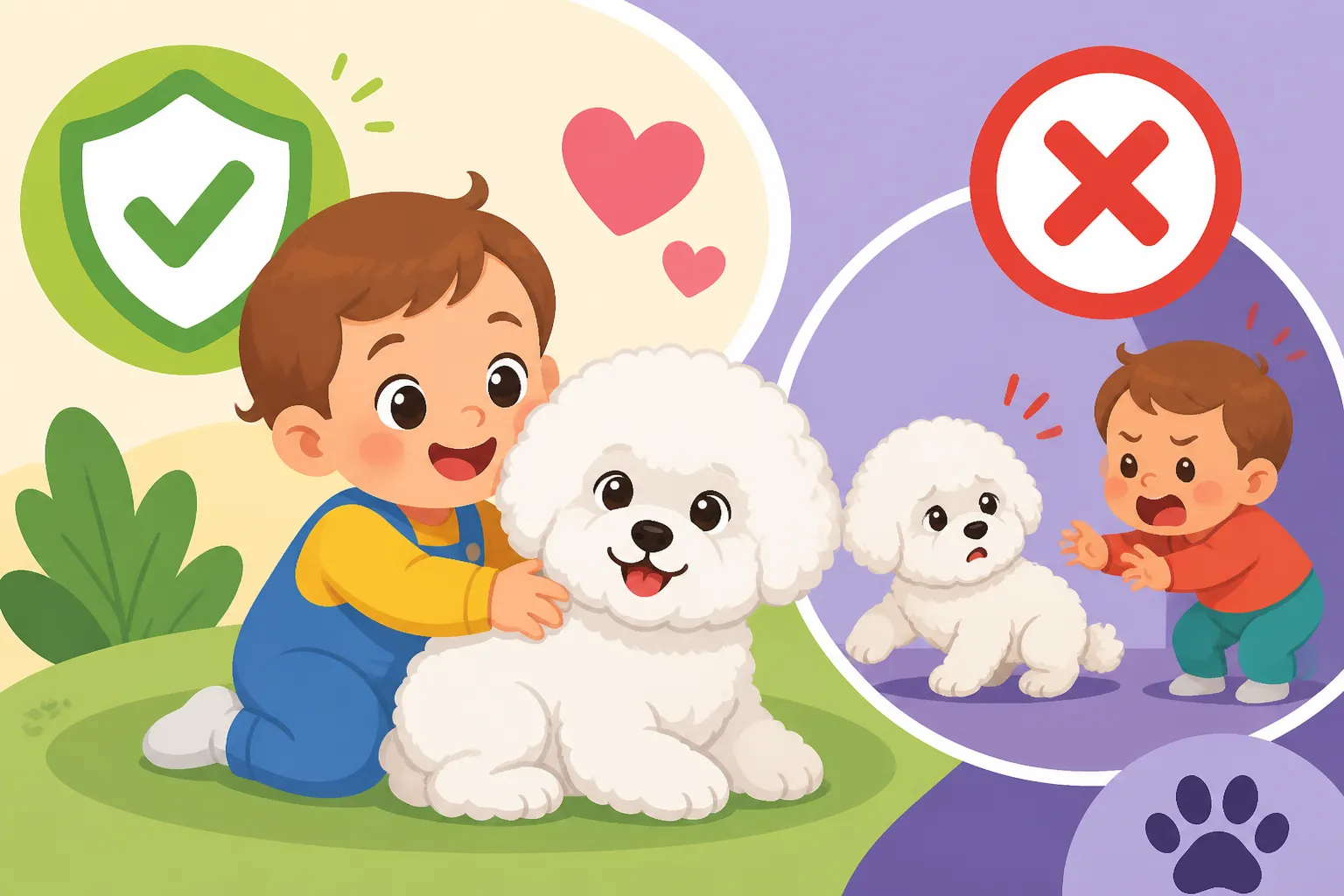
This is perhaps one of the biggest challenges when toddlers and small dogs coexist. Toddlers explore with their hands. They grab, poke, pull, and squeeze as a way to understand textures, shapes, and reactions. Unfortunately, a Bichon Frise, with its soft, fluffy coat, wagging tail, and floppy ears, presents an irresistible target for this kind of exploration. A toddler might grab a handful of fur, pull an ear, poke an eye, or even sit on the dog, all without malice. They simply don't understand that these actions cause pain or discomfort.
From the Bichon's perspective, these are direct assaults. Their natural instinct is to move away from pain, but if escape isn't possible, their next line of defense is a warning: a growl, a snarl, or a snap. Many dog bites involving children happen precisely because the child unintentionally hurt the dog, and the dog reacted instinctively to stop the pain. It's not a sign of a "bad" dog, but a natural self-preservation response. Teaching a Bichon to cope with handling and teaching a child gentle interactions are both critical, but it's important to remember that toddlers are not miniature adults and cannot be expected to have perfect control.
Lack of Understanding Boundaries and Dog Signals
Toddlers are still developing empathy and the ability to read complex social cues, especially those of an animal. They won't understand a dog's subtle signals of discomfort: the stiffening body, the averted gaze, the lip lick, the slight tail tuck, or the yawn. These are all common canine "calming signals" or signs of stress that a dog offers before escalating to a growl or bite. A toddler will likely walk right past these signals, blissfully unaware they are pushing the dog towards its breaking point.
They also don't grasp the concept of personal space or boundaries, often invading a dog's bed, eating area, or even reaching into their mouth to take a toy or food. For a dog, these are high-stress situations that can trigger resource guarding or defensive behaviors. It's our responsibility as adults to be the interpreters and the boundary enforcers, protecting both the child from potential harm and the dog from feeling constantly threatened. This requires constant, active supervision and management.
Common Bichon Frise Reactions to Toddlers
Even the most good-natured Bichon Frise can react negatively to toddlers if not properly introduced, managed, and given appropriate boundaries. Recognizing these reactions is vital for intervention and prevention.
Snapping, Growling, or Biting
When a Bichon Frise feels threatened, cornered, or in pain, their natural instinct is to defend themselves. For a small dog, their primary defense mechanisms are vocalizations and, if necessary, a bite. A growl is a warning – a dog's way of saying, "Stop, I'm uncomfortable, or I'm scared." It's crucial not to punish a growl, as it's an important communication signal. Punishing a growl can teach a dog to skip the warning and go straight to a bite.
Snapping is often a step above a growl, a quick, air-snapping motion meant to startle without making contact. If contact is made, it's typically a "nip" designed to convey a stronger warning. A full bite, especially from a fearful or injured dog, can be more serious. These reactions almost always stem from fear, stress, or pain, not malice. A Bichon that is normally docile but suddenly becomes reactive around a toddler might be feeling overwhelmed, in pain from rough handling, or might have an underlying medical issue that makes them more irritable. It's worth considering if they are experiencing discomfort, such as from allergies, by observing if Whether an Itchy Bichon Frise Is Grumpier holds true for your dog.
Hiding and Avoidance Behaviors
A more common reaction from a sensitive Bichon Frise when overwhelmed by a toddler is to simply try to escape the situation. They might seek refuge under furniture, retreat to their crate, or go to another room in the house. This is a clear signal that the dog is uncomfortable and needs space. While these behaviors are less dramatic than a growl or snap, they are equally important to heed. A dog that consistently hides or avoids a toddler is a stressed dog, and repeated exposure to the stressor without relief can lead to chronic anxiety or a breakdown in their coping mechanisms.
It's vital that the dog has accessible "safe zones" where the toddler is never allowed to intrude. This could be a crate, a designated bed in a quiet room, or an elevated space. These safe havens give the dog agency and a way to manage their own stress, rather than feeling trapped. Ignoring these avoidance behaviors can eventually lead to more overt and undesirable reactions. It's about giving them an escape route and respecting their need for quiet time away from the whirlwind.
Anxiety and Stress Signals
Beyond hiding, Bichons can display a range of more subtle stress signals that owners might miss if they aren't looking closely. These can include excessive licking (paws, lips), yawning when not tired, panting when not hot or exercised, trembling, shedding more than usual, a tucked tail, flattened ears, or a stiff body posture. Some Bichons might even start to display changes in appetite or become withdrawn. These are all signs that the dog is struggling to cope with the presence or actions of the toddler.
Chronic stress can have significant implications for a dog's overall health and well-being. It can suppress their immune system, exacerbate existing conditions like allergies, and generally reduce their quality of life. If you notice these persistent stress signals, it’s a red flag that interventions are needed immediately. It might involve increasing separation, adjusting supervision strategies, or seeking guidance from a professional dog trainer or veterinary behaviorist. A dog's anxiety is a serious matter and should be addressed proactively.
Creating a Safe Environment for Both Child and Dog
The key to harmonious living between a Bichon Frise and a toddler lies in proactive management and thoughtful environmental setup. It’s about setting everyone up for success by minimizing opportunities for conflict and maximizing positive interactions.
Designated Safe Spaces and Supervision
Establishing clear physical boundaries is perhaps the most crucial step. Your Bichon Frise needs at least one, if not multiple, safe spaces where they can retreat and be completely undisturbed by the toddler. This could be their crate (which should be a positive, comfortable den, not a punishment zone), a dog bed in a room with a baby gate, or even an elevated dog bed that the toddler cannot reach. The rule must be absolute: when the dog is in their safe space, the toddler is never allowed to approach, touch, or disturb them. This teaches the dog that they have control and a reliable escape route.
For toddlers, physical barriers like baby gates are your best friend. They allow your Bichon to be present in a room without being directly accessible to a curious toddler. You can gate off an entire room for the dog, or even just a corner where their bed and water bowl are. When both are in the same room, constant, active, 100% supervision is non-negotiable. This means an adult is always within arm's reach, ready to intervene instantly. Never leave a dog and a toddler unsupervised, even for a second. This is where tools you might find on Amazon, like sturdy baby gates or expansive playpens, become invaluable for creating safe zones.
Teaching Gentle Interactions and Boundaries to Toddlers
While toddlers are limited in their understanding, you can start to lay the groundwork for gentle interactions. Focus on teaching your toddler to "be gentle" or "soft touch." Demonstrate by gently petting the dog yourself, guiding their hand if appropriate, and praising them enthusiastically when they are soft. Teach them to pet only in "safe" areas, like the dog's back or chest, avoiding the face, ears, or tail.
It’s equally important to teach the toddler what not to do. Consistently redirect them away from grabbing, poking, or pulling. Use simple, clear commands like "No touch!" or "Gentle hands!" and immediately remove them from the situation if they are too rough. Emphasize that the dog's personal items, like toys and food bowls, are off-limits. This is a long process that requires immense patience and repetition, as toddlers will naturally test boundaries. The goal isn't perfection, but consistent reinforcement of safe behaviors.
Utilizing Equipment Like Gates and Playpens
As mentioned, baby gates are invaluable for managing the physical space. Use them to block off rooms, create a separate "dog zone" within a larger living area, or even to contain the toddler. Consider extra-wide gates or pressure-mounted gates depending on your home layout. A large, sturdy playpen can also be excellent for containing the toddler in a safe area while the Bichon has free roam of the rest of the room, or vice versa.
Beyond gates, consider a comfortable, elevated dog bed. Many Bichons enjoy being up high, and an elevated bed can offer a sense of security and a slight physical barrier from a crawling or toddling child. For walks, using a harness instead of a collar on your Bichon can provide better control and prevent injury if a toddler accidentally tugs the leash or the dog gets startled. These physical tools are not substitutes for supervision but are crucial aids in establishing boundaries and preventing unintended interactions.
Training Your Bichon Frise for Toddler Interactions
Training is a powerful tool to help your Bichon Frse navigate life with a toddler. It’s not about making your dog "child-proof," which is an unrealistic expectation, but about teaching them coping mechanisms, impulse control, and positive associations with children.
Desensitization and Counter-Conditioning
If your Bichon is already wary of toddlers, or even if they’re just generally sensitive, desensitization and counter-conditioning are key. This involves gradually exposing your dog to the sights, sounds, and smells of a toddler in a way that creates positive associations. Start with very low-level exposures: perhaps the sound of a toddler giggling from a recording played softly, paired with high-value treats. Slowly increase the volume, or move to seeing a toddler at a distance, always pairing the presence of the child with something wonderful for your dog, like their favorite treat or a special toy.
The goal is to change the dog's emotional response from fear or anxiety to neutrality or even anticipation of good things. If your dog sees a toddler and immediately thinks, "Yay, treats!" you're on the right track. This process must be done slowly, never pushing the dog past their comfort level. If they show any signs of stress, you've gone too far, too fast, and need to dial it back. Consistency is paramount, making every encounter a positive, controlled experience.
Teaching Polite Greetings and Impulse Control
Training foundational commands like "sit," "stay," "leave it," and "go to your mat/place" are invaluable. These commands help establish impulse control and provide your Bichon with alternative, acceptable behaviors when a toddler is present. For example, instead of rushing towards a toddler (even if friendly), your dog can be cued to "sit" and "stay" calmly. "Leave it" is essential for teaching them to ignore dropped food or toys that a toddler might leave behind.
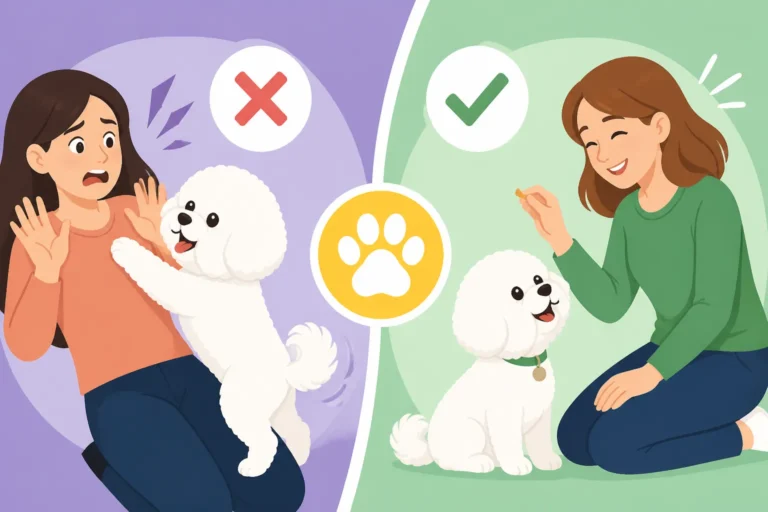
"Go to your mat" teaches your dog to settle in their designated safe space on command. Practice these commands frequently, reinforcing them with praise and high-value treats. When introducing your Bichon to a toddler, always ensure it's on your terms. Keep the dog on a leash at first, guide them into a polite "sit" or "down," and reward them for calm behavior. Never allow jumping or overly boisterous greetings, as these can easily knock over or scare a small child. The online training programs offered by services like BAXTER & Bella can be incredibly helpful for teaching these foundational skills.
Importance of Consistent Positive Reinforcement
Bichons respond incredibly well to positive reinforcement, especially when they are rewarded for good behavior. This means using treats, praise, and gentle petting to mark the behaviors you want to see more of. Avoid punishment or scolding, as this can create fear and anxiety, potentially exacerbating negative reactions towards children. If your dog growls, for example, instead of punishing the growl, recognize it as a warning and immediately remove the dog from the stressful situation. Then, revisit your management and training strategies.
Consistency across all family members is vital. Everyone in the household needs to be on the same page regarding rules, commands, and expectations for both the Bichon and the toddler. Inconsistent messages can confuse your dog and undermine your training efforts. Remember, a Bichon Frise wants to please and respond to kindness. Making positive associations with toddlers through gentle, controlled interactions and generous rewards will build confidence and a stronger, safer bond. What a Bichon Frise Will Work For is usually positive reinforcement with treats and praise, so lean into that! For Short Sessions Suit a Bichon Frise, keep training brief and fun.
Here's a quick reference table for managing interactions:
| Toddler Behavior | Dog's Potential Reaction | Adult's Intervention Strategy |
|---|---|---|
| Sudden scream/loud noise | Startle, retreat, bark | Provide safe space, offer comforting words/treats, desensitize. |
| Grabbing fur/ears | Snapping, growling, hiding | Immediately separate, redirect toddler, teach "gentle hands." |
| Invading dog's personal space (bed, food) | Resource guarding, stress signals | Use baby gates, teach "leave it," ensure dog has undisturbed safe zones. |
| Unpredictable running/stumbling | Fear, avoidance, anxiety | Maintain distance, supervise closely, reward dog for calm observation. |
| Dropping food/toys | Sniffing, trying to eat | Teach "leave it," clean up immediately, use physical barriers. |
| Reaching for dog's face | Averting gaze, snapping | Intercept toddler's hand, teach gentle petting on body only. |
When to Seek Professional Guidance
While this guide offers many strategies, there are times when the situation requires the expertise of a professional. Don't hesitate to reach out for help; it's a sign of responsible pet ownership and a commitment to safety.
Recognizing Red Flags in Dog Behavior
If your Bichon Frise exhibits any of the following behaviors consistently or intensely, it's a strong indicator that professional help is needed:
- Persistent growling or snapping: If your dog regularly growls or snaps at your toddler, even after you've implemented management strategies.
- Attempted bites: Any instance of your dog attempting to bite, or actually biting, your toddler, regardless of severity.
- Extreme fear or anxiety: If your Bichon is constantly hiding, shaking, or showing severe stress signals whenever the toddler is nearby, to the point where their quality of life is affected.
- Resource guarding: If your dog aggressively guards their food, toys, or even you from the toddler.
- Sudden behavioral changes: Any abrupt shift in temperament or behavior around your toddler that you can't explain.
These are not behaviors that you should try to "fix" on your own without expert guidance, especially when the safety of a child is involved. Early intervention can prevent escalation and improve outcomes for everyone.
Benefits of Consulting a Certified Professional Dog Trainer
A certified professional dog trainer, particularly one specializing in family dog mediation or children and dog safety, can be an invaluable resource. They can observe your specific household dynamics, assess your Bichon's behavior, and provide a customized training plan. They can help you:
- Identify triggers: Pinpoint the exact moments or actions that provoke your Bichon's reactions.
- Implement effective training techniques: Guide you through desensitization, counter-conditioning, and teaching critical commands.
- Improve communication: Help you better understand your dog's body language and teach your dog clearer signals.
- Set up your environment optimally: Offer advice on crate placement, baby gate usage, and other management tools.
- Coach toddler interactions: Give you strategies for teaching your toddler how to interact safely and respectfully with your dog.
Look for trainers certified by reputable organizations (e.g., CCPDT, KPA-CTP) and ask about their experience with dogs and children. Services like BAXTER & Bella also provide structured online puppy training, which can lay a solid foundation for good behavior even before toddlers are in the picture or as they grow up.
When a Veterinary Behaviorist Might Be Necessary
In some cases, especially if your Bichon's behavior is severe, persistent, or appears to have a significant underlying anxiety component, a veterinary behaviorist might be the best course of action. These are veterinarians who have specialized training in animal behavior and can prescribe medication if necessary. Just as a human might need medication to manage severe anxiety, some dogs can benefit from pharmacological support to help them cope while behavioral modification techniques are being implemented.
A veterinary behaviorist can rule out any medical conditions that might be contributing to the behavior (e.g., pain from arthritis, hormonal imbalances). They can work in conjunction with a certified dog trainer, creating a comprehensive plan that addresses both the behavioral and physiological aspects of your Bichon's reactions. Remember, your vet is also a great first point of contact to discuss any concerns, as they can help determine if there's a physical reason for behavioral changes or refer you to appropriate specialists. Sometimes, a full health check, similar to when considering Handling a Bichon Frise Whose Skin Is Sore or if you suspect pain, can reveal underlying issues that make a dog less tolerant.
Ultimately, safety and harmony between your Bichon Frise and your toddler are achievable with a combination of understanding, proactive management, consistent training, and, when needed, professional guidance. You're building a relationship, and like all good relationships, it takes effort and communication from all sides.
Disclaimer
This article is for general informational purposes only and does not constitute professional advice. Laws, prices and regulations vary by location and change over time. Consult a qualified professional for guidance on your specific situation.