Whether a Bichon Frise Should Be Taken Out Hourly
Oh, the age-old question for every Bichon Frise parent: "Do I really need to take them out every single hour?" If you've ever felt like your life revolves around a tiny, fluffy bladder, you are absolutely not alone. It's a common frustration, making even the most dedicated Bichon owners wonder if their little cloud of joy is ever going to get a handle on its potty habits. This guide is here to unravel the mystery of the frequent piddle and help you find a sustainable, effective housetraining routine that works for both you and your beloved Bichon.
The Unique Bichon Bladder Challenge
Let's be honest, Bichon Frises have a reputation for being notoriously difficult to housetrain. It’s not just an old wives' tale; there are genuine reasons why these charming little dogs can be a bit more of a challenge when it comes to keeping your floors dry. Understanding these factors is the first step toward figuring out if hourly trips are truly the answer.
Why They Seem to Go So Often
First off, let's talk about size. Bichon Frises are small dogs, and with a small dog often comes a proportionally small bladder. It's simply a matter of physics – there's less storage capacity, meaning it fills up quicker. Imagine trying to hold a gallon of water in a teacup; it’s just not going to work for very long. Puppies, especially, have even less bladder control and need to go much more frequently than adult dogs. Their tiny bodies also have faster metabolisms, meaning food and water pass through their system more quickly. So, that drink of water at 9 AM might lead to a full bladder much sooner than it would for a larger breed.
Beyond just their size, Bichons, as a breed, are also predisposed to certain health issues that can directly impact their urinary frequency. Conditions like bladder stones, particularly calcium oxalate stones, are unfortunately common in Bichons. These stones can cause constant irritation to the bladder lining, making a dog feel like they need to urinate even when their bladder isn't completely full. It's like having a pebble in your shoe – you constantly feel the urge to shift your weight or take it out, even if your foot isn't technically "full." This constant urge can lead to frequent squatting, often with very little urine produced. This is a critical point that many owners miss, often blaming themselves or their dog's training when there's actually an underlying medical reason. We'll delve into Why a Bichon Frise Forms Stones Twenty Times as Often in another post, but for now, just know it's a real concern that can affect their potty habits.
Distinguishing Urgency from Lack of Training
This is where it gets tricky, and frankly, where a lot of frustration can brew. You might think your Bichon is just being stubborn or isn't "getting it" when they have an accident shortly after being outside. However, as we just touched on, true urinary urgency can look a lot like a training failure.
If your Bichon suddenly starts having accidents indoors, goes much more frequently than usual, strains to urinate, or produces only a few drops each time, it’s a huge red flag that something medical might be going on. This isn't just about a full bladder; it's about discomfort and an almost constant feeling of needing to go. Imagine having a urinary tract infection yourself – the urge is overwhelming and constant, regardless of how recently you last went. Your Bichon could be experiencing something similar.
A dog with stones or an infection might also show other signs, such as licking their privates excessively, having bloody or cloudy urine, or even becoming less active. The First Signs a Bichon Frise Has Stones can be subtle, so it's important to be vigilant. Before you double down on housetraining efforts, especially if there's a sudden change in behavior, it's always best to consult your veterinarian to rule out any underlying medical conditions. This step is non-negotiable, as training won't fix a bladder stone.
The Hourly Outing Approach: Pros and Cons
So, back to the core question: should a Bichon Frise be taken out hourly? The answer isn't a simple yes or no. There are definitely advantages, particularly for puppies, but also some significant drawbacks if it becomes your sole strategy without addressing other factors.
The Benefits of Frequent Potty Breaks
For young puppies, very frequent potty breaks – sometimes hourly, sometimes every 30-45 minutes depending on age and activity – are absolutely essential. Their tiny bladders simply can't hold it for long, and prevention is always better than trying to clean up accidents and correct mistakes. Hourly trips (or more frequent if needed) for a puppy help establish a strong routine and teach them where they are supposed to go. Each successful outdoor potty break is a chance for positive reinforcement – praise, a small high-value treat – which builds a strong association between going outside and good things happening. This consistent success helps them learn quickly. How Long a Bichon Frise Puppy Holds It Overnight gives a good sense of their early limits.
Frequent outings also help you learn your individual Bichon’s rhythm. You start to notice patterns: when they wake up, after they eat or drink, after a play session. These are prime potty times, and being proactive means fewer indoor mishaps. It’s about setting them up for success, not waiting for them to fail. Think of it as errorless learning – if they never have an accident inside, they never learn that going indoors is an option.
The Drawbacks of Over-Reliance on Hourly Trips
While great for puppies, relying solely on hourly trips indefinitely can create its own set of problems. Firstly, it’s simply not sustainable for most human schedules. Life happens! You can't always drop everything every 60 minutes to take your dog out, especially as they get older and should be able to hold it longer. This can lead to frustration for you and potential anxiety for your dog if they become dependent on such a strict schedule and then it breaks down.
Secondly, if you're taking your Bichon out too frequently when they could hold it longer, you might actually be inadvertently teaching them to empty their bladder whenever they’re outside, rather than learning to hold it until they genuinely need to go. This can hinder the development of better bladder control. You want them to learn to differentiate between a truly full bladder and just "going because I'm out here." If you’re constantly prompting them, they may not learn to recognize their body’s own signals for when it's truly time.
Finally, and perhaps most importantly, if the frequent urination is due to an underlying medical issue like bladder stones or a UTI, hourly trips are just a band-aid. They don't solve the root problem. In fact, if you're so focused on the hourly schedule, you might miss the subtle signs that your Bichon is in discomfort or pain, delaying a much-needed vet visit. It's crucial to differentiate between a normal puppy learning curve and genuine discomfort leading to frequent urges. Whether Frequent Squatting Means Stones Not Training explores this distinction further.
Crafting a Sustainable Housetraining Strategy
So, if hourly trips aren't the be-all and end-all, what's a better, more sustainable approach for your Bichon? It's all about consistency, observation, and understanding, rather than just clock-watching.
Beyond the Clock: Reading Your Bichon's Signals
Your Bichon is constantly communicating with you, even if they aren't using words. The key is to learn their language. Instead of rigidly adhering to an hourly schedule, start paying close attention to their unique cues that they need to go out. These can be subtle at first, but with practice, you'll become a pro at reading them.
Common signals include:
- Restlessness: Pacing, circling, or general unease.
- Sniffing: Especially sniffing the floor or specific corners with intense focus.
- Whining or Barking: A distinct sound they make when they need to go.
- Going to the Door: Standing by the exit, looking at you, or pawing at the door.
- Sudden Silence: Sometimes a normally active dog will suddenly get quiet and disappear into another room. This is often a sign they're about to have an accident in a secluded spot.
- Squatting/Lifting Leg: This is usually the last-ditch effort, and you'll need to interrupt them immediately and rush them outside.
Every Bichon is different, so spend time actively observing them. Keep a mental (or even written) log of when they go out, when they have accidents, and what they were doing just before. This information will be invaluable in developing a custom routine.
The Importance of a Consistent Routine
While not strictly hourly, a consistent routine is paramount for housetraining any dog, especially a Bichon Frise. Dogs thrive on predictability. They learn what to expect and when to expect it, which helps them anticipate when they'll have the opportunity to relieve themselves.
Your routine should include:
- First Thing in the Morning: As soon as your Bichon wakes up, it's straight outside. Their bladder has likely been full all night.
- After Meals: Within 10-30 minutes after eating, dogs often need to go.
- After Naps: Similar to waking up in the morning, a good stretch after a nap often signals a potty break is needed.
- After Play Sessions: Excitement and activity can stimulate the bladder.
- Before Bedtime: A final potty trip right before settling down for the night is crucial.
- Regular Scheduled Breaks: In between these key times, establish consistent intervals, such as every 2-3 hours for an adult Bichon, or more frequently for a puppy. This gives them predictable chances to go and reinforces the idea of holding it until the next scheduled break.
A Written Toilet Schedule Helps a Bichon Frise immensely, especially in the early days. Stick to this schedule religiously, even on weekends or days you're home more. Consistency is truly the bedrock of successful housetraining.
Making the Outdoor Experience Positive
When you take your Bichon outside for a potty break, make it a positive, focused experience. This isn't the time for long play sessions or sniffing every blade of grass (though a little exploration is fine). Your primary goal is for them to relieve themselves.
- Go to the Same Spot: Dogs learn to associate specific areas with "potty time." Taking them to the same spot helps reinforce this.
- Use a Cue Word: As you take them out, use a consistent cue word like "potty," "go pee-pee," or "hurry up." Say it calmly as they sniff and when they start to eliminate.
- Praise and Reward: The moment they finish going, offer enthusiastic praise ("Good potty!") and a high-value treat. Make it clear they did exactly what you wanted. This immediate reward is critical for learning.
- Stay Out Long Enough: Don't rush them back inside if they haven't gone. Give them a few minutes, calmly repeating your cue word. If they still don't go, bring them inside and try again in 10-15 minutes, supervising them closely during that interim.
Remember, patience is key. Avoid scolding them for accidents inside, as this can make them afraid to eliminate in front of you, even outside. If you catch them in the act, a sharp "No!" or clap can interrupt them, then immediately rush them outside to finish.
When Hourly Isn't Enough: Addressing Underlying Issues
Sometimes, even with the most diligent training and consistent routine, a Bichon Frise continues to struggle with housetraining. This is often a sign that there's more at play than just a training gap.
The Medical Angle: Ruling Out Health Problems
As mentioned earlier, health issues are a surprisingly common reason for persistent housetraining problems in Bichons. It's not just bladder stones; urinary tract infections (UTIs) are also frequent culprits. A UTI causes inflammation and irritation, leading to increased urgency and frequency, often with discomfort. Diabetes, while less common as a direct cause of housetraining failure, can also lead to excessive thirst and urination, overwhelming a dog's bladder control.
If your housetrained Bichon suddenly starts having accidents, or if a puppy is exceptionally difficult to train despite consistent effort, a vet visit is absolutely essential. Your vet can perform a urinalysis to check for infection, perform blood tests, and often recommend imaging like an X-ray or ultrasound to look for bladder stones. How a Vet Confirms Stones in a Bichon Frise describes the diagnostic process in detail. Don't assume it's "just a training problem" when it could be a cry for help from a dog in discomfort. Early diagnosis and treatment can prevent more serious complications down the line.
Behavioral Factors: Anxiety and Marking
Beyond medical concerns, behavioral issues can also lead to inappropriate urination.
- Excitement Urination: Some Bichons, especially puppies, can get so excited when greeting people or during intense play that they lose control of their bladder. This is often outgrown but can be managed by keeping greetings calm and taking them out right before anticipated exciting events. Whether a Bichon Frise Toilets When Greeting People is a common concern.
- Submissive Urination: If your Bichon is particularly shy or easily intimidated, they might urinate as a sign of submission, especially when approached by someone they perceive as threatening or dominant. This often happens with a lowered head, tucked tail, and averted gaze. Building their confidence and avoiding direct, forceful interactions can help.
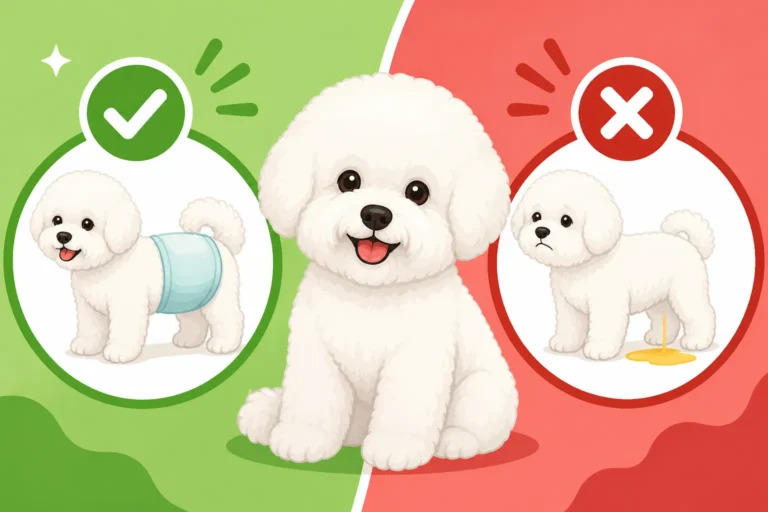
- Territorial Marking: While more common in unneutered males, both male and female Bichons can engage in marking behavior, typically lifting a leg (or squatting for females) and depositing small amounts of urine in various spots, often on vertical surfaces. This is usually done to claim territory. Neutering can help reduce this, but environmental management and continued positive reinforcement for outdoor pottying are also important. Whether a Male Bichon Frise Marks Indoors can be a real headache. Products like belly bands (available on sites like Amazon) can be helpful in managing male marking indoors while you work on training.
Utilizing Training Aids and Resources
Even with a solid routine and ruling out medical issues, you might need a little extra help.
- Indoor Potty Solutions: While the goal is usually outdoor pottying, for tiny puppies or in inclement weather, an indoor option can be a lifesaver. Potty pads (some dogs even prefer turf pads) or an indoor grass patch can provide a designated spot. The trick is to gradually transition them outside as they mature.
- Crate Training: A crate can be an invaluable tool for housetraining. Dogs naturally don't want to soil their sleeping area, so a properly sized crate (just big enough to stand up, turn around, and lie down comfortably) can help them learn to hold it. When you can't actively supervise your Bichon, they go into the crate. When they come out, it's immediately outside for a potty break. Whether Crate Training Works on a Bichon Frise is generally a resounding yes!
- Enzyme Cleaners: Accidents will happen. It's crucial to clean them thoroughly with an enzymatic cleaner, which neutralizes the odors that can attract a dog back to the same spot. Regular household cleaners might remove the visible stain for you, but your dog can still smell the residual odor, signaling "this is a potty spot."
- Professional Help: Don't hesitate to seek help from a professional dog trainer or behaviorist if you're struggling. They can offer personalized advice, help you interpret your dog's specific behaviors, and guide you through challenges. Online resources, like training programs from BAXTER & Bella, often provide comprehensive guides and support that can be a game-changer for owners dealing with housetraining woes.
Table: Hourly Outings vs. Scheduled Potty Breaks
| Feature | Hourly Outings (Puppy Specific) | Scheduled Potty Breaks (Adult & Older Puppy Focus) |
|---|---|---|
| Frequency | Very high (every 30-60 mins) | Moderate (every 2-4 hours, plus key times) |
| Primary Goal | Prevent accidents, establish initial outdoor association | Reinforce bladder control, maintain routine, prevent accidents |
| Best For | Young puppies (under 4-5 months) | Older puppies, adult Bichons, dogs with established bladder control |
| Pros | Minimizes accidents, strong positive reinforcement for puppies | Sustainable for owner, teaches bladder control, less dependency |
| Cons | Unsustainable long-term, can foster dependency, doesn't solve medical issues | Requires careful observation, initial accidents if timing is off |
| Owner Effort | Very high, constant vigilance | Consistent, but less demanding than hourly |
In summary, taking your Bichon Frise out hourly might be a necessary, albeit tiring, phase during puppyhood. It’s a temporary measure to build a foundation. However, as they mature, the goal shifts from hourly excursions to a predictable routine combined with keen observation, addressing any underlying health or behavioral issues, and utilizing appropriate training tools. Your Bichon deserves a clear, consistent approach, and you deserve a dry home!
Disclaimer
This article is for general informational purposes only and does not constitute professional advice. Laws, prices and regulations vary by location and change over time. Consult a qualified professional for guidance on your specific situation.