Whether a Bichon Frise Makes a Therapy Dog
It’s a truly heartwarming thought, isn't it? Imagining your fluffy, cheerful Bichon Frise bringing comfort and smiles to people in need. Many of us see the inherent joy our Bichons bring into our own lives and immediately think, "Could my little cloud of happiness share that with others?" The desire to channel that boundless affection into a purpose as noble as therapy work is completely understandable. This guide is here to walk you through exactly what it takes, the unique gifts a Bichon Frise brings to the table, and the realities of preparing your furry friend to become a certified therapy dog.
Understanding the Role of a Therapy Dog and a Bichon Frise's Natural Traits
Before we dive headfirst into training and certification, it's crucial to truly grasp what being a therapy dog entails and how your Bichon Frise's inherent personality might fit into that mold. It's more than just being "friendly"; it's a specific set of skills and a deep well of patience.
What Exactly Does a Therapy Dog Do?
A therapy dog isn't just a beloved pet; they are a working animal with a very specific, and incredibly important, job. Their primary role is to provide comfort, affection, and emotional support to individuals in various settings, often those who are vulnerable, stressed, or lonely. Think of the places where a wagging tail and a soft fur coat can make an immense difference:
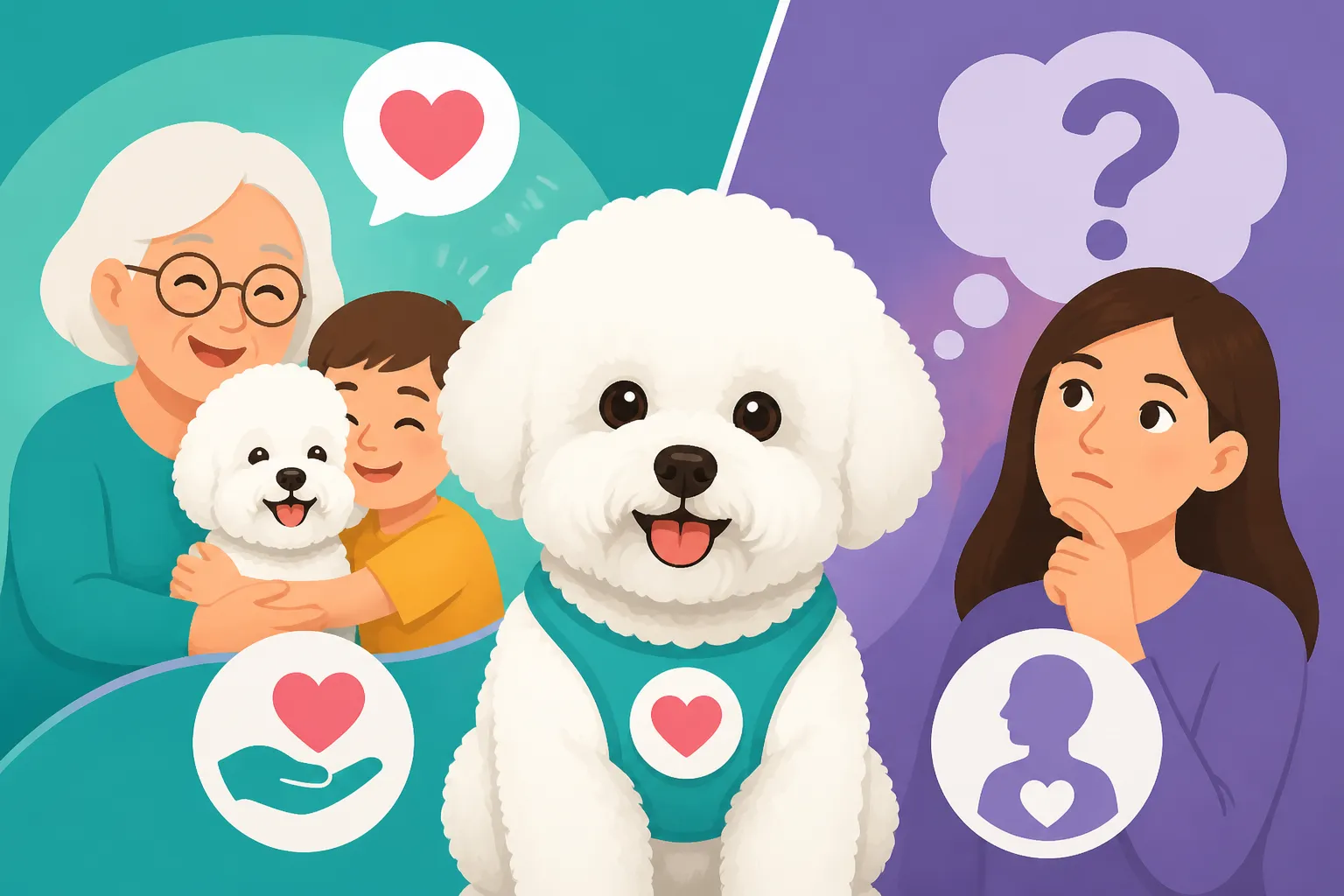
- Hospitals and Rehabilitation Centers: Visiting patients recovering from surgery, battling long-term illnesses, or undergoing physical therapy. A dog can be a wonderful distraction from pain, a motivator for movement, and a source of calm in a sterile environment. Imagine a patient, perhaps elderly and missing their own pets, finding solace in gently petting your Bichon.
- Nursing Homes and Assisted Living Facilities: Bringing moments of joy and connection to residents who may feel isolated. These visits often spark memories, encourage conversation, and provide much-needed tactile interaction. Your Bichon's gentle nature can be a perfect fit for a quiet cuddle on a lap.
- Schools and Libraries: Participating in "read to a dog" programs, where children, especially those struggling with reading or confidence, can practice their skills in a non-judgmental, calming presence. Or simply being a comforting presence for students during stressful exam periods.
- Disaster Relief Areas or Crisis Situations: Providing a sense of normalcy and comfort to individuals who have experienced trauma. In these incredibly sensitive environments, a gentle, unassuming dog can offer quiet support when words fail.
It’s vital to distinguish therapy dogs from service dogs and emotional support animals. A service dog is specifically trained to perform tasks for an individual with a disability, granting them public access rights under laws like the Americans with Disabilities Act. An emotional support animal provides comfort through its presence but doesn't require specific task training and has fewer public access rights. A therapy dog, on the other hand, is a volunteer animal, typically owned by their handler, who visits facilities to provide comfort to many different people. They don't have the same public access rights as service dogs and operate under the permission of the specific facility they are visiting. The most important qualities for a therapy dog are an incredibly stable, friendly, and patient temperament, and the ability to remain calm and well-behaved in unpredictable environments.
The Bichon Frise's Innate Temperament and Suitability
Now, let's talk about our wonderful Bichons! The breed standard for a Bichon Frise calls for a "merry" temperament, and anyone who has lived with one knows this to be profoundly true. They are, almost without exception, cheerful, outgoing, and utterly devoted companions. This natural inclination towards happiness and affection is a huge advantage when considering therapy work. They genuinely love people and thrive on interaction, which is exactly what a therapy dog needs to do.
Their size is also a significant asset. Being a small, sturdy dog means they are easily transportable, can sit comfortably on laps or beds, and are generally less intimidating to people who might be fearful of larger dogs. Their soft, curly, white coat is also often seen as inviting and comforting. There’s something universally appealing about a fluffy white dog, and a Bichon certainly fits that bill! Their playful spirit often means they are Playful Into Old Age, which means they can continue therapy work for many years if they enjoy it.
However, it wouldn't be realistic to say every Bichon is a perfect therapy dog candidate without any training. While generally friendly, some Bichons can have a tendency towards The Window Barking a Bichon Frise Does or can be quite excitable, especially when greeting new people. This exuberance, while charming at home, needs to be tempered with training so they can remain calm and focused in a therapeutic setting. They also need to be comfortable with being handled by strangers, sometimes clumsily, and to tolerate new sights, sounds, and even smells without being startled or anxious. The core attributes are certainly there, but shaping them into a reliable therapy dog requires dedication.
Essential Training and Socialization for a Therapy Bichon Frise
So, you've assessed your Bichon's personality and feel they have the right stuff! That's fantastic. The next step is a deep dive into structured training and comprehensive socialization. This isn't just about good manners; it's about building an unshakeable confidence and predictability in your dog.
Building a Solid Foundation: Obedience and Manners
Every successful therapy dog stands on a bedrock of excellent obedience. This isn't just about showing off; it's about safety and control in diverse, often unpredictable, environments. Your Bichon needs to respond reliably to commands even when there are tempting distractions – a dropped crumb, a loud noise, or an excited person.
Start with the absolute basics: "sit," "stay," "down," "come," and "leave it." These aren't just tricks; they are communication tools. A solid "stay" can keep your Bichon calm at a patient's bedside, while "leave it" prevents them from snagging a dropped pill or food item in a hospital. Practice these commands in various locations, gradually increasing distractions. Begin at home, move to your quiet backyard, then a bustling park, and finally, perhaps a pet-friendly store. This progressive exposure helps generalize their learning. Remember, positive reinforcement is key – lots of praise, small, delicious treats, and exciting play are far more effective than punishment, especially for a sensitive breed like a Bichon. They typically learn How Fast a Bichon Frise Learns a New Cue when motivated with kindness.
Many owners find immense value in structured puppy classes and basic obedience courses. These not only teach your dog the commands but also teach you how to effectively communicate with your dog. Online training platforms, such as those offered by BAXTER & Bella, can be incredibly helpful for building this foundation from the comfort of your home, offering step-by-step guidance and resources that you can revisit as needed. This allows you to work at your Bichon's pace and tackle specific behaviors before moving on to advanced work.
Exposure and Desensitization to Novel Environments
For a therapy dog, the world is their workplace. This means they need to be comfortable and confident in places far beyond your living room. This is where comprehensive socialization comes in – exposing your Bichon to a wide array of sights, sounds, smells, and people, all in a positive and controlled way.
Think about the environments they'll encounter:
- Medical Equipment: Wheelchairs, walkers, crutches, IV poles. Your Bichon should see these as normal, non-threatening objects.
- Diverse People: Children, elderly individuals, people in uniforms (nurses, doctors), people wearing hats or glasses, people with different gaits or voices. They need to be equally comfortable with a quiet, gentle stroke from an older person and a slightly clumsy pat from a curious child.
- Unusual Sounds: Hospital call buttons, sudden beeps, loud talking, unexpected alarms.
- Varied Surfaces: Slippery hospital floors, carpeted common areas, outdoor concrete.
The goal is desensitization – making these experiences routine and non-alarming. Start early, and make every exposure a positive one. If your Bichon is nervous around a wheelchair, don't force them to approach it. Instead, sit with the wheelchair at a distance, offer treats and praise when your Bichon is calm, and gradually move closer over several sessions. You can even find specific items on Amazon, like crinkly toys or unusual textures, to introduce new sounds and feelings at home. Practicing calm behavior in a crate can also be beneficial, as it provides a secure space for your Bichon in new environments (Whether Crate Training Works on a Bichon Frise). A well-socialized Bichon will take new experiences in stride, showing curiosity rather than fear or aggression.
Overcoming Challenges and Seeking Certification
Even with a naturally sweet temperament, the journey to becoming a certified therapy dog often presents a few hurdles. Recognizing and proactively addressing these challenges is crucial for success, as is understanding the certification process itself.
Addressing Common Bichon Frise Obstacles
While Bichons are wonderful, they do have a few breed-specific traits that might need extra attention during therapy dog training:
- Excitement and Barking: Their cheerful nature can sometimes manifest as over-excitement, leading to jumping or excessive barking when greeting new people. While adorable at home, this is generally unacceptable in a therapy setting where calm is paramount. You'll need to teach a "quiet" command and practice calm greetings diligently. This means rewarding four paws on the floor and a quiet demeanor when visitors arrive, perhaps even having friends practice entering your home calmly and ignoring your Bichon until it settles.
- "Housetraining Challenges": Bichons are Famously Hard to Housetrain, and while a fully grown dog should be reliable, stress or excitement can sometimes lead to excitement wetting. This is a definite no-go in many facilities. Reinforce rock-solid housetraining routines, ensure your dog is completely empty before visits, and practice self-control in exciting situations. If your Bichon still struggles, it might be a sign that therapy work isn't the best fit, or that underlying medical issues need to be ruled out by your vet.
- Sensitivity to Rough Handling: While generally tolerant, some Bichons might not appreciate overly enthusiastic or clumsy petting, especially from very young children or individuals with motor control issues. Your dog needs to be able to politely disengage or signal discomfort without snapping. Teaching a "touch" cue where they gently nudge a hand, or a "go say hello" cue, can empower them to engage on their own terms. Early and consistent exposure to varied handling during puppyhood can mitigate this, ensuring that Whether an Undersocialized Bichon Frise Recovers is not a question you need to ask later on. Investing in good grooming tools from Amazon and practicing gentle grooming at home daily also helps them get used to being touched all over their body.
Consistency is your best friend when addressing these points. If you allow jumping at home but demand calm in public, your Bichon will be confused. Every interaction is a training opportunity. If you find yourself consistently struggling with a particular behavior, don't hesitate to consult with a professional positive reinforcement trainer.
Navigating Therapy Dog Certification Programs
Once you feel your Bichon is consistently well-behaved, calm, and ready for public interaction, the next step is seeking formal certification. This is a critical process, as it ensures that your dog meets the highest standards for safety and temperament. There are several reputable national organizations that certify therapy dog teams, such as Alliance of Therapy Dogs (ATD) or Therapy Dogs International (TDI).
The general process usually involves:
- Preparation: Ensuring your dog is up-to-date on all vaccinations, parasite control, and has a clean bill of health from your veterinarian. Many organizations also require a certain age (often at least one year old) and that your dog has lived with you for a specified period.
- Evaluation: This is the core of certification. A certified evaluator will assess your Bichon's temperament and obedience skills in a simulated environment. They'll test for:
- Polite Greetings: Your dog approaching and interacting calmly with strangers, without jumping or excessive barking.
- Leash Manners: Walking on a loose leash, responding to commands, and not pulling or reacting to other dogs or distractions.
- Reaction to Distractions: Remaining calm in the presence of loud noises, dropped objects, people with unusual gaits, or medical equipment.
- Tolerance for Handling: Accepting being petted by multiple strangers, including gentle ear and tail pulls (simulating accidental rough handling).
- Supervised Separation: Remaining calm while you briefly leave their sight (demonstrating confidence and lack of extreme separation anxiety).
- "Leave It" and "Stay": Demonstrating reliable response to these crucial commands.
- Mentored Visits: Many organizations require a certain number of supervised visits with an experienced therapy dog team before your team is fully certified. This is invaluable real-world practice, allowing you to learn the nuances of therapy visits under expert guidance.
It's important to remember that not every dog is suited for therapy work, and that's perfectly okay. If your Bichon doesn't pass the evaluation, it doesn't mean they aren't a wonderful pet. It simply means this particular role isn't the right fit. Their happiness and well-being should always be the top priority.
The Benefits of a Therapy Bichon Frise and What to Expect
If your Bichon Frise makes it through the rigorous training and certification process, you're in for an incredibly rewarding journey. The unique qualities of a Bichon can make them exceptional therapy dogs, bringing immense joy and comfort wherever they go.
The Unique Contributions of a Bichon Frise as a Therapy Dog
Bichons bring a special blend of characteristics that make them particularly well-suited for therapy work, often excelling where other breeds might face challenges:
- Non-Threatening Appearance: Their small size, fluffy white coat, and "teddy bear" look are almost universally seen as approachable and non-intimidating. This is a huge advantage, especially when working with children, anxious individuals, or people who may have had negative experiences with dogs in the past. They invite interaction without any sense of fear.
- Uplifting Demeanor: That "merry temperament" we talked about earlier is contagious. A Bichon'ise cheerful, enthusiastic, yet gentle disposition can genuinely lift spirits and bring a smile to even the most somber faces. They have a knack for sensing a person's mood and often respond with an innate empathy that is truly remarkable.
- Perfect Lap Size: Many therapy visits involve sitting quietly with a person, perhaps in a bed, a wheelchair, or a comfortable armchair. A Bichon Frise is the ideal size for this, fitting comfortably on a lap, allowing for easy petting and closeness. They are natural lap dogs, making them perfect for cozy interactions. This physical closeness can be incredibly therapeutic, especially for those who might miss their own pets or human touch.
- Good Grooming and Hygiene: While their coat is high-maintenance (as anyone with a Bichon knows!), their non-shedding nature is often appreciated in clinical settings where allergies or cleanliness are concerns. Keeping them impeccably clean and regularly groomed (The Powder Puff Outline a Bichon Frise Is Scissored Into) is part of the responsibility, ensuring they present a fresh, appealing presence to everyone they meet.
The impact a therapy Bichon can have is profound. They can reduce stress, lower blood pressure, alleviate feelings of loneliness, and even motivate individuals in physical therapy. The simple act of petting a soft, warm dog can release endorphins, creating a sense of calm and well-being.
Life as a Therapy Dog Team: Rewards and Responsibilities
Becoming a therapy dog team is a commitment, but the rewards are immeasurable. You and your Bichon will embark on a shared purpose that deepens your bond and enriches both your lives.
- Immense Satisfaction: As the handler, witnessing the genuine smiles, the softening of expressions, and the moments of connection your Bichon creates is incredibly moving. You become an active participant in spreading joy and comfort, and that's a truly special feeling. For your Bichon, the consistent positive attention and interaction can be wonderfully stimulating and fulfilling. They are doing what they love – being with people – but with a profound purpose.
- Ongoing Training and Health Maintenance: The journey doesn't end with certification. You'll need to maintain your Bichon's obedience skills, continue their socialization, and refresh their comfort with various scenarios. Regular vet check-ups are paramount, not just for their own health, but to ensure they remain suitable for therapy work, especially as they get older. Good dental hygiene, regular grooming, and monitoring their stress levels during visits are all ongoing responsibilities.
- Recognizing Your Dog's Limits: This is perhaps one of the most important responsibilities. Even the most dedicated therapy dog has limits. Some days, they might be more tired, or a particular environment might be overwhelming. It's crucial for you, as the handler, to be attuned to your Bichon's body language and signals of stress or fatigue. Signs like lip licking, yawning, turning away, or excessive panting can indicate they need a break or that the visit should end. Pushing a dog beyond their comfort zone is detrimental to their well-being and the quality of their work.
- A Deeper Bond: The shared experiences, the reliance on each other in new environments, and the profound impact you make together will undoubtedly strengthen the bond between you and your Bichon. You become a true team, working together to bring light into the lives of others. It’s an adventure that few pet owners get to experience, and it's one that a Bichon Frise, with their heart full of love and joy, is uniquely suited to embrace.
| Requirement for Therapy Dog | Typical Bichon Frise Trait | Suitability for Therapy Work |
|---|---|---|
| Calm, Stable Temperament | Merry, Outgoing, Affectionate | High, with proper training |
| Good Obedience Skills | Intelligent, Eager to Please | High, but needs consistent effort |
| Tolerant of Strangers | Generally Friendly, Sociable | High |
| Non-Reactive to Distractions | Can be Prone to Barking/Excitement | Moderate to High, requires desensitization |
| Comfortable with Handling | Enjoys Attention, but needs practice with varied handling | High, with early exposure |
| Appropriate Size | Small, Portable | High, fits well in various settings |
Disclaimer
This article is for general informational purposes only and does not constitute professional advice. Laws, prices and regulations vary by location and change over time. Consult a qualified professional for guidance on your specific situation.