Whether a Bichon Frise Puppy Should Be Crated at Night
Bringing home a fluffy Bichon Frise puppy is absolutely magical, but then night falls, and suddenly, you're faced with a big question: where should your tiny companion sleep? Many new puppy parents agonize over whether to crate their Bichon Frise puppy at night, worrying if it's cruel, if they'll cry endlessly, or if it's truly the best thing for housetraining. This comprehensive guide is here to walk you through the ins and outs of nighttime crate training for your Bichon Frise puppy, helping you establish a routine that offers security, promotes faster housetraining, and ensures everyone gets some much-needed rest.
The Rationale Behind Crate Training for Nighttime Sleep
The idea of putting a tiny, innocent puppy into a crate can feel a little harsh at first glance. We picture them feeling lonely or trapped. However, when approached correctly, a crate isn't a punishment; it's a vital tool that plays directly into a dog's natural instincts and significantly aids in the crucial early stages of development, especially when it comes to sleeping through the night without accidents.
Why Crating Can Be Beneficial for a Bichon Frise Puppy
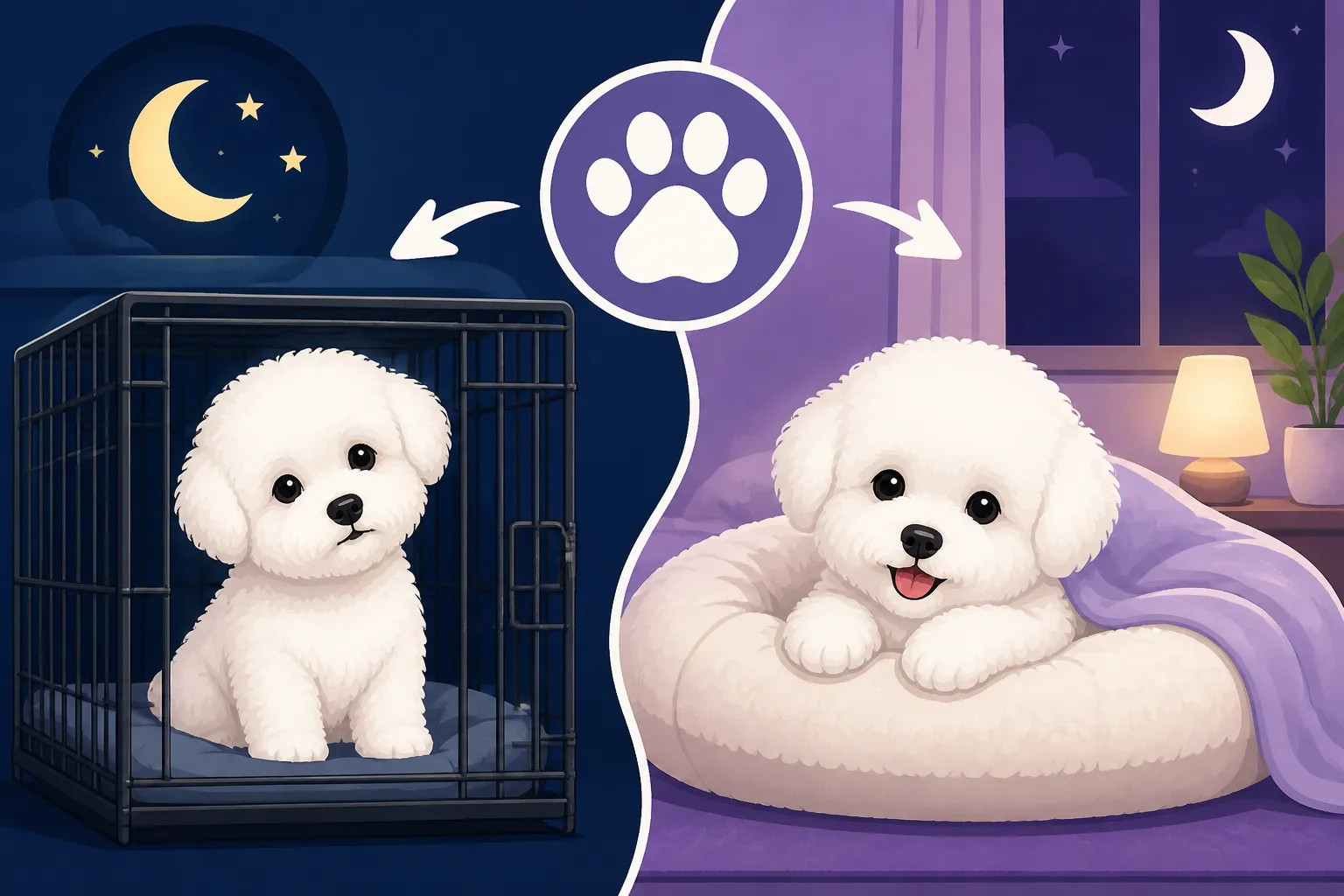
Think of a crate not as a cage, but as your puppy's very own cozy, secure den. In the wild, canines seek out small, enclosed spaces to feel safe and protected while they sleep or when vulnerable. This innate den instinct is incredibly strong in most dogs, including our domesticated Bichon Frises. A crate provides that secure, personal space, which can actually reduce anxiety for a puppy adjusting to a new home. Instead of being overwhelmed by an entire house, they have a small, predictable sanctuary.
Beyond comfort, the biggest benefit of nighttime crating for a Bichon Frise puppy is undeniably housetraining. Puppies, by nature, are extremely reluctant to soil their sleeping area. If the crate is appropriately sized – just big enough for them to stand up, turn around, and lie down comfortably, but not so large that they can designate a "bathroom" corner – this natural instinct kicks in. They will hold their bladder as long as they possibly can to avoid making a mess where they sleep. This is particularly important for a Bichon Frise, who, despite their small size, have surprisingly small bladders, meaning they need more frequent potty breaks than some larger breeds. You'll find that their little bodies can't hold it for long, especially when they're very young, so managing those impulses in a controlled environment is key. For more on this, you might find our article Whether a Bichon Frise's Small Bladder Is the Problem helpful.
Addressing Common Concerns About Crating at Night
It's completely normal to worry about your puppy crying in the crate. Many puppies will protest when first introduced to a crate, especially at night when they're feeling isolated from their new family. This crying often stems from a combination of loneliness, adjusting to a new environment, and a lack of understanding about what the crate signifies. It's not usually because they feel trapped in a negative sense, but rather because they're expressing a desire for companionship or needing to relieve themselves.
The key to overcoming this is positive association and consistency. If you make the crate a happy place during the day, filled with treats, toys, and praise, your puppy will start to view it less as a place of confinement and more as their personal retreat. Ignoring attention-seeking crying (after you've ruled out the need for a potty break) is crucial to teach them that crying won't get them out. However, if your puppy displays signs of genuine panic, like incessant barking, frantic digging, or self-harm attempts, it's a different story and might indicate a deeper issue like true separation anxiety, which requires a different approach and possibly professional help. Most often, though, consistent, positive reinforcement will lead to a puppy who settles quickly and quietly in their crate overnight.
Setting Up the Perfect Nighttime Crate Environment
The success of nighttime crate training hinges significantly on how you set up the crate itself and where you place it. A poorly chosen crate or an uncomfortable environment can turn a positive experience into a stressful one for your Bichon Frise puppy. The goal is to create a space that feels inviting, safe, and just right for them.
Choosing the Right Crate Size and Type for a Bichon Frise
When selecting a crate for your Bichon Frise puppy, size is paramount. You want a crate that is large enough for your puppy to stand up, turn around, and lie down comfortably, but not so big that they can walk to one end and use the other as a bathroom. If it's too large, you lose the primary housetraining benefit. Many crates come with dividers, which are fantastic because they allow you to adjust the internal space as your puppy grows. You can start with a smaller section and gradually expand it, ensuring the crate remains the appropriate size throughout their puppyhood.
As for type, wire crates are popular for their ventilation and visibility, allowing your Bichon Frise to see what's going on around them, which can be reassuring. Plastic travel crates, sometimes called "airline crates," offer more of a den-like feel, as they're enclosed, which some puppies prefer for an extra sense of security. Both types work well, so consider your puppy's initial reaction and your own preferences. You can find a wide variety of options for crates and dividers on platforms like Amazon, making it easy to compare features and sizes before you buy. Remember, this is an investment in their comfort and your peace of mind.
Making the Crate a Cozy, Safe Haven
Once you have the right crate, it's time to make it irresistibly cozy. Start with soft, comfortable bedding. A plush dog bed, a cozy blanket, or even an old, clean towel can make a world of difference. Ensure whatever you choose is washable, as accidents can happen, especially in the very beginning. Avoid anything with loose threads or small parts that your puppy could chew off and ingest.
Next, add a few safe, durable chew toys. These provide entertainment and comfort, helping to distract them if they wake up feeling a little lonely. A KONG stuffed with a bit of peanut butter or frozen yogurt can be a fantastic distraction for initial crate introductions or if they tend to whine. Place the crate in your bedroom, close to your bed, for at least the first few weeks. Hearing and smelling you nearby will provide immense comfort to your new Bichon Frise puppy and help them feel less isolated. As they get older and more comfortable, you can gradually move the crate to a more permanent location if you wish. However, it's generally advised not to provide food or water inside the crate overnight, as this only increases the likelihood of them needing to urinate or defecate, undoing the benefits of holding it. While you don't want your puppy holding their urine for dangerously long periods, a properly structured routine ensures they empty their bladder right before bed, minimizing the risk of discomfort or accidents. Prolonged urine retention, however, can contribute to urinary issues later on, so preventing it is key, as discussed in Whether Holding Urine Raises a Bichon Frise's Stone Risk.
Establishing a Successful Nighttime Routine
A successful nighttime crate experience for your Bichon Frise puppy isn't just about the crate itself; it's heavily reliant on a consistent routine and positive reinforcement. Puppies thrive on predictability, and establishing clear expectations around bedtime will help them feel secure and understand what's expected of them.
Gradual Introduction and Positive Reinforcement
Never just put your puppy in the crate and close the door, especially not for the first time at night. The process of introducing the crate should be gradual and overwhelmingly positive. Start by placing treats and toys inside the open crate during the day, allowing your puppy to explore it on their own terms. Feed them their meals inside the crate with the door open, so they associate it with good things. Once they're comfortable going in and out, start closing the door for very short periods (seconds at first, then minutes), always rewarding them with praise and treats when they're calm.
You can also play short games where you toss a toy into the crate, and they retrieve it. The goal is to build a positive association, so the crate isn't seen as a punishment but as a comfortable, safe space where good things happen. If you're looking for more detailed, step-by-step guidance on all aspects of puppy training, resources like BAXTER & Bella offer excellent online programs that can walk you through this process effectively. Their structured approach can be incredibly helpful for new puppy owners navigating crate training and other foundational behaviors. Always end crate sessions on a positive note, letting them out before they start fussing, if possible.
Managing Nighttime Potty Breaks
This is perhaps the most critical part of successful nighttime crating. Young Bichon Frise puppies simply cannot hold their bladder all night. Expect to take your puppy out for potty breaks during the night, especially in the first few weeks. The general rule of thumb is that a puppy can hold their bladder for one hour per month of age, plus one, up to about 8-10 hours. So, an 8-week-old (2-month) puppy can only reasonably hold it for about 3 hours. This means you will need to set an alarm. For insights into how long they can hold it, check out How Long a Bichon Frise Puppy Holds It Overnight.
Your nighttime potty routine should be strictly business. When your alarm goes off, quietly take your puppy out of their crate, carry them to their designated potty spot outside, and wait patiently for them to relieve themselves. No play, no extended cuddles, no excited voices. Keep it dull and predictable. As soon as they go, praise them calmly, and immediately bring them back inside and put them back in the crate. This teaches them that nighttime outings are solely for pottying and not for playtime or social interaction. Over time, as their bladder matures, you can gradually extend the time between potty breaks. A consistent written toilet schedule, as discussed in Whether a Written Toilet Schedule Helps a Bichon Frise, can be a lifesaver for tracking and improving your puppy's nighttime routine. For a broader perspective on successful housetraining strategies, our article The Toilet Routine That Finally Works on a Bichon Frise offers additional tips. You may also find it useful to read Whether a Bichon Frise Needs Waking in the Night for more specific advice on this aspect of overnight care.
When Crate Training Might Not Be the Right Fit
While crate training is highly recommended for most Bichon Frise puppies, it's not a one-size-fits-all solution. There are instances where a puppy might experience genuine distress, or an owner might find an alternative method that works better for their specific situation. Understanding these nuances is important for ensuring your puppy's well-being.
Recognizing Signs of Extreme Distress
Some puppies, despite the best positive reinforcement efforts, might exhibit extreme distress in a crate. This isn't just mild whining or barking, which is common during the initial adjustment phase. We're talking about prolonged, frantic efforts to escape, such as incessant barking, howling, destructive chewing of the crate itself, excessive drooling, self-harm (like rubbing their nose raw on the bars), or even urinating/defecating in the crate and then frantically trying to get away from it. If your Bichon Frise puppy displays these severe signs of panic or anxiety after a consistent, positive introduction period, it's a strong indicator that the crate might be causing more harm than good for that particular puppy.
In such cases, continuing to force crate training can lead to fear, behavioral issues, and a breakdown of trust. It's crucial to consult with your veterinarian or a certified professional dog trainer to rule out underlying medical conditions or true separation anxiety. Sometimes, severe distress in a crate, especially if accompanied by soiling, can even hint at past negative experiences, which our article Whether Crate Soiling Means a Bichon Frise Was Caged delves into.
Alternative Overnight Solutions for a Bichon Frise Puppy
If crate training proves too stressful for your Bichon Frise puppy, or simply doesn't fit your lifestyle, there are viable alternatives that still prioritize housetraining and safety. The key is to create a confined, safe space that limits their freedom but doesn't induce panic.
One popular alternative is a puppy playpen. These freestanding enclosures can be set up in a corner of your room or a puppy-proofed area. A playpen offers more space than a crate, which can alleviate feelings of confinement for some puppies. You can set it up with a cozy sleeping area on one side and a designated potty pad on the other. This allows your puppy to move around, stretch, and relieve themselves if they can't hold it, without making a mess throughout your house. Just be aware that introducing potty pads might inadvertently slow down outdoor housetraining for some puppies, as discussed in Whether a Bichon Frise Learns to Use a Pad.
Another option is a puppy-proofed room, like a bathroom or laundry room, fitted with baby gates. This provides even more space, but requires meticulous preparation to remove any hazards or items they might chew on. Again, you would typically include a designated sleeping area and possibly a potty pad. The principle here remains the same as with a crate: limit the space to encourage bladder control and provide a secure environment. No matter the method, the goal is to create a predictable, safe, and controlled environment that promotes good habits and peaceful nights for both you and your Bichon Frise puppy. What a Crate and Playpen Cost a Bichon Frise Owner might give you an idea of the equipment investment for these options.
Here's a quick comparison of Crate Training versus Playpen Training for nighttime:
| Feature | Crate Training | Playpen Training |
|---|---|---|
| Primary Benefit | Capitalizes on den instinct, fast housetraining | More space, less feeling of confinement |
| Space Required | Minimal (crate size specific to puppy) | Moderate (larger footprint than a crate) |
| Housetraining Aid | Stronger deterrent to soiling sleeping area | Allows for designated potty pad area, still limits accidents |
| Travel Portability | Excellent for travel (crate becomes familiar den) | Less portable, can be bulky |
| Cost | Generally lower for a basic crate | Can be similar or higher depending on size and features |
| Anxiety Reduction | Provides security for den-seeking dogs | Reduces confinement anxiety for some puppies |
| Supervision Needed | Still requires nighttime potty breaks | Requires more puppy-proofing of the pen area |
| Potential Drawback | Can cause distress if not introduced positively | May slow down outdoor housetraining due to pad use |
Choosing whether to crate your Bichon Frise puppy at night is a big decision, and it's fantastic that you're taking the time to research it thoroughly. For many, many Bichon Frise owners, consistent and positive crate training is an invaluable tool for both housetraining and establishing a strong, secure bond. It leverages their natural instincts and helps them develop good habits from the start, leading to a well-adjusted companion and much more restful nights for everyone. Just remember, patience, consistency, and a whole lot of love are the most important ingredients in any puppy training journey.
Disclaimer
This article is for general informational purposes only and does not constitute professional advice. Laws, prices and regulations vary by location and change over time. Consult a qualified professional for guidance on your specific situation.