Whether Medication Helps an Anxious Bichon Frise
It’s truly heartbreaking to watch your fluffy little Bichon Frise, normally so full of joy and exuberance, become a trembling, panting mess. Anxiety in our beloved pets isn't just a minor inconvenience; it's a genuine struggle that affects their quality of life and, let's be honest, ours too, as we desperately try to comfort them. This guide aims to explore when medication can be a supportive and necessary tool in helping your anxious Bichon Frise find peace, explaining the different options and how they fit into a holistic approach to their well-being.
Understanding Anxiety in Your Bichon Frise
Anxiety in dogs, especially in sensitive breeds like the Bichon Frise, can manifest in many forms, often leaving owners feeling confused and helpless. You might find yourself wondering if it's just a phase, or if something deeper is at play. It's not always obvious, and sometimes the behaviors can be misconstrued as "naughtiness" when they're truly a cry for help from an overwhelmed pup.
What Does Bichon Frise Anxiety Look Like?
When your Bichon Frise is anxious, their sweet, merry demeanor can give way to a range of unsettling behaviors. It's not just a little nervous shake; it can be persistent panting even when it’s cool, excessive licking of paws until they're raw, or destructive chewing that seems to come out of nowhere. Imagine your little cloud of fluff pacing incessantly from room to room, unable to settle, or perhaps they start shaking uncontrollably during a thunderstorm, even if they've been fine with loud noises before. These are common signs. You might also notice them drooling more than usual, yawning excessively, or having dilated pupils, making their eyes look wider and more frantic than their usual bright, curious gaze. Some Bichons might even become withdrawn, hiding under furniture or refusing to engage in play, which is a stark contrast to their typically playful nature.
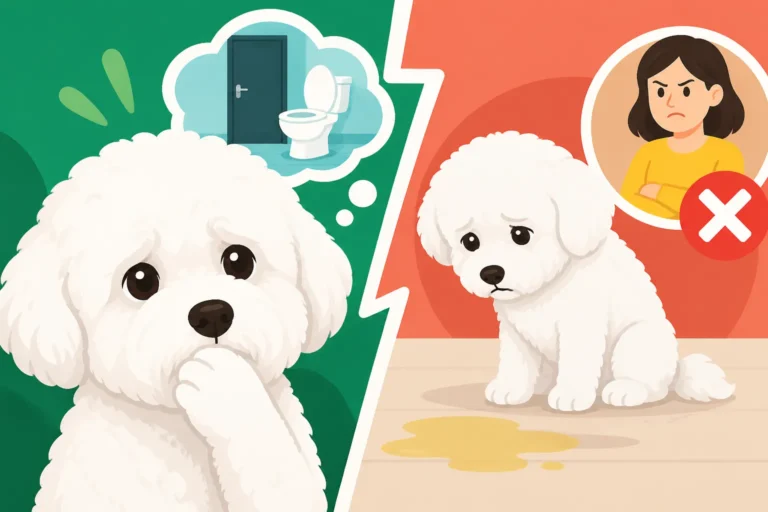
Another common manifestation is house-soiling, even in a perfectly housetrained dog. A sudden inability to hold their bladder or bowels, especially when you're away or during a stressful event, can be a clear indicator of anxiety, not just a lapse in training. It can feel like a huge step backward, especially if you've worked hard on their The Toilet Routine That Finally Works on a Bichon Frise. They might whine or bark excessively when left alone, escalating from a mild protest to a full-blown panic attack, causing distress for both your Bichon and your neighbors.
Common Triggers for Anxiety in Bichon Frises
Bichon Frises, despite their cheerful appearance, can be quite sensitive to their environment and routine. One of the most common triggers for anxiety in this breed is separation anxiety. They bond deeply with their human companions, and being left alone, even for short periods, can induce intense panic. Picture a scene where you simply step out to grab the mail, and your Bichon is already starting to whimper, anticipating your departure. For them, every time you leave, there's a primal fear that you might not return. This can be exacerbated if they haven't been slowly accustomed to alone time from a young age.
Noise phobias are another big one. Fireworks, thunderstorms, construction noise, or even loud vacuum cleaners can send an anxious Bichon into a tailspin. They have acute hearing, and these sudden, unpredictable sounds can be truly terrifying. Think about how jarring a firework sounds to us; for a dog, it’s amplified and utterly incomprehensible. Changes in routine, new people, new pets, or moving to a new house can also be significant stressors. Sometimes, anxiety stems from underlying physical discomfort or pain. A dog that is suddenly anxious might be trying to tell you something about their health, whether it's dental pain, arthritis, or another medical condition. This is why a vet check is always the first step.
Why Traditional Training Might Fall Short for Anxious Bichons
Many owners start with traditional training methods like desensitization, counter-conditioning, or simply ignoring unwanted behaviors, which are excellent strategies for many behavioral issues. However, for a Bichon Frise with significant anxiety, these methods alone often fall short. The reason is that an anxious dog isn't simply "choosing" to be anxious; their brain is genuinely in a state of fight, flight, or freeze. When your Bichon is in the throes of a panic attack, their ability to learn or respond to commands is severely compromised. It’s like trying to teach a child math during an earthquake – their primal brain functions take over.
The emotional state is so overwhelming that logic and learned responses go out the window. If you try to enforce a "stay" command when they're terrified of a storm, you might inadvertently create a negative association with the command, making things worse. It’s not a lack of intelligence or stubbornness on their part; it’s a physiological response that bypasses their conscious learning. This is where the frustration really sets in for owners, as you pour your heart and soul into training, only to see little progress, leading to feelings of failure and guilt. It's crucial to understand that sometimes, the brain chemistry needs a helping hand to get to a point where traditional training can even begin to be effective.
When to Consider Medication for Bichon Frise Anxiety
Deciding to use medication for your beloved Bichon Frise is a significant step, and it's completely understandable to feel hesitant. We all want the best for our furry family members, and adding pharmaceuticals to their routine can feel overwhelming. However, in certain circumstances, it can be a truly life-changing decision that improves their welfare dramatically.
The Role of Your Veterinarian in Diagnosis
Before any discussion of medication, your first and most critical step should always be a thorough visit to your veterinarian. They are your best resource for understanding what’s truly going on with your Bichon Frise. Anxiety symptoms can often mask underlying medical conditions, and it’s vital to rule these out first. For instance, increased urination might seem like anxiety-driven house-soiling, but it could actually be a sign of a urinary tract infection or even Diabetes in a Bichon Frise. Similarly, restlessness could be caused by pain from Slipping Kneecaps in a Bichon Frise rather than pure anxiety.
Your vet will conduct a full physical examination, possibly recommend blood tests, urine analysis, or even imaging like X-rays to ensure there are no physical issues contributing to or causing the behaviors you’re seeing. They’ll ask detailed questions about the onset of symptoms, specific triggers, and how your Bichon behaves in different situations. This comprehensive approach ensures that any medication prescribed is targeting the correct problem, providing the most effective relief for your dog. Never try to diagnose or medicate your dog yourself; their physiology is complex, and what helps one dog might harm another.
Situations Where Medication Becomes a Key Tool
Medication isn't typically the first resort for mild anxiety, but it becomes an invaluable tool when anxiety severely impacts your Bichon Frise’s quality of life or poses a risk to their safety or yours. Consider a Bichon who experiences such intense panic during thunderstorms that they scratch themselves raw trying to escape, or become so destructive they ingest foreign objects. Or perhaps a dog with separation anxiety that barks incessantly for hours, leading to neighbor complaints and constant stress. In these severe cases, the constant state of fear and distress is detrimental to their overall health and happiness.
Medication can help "take the edge off" that overwhelming anxiety, lowering their baseline stress levels to a point where they can actually respond to behavior modification techniques. Think of it as opening a window for learning and healing. Without medication, some dogs are simply too far gone into their anxious state to process anything new. It's about providing comfort and creating an environment where they can begin to cope, rather than being perpetually stuck in a cycle of fear. It allows them to relax, rest, and engage more positively with their environment and family.
Setting Realistic Expectations for Medication
It's crucial to approach medication with a realistic mindset. It's not a "magic pill" that will instantly transform your anxious Bichon Frise into a perfectly calm dog overnight. Instead, medication is a tool, usually one part of a multi-faceted approach. Its primary goal is to help regulate brain chemistry, reducing the intensity and frequency of anxious episodes, thereby enabling other interventions to be more effective. Just like humans taking antidepressants, it often takes several weeks for the full effects of long-term anxiety medications to become apparent. You might see subtle changes at first: a little less panting, a slightly shorter duration of a barking fit, or a quicker recovery after a scary event.
There will still be good days and bad days, and consistent management will always be key. Medication won't fix poor training habits, lack of socialization, or an unpredictable home environment. It works best when combined with a consistent routine, appropriate enrichment, and targeted behavior modification exercises. Your vet will likely start with a low dose and gradually adjust it, monitoring your Bichon for both efficacy and any potential side effects. This process requires patience and close communication with your veterinary team to find the optimal regimen for your individual dog.
Types of Medications for Bichon Frise Anxiety
When it comes to supporting an anxious Bichon Frise, the veterinary world offers a range of options, from quick-acting aids for specific events to daily medications designed for long-term emotional regulation. Understanding these different categories can help you and your vet make informed decisions.
Short-Term Aids for Specific Events
Sometimes, anxiety isn't a constant presence but flares up intensely during predictable, acute situations. Think about those dreaded vet visits, grooming appointments, car rides, or the inevitable fireworks display on the Fourth of July. For these scenarios, short-term, situational anxiety medications can be incredibly helpful. These are often given a couple of hours before the anticipated stressful event to help your Bichon Frise remain calmer and more comfortable.
Common options might include mild sedatives or anti-anxiety medications that work quickly to reduce their physiological stress response. For instance, medications like trazodone or gabapentin are often prescribed for this purpose. They can make your dog feel more relaxed, less reactive to triggers, and sometimes a little drowsy, allowing them to ride out the stressful event with less distress. It's important to test these medications out at home first, on a non-stressful day, to see how your individual Bichon reacts to the dose. Some natural calming aids, like pheromone collars or sprays (you can often find a good selection on platforms like Amazon), or L-theanine supplements, might also be suggested by your vet for milder cases, or to use in conjunction with other strategies. These aren't sedatives but can help promote a sense of calm.
Long-Term Management for Chronic Anxiety
For Bichon Frises suffering from chronic, pervasive anxiety, a more consistent, long-term medication approach is often necessary. These medications work by altering brain chemistry over time, similar to how antidepressants work in humans. The most common classes include Selective Serotonin Reuptake Inhibitors (SSRIs) and Tricyclic Antidepressants (TCAs). Medications like fluoxetine (an SSRI) or clomipramine (a TCA) are frequently prescribed. These aren't sedatives; they aim to rebalance neurotransmitters like serotonin, which play a crucial role in mood regulation and anxiety.
The biggest difference with long-term medications is that they need time to build up in your Bichon's system to be effective, often taking several weeks, or even a couple of months, before you see the full benefits. Consistency is key – they must be given daily as prescribed. Your vet will monitor your Bichon closely for potential side effects, which can sometimes include mild gastrointestinal upset, lethargy, or changes in appetite, especially during the initial adjustment phase. It’s a process of titration and observation, working with your vet to find the right medication and dose that provides the most relief with the fewest side effects, ultimately aiming to improve their overall emotional well-being day-to-day. Whether a Bichon Frise With Cushing's Lives Long is another factor to consider when evaluating long-term medication, as some conditions can complicate drug choices.
Complementary Approaches Alongside Medication
Medication is a powerful tool, but it truly shines when integrated with other supportive measures. Think of it as building a robust support system for your Bichon Frise. Behavior modification techniques are paramount. This involves working with a certified professional dog trainer or veterinary behaviorist to teach your dog coping skills and slowly change their emotional response to triggers. This could involve systematic desensitization (gradually exposing them to a fear-inducing stimulus at a low level) and counter-conditioning (changing their emotional response to a positive one).
Environmental enrichment also plays a huge role. Providing plenty of mentally stimulating toys, regular exercise appropriate for their size, and a predictable routine can greatly reduce stress. Consider puzzle toys that dispense treats, or snuffle mats that engage their natural foraging instincts. Nutritional support, including specific calming supplements containing ingredients like L-theanine, alpha-casozepine, or tryptophan, might also be recommended by your vet to complement their diet. For structured guidance on training and behavior, online resources and courses can be incredibly valuable. Companies like BAXTER & Bella offer online puppy training programs that, while focused on puppies, often cover foundational concepts useful for anxious dogs and can provide a consistent training framework that can reduce overall stress. They can help owners establish clear communication and positive reinforcement techniques, which are vital when dealing with an anxious dog, allowing you to build confidence in your Bichon and yourself.
Integrating Medication with Behavior Modification
The ultimate goal in treating anxiety in your Bichon Frise is not simply to sedate them, but to help them feel safer and more comfortable in their world. This is where the careful integration of medication with thoughtful behavior modification truly makes a difference. It's a journey, not a quick fix, and it requires patience and dedication from you as their loving owner.
Crafting a Comprehensive Treatment Plan
Successfully managing an anxious Bichon Frise often means thinking beyond just one solution. It’s about building a multi-layered support system. Your veterinarian will be the quarterback of this team, prescribing and monitoring medication, but they’ll also often refer you to a certified professional dog trainer or, ideally, a veterinary behaviorist. These specialists work hand-in-hand to create a comprehensive treatment plan tailored specifically to your Bichon’s needs and the nuances of their anxiety. The plan might involve a combination of daily long-term medication to adjust brain chemistry, short-term medication for specific high-stress events, and a detailed schedule for behavior modification exercises. For instance, if your Bichon has significant separation anxiety, the plan might include very gradual, structured departures combined with specific calming cues, alongside their daily anxiety medication. This integrated approach ensures that the medication helps reduce their baseline anxiety, making them more receptive to learning new, calmer responses during training sessions.
A key component of this plan will be careful monitoring and open communication. You’ll be tracking your Bichon’s progress, noting improvements or setbacks, and regularly checking in with your vet and trainer. This allows the team to adjust medication dosages, try different medications, or modify training techniques as needed. It’s a dynamic process, and what works beautifully for one Bichon might need tweaking for another. The ultimate aim is to improve their overall quality of life, allowing them to experience joy and contentment without being overwhelmed by fear.
The Importance of a Consistent Routine
Dogs, especially anxious ones, thrive on predictability. A consistent daily routine acts as a stable framework, reducing uncertainty and helping your Bichon Frise feel secure. This isn't just about feeding times; it encompasses everything from wake-up calls, potty breaks, meal schedules, playtimes, training sessions, and bedtime. Imagine your Bichon waking up knowing exactly when they’ll eat, when they’ll go outside, and when they’ll get their attention and exercise. This predictability helps lower their anxiety by giving them a sense of control and understanding over their environment.
For instance, if your Bichon knows that after their morning walk, they get their special puzzle toy, it becomes a positive, anticipated part of their day. Irregular schedules can be a source of stress, leaving them wondering what's next and when their needs will be met. Even something as simple as consistently taking them out for potty breaks at the same intervals can prevent accidents and reduce anxiety related to holding their bladder too long. This also applies to medication administration – giving their daily pill at the same time each day helps it maintain a steady level in their system, maximizing its effectiveness. Consistency doesn't mean rigidity; it means establishing a rhythm that provides comfort and reduces the emotional rollercoaster of unpredictability. This routine also provides a solid foundation for training, as consistency is critical when teaching new behaviors, even for things like their Toilet Routine That Finally Works on a Bichon Frise.
Resources for Behavior Training and Support
Navigating anxiety in your Bichon Frise, even with medication, requires ongoing support and education. You don't have to tackle this alone! Beyond your veterinarian and veterinary behaviorist, there's a wealth of resources available to empower you. Online platforms have truly opened up access to expert guidance. Many reputable dog trainers offer virtual consultations, online courses, and webinars that can be incredibly helpful. These can teach you specific techniques for desensitization, counter-conditioning, and positive reinforcement, all from the comfort of your home. For example, if you're struggling with separation anxiety, you might find structured online programs that guide you step-by-step through creating a safe space for your Bichon and gradually increasing alone time.
Websites like those offered by organizations such as BAXTER & Bella often provide extensive content, tutorials, and sometimes even personalized coaching to help with various behavioral challenges, including anxiety. They focus on positive, force-free methods that build confidence and trust, which are essential when working with an anxious dog. Additionally, support groups, both local and online, can connect you with other owners facing similar challenges. Sharing experiences, tips, and simply knowing you’re not alone can be incredibly validating and provide emotional support during what can be a very challenging time. Always ensure that any trainer or resource you choose utilizes humane, science-based methods, as punitive approaches can actually worsen anxiety in sensitive dogs like the Bichon Frise.
When considering anxiety in your Bichon Frise, here's a quick look at how short-term and long-term medication approaches differ:
| Feature | Short-Term Medication | Long-Term Medication |
|---|---|---|
| Purpose | Acute relief for specific stressful events | Daily management of chronic, pervasive anxiety |
| Onset | Works within 30-90 minutes | Takes several weeks (4-8+) to reach full effect |
| Administration | As needed, prior to known stressor | Daily, consistently |
| Examples | Trazodone, Gabapentin | Fluoxetine (Prozac), Clomipramine (Clomicalm) |
| Goal | Reduce immediate fear/stress in a situation | Rebalance brain chemistry, lower baseline anxiety |
| Side Effects | Drowsiness, mild sedation | GI upset, lethargy, appetite change (initially) |
| Interaction | Often used in conjunction with other calming aids | Most effective when combined with behavior modification |
Ultimately, the decision to use medication for your anxious Bichon Frise is a personal one, made in close consultation with your veterinarian. It's a testament to your love and commitment to their well-being, offering them a chance at a calmer, happier life.
Disclaimer
This article is for general informational purposes only and does not constitute professional advice. Laws, prices and regulations vary by location and change over time. Consult a qualified professional for guidance on your specific situation.