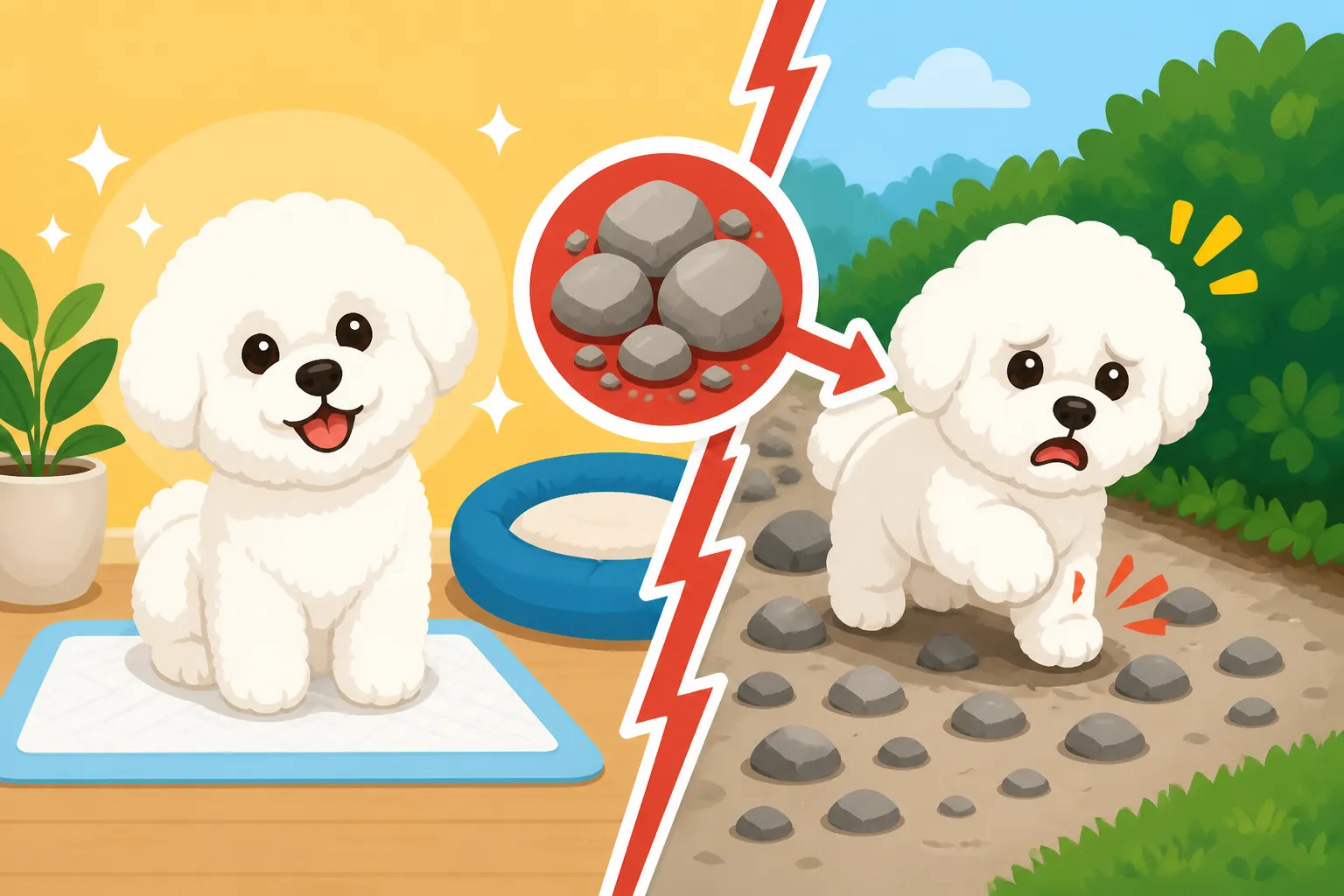
How Stones Wreck a Bichon Frise Housetraining Routine
One of the most disheartening things a Bichon Frise owner can face is having their perfectly housetrained companion suddenly start having accidents indoors. It’s confusing, frustrating, and often leads to worry that you've done something wrong or that your furry friend is simply being stubborn. This comprehensive guide is here to shed light on a common, yet often overlooked, culprit behind these regressions in Bichons: bladder stones, and how they can utterly wreck even the most established housetraining routine.
The Initial Challenge of Housetraining a Bichon Frise
Let's be honest, housetraining a Bichon Frise isn't always a walk in the park, even for the most dedicated owner. While they are intelligent and eager to please, there are a few breed-specific quirks that can make the journey a bit longer than with other dogs. Owners often find themselves tearing their hair out over sudden puddles, even when they’ve been diligent.
Why Bichons Can Be Tricky
Bichons are notorious for being a little slower to housetrain than some other breeds. Their small size means they have smaller bladders, which naturally requires more frequent potty breaks, especially when they're puppies. This isn't just an inconvenience; it's a physiological reality. Many small breeds, including Bichons, also have a strong preference for comfort and dislike getting wet or cold. Imagine a tiny, fluffy dog stepping out into a sudden downpour or chilly morning frost – it's understandable why they might hesitate. This preference can lead them to seek out a warm, dry spot indoors, making consistent outdoor potty training a real test of patience. Furthermore, if not taken out often enough, they can learn to "hold it" for too long, leading to stretched bladders and potential issues down the line. It's a delicate balance, trying to encourage frequent elimination without creating an anxiety about going outside.
Establishing a Solid Routine
When you first bring home a Bichon Frise puppy, or even an adult rescue, establishing an ironclad housetraining routine is paramount. This means frequent trips outside, usually every hour or two for puppies, immediately after waking up, after eating, and before bed. It's about predictability and positive reinforcement. When your Bichon eliminates outside, a party should ensue – enthusiastic praise, a special high-value treat, and perhaps a quick, happy play session. This creates a strong positive association with going potty outdoors. Crate training can be incredibly helpful here, as most dogs instinctively avoid soiling their sleeping area. You might consider resources like BAXTER & Bella, an online puppy training school, which offers structured programs that can guide new owners through these crucial early stages of routine building. Consistency is king; every family member needs to be on the same page, taking the dog out at the same times and using the same cues. This structure, ideally, helps your Bichon understand exactly where and when to do their business, making those early months manageable, if not always easy. How Many Weeks a Bichon Frise Takes to Be Clean can feel like an eternity, but persistence pays off.
How Bladder Stones Introduce a New Layer of Housetraining Hell
Just when you think you've conquered housetraining, and your Bichon is a champion at holding it and signaling, suddenly accidents start happening again. This isn't just a simple regression; if bladder stones are the cause, it's a completely different ballgame, adding a layer of physical distress that makes all previous training almost irrelevant.
The Physical Urgency Stones Create
Imagine trying to hold your bladder when you have a sharp stone irritating the lining, or even worse, when a tiny stone is trying to pass through a narrow tube. That's essentially what your Bichon Frise might be experiencing. Bladder stones, especially the calcium oxalate variety common in Bichons, cause significant inflammation and irritation to the bladder wall. This irritation triggers an intense, almost constant, sensation of needing to urinate, even if the bladder isn't full. It's an overwhelming urge that's extremely difficult, if not impossible, for your dog to control, regardless of how well they were previously housetrained. They might squat repeatedly, producing only a few drops, or leak urine involuntarily. This urgency is not a behavioral problem; it's a medical emergency that overrides any learned behavior. For male Bichons, the situation can be even more dire, as a stone can get lodged in the narrower urethra, causing a complete blockage and immense pain, turning any attempt to urinate into a life-threatening crisis. Whether a Straining Bichon Frise Is an Emergency should never be taken lightly.
Pain and Discomfort Leading to Accidents
Beyond the urgency, bladder stones cause significant pain and discomfort. Picture walking around with a pebble in your shoe, but that pebble is inside your most sensitive internal organs. The inflammation and physical presence of the stones can make urination a painful experience. Your Bichon might start associating the act of going outside with this pain, leading to hesitation or even refusal to urinate when prompted, simply because they've learned it hurts. This can lead to them holding it even longer, exacerbating the problem, until they simply can't anymore and have an accident indoors. They might also start to urinate in unusual or hidden spots in the house, perhaps seeking a place where they feel less vulnerable or where they won't be "punished" for having an accident that isn't their fault. This isn't defiance; it's a desperate reaction to an internal struggle. The stress and discomfort can also lead to other behavioral changes, making your once-happy, housetrained Bichon seem withdrawn or anxious. It's heartbreaking to witness, and it’s critical to remember that this behavior stems from physical suffering, not a lapse in their understanding of boundaries.
Recognizing the Signs: Is It Stones or a Training Regression?
It's easy to dismiss sudden indoor accidents as a simple regression or stubbornness, especially if your Bichon Frise has always been a bit challenging with housetraining. However, it's crucial for owners to differentiate between true behavioral regression and physical symptoms indicating a deeper medical issue like bladder stones. The subtle cues can be easily missed if you're not specifically looking for them.
Behavioral Changes to Look For
If your previously housetrained Bichon starts having accidents, pay close attention to the way they are urinating. Are they squatting more frequently than usual, perhaps producing only small amounts of urine each time? This frequent, unproductive squatting, sometimes referred to as pollakiuria, is a red flag for urinary tract irritation, often caused by stones. You might notice them straining to urinate, hunching their back, or vocalizing softly during urination. This isn't just about needing to go; it's about difficulty going.
Another telling sign is a sudden change in their preferred potty spot. If your Bichon, who always used the backyard, suddenly starts seeking out a quiet corner of the living room or a specific rug, it could be a sign of discomfort. They might be trying to hide the act or find a softer surface that provides some relief. Sometimes, they might even seem confused, as if they know they shouldn't be going indoors, but the physical urge is too overwhelming to control. You might also notice an increase in licking their genital area, a common self-soothing behavior when there's irritation or pain. These aren't typical "oops, I forgot" accidents; they often come with an air of urgency and distress. The First Signs a Bichon Frise Has Stones can be subtle but important.
Physical Symptoms That Point to Stones
While behavioral changes are important, physical symptoms offer more direct clues. The most alarming and obvious sign is blood in your Bichon's urine, known as hematuria. This can range from a faint pink tinge to bright red and is a strong indicator of irritation or damage to the urinary tract lining, often caused by stones scraping against it. Don't panic if you see this, but treat it as an immediate reason to contact your vet.
Beyond visible blood, the urine itself might appear cloudy or have an unusually strong, pungent odor due to infection that often accompanies stones. Your Bichon might also show general signs of illness, such as lethargy, reduced appetite, or an unusual disinterest in play. They might also appear restless, unable to get comfortable, or more withdrawn than usual. If a stone completely blocks the urethra, especially in male Bichons, they will strain to urinate with no urine coming out, rapidly becoming distressed, painful, and eventually, very sick. This is a critical emergency and requires immediate veterinary attention. These physical signs, coupled with the behavioral changes, create a compelling picture that points towards a medical issue rather than just a training lapse. Whether Blood in a Bichon Frise's Urine Means Stones is a question that needs a vet's answer.
The Diagnostic Journey: Ruling Out or Confirming Stones
When your Bichon Frise starts exhibiting these concerning symptoms, it's natural to feel anxious and want answers. The diagnostic process can feel a bit like detective work, but it's absolutely essential to get to the root cause of their discomfort and the sudden housetraining challenges.
Your Vet's Role in Unraveling the Mystery
The first and most crucial step is a thorough veterinary examination. Your vet will begin with a physical exam, checking your Bichon for tenderness in the abdomen, bladder size, and any other indicators of discomfort or illness. They'll also ask you detailed questions about the onset of symptoms, your dog's urination habits, diet, and any other changes you've observed. This comprehensive history is invaluable.
Next, diagnostic tests will likely be recommended. A urinalysis is often the first line of defense. This simple test can reveal the presence of blood, crystals, bacteria, and abnormal pH levels, all of which can point towards bladder stones or a urinary tract infection. However, a urinalysis alone won't confirm stones. Imaging is usually required. This typically involves X-rays, which are excellent for detecting many types of stones that are radiopaque (show up on X-ray). Sometimes, an ultrasound is also used, especially for stones that might not be visible on an X-ray, or to get a better view of the bladder wall and other abdominal organs. How a Vet Confirms Stones in a Bichon Frise often involves a combination of these techniques. It's a systematic approach designed to accurately identify the problem so the correct treatment can be initiated.
Communicating Your Housetraining Woes to the Vet
When you're at the vet, it’s really important to be as detailed as possible about the housetraining issues. Don't just say, "He's having accidents." Explain when they started, how often they occur, what they look like (small puddles, large volumes, straining, squatting frequently), and where they're happening (same spot, random spots, hidden areas). Mention any changes in water intake, appetite, or general demeanor. For instance, you could say, "He used to go six hours without an accident, but now he's having a small leak every hour, even right after going outside. He also seems to lick himself a lot more and strains when he tries to pee."
Being specific helps your vet connect the dots between the behavioral changes and potential medical conditions. It helps them understand the impact this is having on your Bichon and your household. Don't be embarrassed to discuss every detail, no matter how minor it seems – sometimes the smallest observation can be the most critical piece of the puzzle. This open and thorough communication ensures your vet has all the information needed to make an accurate diagnosis and develop the most effective treatment plan for your furry friend.
Rebuilding Trust and Routine After a Stone Diagnosis
Discovering your Bichon Frise has bladder stones is a huge relief to finally know the cause of their troubles, but it also marks the beginning of a new journey. It's crucial to understand that simply treating the stones isn't enough; you'll also need to carefully rebuild their confidence and routine, addressing both the physical and psychological impact of their ordeal.
Managing Pain and Treating Stones First
Before you can even think about retraining, the immediate priority is to address the underlying medical issue: the bladder stones themselves. Your vet will determine the best course of action, which could involve a special prescription diet designed to dissolve certain types of stones (like struvite) or, more commonly for calcium oxalate stones in Bichons, surgical removal. Why a Bichon Frise's Stones Must Be Cut Out is often due to their type. During this period, your Bichon will likely be on pain medication and possibly antibiotics to manage any secondary infections.
While your Bichon is recovering or undergoing treatment, focus on comfort and providing easy access to potty areas. This might mean more frequent trips outside, or even temporarily using puppy pads indoors if going outside is still too painful or difficult. The goal is to minimize any further discomfort or negative associations with urination. Remember, they aren't having accidents out of spite; their body is recovering from a significant trauma. Patience and understanding are key during this delicate time. Once the stones are gone and your Bichon is pain-free, the physical urgency and discomfort that caused the accidents will subside, setting the stage for retraining.
Starting Housetraining From Scratch (Almost)
Once the medical issue is resolved and your Bichon is feeling better, you'll need to approach housetraining almost as if you have a new puppy again. Their previous routine has been disrupted by pain and uncontrollable urges, and they might have developed new, undesirable habits. The good news is that they were housetrained before, so the underlying learning ability is there; it just needs reactivating and reinforcing.
Start with a very frequent potty schedule, perhaps taking them out every hour or two, just like you would with a young pup. Praise and treat lavishly every single time they successfully urinate outside. Make it a huge, exciting event! If you used a crate before, reintroduce it for short periods, ensuring it's always a positive, comfortable space. Be diligent about cleaning up any indoor accidents with an enzymatic cleaner (like those found on Amazon) to eliminate odors that might encourage repeat offenses. Avoid any punishment for accidents; your Bichon has been through enough, and punishment will only create fear and anxiety, potentially making them hide their accidents. The key is consistency, positive reinforcement, and immense patience. It might take weeks or even months to get back to their previous level of reliability, but with a healthy bladder and your understanding, it is absolutely possible. Whether a Bichon Frise Recovers Quickly From Stone Surgery can vary, so adjust your expectations accordingly.
Long-Term Management and Prevention of Future Housetraining Disruptions
Dealing with bladder stones is a significant event, but for Bichon Frise owners, it's often not a one-time occurrence. This breed has a predisposition to stone formation, which means long-term management and prevention are critical, not just for their health, but also for maintaining a stable and reliable housetraining routine. Proactive care is truly the best defense.
The Lifelong Stone Prevention Diet
One of the most effective tools in preventing recurrence of calcium oxalate stones, which are particularly common in Bichons, is a specialized prescription diet. These diets are carefully formulated to create an environment in the bladder that is less conducive to stone formation. They typically control mineral levels, particularly calcium and oxalate, and maintain a specific urine pH to discourage crystal growth.
Your vet will prescribe a specific brand and type of food, and it's imperative that your Bichon Frise stays on this diet for life. Even a single treat or meal of regular food can upset the delicate balance required to prevent stone recurrence. This can be challenging, especially if your Bichon is a fussy eater or if you have other pets in the household. It means no table scraps, no sneaking treats that aren't approved, and careful management of all food sources. The Diet a Bichon Frise Stays On for Life is a serious commitment. This diet is your primary defense against stones, and by extension, against future urinary discomfort that could derail their housetraining once more. Think of it as medicine they eat daily.
Continuous Monitoring and Proactive Care
Beyond the prescription diet, continuous monitoring and proactive care are essential for a Bichon Frise prone to stones. Your vet will likely recommend regular check-ups, which often include urine testing and sometimes even abdominal imaging (X-rays or ultrasound) to catch any signs of crystals or new stone formation early. Whether a Bichon Frise Should Be Urine Tested Yearly is a common recommendation for at-risk dogs. Catching potential problems when they are small and asymptomatic is far easier and less traumatic than dealing with another full-blown crisis.
Encouraging increased water intake is another vital strategy. Diluted urine is less likely to form crystals, so make sure your Bichon always has access to fresh, clean water. You might consider a pet water fountain to entice them to drink more, or adding a little water to their prescription wet food. Whether Water Intake Changes a Bichon Frise's Risk is definitely a yes. Regular walks and frequent potty breaks also help to keep the bladder flushed and prevent urine from stagnating, which can contribute to crystal formation. By staying vigilant with diet, vet visits, and promoting good hydration, you're not only protecting your Bichon's health but also safeguarding their hard-won housetraining success.
Housetraining Regressions vs. Stone-Related Accidents
It can be incredibly challenging to tell the difference between a simple housetraining regression (which can happen for many reasons, from stress to changes in routine) and a problem caused by bladder stones. Here's a table to help you identify key differences.
| Feature | Typical Housetraining Regression (Behavioral) | Bladder Stone-Related Accidents (Medical) |
|---|---|---|
| Onset | Gradual, often linked to a change (new baby, move, schedule change) | Sudden, abrupt, often with no clear environmental trigger |
| Frequency | May increase, but not necessarily constant urgency | Frequent, intense urgency; repeated squatting; small puddles |
| Amount of Urine | Can be variable, sometimes full puddles | Often small, frequent amounts (pollakiuria) or straining with no output |
| Effort to Urinate | Usually normal, quick elimination | Straining, hunched posture, discomfort, vocalization, licking |
| Location of Accidents | Can be anywhere, sometimes familiar spots | May seek hidden, softer, or unusual spots (trying to hide pain/shame) |
| Appearance of Urine | Clear, normal color | Bloody, cloudy, strong odor |
| General Demeanor | May be slightly anxious, stubborn, or attention-seeking | Often painful, lethargic, withdrawn, restless, reduced appetite |
| Associated Behaviors | May ignore cues, sneak off, or be easily distracted | Licking genitals excessively, reluctance to move, guarding abdomen |
| Response to Cues | May understand but choose to ignore, or be distracted | May try to respond but physically unable to control the urge |
This table isn't a substitute for veterinary advice, but it can help you communicate more effectively with your vet and advocate for your Bichon Frise if you suspect something more serious than a simple training issue is at play.
Disclaimer
This article is for general informational purposes only and does not constitute professional advice. Laws, prices and regulations vary by location and change over time. Consult a qualified professional for guidance on your specific situation.