Which Brush Suits a Bichon Frise
If you're a Bichon Frise parent, you know that their glorious, cloud-like coat is both a blessing and, let's be honest, sometimes a bit of a curse! Those beautiful white curls are prone to matting faster than you can say "fluffy," and choosing the right tools to keep them pristine can feel like a never-ending quest. This guide is here to walk you through the world of Bichon Frise brushes, helping you understand exactly what your fluffy friend needs to stay comfortable and looking their best.
Understanding Your Bichon Frise's Unique Coat
Before we dive into the specific brushes, it's really important to understand what makes a Bichon Frise coat so special, and yes, sometimes challenging. This isn't just a regular dog coat; it has characteristics that demand particular care and attention. If you don't grasp these fundamentals, you'll always feel like you're fighting a losing battle against the mats.
The Distinctive Double Coat and Its Growth
A Bichon Frise boasts a luxurious double coat, but it's not like the typical shedding double coat you find on a Labrador or a Husky. Instead, your Bichon has a soft, dense undercoat combined with a coarser, curly outer coat that gives them their signature "powder puff" look. The magic, and the challenge, lies in the fact that Bichons are often touted as "hypoallergenic" because they don't shed in the traditional sense. This means that instead of loose hair falling out onto your furniture, it gets trapped within the dense undercoat and the curly outer layer. It just keeps growing, too! Unlike some breeds where the coat has a fixed length, a Bichon's hair will literally grow forever if not trimmed or groomed regularly. This continuous growth, combined with trapped dead hair, is the perfect recipe for tangles and mats if not addressed daily.
Imagine trying to brush a tangled ball of yarn that just keeps adding more strands; that's a bit like what you're dealing with. The soft undercoat is prone to felting, where the hairs bind together tightly, while the curly topcoat acts like Velcro, catching everything. This unique combination makes proactive and consistent grooming non-negotiable for their comfort and health. It’s why understanding Whether a Bichon Frise Has an Undercoat is key to proper grooming.
Why Matting is a Constant Battle
Matting isn't just an aesthetic issue; it's a serious welfare concern for your Bichon Frise. Because their non-shedding hair gets trapped, it quickly forms tangles that, if left unchecked, tighten into dense, painful mats. These mats act like a second skin, pulling at your dog's actual skin with every movement, causing discomfort and even pain. They restrict blood flow, can harbor dirt, parasites, and moisture, leading to skin infections and hotspots. Areas particularly prone to matting include behind the ears, under the armpits, around the collar area, on the belly, and, of course, the ever-challenging leg and paw hair.
The reality is that mats can form incredibly quickly, sometimes overnight, especially after a bath if the coat isn't thoroughly brushed and dried. A romp in the park, a little rain, even just sleeping can contribute to mats. It's a constant battle, and it’s why your choice of brush and your consistent routine are paramount. Without the right tools and techniques, you might think you're brushing effectively, only to discover a dense mat nestled deep against the skin. This can lead to frustration for both you and your dog, making grooming sessions a dreaded chore rather than a bonding experience.
The Essential Brushes for a Bichon Frise
Okay, now that we understand the unique challenges of the Bichon coat, let's talk about the cavalry: the brushes! You might be tempted to just grab any old brush, but trust me, not all brushes are created equal, especially when it comes to tackling the delightful complexity of a Bichon's fluff. Having the right arsenal of tools is like having the right recipe for a perfect cake – essential for success.
The Mighty Slicker Brush
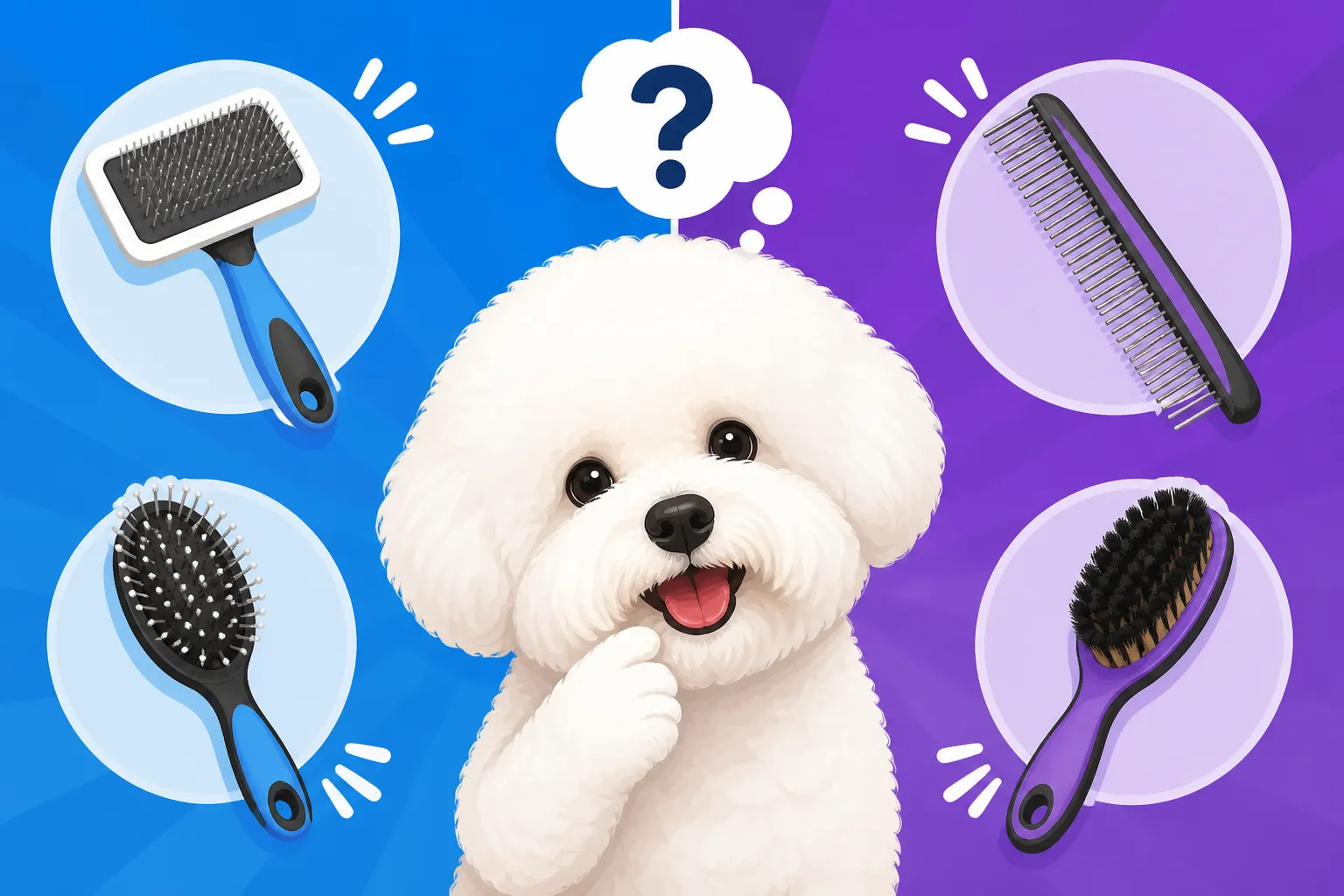
If there's one brush you must have for your Bichon Frise, it's a good quality slicker brush. Think of it as your primary weapon against mats and tangles. A slicker brush typically has a wide head covered in fine, short, angled wire pins. These pins are designed to reach deep into the dense undercoat, grabbing and separating those trapped, loose hairs before they can form painful mats.
When choosing a slicker brush, don't skimp on quality. Cheap slicker brushes can have flimsy pins that bend easily or have sharp tips that scratch your dog's skin. Look for a slicker with firm, durable pins that have a slight bend, and ideally, protected tips to prevent irritation. The handle should be comfortable for you to hold, as you'll be spending a lot of time with it! Brands known for good quality slickers are often found on sites like Amazon or specialty pet retailers like Chewy. Some professional groomers swear by specific brands, so it's worth reading reviews. A good slicker brush is effective in gently working through tangles and removing loose undercoat without causing pain. It’s crucial for reaching the skin, which is why Whether a Slicker Reaches a Bichon Frise's Skin is so important.
The Indispensable Metal Comb
Once you've worked through the coat with your slicker brush, your job isn't done. This is where the metal comb steps in, acting as your quality control. A metal comb, ideally one with both wide and fine-toothed sections, is absolutely indispensable for a Bichon. Its purpose is to go through the coat after you've used the slicker, ensuring that you haven't missed any hidden tangles or mats.
Start with the wide-toothed section to gently comb through the areas you've just brushed. If the comb glides through without snagging, you've done a great job. If it catches, go back with your slicker brush and work that section again. Once the wide-toothed side passes easily, switch to the fine-toothed side to double-check. The fine teeth will catch even the smallest, most stubborn tangles that the slicker or wider comb teeth might have missed. This step is non-negotiable. Many owners think they've brushed sufficiently with just a slicker, but it's the comb that truly confirms a mat-free coat, right down to the skin. It acts as a safety net, ensuring no nasty surprises later. This is why Whether a Comb Should Follow the Brush is a resounding yes!
Pin Brushes and Their Role
A pin brush, with its widely spaced, flexible metal pins (often with rounded tips), serves a different purpose than the slicker. While a slicker is your heavy-duty mat-busting tool, a pin brush is more for general tidying, fluffing, and gently detangling very minor knots on a well-maintained, already combed-out coat. It's not the primary tool for dematting.
If you try to use a pin brush on a matted Bichon, you'll likely just glide over the top of the mats, leaving them undisturbed deep within the coat. It won't penetrate effectively enough to separate the individual hairs. However, once your Bichon is perfectly brushed and combed, a pin brush can be lovely for a final fluff or for distributing natural oils. Some owners use it for daily light brushing if their dog's coat is already in immaculate condition and they just want to give it a quick once-over. So, while it's not the workhorse, it can be a nice supplementary tool, particularly if you're aiming for that perfectly fluffed, show-ring look. Just remember: slicker first, comb second, then a pin brush if you like.
Brushing Techniques That Actually Work
Having the right tools is only half the battle; knowing how to use them effectively is the other, equally important, half. You can have the most expensive, top-of-the-line brushes, but if your technique isn't spot-on, you'll still end up with mats, a frustrated Bichon, and probably a sore back. Let's talk about how to make those grooming sessions truly count.
The Art of Line Brushing
Line brushing is the gold standard technique for a Bichon Frise, and it's essential for getting right down to the skin to prevent and remove mats. It sounds fancy, but it's really just a systematic way of brushing that ensures no area is missed. This isn't about just running a brush over the top of the coat; it's about methodically working through every single strand.
Here’s how you do it:
- Prepare Your Dog: Start with your Bichon standing or lying comfortably on a non-slip surface. Many owners find a grooming table helpful to save their back and keep their dog still. Give them a treat and praise them for being calm.
- Section the Coat: Using your non-brushing hand, part the coat horizontally, creating a small "line" of hair at the bottom of the section you're working on (e.g., the bottom of a leg or belly). Hold the rest of the hair up and out of the way, perhaps with a clip or just by holding it firmly.
- Brush the Line: Take your slicker brush and brush down and out from the skin, through that small "line" of hair. You should see the skin as you brush. Work in small, gentle strokes.
- Move Up: Once that line is completely tangle-free (check with your metal comb!), drop another small "line" of hair from above, overlapping slightly with the section you just brushed. Repeat the brushing process.
- Systematic Progress: Continue this process, working your way up the leg, across the body, or down the ear. Be thorough. This technique ensures that you are literally brushing from the skin out, layer by layer, rather than just skimming the surface. It takes time, but it's the only way to truly prevent mats. Remember, Whether Line Brushing Is Necessary on a Bichon Frise is not a question – it's a requirement!
Making Brushing a Positive Experience
Grooming shouldn't be a battle. It should be a regular, positive interaction that strengthens your bond with your Bichon. If your dog associates grooming with pain or prolonged discomfort, they'll dread it, and you will too. Starting early and making it fun are key.
Begin grooming sessions when your Bichon Frise is a puppy. Keep the sessions short, even just a few minutes at first, and always end on a positive note. Use lots of praise, gentle strokes, and high-value treats (like small pieces of cooked chicken or cheese). If you encounter a tangle, don't pull! Gently work it out with your fingers first, then use a detangling spray and the edge of your slicker brush, always brushing away from the skin. If your puppy is still small and wiggly, consider starting with just touching the brush to them while they eat. The goal is to build a positive association. Consistency is also vital; a quick daily brush is far better than an infrequent, hour-long struggle. This positive reinforcement approach helps prevent a situation where Whether a Bichon Frise Learns to Fear the Groomer After Pain becomes a real concern.
When to Seek Professional Help
Despite your best efforts, sometimes mats happen. Life gets busy, or maybe a surprise swim turned into an impossible tangle. If you find severe, pelt-like matting, or if your dog is in pain when you try to brush, it's time to call in a professional groomer. Attempting to cut out tight mats with scissors at home is extremely dangerous and can easily lead to serious injury to your dog's skin.
A professional groomer has specialized tools and experience to deal with severe matting safely. Often, this means a complete shave-down of the matted areas, which can be an emotional experience for owners who love their Bichon's fluffy coat. However, it's truly the kindest and safest option for a severely matted dog. The groomer can assess the situation and recommend the best course of action. Once shaved down, you'll have a fresh start to implement a consistent home grooming routine. This is often the case when Whether a Matted Bichon Frise Must Be Shaved becomes the only humane option. Regular home brushing, even if it's just daily short sessions, makes a groomer's job much easier and less stressful for your dog, often resulting in lower grooming fees because they don't have to spend hours dematting. It's also worth noting that it's smart to introduce your Bichon Frise to professional grooming early; consider How Early a Bichon Frise Should Meet a Groomer.
Maintaining Your Brushing Routine and Tools
A successful grooming routine isn't just about what you do in one session; it's about consistency, frequency, and keeping your tools in tip-top shape. Think of it as a marathon, not a sprint. Your Bichon's coat needs ongoing attention to prevent problems from escalating.
How Often is "Enough"?
This is a question every Bichon owner asks, and the simple answer is: more often than you think! For most Bichons, daily brushing is ideal. Yes, daily. Even if it's just a 10-15 minute session where you meticulously line brush one section of their body, rotating through different areas each day, it makes a world of difference. This proactive approach prevents small tangles from becoming huge, painful mats.
If daily brushing isn't feasible, aim for every other day at the absolute minimum, ensuring you do a thorough full-body line brush each time. Any less frequent, and you're very likely to find yourself battling serious mats, especially in active dogs or those with particularly dense coats. Remember that trapped hair can mat quickly, particularly around pressure points or areas that get wet. So, after a walk in the rain or a bath, ensure you brush and dry your Bichon thoroughly. This consistency is far more effective than trying to tackle a week's worth of tangles in one marathon session. If you're wondering Whether Brushing Every Other Day Is Enough, the honest answer is it's the bare minimum, and daily is better.
Cleaning and Caring for Your Brushes
Your grooming tools are an investment, and like any investment, they need care to perform their best. A dirty or damaged brush won't be effective and can even harm your Bichon's coat or skin.
After each brushing session, always remove the hair from your slicker brush and comb. You can use another comb or even your fingers to pull the hair out of the slicker pins. For a deeper clean, especially if you use conditioning sprays, periodically wash your brushes with a mild soap and water. Allow them to air dry completely, pins down, to prevent rust and mildew. Store your brushes in a clean, dry place where they won't get squashed or damaged. Bent slicker pins are much less effective and can be scratchy. Regularly inspect your brushes for any damage – broken or rusty pins, loose handles – and replace them if necessary. A well-maintained set of tools makes grooming easier for you and more comfortable for your Bichon. Consider what What a Home Grooming Kit Costs a Bichon Frise Owner could entail, as it's not just brushes but also combs, scissors, and maybe even a good dryer.
Beyond Brushes: Other Grooming Essentials
While brushes and combs are your primary tools, a few other items can significantly enhance your Bichon Frise's grooming experience and maintain their glorious coat.
- Detangling Spray: A good quality detangling or conditioning spray is your secret weapon against stubborn knots. Lightly misting the coat before brushing helps to lubricate the hair, making it easier for the brush to glide through and minimizing breakage and static. Always choose a dog-specific product, as human products can irritate their skin. Many good options can be found online at retailers like Chewy or Amazon.
- Quality Shampoo and Conditioner: Regular bathing (every 2-4 weeks, depending on lifestyle) is important for keeping your Bichon clean and their coat manageable. Use a shampoo specifically formulated for dogs, ideally one designed for white coats or sensitive skin. Always follow up with a conditioner to help keep the hair soft and prevent tangles. Remember, though, you must brush and comb your Bichon thoroughly before bathing, as water will tighten any existing mats, making them nearly impossible to remove.
- High-Velocity Dryer: After a bath, a high-velocity dog dryer is invaluable. It not only dries your Bichon quickly but also helps to straighten the coat, making it easier to brush and preventing mats from forming as the hair dries. Towel drying alone is rarely enough for a Bichon's dense coat and can actually contribute to matting if not followed by thorough brushing while drying.
- Small, Blunt-Nosed Scissors: These can be helpful for carefully trimming hair around the eyes (if your dog tolerates it) or for hygiene purposes around the sanitary area, but they should only be used with extreme caution and never for cutting out mats against the skin. For serious trimming and styling, your professional groomer is always the safest bet. It's especially useful for Whether a Bichon Frise's Sanitary Area Needs Trimming.
By combining the right brushes with proper technique and these helpful accessories, you'll be well on your way to keeping your Bichon Frise's coat healthy, happy, and mat-free. It's a commitment, yes, but the reward is a beautiful, comfortable companion. For more insights on the frequency of professional grooming, consider checking out How Many Weeks Between Bichon Frise Grooms. And if you're curious about the overall financial commitment, What a Full Bichon Frise Groom Costs can shed some light on that aspect of Bichon ownership.
Disclaimer
This article is for general informational purposes only and does not constitute professional advice. Laws, prices and regulations vary by location and change over time. Consult a qualified professional for guidance on your specific situation.