Whether Adding Water to Kibble Helps a Bichon Frise
As Bichon Frise owners, we often find ourselves fretting over the smallest details of their care, and one concern that consistently crops up is ensuring they drink enough water. It’s a silent worry for many, especially when you know how susceptible these adorable little fluffballs can be to urinary issues. This guide is here to unravel the mystery of hydration for your Bichon, specifically delving into whether simply adding water to their kibble can make a real difference and how to do it effectively.
The Critical Link Between Hydration and Bichon Frise Health
It’s no secret that a healthy pet needs to drink water, but for a Bichon Frise, hydration isn't just about general well-being; it's a critical line of defense against some very specific and distressing health challenges.
Understanding the Bichon Frise's Unique Urinary Challenges
Let’s be honest, finding out your sweet Bichon Frise has bladder stones is heartbreaking and often unexpected. Unfortunately, our beloved Bichons are, genetically speaking, highly predisposed to forming certain types of bladder stones, most notably calcium oxalate stones. It feels like an unfair hand when you're trying your best to keep them healthy, yet this silent threat can loom. This isn't just bad luck; it's a known genetic predisposition that makes urinary tract health a top-tier concern for the breed. If you've ever heard a vet explain the statistics, you'll understand why it's such a common conversation among Bichon owners; it's why Why a Bichon Frise Forms Stones Twenty Times as Often is a topic many of us are unfortunately all too familiar with.
The core issue here revolves around urine concentration. When your Bichon doesn't drink enough water, their urine becomes more concentrated, meaning there's a higher density of minerals and waste products. Think of it like a crowded bus: if there are too many passengers (minerals) in a small space (concentrated urine), it's much easier for them to bump into each other and form clumps (crystals, then stones). Dilute urine, on the other hand, is like a spacious limousine, giving those minerals plenty of room to move freely and be flushed out without incident. This simple concept of dilution is paramount in preventing crystal and stone formation.
The consequences of stone formation can range from uncomfortable urinary tract infections to life-threatening blockages. Imagine your Bichon straining to urinate, or worse, completely unable to pass urine. That's not just a training problem; it's an emergency that often requires immediate veterinary intervention. Owners who've experienced it will tell you the panic and fear are immense, and the vet bills can be substantial. Understanding that a simple struggle to urinate could signify something far more serious, like a blockage, is crucial for any Bichon owner. Whether a Straining Bichon Frise Is an Emergency highlights just how serious this can be.
Why Just Drinking from a Bowl Might Not Be Enough
We all want our dogs to drink from their water bowls like they're competing in a hydration challenge, but the reality is, many Bichons simply aren’t naturally big drinkers. You might see them take a few polite sips throughout the day, but is it truly enough to keep their urine sufficiently diluted? Often, the answer is no. This can be incredibly frustrating when you've placed fresh water out multiple times a day and they still just glance at it. It's not that they're being difficult; some dogs just don't have that innate drive to gulp down water like others.
Several factors can influence a Bichon's water intake. Activity level plays a part – a lazy day on the couch won't necessarily spark a thirst. The weather is another; while hot days might encourage more drinking, cooler weather might see them barely touch their bowl. Even the type of bowl can make a difference; some dogs prefer ceramic over stainless steel, or vice-versa. I've known owners who swear by special filtered water bowls, hoping to tempt their pup into a few more sips. You might even find your Bichon staring at the tap, wishing for fresh running water, rather than drinking from a stagnant bowl. This is why many turn to Whether a Water Fountain Encourages a Bichon Frise as a solution.
Ideally, a Bichon Frise at risk of urinary stones should be producing large volumes of dilute urine. This means they should be drinking enough water to warrant frequent potty breaks, and when they do go, the urine should be pale yellow, almost clear. If you’re consistently seeing dark, concentrated urine, it’s a clear sign that their hydration levels might not be optimal. The goal is to maximize their water intake to keep that urinary tract flushed and happy. This constant dilution is your best defense. For more insight into how critical this is, consider Whether Water Intake Changes a Bichon Frise's Risk.
The Tangible Benefits of Hydrating Your Bichon's Kibble
Given the challenges of getting a Bichon to drink enough water willingly, adding water to their food becomes a simple yet profoundly effective strategy. It's a way to ensure every meal contributes to their hydration goals.
Boosting Overall Hydration and Urinary Tract Health
The most obvious benefit of adding water to kibble is the direct boost it gives to your Bichon's overall hydration. Think of it as a guaranteed dose of water with every bite. This proactive approach helps to keep the urine consistently diluted, making it far less likely for those problematic crystals to precipitate out and form stones. It creates an environment within the bladder that discourages stone formation, literally flushing out potential problems before they can take root. This is a game-changer for prevention.
For Bichons who have already experienced bladder stones, especially those pesky calcium oxalates that don't dissolve and often recur, this method is practically non-negotiable. Many veterinarians will strongly recommend increasing water intake through diet as a cornerstone of management. It’s an essential part of the long-term strategy to prevent the heartbreaking return of stones. Knowing that The Stone That Comes Back a Year After Bichon Frise Surgery is a common and distressing reality, making every effort to dilute urine becomes paramount.
Beyond just preventing stones, increased hydration supports overall kidney function and digestive health. Well-hydrated kidneys can more efficiently filter waste products from the blood. And in the digestive tract, adequate moisture helps with the smooth passage of food and improved nutrient absorption. It's not just about the bladder; it's about a healthier internal system all around. It's a simple change that yields widespread benefits, contributing to your Bichon's comfort and longevity.
Making Dry Kibble More Appealing and Easier to Eat
Bichons are famous for many things, but being robust, enthusiastic eaters isn't always one of them. Many Bichon owners will nod knowingly at the mention of a picky eater, and it can be a real struggle to get them to finish their meals. This is where soaking kibble truly shines. Adding water softens the hard pellets and, more importantly, releases the aromas of the food. For a dog that might turn up its nose at dry, boring kibble, a warmed, softened, and more fragrant meal can be incredibly enticing. It often transforms mealtime from a battle of wills into a much more enjoyable experience for everyone involved. If you've ever had a Whether a Bichon Frise Is a Fussy Eater on your hands, you know how valuable this can be.
Another significant advantage of softening kibble is the comfort it offers, especially for older Bichons or those with dental issues. Hard kibble can be uncomfortable, even painful, for dogs with sensitive gums, missing teeth, or other oral health problems. Imagine trying to crunch on hard food with a toothache! Soaked kibble becomes much easier to chew and swallow, reducing discomfort and ensuring they can actually consume their meals without pain. Given that Dental Disease in a Bichon Frise is a prevalent issue in the breed, this consideration becomes even more important for many pet parents.
Lastly, for those Bichons who tend to inhale their food at lightning speed, softening the kibble can actually slow them down. When the kibble swells with water, it takes up more space and is less dense, making it harder to gulp down. This slower eating can help reduce the amount of air they swallow, potentially lessening issues like gas or bloat, which, while not as common in small breeds, are still uncomfortable. It’s a subtle benefit, but one that contributes to a more pleasant post-meal experience.
Practical Steps for Incorporating Water into Your Bichon's Diet
Now that we understand the 'why,' let's dive into the 'how.' Successfully adding water to your Bichon's kibble involves a few simple considerations to ensure it's effective and enjoyable for your furry friend.
Choosing the Right Type and Amount of Water
When it comes to the water itself, tap water is generally acceptable for most dogs, provided it’s safe for human consumption in your area. However, some areas have very hard water, which contains higher levels of minerals. While there isn't definitive proof this directly contributes to stone formation in dogs, it's a concern for some owners. If you're worried, or if your tap water is heavily chlorinated, filtered water (like from a Brita pitcher or a whole-house filter) can be a good alternative. Many owners feel better knowing their Bichon is getting the cleanest water possible. Some even report that Whether Filtered Water Reduces a Bichon Frise's Staining is a noticeable benefit, so it's certainly worth considering.
The temperature of the water can also make a difference to a picky eater. Most dogs prefer room temperature or slightly warm water. Avoid extremely cold water straight from the tap, as it can sometimes be a shock to their system or make the food less appealing. Conversely, excessively hot water could make the food too warm to eat comfortably immediately, or degrade some nutrients if left for too long. A gentle warmth can also enhance the aroma, which, as discussed, is a great way to tempt a fussy Bichon.
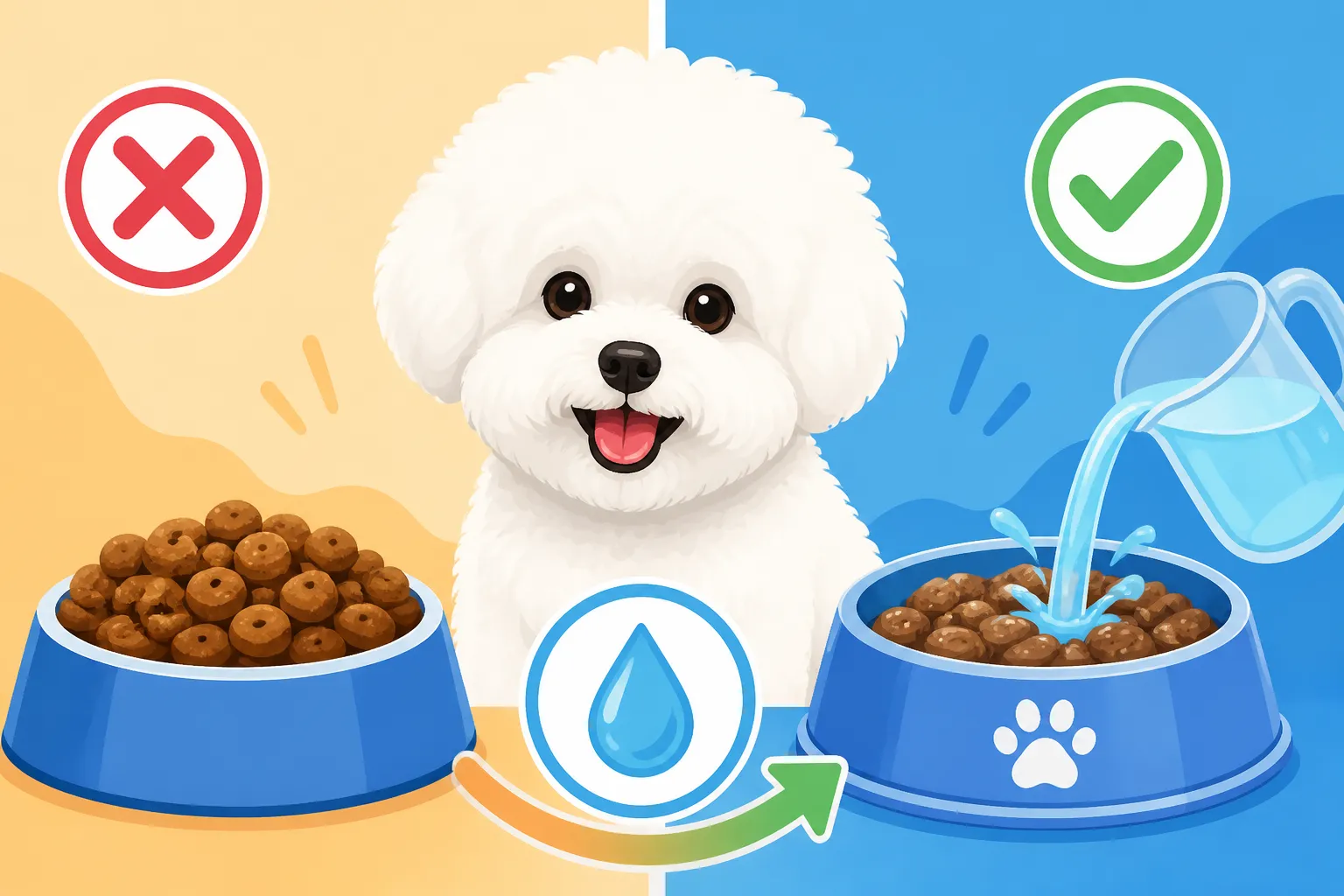
Determining the right amount of water is key. You don't want to turn their kibble into a soggy mess they won't touch, but you also want enough water to actually provide significant hydration. A good starting point is a 1:1 ratio of water to kibble by volume. So, if you feed half a cup of kibble, add half a cup of water. You can then adjust based on your Bichon's preference. Some dogs love a truly soupy consistency, while others prefer it just softened and moist. The goal is to have the kibble absorb the water and soften, leaving little to no standing water, or just a small amount of "gravy." Don't be afraid to experiment to find your Bichon's sweet spot.
Here’s a quick overview of water types:
| Water Type | Pros | Cons | Best For |
|---|---|---|---|
| Tap Water | Readily available, cost-effective | Mineral content varies, chlorine taste | Most general healthy Bichons |
| Filtered Water | Removes chlorine, reduces some minerals | Requires filter system, ongoing cost of filters | Bichons in hard water areas, sensitive to taste |
| Bottled Water | Consistent quality, convenient | Environmental impact, high recurring cost | Travel, emergencies, very sensitive Bichons |
The Art of Soaking and Serving
The timing of when you add the water is more flexible than you might think, but some practices work better than others. For softened kibble, aim to add water about 15-30 minutes before mealtime. This gives the kibble enough time to absorb the liquid and become tender. If you prefer a really mushy consistency, you can soak it for longer, even a few hours, especially if you prepare it in advance. However, if soaking for an extended period, especially overnight, it’s best to store the bowl in the refrigerator to prevent bacterial growth, just as you would with human food.
Freshness is paramount. While it's okay to pre-soak a meal or two, don't leave wet kibble sitting out at room temperature for hours on end, especially in warm weather. Once water is added, the kibble becomes a much more hospitable environment for bacteria. It’s always best to prepare fresh portions for each meal. If your Bichon doesn’t finish their moistened meal within a reasonable timeframe (say, 30-60 minutes), discard it and offer a fresh portion at the next mealtime. This careful approach is crucial to avoid any potential digestive upset or illness.
Even presentation can influence a picky Bichon. Some dogs seem to have a preference for certain bowls. Stainless steel bowls are hygienic and easy to clean, while ceramic bowls can feel a bit more substantial. Experiment with different bowl types if your Bichon is particularly finicky. You can find a wide variety of options on retailers like Chewy or Amazon, allowing you to choose one that fits your dog's style and your budget. Remember, the goal is to make mealtime as appealing as possible.
If your Bichon has always eaten dry kibble, suddenly presenting them with a soupy meal might be met with suspicion. Introduce the change gradually. Start by adding just a tablespoon or two of water, letting it sit for only a few minutes to slightly moisten the kibble. Over several days or a week, slowly increase the amount of water and the soaking time until you reach the desired consistency. This gentle transition helps your Bichon adjust to the new texture and taste without becoming overwhelmed or refusing the food entirely. Patience is a virtue here!
Beyond Water: Holistic Hydration Strategies for Your Bichon Frise
While hydrating kibble is a fantastic step, a truly comprehensive approach to your Bichon's hydration involves looking at their diet and daily routine as a whole.
Exploring Other Hydration-Boosting Food Options
One of the best ways to boost your Bichon's water intake through their diet is by incorporating wet food. Canned or fresh wet dog food contains a significantly higher moisture content than dry kibble, often ranging from 70-80% water. Even if you don't switch entirely to wet food, adding a spoonful or two of a high-quality wet food to your hydrated kibble can make the meal even more appealing and add extra moisture. Many popular fresh food brands, such as Ollie, specifically formulate their meals with high moisture levels, which can be an excellent option for increasing total water intake. If you're on a specific veterinary diet, remember to discuss wet food options with your vet to ensure compatibility, especially if your Bichon is on The Diet a Bichon Frise Stays On for Life for stone prevention.
Another excellent way to add moisture and flavor is through pet-safe broths. Look for low-sodium, plain bone broths specifically formulated for dogs, or make your own from plain chicken or beef bones (without onions, garlic, or other harmful ingredients). A splash of warm broth over their kibble can turn a regular meal into a gourmet experience, enticing even the pickiest eaters to finish every last drop, and with it, more fluid. This is also a great way to encourage a Bichon who is feeling a bit under the weather to eat and drink.
Finally, consider introducing small amounts of water-rich vegetables and fruits as healthy snacks. Cucumbers, zucchini, celery, and watermelon (without seeds) are all safe, low-calorie options that can contribute to overall hydration. Always offer these in moderation and ensure they are cut into small, manageable pieces to prevent choking. These crunchy, hydrating treats can be a welcome change from traditional dry biscuits and further contribute to a well-hydrated system.
Encouraging Active Drinking Throughout the Day
While we're focusing on dietary hydration, we can't forget about encouraging active drinking from bowls. Placing multiple water stations around your home can dramatically increase the chances of your Bichon taking a few sips here and there. Think about their favorite lounging spots – maybe one bowl in the living room, another in the kitchen, and one near their bed. The more accessible water is, the more likely they are to drink. It's about convenience for your little companion.
As mentioned earlier, water fountains can be a game-changer for some dogs. The sight and sound of bubbling, circulating water often pique a dog's interest more than a still bowl. Many Bichons find the fresh, flowing water more appealing and will drink more from a fountain. Brands like PetSafe or Pioneer Pet offer various models that might tempt your pup. Just remember to keep them clean and change filters regularly for optimal hygiene. Whether a Water Fountain Encourages a Bichon Frise is a common question, and for good reason!
Another crucial part of encouraging hydration, especially for urinary health, is frequent potty breaks. The more opportunities your Bichon has to urinate, the more fluids will move through their system, and the less time concentrated urine sits in the bladder. This helps to flush out any tiny crystals before they can grow into larger stones. Even if they don't seem desperate, a quick trip outside can make a big difference. This ties into the concept that Whether Frequent Urination Protects a Bichon Frise is indeed true, and conversely, Whether Holding Urine Raises a Bichon Frise's Risk is a concern.
Finally, consider making drinking an interactive and fun experience. Add ice cubes to their water bowl on a hot day – many dogs love to crunch on them. You can even make "pupsicles" by freezing low-sodium broth in ice cube trays. These small gestures can make hydration less of a chore and more of a treat for your Bichon. Remember, the goal is to make drinking water a natural and enjoyable part of their day, bolstering all your efforts to prevent urinary issues. When combined with hydrating kibble, these strategies offer a robust defense against common Bichon Frise health concerns.
Disclaimer
This article is for general informational purposes only and does not constitute professional advice. Laws, prices and regulations vary by location and change over time. Consult a qualified professional for guidance on your specific situation.