Whether Home Cooking Suits a Bichon Frise With Stones
For Bichon Frise owners, discovering your beloved companion is prone to bladder stones, especially the notoriously stubborn calcium oxalate type, can be incredibly disheartening. You might feel a desperate urge to take control of every aspect of their diet, leading many to wonder if home cooking could be the ultimate solution to prevent future stone formation. This guide will explore whether home cooking truly suits a Bichon Frise with stones, examining the intricate nutritional requirements, inherent risks, and crucial steps for success.
The Allure of Home Cooking for Your Stone-Prone Bichon
It’s completely understandable why many Bichon Frise owners, faced with the daunting challenge of managing bladder stones, turn their thoughts toward preparing meals at home. The idea feels intuitively right, offering a sense of control and a personalized touch to their dog's health journey.
The Desire for "Natural" and Control
When your Bichon Frise is diagnosed with a recurring health issue like calcium oxalate bladder stones, it often triggers a deep desire to understand and control everything that goes into their body. Owners often envision a diet free from "unnecessary" additives, fillers, or ingredients they don't recognize, opting instead for whole, fresh ingredients. The narrative of "natural" food has a powerful pull, suggesting a healthier, purer path that might intuitively seem beneficial for complex conditions. You want to see and touch every single component, ensuring quality and purity, especially when the stakes are so high for your pet's urinary health. This drive comes from a place of love and a wish to do everything possible to prevent the pain and danger of stone recurrence.
This emotional connection to food preparation often gives owners a sense of empowerment. After all, if commercial foods have failed to prevent stones, or if the ingredients seem opaque, then surely taking matters into your own hands offers a better chance. It's about feeling proactive and personally invested in their well-being, rather than simply relying on a bag of kibble. The goal is to create an optimal environment within their body, and for many, that begins with absolute control over their plate.
Addressing Picky Eaters
Bichon Frises, despite their cheerful demeanor, can sometimes be notoriously picky eaters. This characteristic can turn mealtime into a frustrating battle, especially when a veterinarian prescribes a specific, often less palatable, commercial urinary diet for stone prevention. The thought of your Bichon refusing the very food meant to keep them healthy is a real concern, and it can lead owners down the path of home cooking. The appeal here is the ability to customize. If your Bichon turns up their nose at a particular kibble, a home-cooked meal offers the flexibility to experiment with different proteins, vegetables, and textures to find something they will eagerly consume.
Imagine the relief of preparing a meal where you know your dog will eat every bite, rather than leaving half their bowl untouched. This personalized approach can be a significant motivator, ensuring your Bichon receives the vital nutrition needed to manage their stone risk, even if they're a bit of a diva about their dinner. The ability to cater to their individual preferences while still adhering to strict dietary requirements can feel like a win-win, especially for dogs that have suffered through multiple dietary changes or have developed food aversions.
Navigating the Nutritional Minefield of Stone Prevention
While the appeal of home cooking is strong, the reality of formulating a diet for a Bichon Frise prone to calcium oxalate stones is far more complex than simply cooking up some chicken and rice. It requires a deep understanding of very specific nutritional interactions.
Understanding Calcium Oxalate Stones in Bichons
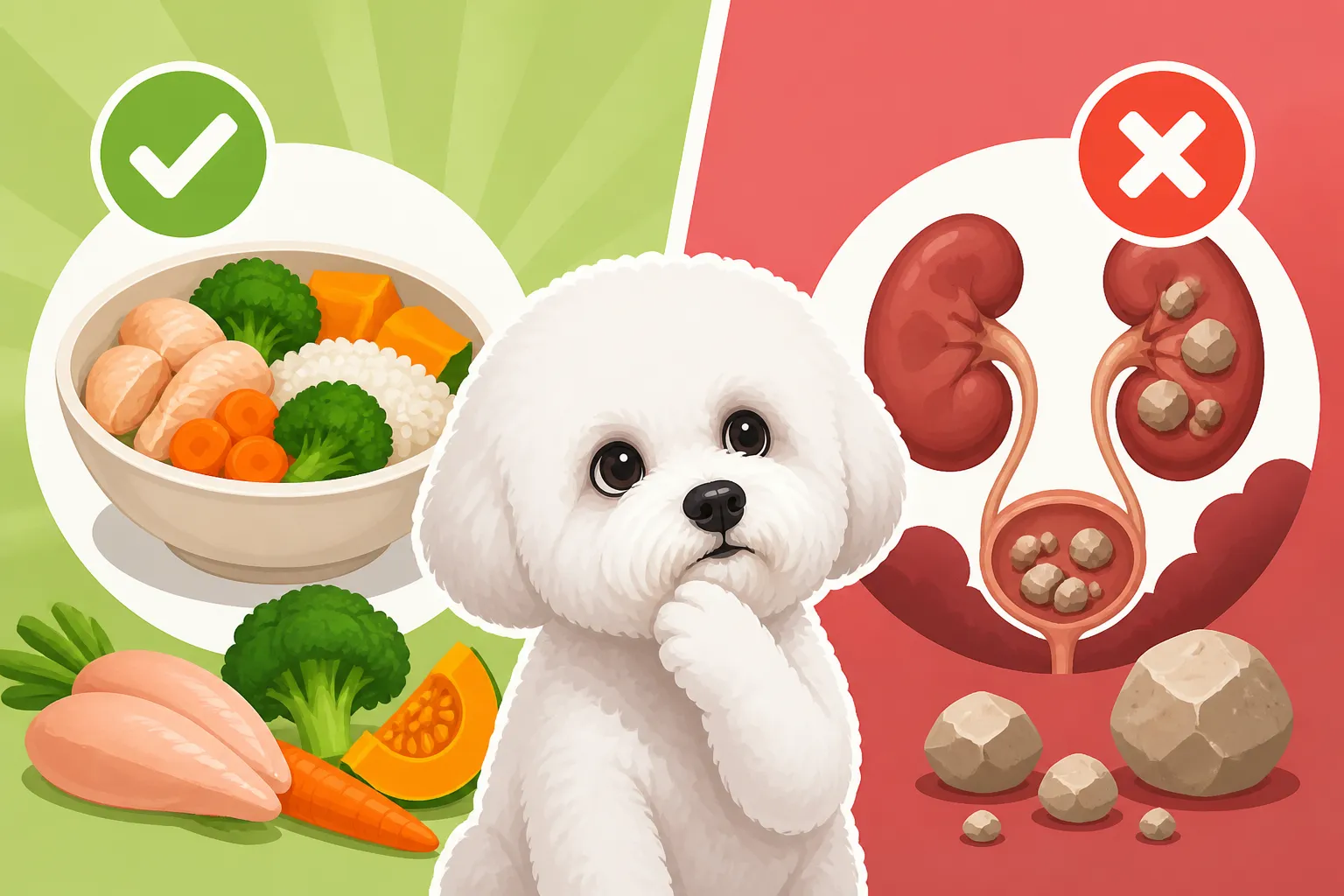
Calcium oxalate stones are a serious issue for many Bichon Frises, and unfortunately, this breed is genetically predisposed to forming them. These aren't just any bladder stones; they are hard, spiky concretions that cannot be dissolved with diet changes, unlike some other stone types. This means prevention is paramount once they’ve formed, often following surgical removal. Why a Bichon Frise's Stones Must Be Cut Out. The stones form when there are high concentrations of calcium and oxalate in the urine, coupled with specific pH levels that favor crystallization. Factors like genetics, diet, hydration, and certain metabolic conditions all play a role. It's a delicate biochemical balancing act within the urinary tract that requires precise management.
For Bichons, understanding this specific stone type is non-negotiable. It dictates a very particular dietary strategy, focusing on reducing the building blocks of these stones and promoting a urinary environment that discourages their formation. This isn't a generic "healthy diet"; it's a highly targeted therapeutic approach. Any home-cooked diet must be designed with the explicit goal of disrupting the specific conditions that lead to calcium oxalate stone formation. Without this foundational understanding, even the best intentions can inadvertently worsen the problem. You can learn more about What a Calcium Oxalate Stone Is in a Bichon Frise in our detailed guide.
Key Nutrients to Control: Calcium, Oxalate, Phosphorus, Sodium
When dealing with calcium oxalate stones, several key nutrients become critical points of control in any diet, especially a home-cooked one. Getting these wrong can quickly lead to stone recurrence.
- Calcium: While calcium is essential for bones and other bodily functions, too much dietary calcium can increase its concentration in the urine, raising the risk of stone formation. However, too little calcium can also be problematic, leading to secondary hyperoxaluria (where the body absorbs more oxalate). The goal is a controlled, moderate amount that binds with oxalate in the gut, rather than letting it be absorbed and excreted in the urine.
- Oxalate: This is the other half of the calcium oxalate equation. Oxalate is a compound found in many plant foods. High-oxalate foods, even those considered healthy for humans, can be dangerous for a stone-prone Bichon. Examples include spinach, sweet potatoes, beets, almonds, and even some fruits. Tracking and limiting oxalate intake is incredibly challenging in home cooking, as oxalate levels can vary widely in ingredients based on growing conditions and preparation. You might think you're feeding something benign, only to discover it's a high-oxalate culprit. This is where a simple "low oxalate diet" can be misleading if not meticulously calculated. For instance, Whether a Low Oxalate Diet Is Enough for a Bichon Frise is a common question, and the answer is usually "no, it's more complex than just oxalate."
- Phosphorus: Often found alongside calcium in many foods, phosphorus also needs to be controlled. While not directly forming calcium oxalate stones, an imbalance can affect calcium metabolism and kidney function.
- Sodium: Moderate sodium levels can be beneficial. It encourages the dog to drink more water, which helps dilute the urine and reduce the concentration of stone-forming minerals. However, excessively high sodium can lead to other health issues, so it's a fine line.
The balancing act required for these nutrients is incredibly precise. It’s not about eliminating them entirely, but providing them in the correct ratios and amounts to prevent stone formation without causing other nutritional deficiencies or excesses. This level of precision is virtually impossible to achieve without specialized knowledge and calculation software. Many common food items you might consider healthy or harmless can throw this delicate balance completely off. Furthermore, supplements like Vitamin C, often given with good intentions, can actually be metabolized into oxalate, increasing risk. This is why Whether Vitamin C Is Bad for a Bichon Frise is a critical question for owners of stone-prone dogs.
The Importance of Urine pH and Dilution
Beyond specific nutrients, managing urine pH and ensuring adequate urine dilution are cornerstones of preventing calcium oxalate stones in Bichons.
- Urine pH: For calcium oxalate stones, the goal is often to maintain a slightly alkaline (less acidic) urine pH, usually in the range of 6.5 to 7.5. Acidic urine tends to promote calcium oxalate crystal formation. The foods your Bichon eats directly influence urine pH. Certain proteins, for example, can acidify urine, while others might alkalinize it. Crafting a home-cooked diet that consistently maintains the ideal pH range is incredibly difficult, as even slight variations in ingredients or preparation can cause swings. Regular monitoring of urine pH, often through daily litmus paper tests or frequent veterinary urinalysis, becomes crucial. This constant vigilance is part of the extensive commitment needed for home cooking. We cover this in more detail in Whether a Bichon Frise Needs Urine pH Monitored.
- Urine Dilution: This is arguably one of the most critical factors. A diluted urine means there's less concentration of calcium and oxalate, making it harder for crystals to form and clump together into stones. Think of it like a crowded room: if there are fewer people (minerals), it's harder for them to bump into each other and form a cluster. Encouraging water intake is vital. This is why wet food is often preferred for stone-prone dogs, as it naturally has a higher moisture content. While you can add water to home-cooked meals, consistently ensuring optimal hydration requires careful planning and observation. Whether Diluting Urine Prevents Bichon Frise Stones is a concept every owner needs to grasp. Many owners use tricks like adding extra water, bone broth (unsalted, low sodium), or ice cubes to their dog's meals to boost fluid intake.
Achieving both the right pH and sufficient dilution simultaneously, day in and day out, with a home-cooked diet, demands meticulous measurement, consistent ingredient sourcing, and ongoing testing. Without these measures, you're essentially flying blind and hoping for the best, which is a dangerous gamble when your Bichon's health is on the line.
The Significant Risks of an Unbalanced Homemade Diet
The appeal of home cooking is undeniable, but without expert guidance, the risks of creating an unbalanced diet that actually harms your Bichon Frise are substantial. This isn't just about making your dog full; it's about providing precise nutrition for a complex medical condition.
Creating Deficiencies or Excesses
One of the biggest pitfalls of owner-formulated home-cooked diets is the unintentional creation of nutrient deficiencies or excesses. It's a common misconception that simply feeding a variety of "healthy" human foods will cover all nutritional bases for a dog, especially one with a medical condition. Dogs have different nutritional requirements than humans, and their needs change based on age, activity level, and health status.
For a Bichon Frise with calcium oxalate stones, this risk is amplified. For example, you might inadvertently provide too much protein, which can acidify urine, or too much fat, leading to other health issues. Conversely, you could easily under-provide essential trace minerals like zinc, copper, or selenium, or crucial vitamins such as B vitamins or Vitamin D, leading to insidious health problems over time. Calcium-to-phosphorus ratios are notoriously difficult to get right at home and are critical for bone health. An imbalance here can lead to skeletal problems or even exacerbate stone formation indirectly.
The consequences of these imbalances aren't always immediate or obvious. They can manifest slowly over months or even years, leading to a decline in coat quality, lethargy, weakened immune function, bone density loss, or even organ damage. By the time symptoms become apparent, significant harm may have already occurred. This silent progression makes unguided home cooking for a medical condition particularly risky.
Unintended Stone Recurrence
The primary goal of dietary management for a Bichon Frise with stones is to prevent recurrence. Unfortunately, an unbalanced home-cooked diet, even one prepared with love and good intentions, can inadvertently lead to new stone formation. Any error in the delicate balance of calcium, oxalate, pH modifiers, or water intake can tip the scales back toward crystallization in the urine.
Imagine meticulously preparing meals every day, believing you are doing the best for your dog, only to discover weeks or months later, through an ultrasound or X-ray, that new stones have formed. This is the heartbreaking reality many owners face when attempting therapeutic home cooking without expert guidance. The Stone That Comes Back a Year After Bichon Frise Surgery highlights how common recurrence is, even with proper management. The emotional toll of this discovery, coupled with the potential need for another expensive and invasive surgery, underscores the gravity of getting the diet right. This isn't just about managing a minor allergy; it's about preventing a potentially life-threatening obstruction if the stones block the urethra, a critical emergency for male Bichons especially.
Other Health Complications
Beyond nutrient imbalances and stone recurrence, an improperly formulated home-cooked diet can lead to a host of other health problems for your Bichon Frise.
For instance, if the diet is deficient in specific fatty acids, your Bichon's skin and coat health could suffer, potentially exacerbating issues like dry skin or dull fur. If the diet is too restrictive in calories or certain macronutrients, your Bichon might experience muscle wasting, weight loss, or persistent low energy. Conversely, a diet too rich in calories or the wrong types of fats could lead to obesity, putting strain on their joints (which Bichons are already prone to with conditions like Slipping Kneecaps in a Bichon Frise) and increasing their risk for other metabolic diseases like Diabetes in a Bichon Frise.
There's also the risk of bacterial contamination if ingredients aren't handled or cooked properly, leading to gastrointestinal upset. While the focus is often on avoiding stones, an imbalanced diet can compromise their overall immune system, making them more susceptible to infections. It's crucial to remember that a dog's health is an interconnected system, and a diet that fails in one area can have ripple effects throughout their entire body.
The Indispensable Role of a Veterinary Nutritionist
Given the immense complexities and risks involved, attempting to home-cook for a Bichon Frise with bladder stones without professional guidance is like performing surgery without a medical degree. A board-certified veterinary nutritionist is the essential partner in this journey.
What a Board-Certified Veterinary Nutritionist Does
A board-certified veterinary nutritionist isn't just any vet; they are veterinarians who have undergone extensive additional training and specialization in animal nutrition. This usually involves a multi-year residency program, research, and passing a rigorous board examination to become a Diplomate of the American College of Veterinary Nutrition (ACVN). This level of expertise is crucial for managing complex dietary needs, especially for conditions like calcium oxalate urolithiasis in Bichon Frises.
Their role goes far beyond offering general advice. They have a deep understanding of nutrient interactions, metabolism, and how specific ingredients impact a dog's health and urinary environment. They are equipped with the scientific knowledge and tools to analyze a dog's complete medical history, stone analysis results, and individual dietary goals to formulate a truly balanced and therapeutic diet. They can identify subtle nutrient deficiencies or excesses that a general vet or an owner might miss, ensuring that the home-cooked diet not only addresses the stone issue but also supports overall health. Their expertise is what transforms a risky endeavor into a calculated, safe, and effective medical strategy.
The Custom Diet Formulation Process
Working with a veterinary nutritionist for a home-cooked diet is a structured and scientific process, not a casual recipe swap. It typically involves several key steps:
- Initial Consultation and Comprehensive Assessment: The nutritionist will conduct a thorough review of your Bichon's complete medical history, including all diagnostic test results, stone analysis (which is critical!), current medications, and any other health conditions. They'll ask about your Bichon's eating habits, activity level, and your lifestyle to ensure the diet is practical for you to prepare.
- Goal Setting: Together, you'll define the specific dietary goals – in this case, preventing calcium oxalate stone recurrence, maintaining a target urine pH, ensuring optimal hydration, and providing complete nutrition.
- Ingredient Selection and Calculation: Based on the assessment, the nutritionist will select appropriate ingredients (proteins, carbohydrates, fats, vitamins, minerals) that meet the specific nutrient profiles required. They will use specialized software to precisely calculate the exact quantities of each ingredient, down to the gram, ensuring the diet is balanced and addresses the stone issue. This isn't guesswork; it's a scientific formulation.
- Recipe Development and Preparation Instructions: You will receive a detailed recipe, including precise measurements, cooking methods, and storage instructions. This recipe is unique to your Bichon Frise and their specific needs.
- Supplement Recommendation: Often, even with careful ingredient selection, a home-cooked diet will require specific vitamin and mineral supplements to ensure complete nutritional balance. The nutritionist will recommend appropriate, high-quality supplements and their exact dosages.
- Follow-Up and Monitoring Plan: The nutritionist will outline a plan for regular follow-up appointments, blood tests, urine tests, and imaging (such as X-rays or ultrasound – Whether an Ultrasound Finds a Bichon Frise's Stones is a good read) to monitor the diet's effectiveness and your Bichon's health. This ensures that the diet is working as intended and allows for adjustments if needed.
This rigorous process ensures that the home-cooked diet is not only palatable for your picky Bichon but, more importantly, nutritionally sound and therapeutically effective in preventing stone recurrence.
Ongoing Monitoring and Adjustments
Creating the initial home-cooked diet plan is just the first step; ongoing monitoring and the willingness to make adjustments are absolutely critical for long-term success. A diet isn't a static entity, especially for a dog with a chronic condition like stone formation.
Your Bichon Frise's needs will change over time. As they age, their metabolism shifts, activity levels might decrease, or new health issues could arise. For example, an older Bichon might require a different calorie intake or adjusted nutrient levels. If blood tests show any subtle deficiencies or excesses, or if urinalysis indicates that the urine pH or specific gravity isn't consistently in the target range, the nutritionist will need to tweak the recipe. You must be prepared to regularly take your Bichon in for these check-ups. Whether a Bichon Frise Needs Urine pH Monitored is crucial, and also Whether a Bichon Frise Should Be X Rayed Yearly can be a valuable tool for early detection.
This ongoing relationship with your veterinary nutritionist is paramount. It's a partnership where your observations at home (e.g., changes in appetite, energy, urination patterns) combine with scientific diagnostic data to ensure the diet remains effective and safe. Without this continuous oversight, even a perfectly formulated initial diet could become unbalanced over time, putting your Bichon at risk once more. This commitment extends beyond just preparing the food; it's a commitment to continuous health management.
Home-Cooked vs. Commercial Prescription Diets: A Practical Look
When your Bichon Frise needs a special diet for stone prevention, you essentially have two paths: a commercially prepared prescription diet or an expert-guided home-cooked diet. Each has its own set of advantages and challenges.
Pros and Cons of Expert-Guided Home Cooking
Let's be clear: "home cooking" for a stone-prone Bichon must be expert-guided. Without a veterinary nutritionist, it's not a viable, safe option. Assuming you're working with a specialist, here's a look at the pros and cons:
Pros:
- Full Ingredient Control: You know exactly what goes into your Bichon's bowl. This can be reassuring for owners who want to avoid specific additives or prefer fresh, human-grade ingredients.
- Enhanced Palatability for Picky Eaters: You can tailor flavors and textures to suit your Bichon's preferences, making mealtime more enjoyable and ensuring they eat their full therapeutic diet. This is a huge benefit if your Bichon is one of those finicky eaters who Whether a Fussy Bichon Frise Refuses the Urinary Diet.
- Perceived "Natural" Benefits: Many owners feel that fresh, minimally processed food is inherently healthier, leading to better digestion, coat quality, and overall vitality, though scientific evidence for this over a well-formulated commercial diet is often anecdotal.
Cons:
- High Cost of Nutritionist Consultation: Retaining a board-certified veterinary nutritionist can be a significant upfront and ongoing expense. Their expertise is invaluable but comes at a price.
- Significant Time Commitment: Home cooking involves daily shopping for fresh ingredients, meticulous preparation, and consistent cooking. This is a substantial time investment, much more than simply scooping kibble.
- Difficulty Maintaining Consistency: Sourcing identical ingredients repeatedly, measuring precisely, and preparing consistently can be challenging. Even slight variations can impact nutrient balance.
- Potential for Human Error: Despite best efforts, even a small mistake in measurement or ingredient substitution can compromise the diet's therapeutic effectiveness.
- Storage and Travel Challenges: Fresh, home-cooked food often has a shorter shelf life and requires more careful storage, making travel or extended absences more complicated.
The Robustness of Commercial Prescription Diets
Commercial prescription diets specifically formulated for urinary health, like those from Hill's Prescription Diet, Royal Canin Veterinary Diet, or Purina Pro Plan Veterinary Diets, offer a different set of benefits. These diets are developed by teams of veterinary nutritionists and researchers and are often clinically tested.
- Scientifically Formulated and Tested: These diets are precisely balanced to address specific medical conditions. For calcium oxalate stones, they are designed with controlled levels of calcium, oxalate precursors, and minerals, as well as specific ingredients to maintain a healthy urine pH and encourage dilution. This means you don't have to worry about nutrient calculations.
- Guaranteed Nutritional Completeness: Every bag or can provides a consistent, complete, and balanced nutritional profile for your Bichon's specific needs, removing the risk of deficiencies or excesses.
- Convenience and Ease of Use: Simply scoop and serve. This saves an enormous amount of time and effort compared to home cooking.
- Consistent Composition: Every batch is manufactured to strict standards, ensuring consistent nutrient levels and predictable effects on your Bichon's urinary system.
- Widely Available (with Prescription): These diets are readily available through your veterinarian or reputable online retailers like Chewy and Amazon, though they usually require a veterinary prescription or authorization. What Prescription Urinary Food Costs a Bichon Frise Owner is a factor to consider, and Whether Buying Urinary Food Online Saves Money can be a helpful guide.
- Reduced Monitoring Burden (for owners): While regular vet check-ups are still necessary, the daily burden of monitoring and adjusting recipes falls away. These foods are designed for long-term use, making them a cornerstone of The Diet a Bichon Frise Stays On for Life.
Cost and Time Commitment
The choice between home-cooked and commercial prescription diets often comes down to a balance of cost, time, and your personal comfort level. Let's compare the practicalities:
| Feature | Commercial Prescription Diet | Expert-Guided Home-Cooked Diet |
|---|---|---|
| Nutritional Precision | Scientifically formulated, guaranteed complete & balanced | Custom-formulated by nutritionist, requires strict adherence |
| Ingredient Transparency | Ingredients listed, but not fully controlled by owner | Full owner control, but requires meticulous sourcing |
| Palatability | Varies, some dogs are picky, but many options exist | Highly customizable, often very palatable |
| Time Commitment (Owner) | Minimal (scoop and serve) | Significant (shopping, preparation, cooking, monitoring) |
| Cost (Ongoing) | Higher than regular food, but consistent. | Can be comparable or higher; ongoing ingredient & vet nutritionist fees |
| Monitoring Needs | Regular vet check-ups recommended | Essential & frequent vet checks/adjustments needed |
| Risk of Imbalance | Very low when fed as directed | Low with expert guidance; very high without |
| Preparation Skills | None | Requires meticulous cooking, measuring, and consistency |
The initial consultation with a veterinary nutritionist for a home-cooked diet can cost a few hundred dollars or more, with additional fees for follow-ups and adjustments. The ongoing cost of high-quality, fresh ingredients can also quickly add up, often surpassing the cost of premium prescription kibble or wet food. What a Bichon Frise Stone Prevention Costs a Year is a good way to frame these overall expenses. The time investment for home cooking is significant – hours per week spent on shopping, preparing, and cooking. Commercial diets, while sometimes more expensive per bag than regular dog food, offer the convenience of simply opening a package.
Where to Find Specialized Diets and Ingredients
For commercial prescription diets, your first stop should always be your veterinarian. They can accurately diagnose the stone type (or rule out others) and provide a prescription for the most appropriate diet. Once you have a prescription, you can often purchase these diets directly from your vet's office or through authorized online retailers like Chewy or Amazon. These platforms often require vet authorization to ensure the correct diet is being dispensed, highlighting the medical nature of these foods.
If you choose the home-cooked route with a veterinary nutritionist, you'll be sourcing ingredients from your local grocery stores, farmers' markets, or specialized butchers. The key here is adherence to the precise recipe provided by the nutritionist. Avoid making substitutions without their explicit approval, as even seemingly minor changes can alter the nutritional balance. For owners exploring fresh food options, some services like Ollie deliver human-grade, fresh meals. While these are excellent for general wellness, they are not automatically formulated for specific medical conditions like calcium oxalate stones. If you are considering such a service, you would still need a veterinary nutritionist to review and potentially modify the specific recipe offered by Ollie to ensure it meets your Bichon's unique stone prevention needs. Without that expert review, even high-quality fresh food won't provide the necessary therapeutic balance.
Ultimately, while home cooking can be an option for a Bichon Frise with stones, it is a demanding path that absolutely requires the specialized expertise of a board-certified veterinary nutritionist. For most owners, a commercially available prescription diet offers a more practical, scientifically proven, and reliable way to manage this challenging condition, ensuring your beloved Bichon receives consistent, life-saving nutrition.
Disclaimer
This article is for general informational purposes only and does not constitute professional advice. Laws, prices and regulations vary by location and change over time. Consult a qualified professional for guidance on your specific situation.