Whether a Cavachon Behaves Like a Bichon Frise
It’s a truly exciting time when you’re considering bringing a new furry family member into your home, and if you’ve been looking at Bichon Frises, you’ve likely stumbled across their adorable cousin, the Cavachon. Many prospective owners wonder if a Cavachon truly embodies the best of both worlds, blending the Bichon Frise's playful charm with the Cavalier King Charles Spaniel's gentle nature, or if their behavior is just a roll of the dice. This guide will dive deep into the behavioral traits of both parent breeds and explore what you can realistically expect from a Cavachon, helping you understand if this delightful mix is the right fit for your lifestyle.
Understanding the Bichon Frise Temperament: The Joyful, Energetic Cloud
Let's start by painting a picture of the purebred Bichon Frise, the foundation of our understanding. If you've ever met a Bichon, you know they are utterly charming. Their temperament is officially described by breed standards as "merry," and honestly, it’s the perfect word. They are genuinely cheerful, intelligent, and possess a playful spirit that often remains well into their senior years. This isn't just a marketing ploy; it's deeply ingrained in their personality. You’ll often hear us talk about The Merry Temperament the Bichon Frise Standard Demands because it's so fundamental to who they are.
These little white fluffs are notorious for their bursts of energy, often affectionately dubbed the "Bichon Blitz" or "zoomies." One minute they're snoozing on your lap, the next they're tearing through the house at top speed, looping around furniture, and sliding across rugs. This isn't hyperactivity in a problematic sense; it's a joyful release of energy, and it's something to prepare for. It’s part of their lively charm and usually signals a happy, well-adjusted dog. Understanding The Bichon Blitz and What It Means is key to appreciating this aspect of their personality. While they're generally not demanding marathon runners, these short bursts of high-intensity play are important for their mental and physical well-being.
Bichons are highly intelligent and love to be involved in family activities. They thrive on companionship and can be prone to separation anxiety if left alone for extended periods. They want to be wherever you are, often following you from room to room. This strong bond means they are excellent family dogs, forming deep attachments with their human companions. However, their intelligence can also manifest as a stubborn streak, particularly when it comes to training. Housetraining, for example, can be a notoriously slow process with some Bichons, leading many to ask whether a Bichon Frise is famously hard to housetrain. It's not that they aren't smart enough; it's often a combination of a small bladder, sensitivity to weather, and a preference for indoor comforts.
Playfulness and Social Needs
Bichons are generally very social creatures, both with humans and other animals. They tend to greet strangers with enthusiasm and are usually quite happy to make new friends. This outgoing nature makes them suitable for households that have frequent visitors or who enjoy taking their dog to dog parks or on outings. They are generally not aggressive, preferring to charm their way into hearts.
However, this sociability comes with a need for attention. A Bichon that is ignored or left alone too often can develop undesirable behaviors, such as excessive barking or destructive chewing, born out of boredom or anxiety. They truly are companion dogs through and through, meaning they were The Household a Bichon Frise Was Bred For to be by their human's side. If you're looking for a dog that will happily entertain itself for hours, a purebred Bichon Frise might not be the best fit without significant environmental enrichment.
Trainability and Stubbornness
While intelligent, a Bichon Frise can sometimes have a mind of its own. They respond best to positive reinforcement, praise, and treats, often working diligently when motivated. Treats from a trusted brand like Chewy can be a fantastic motivator for keeping them engaged during training sessions. Trying to force a Bichon to do something will often backfire, as they can become resistant. Consistency and patience are paramount.
Their "merry" disposition doesn't always translate to immediate obedience, especially if they see a more interesting option. This is where their cleverness can sometimes get them into mischief. They need clear boundaries and consistent training from day one, not just to teach them commands, but to help them understand their place in the family structure. Without it, you might find your little fluffball ruling the roost!
The Influence of the Cavalier King Charles Spaniel: The Gentle, Affectionate Soul
Now, let’s look at the other side of the Cavachon coin: the Cavalier King Charles Spaniel. Cavaliers are known for their incredibly sweet, gentle, and affectionate nature. They embody the term "lap dog" and are often described as being eager to please and very devoted to their families. While they enjoy a good romp in the yard, their energy levels are generally lower and more manageable than a Bichon's.
Cavaliers are typically calmer and less prone to intense bursts of energy. They love to cuddle and are often content just to be near their human companions, whether that's curled up on the sofa or gently resting their head on your foot. This innate desire for close contact earns them the nickname "Velcro dogs," as they tend to stick close to their owners.
Temperament and Sociability
Cavaliers are famously good-natured and friendly, rarely showing aggression. They usually get along wonderfully with children and other pets, making them excellent family additions. Their placid demeanor means they are often quite adaptable to various living situations, from apartments to larger homes, as long as they receive adequate companionship and moderate exercise.
They are generally not alarm barkers, although they will alert you to someone at the door. Unlike some Bichons who might be quite vocal, Cavaliers tend to be a bit more reserved in their vocalizations. They are less likely to have extreme bursts of energy, preferring consistent, gentle play and walks.
Trainability and Sensitivity
Cavaliers are highly intelligent and, crucially, very eager to please. This combination makes them generally easier to train than many other breeds. They respond beautifully to positive reinforcement and gentle guidance. Harsh training methods are not only unnecessary but can be detrimental to their sensitive nature. They want to make you happy, which is a powerful motivator.
Their sensitivity also means they don't do well with harsh reprimands or being left alone for too long. Much like Bichons, they thrive on companionship, and isolation can lead to anxiety or destructive behaviors. However, their lower energy and calmer disposition can sometimes make them slightly easier to manage in a household where quiet companionship is prioritized over constant play.
How Cavachon Temperament Mixes the Two Breeds: The Best of Both Worlds?
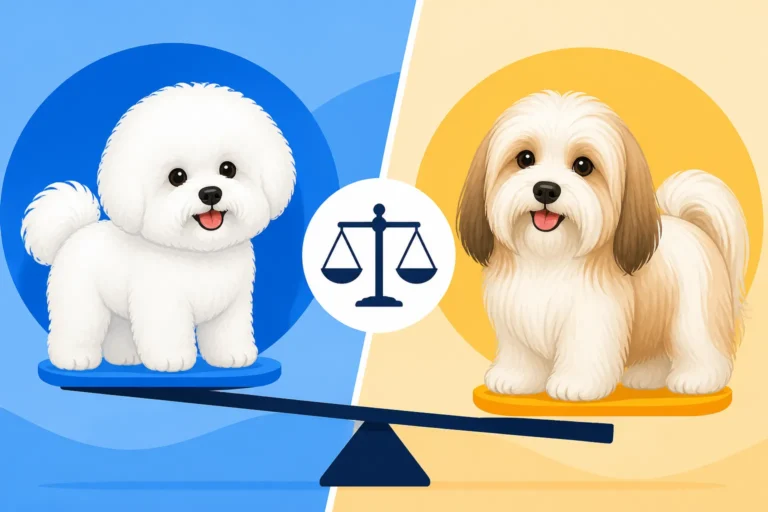
So, how does the Cavachon blend these two delightful personalities? The truth about designer breeds like the Cavachon is that there's always a degree of variability. You're combining the genetics of two distinct breeds, and the outcome isn't always a 50/50 split. Some Cavachons might lean more heavily towards their Bichon parent, exhibiting more energy and a slightly more independent streak, while others might inherit the Cavalier's calm, cuddly disposition more prominently.
Generally speaking, a well-bred Cavachon often exhibits a wonderful balance. They typically retain the Bichon's intelligence and cheerful playfulness but often with the Cavalier’s slightly lower energy levels and more eager-to-please attitude. This often results in a dog that is still very much a happy-go-lucky companion but might be a tad easier to train than a pure Bichon, and perhaps less prone to the intense "Bichon Blitz." They are often described as being very adaptable, fitting well into various family dynamics.
| Trait | Bichon Frise | Cavalier King Charles Spaniel | Cavachon (General Expectation) |
|---|---|---|---|
| Energy Level | Moderate to High (prone to "zoomies") | Low to Moderate | Moderate (less intense than Bichon, more than Cavalier) |
| Affection | Very affectionate, seeks companionship | Extremely affectionate, "Velcro dog" | Very affectionate, loves cuddling and being near family |
| Trainability | Intelligent, but can be stubborn; needs patience | Eager to please, highly trainable | Intelligent and eager to please, good for positive reinforcement |
| Independence | Low, can be prone to separation anxiety | Very low, prone to separation anxiety | Low, thrives on companionship, sensitive to being alone |
| Vocalization | Can be quite vocal (barking, alert barking) | Generally quiet, mild alert barking | Can be vocal, but often less so than pure Bichon |
| Socialization | Outgoing, friendly with strangers and pets | Excellent with children and other pets | Outgoing and friendly, good with families and other animals |
| Grooming Needs | High, non-shedding, prone to matting | Moderate, moderate shedding | Moderate to High, can be low-shedding, requires regular care |
Blending the Best Traits
What many Cavachon owners adore is that these hybrids often inherit the Bichon’s non-shedding, hypoallergenic-friendly coat (though this can vary) alongside the Cavalier’s gentle eyes and sweet expression. Behaviorally, you might find a Cavachon that is playful and enjoys short games of fetch, but is also perfectly content to curl up on your lap for an hour or more. They tend to be highly adaptable and less demanding in terms of constant activity than a purebred Bichon, but still possess that spark of joyful mischief.
For instance, while a pure Bichon might struggle more with consistent indoor potty habits, a Cavachon with a stronger Cavalier influence might pick up housetraining cues a bit faster due to the Cavalier's eager-to-please nature. However, remember that individual variations are normal, and a Cavachon can still have the small bladder and outdoor aversion traits of a Bichon, potentially leading to questions like Whether a Housetrained Bichon Frise Suddenly Starts Leaking if underlying health issues or anxiety are present.
Grooming Considerations
While not strictly a behavioral trait, grooming needs do influence a dog's overall manageability and comfort, which in turn impacts behavior. A Cavachon's coat can vary. Some may have a curlier, more Bichon-like coat, while others might have a softer, wavier coat closer to a Cavalier's. Regardless, regular grooming is essential. You'll need good quality brushes and combs, which you can find readily on platforms like Chewy, to prevent matting. While perhaps not as intense as the full The Powder Puff Outline a Bichon Frise Is Scissored Into, regular brushing and professional trims are still necessary. A dog that is uncomfortable due to mats can become irritable or resistant to handling.
Managing Cavachon Behavior: What to Expect and How to Nurture
Bringing a Cavachon into your home is a commitment, and while they are generally wonderful companions, understanding how to nurture their best traits is key. Because of the blend of genetics, proactive and consistent care, training, and socialization are paramount, just as they would be for any well-adjusted dog.
Early Socialization and Training
One of the most crucial things you can do for a Cavachon puppy is to provide early and extensive socialization. Introduce them to a wide variety of sights, sounds, people, and friendly dogs during their critical developmental period. This helps them grow into confident, well-adjusted adults. Enroll in puppy classes – these are excellent for both socialization and starting foundational obedience training. This proactive approach can help ensure they are Whether a Bichon Frise Is Safe With Toddlers and other family members, preventing potential fear or reactivity issues down the line.
When it comes to training, consistency is your best friend. Cavachons are intelligent, and often very eager to please, especially if they lean more towards the Cavalier side. Use positive reinforcement methods, rewarding desired behaviors with treats, praise, and play. Short, fun training sessions several times a day are often more effective than long, arduous ones. Think about what Whether a Bichon Frise Works for Food or Praise – for many Cavachons, it will be a combination! You can find a wide array of training treats and toys on Chewy that will keep your pup engaged and motivated.
Exercise and Mental Stimulation
While often less energetic than a pure Bichon, Cavachons still need daily exercise to stay healthy and happy. Two short to moderate walks a day, plus some playtime in the yard or indoors, are usually sufficient. They love playing fetch, tug-of-war, or simply chasing toys around the house. Mental stimulation is just as important as physical exercise. Puzzle toys, training sessions, and even just new environments during walks can keep their intelligent minds engaged.
Remember their strong need for companionship. A Cavachon left alone for many hours each day without adequate mental and physical outlets can become bored and develop undesirable behaviors. They thrive when they are an integrated part of the family, sharing in daily activities. This constant presence is often why people consider these breeds in the first place, wanting a devoted companion rather than a dog that is fine being alone all day in Whether a Bichon Frise Needs a Yard.
Grooming and Handling
Even if your Cavachon’s coat isn't as dense or curly as a show Bichon’s, it will still require regular attention. Daily brushing is often recommended to prevent mats, especially in areas like behind the ears, armpits, and under the harness. Neglecting grooming can lead to painful mats, which can then make your dog resistant to being brushed or handled. Early positive experiences with grooming, including brushing, nail trims, and even mock baths, are vital. This makes future professional grooming sessions much easier, and you won't be left wondering Whether a Bichon Frise Is Easier to Groom Than a Maltese. Many grooming supplies, from brushes to gentle shampoos, can be sourced from Chewy.
Health Considerations and Breeder Choices
When choosing a Cavachon puppy, it’s critical to find a responsible breeder who health tests both parent breeds. Both Bichons and Cavaliers have certain predispositions. Bichons can be prone to bladder stones and luxating patellas, while Cavaliers are known for heart conditions (Mitral Valve Disease), syringomyelia, and certain eye conditions. A reputable breeder will be transparent about the health history of their breeding dogs and their puppies. Ask to see health clearances for both parents. Understanding the puppy's lineage and asking questions about potential health issues can prevent heartache and costly vet bills down the line. For example, knowing the family history can inform your choices, much like asking Whether a Bichon Frise Can Be Returned if health issues arise early on. It is important to know that while cross-breeding can sometimes broaden a gene pool, it doesn't automatically eliminate genetic predispositions from either parent breed.
Ultimately, while there’s no guarantee with a hybrid, a Cavachon often delivers on the promise of a delightful, loving, and relatively adaptable companion. They often possess the bright, joyful spirit of the Bichon tempered by the sweet, eager-to-please nature of the Cavalier, making them a fantastic choice for many households seeking a devoted furry friend. Just be prepared for The First Year With a Bichon Frise Puppy style commitment – a Cavachon puppy still needs all the same training, socialization, and love to grow into a wonderful adult.
Disclaimer
This article is for general informational purposes only and does not constitute professional advice. Laws, prices and regulations vary by location and change over time. Consult a qualified professional for guidance on your specific situation.