Whether a Bichon Frise Needs a Yard
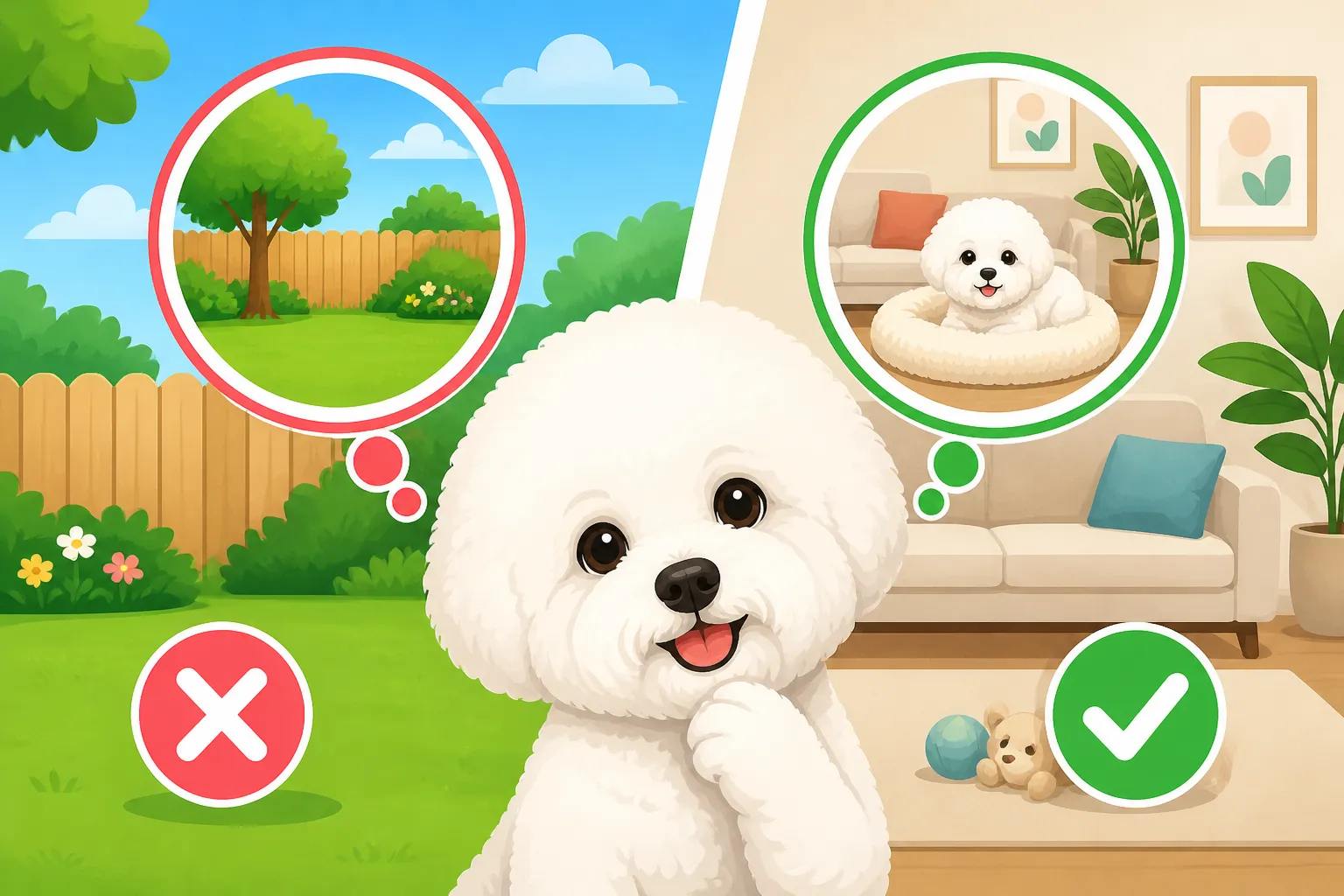
A Bichon Frise does not need a yard to be happy or well exercised. What this cheerful little dog does need is reliable access to safe toilet breaks, daily walks, play, and company. A yard can make some routines easier, but it is not a replacement for those needs—and apartment living can work well when you plan for them.
Does a Bichon Frise need a yard to thrive
A yard is convenient, not essential
A securely fenced yard can be handy for a quick toilet break, a game of fetch, or a stretch of supervised sniffing. But having one does not automatically give a dog enough exercise or stimulation. Many Bichons with yards still need walks, interaction, and play with their people. A dog left alone outside for long stretches may simply become bored, bark at passersby, or wait by the door to come back in.
Without a yard, you can meet the same needs through planned walks and outdoor toilet trips. That may take more effort on a rainy morning or when you live several floors up, but it is a workable routine. The key question is less “Do I have a yard?” and more “Can I reliably take my dog outside and give them time to explore and move?”
That distinction is useful if you are weighing an apartment against a house. A first-floor home with no fenced outdoor space may be easier for toilet trips than a high-rise apartment, while a well-managed apartment routine may suit a Bichon better than a house where the dog is expected to entertain itself outdoors. Whether a Bichon Frise Suits an Apartment
A yard does not solve exercise or boredom by itself
Bichons are companion dogs. They generally enjoy being involved in household life, and a yard does not replace walks, training, or time with their people. A dog may wander around the same patch of lawn for a few minutes and still need a proper outing that offers new scents and sights.
Think of a yard as an extra space to use, not a complete daily plan. A short game of fetch in a secure area can be fun, but so can a sniff-focused walk around the block or a few minutes of practicing cues indoors. Rotating toys and offering simple food puzzles can also help provide variety. If you are browsing enrichment items at Chewy, choose options suited to your dog’s size and chewing habits, and supervise anything new until you know how your dog uses it.
A yard also does not make a Bichon a good candidate for being left alone all day. Some dogs may bark at neighborhood activity or become anxious when separated from their people, whether they are indoors or outside. If your schedule involves long absences, plan for company and toilet breaks rather than assuming outdoor access will fill the gap. Whether a Bichon Frise Suits a Full Time Worker
Meeting a Bichon Frise’s needs without a yard
Build a dependable toilet routine
A dog without a yard needs regular opportunities to go outside. Puppies, older dogs, and dogs with medical issues may need more frequent breaks than healthy adults, so adjust the routine to the individual rather than relying on a fixed schedule. Take your Bichon out after waking, meals, play, and naps, and give them a calm chance to sniff and finish before heading back inside.
Consistency matters. Use the same exit and, if practical, a familiar outdoor spot. When your dog toilets outside, offer quiet praise or a small reward right away. If an accident happens indoors, clean it thoroughly and review whether the dog had a reasonable chance to go out. Scolding after the fact is unlikely to teach the intended lesson and may make a worried dog hide when they need to toilet.
For a person living in a Chicago apartment, for example, the practical challenge may be getting dressed and taking the dog down several floors before an early-morning accident. Setting a leash, waste bags, and shoes by the door can make that first trip quicker. If your dog has sudden urgency, frequent squatting, or a change in their usual toilet habits, do not assume it is a training problem. Whether a Bichon Frise Urgency Problem Looks Like Bad Training and Whether a Bichon Frise Should Be Taken Out Hourly
Use walks, play, and training to provide variety
Without a private yard, walks become the main way to explore the neighborhood and get outdoor movement. Several outings spread through the day may suit your household better than trying to make one walk do everything. Let your dog sniff safely, practice a few easy cues, and take breaks when needed. Keep walks appropriate to age, fitness, weather, and any advice from your veterinarian.
Indoor play can fill in some of the gaps, especially on a day when the weather is unpleasant. Try a gentle game of fetch down a hallway, hide a toy for your dog to find, or practice short training sessions. Keep games suitable for your home: slippery floors, stairs, and jumping from furniture can be hard on small dogs. A secure harness and leash are important outdoors, because a small companion dog should not be trusted off leash in an open public area simply because it is close to home.
A rented or shared outdoor area can be useful, but treat it as a bonus rather than your dog’s only exercise option. Check that gates close securely, remove hazards, and stay with your dog. Public dog parks are not a guaranteed substitute for walks; the dogs, noise, and play style may not suit every Bichon. What a Bichon Frise Needs Every Day
| Living setup | What it makes easier | What you still need to provide |
|---|---|---|
| Fenced private yard | Quick supervised toilet breaks and convenient play | Walks, interaction, training, and supervision |
| Apartment with nearby outdoor access | A manageable routine if outings are consistent | Leash trips, weather planning, and timely toilet breaks |
| Home with an unfenced outdoor area | Short supervised time outside | A leash or secure enclosure and close supervision |
| Home without convenient outdoor access | Indoor games and training can add enrichment | A realistic plan for frequent outdoor toilet trips |
Yard safety, fencing, and weather
A fenced yard still needs supervision
If you do have a yard, check the fence from your dog’s perspective. Look for gaps under gates, loose boards, openings near shrubs, and places where a small dog could squeeze through. A fence that looks secure to a person may not be secure for a curious Bichon investigating a tempting smell. Make sure gates latch properly, especially if visitors, children, or delivery workers use them.
Supervision matters even in a fenced space. Dogs can chew plants, pick up dropped food, encounter wildlife, or react to another dog on the other side of the fence. If your Bichon barks at people walking past, block the view where practical and bring them indoors if they become overexcited. A yard is not a safe place to leave a dog unattended for long periods.
Keep fresh water available when your dog is outside, and bring them in when they seem uncomfortable, overheated, frightened, or eager to return indoors. If you use toys or enrichment items outside, check them for damage and bring them in when play is over. Outdoor time should remain a shared activity, not a substitute for companionship.
Make the routine fit the local weather
A no-yard household has to be ready for ordinary bad-weather inconveniences. In a snowy area, a Bichon may dislike cold, wet ground or need a cleared route to a toilet spot. In a hot climate such as Phoenix, pavement can become uncomfortable, so plan walks for cooler parts of the day and pay attention to your dog’s behavior. In a rainy city, a sheltered entrance or a towel near the door can make the return trip less messy.
Do not force a dog to linger outside just because you have made the trip downstairs. Give them a calm opportunity to toilet, praise them when they do, then head back in if conditions are miserable. Some dogs benefit from gradual, positive practice with rain gear or a covered potty area. Others simply need patient, frequent trips until they become more comfortable. Whether a Bichon Frise Refuses to Go Out in Rain and Whether a Bichon Frise Refuses to Toilet in Snow
If your living arrangement makes outdoor access genuinely difficult, discuss practical alternatives with your veterinarian or a qualified trainer. Indoor potty options may help in specific circumstances, but they require thoughtful placement and consistent cleaning. They also may not suit every dog or household. If you are comparing supplies at Chewy, check dimensions, cleaning instructions, and whether a product will fit the space where you plan to use it rather than buying based only on a listing photo.
Choosing the right routine for your household
Compare the real day, not just the property
Before deciding that a yard is necessary, picture an ordinary weekday. Who takes the dog out first thing? What happens during a long meeting or commute? Is there a nearby sidewalk, courtyard, or safe route? Can someone help if you are delayed? These practical details often matter more than whether the home has grass.
A yard can be especially convenient for someone who is home often and can supervise short breaks. A home without one can work when the owner is willing and able to take regular walks and toilet trips. If you travel frequently or have a schedule that changes from day to day, arranging a dog walker or trusted helper may be more useful than relying on a yard alone.
If you are choosing between a yard and other household factors, prioritize safe access, time, and companionship. A fenced yard is not a cure for separation distress, and a second dog is not an automatic replacement for human attention. Whether a Bichon Frise Needs a Second Dog
Try a simple daily plan and adjust it
A workable routine might include an outdoor toilet trip soon after waking, a walk or sniffing outing later in the morning, another break after meals or play, and a final trip before bed. Add indoor play or short training sessions when appropriate. This is only a starting point: a puppy, senior dog, or dog with a health condition may need a different pattern.
Watch how your Bichon responds. Restlessness near the door, repeated trips to the exit, or accidents may mean the schedule needs adjusting. Excessive barking, destructive behavior, or difficulty settling can have several causes, including boredom, anxiety, or a health issue. More outdoor access may help in some cases, but it is not a guaranteed fix. Keep notes on when problems happen and share them with your veterinarian or trainer if they persist.
The right setup is the one you can maintain kindly and safely, even on a wet Tuesday when you are tired and the dog has just come in with damp paws. A yard is a useful convenience, but a Bichon can thrive without one when toilet breaks, exercise, enrichment, and companionship are built into everyday life. What Bichon Frise Owners Wish They Had Known
Disclaimer
This article is for general informational purposes only and does not constitute professional advice. Laws, prices and regulations vary by location and change over time. Consult a qualified professional for guidance on your specific situation.