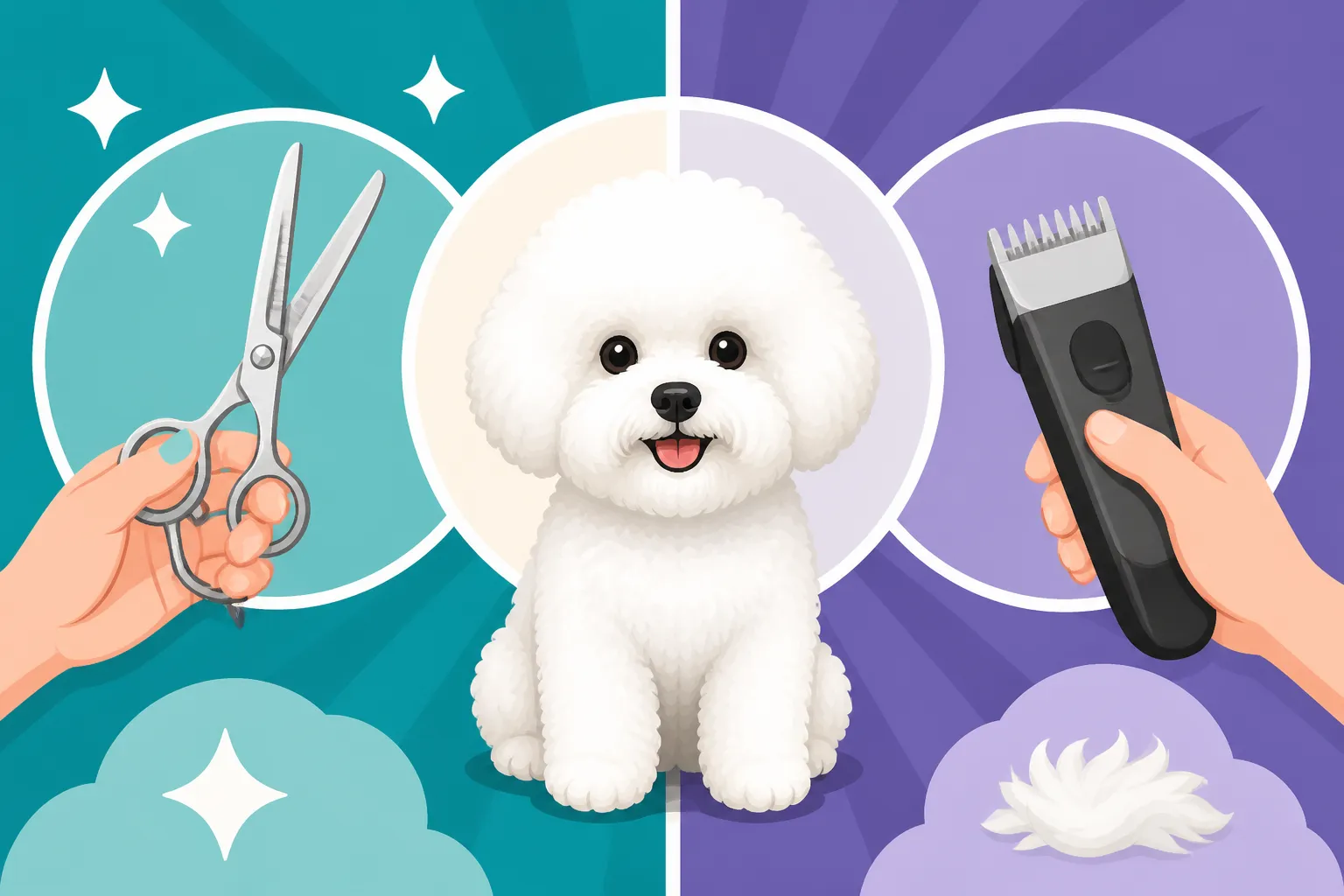
Whether a Scissor Trim Costs More Than a Clip
Many Bichon Frise owners grapple with understanding grooming costs, often wondering why different styles carry different price tags. The choice between a scissor trim and a clipper cut isn't just about aesthetics; it's a decision that impacts your wallet due to the vastly different skill, time, and tools required. This guide will meticulously break down the factors influencing the cost of Bichon Frise grooming, helping you understand why a scissor trim typically commands a higher price than a clipper cut, and how to make the best choice for your beloved companion.
Understanding the Bichon Frise Coat and Standard Trim
The Bichon Frise is renowned for its soft, curly, double coat that gives it that signature "powder puff" look. This isn't just a cute aesthetic; it's part of the breed standard, and maintaining it requires a specific grooming approach. Many new owners are often surprised by the intensive grooming needs, thinking a quick clip will suffice. However, the unique texture and growth pattern of a Bichon's coat mean it responds differently to various grooming tools and techniques, which directly influences the price you pay at the groomer's.
The Distinctive Bichon Frise Coat Texture
Unlike many shedding breeds, the Bichon Frise has a non-shedding coat. This sounds great for allergies, but it means all that loose hair gets trapped within the dense undercoat and curly outer coat. If not brushed regularly and thoroughly, this trapped hair quickly forms mats. These mats aren't just unsightly; they can pull on the skin, cause pain, hide skin infections, and even restrict movement. This propensity for matting is a primary reason why regular, professional grooming is non-negotiable for a Bichon, regardless of whether you opt for a scissor trim or a clip. The groomer has to contend with this texture, and any matting will add to the time and effort, and thus the cost.
The Ideal "Powder Puff" Outline
The hallmark of a well-groomed Bichon Frise is its round, fluffy, "powder puff" outline. This includes a perfectly sculpted round head, full, flowing legs, and a gently curved tail carried over the back. Achieving this specific shape isn't something that can be done with clippers alone, especially if you desire that soft, airy look that defines the breed. The Powder Puff Outline a Bichon Frise Is Scissored Into is a highly sought-after style, and it's a major reason why many owners ultimately choose a scissor trim. Groomers train extensively to master this artistry, understanding how the coat falls and how to create volume and shape using only scissors. This specialized skill is a significant factor in the pricing structure.
Grooming Frequency and Maintenance at Home
Regardless of the style, a Bichon Frise needs consistent grooming, both at home and professionally. Most Bichons require a full professional groom every 4-6 weeks to prevent matting and maintain their coat's health and appearance. Skipping sessions or neglecting home brushing can lead to severe matting, which almost always results in a higher grooming bill, as the groomer will either have to spend extra time dematting (if possible and humane) or resort to a shorter shave-down. Consistent maintenance, even if it feels like a lot of work, can actually save you money in the long run by making your professional groomer's job easier and quicker. You can find essential grooming tools like slicker brushes and combs on platforms like Chewy to keep up with daily brushing. How Often a Bichon Frise Needs Grooming is a question every owner should understand deeply.
The Art and Effort of a Scissor Trim
When you envision that quintessential fluffy Bichon Frise, you're almost certainly picturing a dog that has received a meticulous scissor trim. This isn't just a haircut; it's an artistic process that demands immense skill, patience, and attention to detail from the groomer. This detailed work is precisely why a scissor trim typically costs more than a clipper cut.
Precision and Craftsmanship with Scissors
A full scissor trim involves shaping the entire dog by hand, using various types of scissors – straight, curved, and thinning shears – to achieve a soft, natural, and symmetrical look. Imagine sculpting a cloud, strand by strand. Why a Groomer Scissors a Bichon Frise Instead of Clipping It often comes down to this desire for softness and precise shaping. The groomer needs to have an excellent eye for proportion and symmetry, understanding how to blend the coat seamlessly to create the round head, full body, and fluffy legs. This level of precision cannot be rushed; it requires a steady hand, artistic vision, and years of practice. It's not just about removing hair; it's about enhancing the dog's natural beauty and achieving a specific, aesthetically pleasing silhouette.
Time Commitment and Skill Level
Because of the intricate nature of scissoring, a full scissor trim takes considerably more time than a clipper cut. A skilled groomer might spend anywhere from two to four hours (or even more, depending on the dog's coat condition and temperament) on a single Bichon Frise scissor trim. This includes bathing, drying, brushing, and then the extensive scissoring. The groomer is paid for their time, and the higher time investment directly translates to a higher price for the service. Beyond just time, the skill level required for scissoring is also significantly higher. It takes specialized training and years of experience to master scissor techniques, especially for a breed like the Bichon, where the "perfect" round head and fluffy body are expected. These highly skilled groomers command higher rates, much like any artisan or specialist.
The Desired Aesthetic Outcome
The result of a proper scissor trim is a soft, airy, and voluminous coat that highlights the Bichon's merry personality. The hair stands away from the body, creating that cloud-like appearance. Clippers, by their nature, cut hair more uniformly and can leave a flatter, sometimes harsher, finish, especially on a curly coat like a Bichon's. If you truly want your Bichon to embody the "powder puff" look, with flowing lines and a gentle contour, a scissor trim is the only way to achieve it. It's important to discuss your desired look with your groomer. If you bring in a picture of a show Bichon, be prepared that the cost will reflect the effort to achieve that look. How the Round Head Is Scissored on a Bichon Frise is a classic example of this detailed work.
The Efficiency and Practicality of a Clipped Style
While a scissor trim aims for artistry, a clipper cut prioritizes efficiency and practicality. It's a faster process that can still result in a neat and tidy Bichon, often at a lower cost. However, it’s essential to understand the aesthetic differences and what choosing a clipper cut might mean for your dog’s appearance and the groomer’s approach.
Speed and Uniformity of Clipping
Clippers cut hair at a uniform length across the body, which significantly speeds up the grooming process. Instead of meticulously shaping each section with scissors, a groomer can cover large areas much more quickly with a clipper. This efficiency means less time is spent on the grooming table, which directly translates to a lower service cost for you. A basic clipper cut might take a fraction of the time a full scissor trim requires, making it a popular choice for owners looking for a more budget-friendly option or those whose dogs simply can't tolerate long grooming sessions. The process still involves bathing and drying, but the cutting phase is much faster.
Different Looks Achievable with Clippers
While clippers might not achieve the delicate "powder puff" silhouette, they can still create several appealing and practical styles for a Bichon Frise. Many owners opt for a "teddy bear cut" or a shorter puppy cut, where the coat is kept uniformly shorter all over. This can be fantastic for active dogs, those prone to matting, or owners who prefer less home maintenance between professional grooms. Whether a Pet Trim Suits a Bichon Frise is a relevant consideration here; a pet trim often involves a shorter clipper cut for ease of care. The groomer can still use scissors to refine certain areas, like the face and feet, for a softer finish, but the bulk of the body work will be done with clippers. It's a compromise between the full scissor aesthetic and the practicality of a shorter coat.
When a Clipper Cut Becomes Necessary
Sometimes, a clipper cut isn't just a choice; it's a necessity. If a Bichon Frise arrives at the groomer severely matted, a short clipper shave-down is often the only humane option. Trying to demat a tightly matted coat is incredibly painful for the dog and can cause skin irritation or injury. In such cases, the groomer will explain that the dog needs to be clipped very short underneath the mats. While this might be a clipper cut, it won't necessarily be cheaper. What a groomer charges extra for a matted Bichon Frise can be substantial, as the work involved in carefully shaving a matted dog is still time-consuming and delicate, despite using clippers. The focus then shifts from aesthetics to providing relief and a fresh start for the coat.
Comparing Costs and Deciding What's Right for Your Bichon
The choice between a scissor trim and a clipper cut ultimately boils down to your budget, your aesthetic preference, and your Bichon's individual needs and temperament. Understanding the typical cost differences and what influences them can help you make an informed decision.
Factors Influencing Grooming Prices
Several factors contribute to the overall cost of grooming, regardless of the trim style:
- Location: Grooming prices can vary significantly by geographic location. A salon in a major city center will likely charge more than one in a rural area.
- Groomer's Experience and Reputation: Highly experienced groomers, especially those specializing in Bichons or competition grooming, will command higher prices due to their expertise and demand.
- Dog's Size and Coat Condition: While Bichons are small, their dense coats can be challenging. A matted coat, as mentioned, will incur extra fees. A dog that is difficult to handle or uncooperative might also require more time or two groomers, leading to additional charges.
- Salon Amenities: High-end salons with luxury services, specialized products, and elaborate drying setups often have higher base prices.
- Add-on Services: Nail grinding, teeth brushing, special shampoos, or de-shedding treatments are usually extra.
- Frequency: Regular clients might sometimes receive slight discounts, but generally, consistent, well-maintained coats lead to faster grooms and thus lower regular costs.
Typical Cost Comparison
While specific prices vary wildly, here's a general comparison to illustrate the difference between a full scissor trim and a clipper cut for a Bichon Frise:
| Feature | Full Scissor Trim (Bichon Frise) | Clipper Cut (Bichon Frise) |
|---|---|---|
| Skill Level | High: Artistic shaping, precision, years of experience | Moderate: Efficiency, uniformity, still requires technique and care |
| Time Spent | Longer (2-4+ hours) | Shorter (1-2 hours) |
| Tools Used | Various specialized scissors, combs, brushes | Electric clippers with various blades, some scissors for refining |
| Aesthetic Result | "Powder Puff" look, soft, voluminous, natural flow, breed standard | Shorter, neat, uniform length, practical, "teddy bear" or "puppy" cut |
| Typical Cost | Higher end of pricing scale | Lower to mid-range of pricing scale |
| Maintenance | Requires dedicated home brushing to maintain volume | Easier home maintenance, less prone to quick matting if kept short |
This table highlights that while a clipper cut might save you money upfront, the scissor trim offers a specific, often desired, aesthetic that justifies its higher cost. Remember to always ask for a clear breakdown of services and pricing from your chosen groomer. What a Full Bichon Frise Groom Costs can give you a broader perspective on the overall investment.
Making the Right Choice for Your Bichon
When deciding between a scissor trim and a clipper cut, consider the following:
- Your Vision: What look do you want for your Bichon? If the classic "powder puff" is your dream, prepare for the higher cost of a scissor trim. If you prefer a neat, low-maintenance look, a clipper cut might be ideal. Whether a Clipped Bichon Frise Loses Its Shape is a common concern, and while it won't have the same silhouette as a scissored one, it can still be beautifully shaped.
- Your Budget: Be realistic about what you can afford on a regular basis. Consistently going for the cheaper option might mean you can afford more frequent grooms, which is often better for your dog's coat health than infrequent, expensive scissor trims that follow periods of matting.
- Your Dog's Comfort: Some dogs simply don't have the patience or temperament for long scissoring sessions. A quicker clipper cut might be less stressful for them.
- Home Grooming Commitment: If you're diligent about daily brushing and dematting, you'll make your groomer's job easier, potentially reducing costs or allowing for longer, more intricate styles. Investing in good quality brushes and combs, perhaps from retailers like Chewy, can significantly help with at-home care. Whether Home Brushing Makes Salon Visits Easier is a resounding yes!
Ultimately, open communication with your groomer is key. They can advise you on the best approach based on your Bichon's coat, lifestyle, and your preferences, ensuring your fluffy friend stays happy, healthy, and looking their best.
Disclaimer
This article is for general informational purposes only and does not constitute professional advice. Laws, prices and regulations vary by location and change over time. Consult a qualified professional for guidance on your specific situation.