Whether a Blue Rinse Helps a Bichon Frise
It's a common frustration for Bichon Frise owners: you adore that cloud-like, pristine white coat, but sometimes, no matter how much you groom, it just doesn't seem to gleam with that crisp, clean brilliance you know it can have. Instead, it might look a little dull, a touch yellowed, or even a bit dingy, especially around the face, paws, or areas that rub against things. This guide will explore whether using a blue rinse is a practical and effective solution to help your Bichon Frise's coat truly sparkle, diving into how these products work, their benefits, potential drawbacks, and how to use them safely alongside other crucial grooming practices.
The Challenge of Keeping a Bichon Frise's Coat Bright White
Owning a Bichon Frise means embracing that glorious white coat, which is undeniably one of their most defining and charming features. However, that brilliant white can also be a magnet for every bit of dirt, every tear, and every tiny stain the world throws its way. It's a constant battle to maintain that pristine, snow-white appearance, and it's completely normal to feel like you're fighting an uphill battle sometimes.
Why Bichon Frise Coats Can Look Dull or Yellow
There are so many culprits behind a dull or yellowed Bichon coat, it’s honestly a wonder they stay white at all! First off, simple dirt and environmental grime from daily walks and playtime can subtly discolor the coat, especially if it’s not washed frequently. Think about how a white shirt picks up dust and smudges – it's the same principle. Then there are the more specific stains: tear stains around the eyes are infamous, caused by porphyrins in tears and often exacerbated by moisture. Saliva can do the same around the mouth and on the paws, especially if your Bichon is a licker or chewer. Even urine can lead to yellowing on the legs or belly if they’re not kept meticulously clean.
Beyond visible dirt and organic stains, there's also the phenomenon of oxidation. Just like anything white, your Bichon's coat can slowly oxidize over time from exposure to air, sunlight, and even certain minerals in tap water. This process can give the white hair a yellowish or brassy cast, which is particularly noticeable on a breed renowned for its pure white color. It’s not necessarily a sign of poor hygiene, but rather a natural process that can dim their sparkle.
The Psychology of a "Clean" White Coat
For many Bichon Frise owners, a perfectly clean, bright white coat isn't just about aesthetics; it's part of the breed's identity and reflects the care and love they pour into their furry companion. There’s a deep satisfaction that comes from seeing your Bichon Frise looking like a fluffy cloud, pristine and vibrant. When their coat starts to look dull or discolored, it can feel a bit disheartening, almost as if their inherent cheerfulness isn’t shining through quite as brightly. This desire for a truly white coat isn't vanity; it’s a dedication to maintaining the breed's characteristic elegance and a testament to the effort put into their grooming routine. It’s part of the joy of owning such a beautiful, happy dog, and that’s why solutions like blue rinses become so appealing to help achieve that ideal look. Achieving that ultimate whiteness often involves more than just regular shampooing; it’s about understanding the nuances of their coat and how to combat those persistent yellow tones. This is why many owners explore various options for Keeping a White Bichon Frise Actually White.
Understanding Blue Rinses and How They Work
You might have heard about blue rinses for human hair to combat brassy blonde tones, and the concept for a Bichon Frise's coat is quite similar. It's all about color correction, using a little bit of science to trick the eye into seeing a brighter white.
The Science Behind Color Theory and White Enhancement
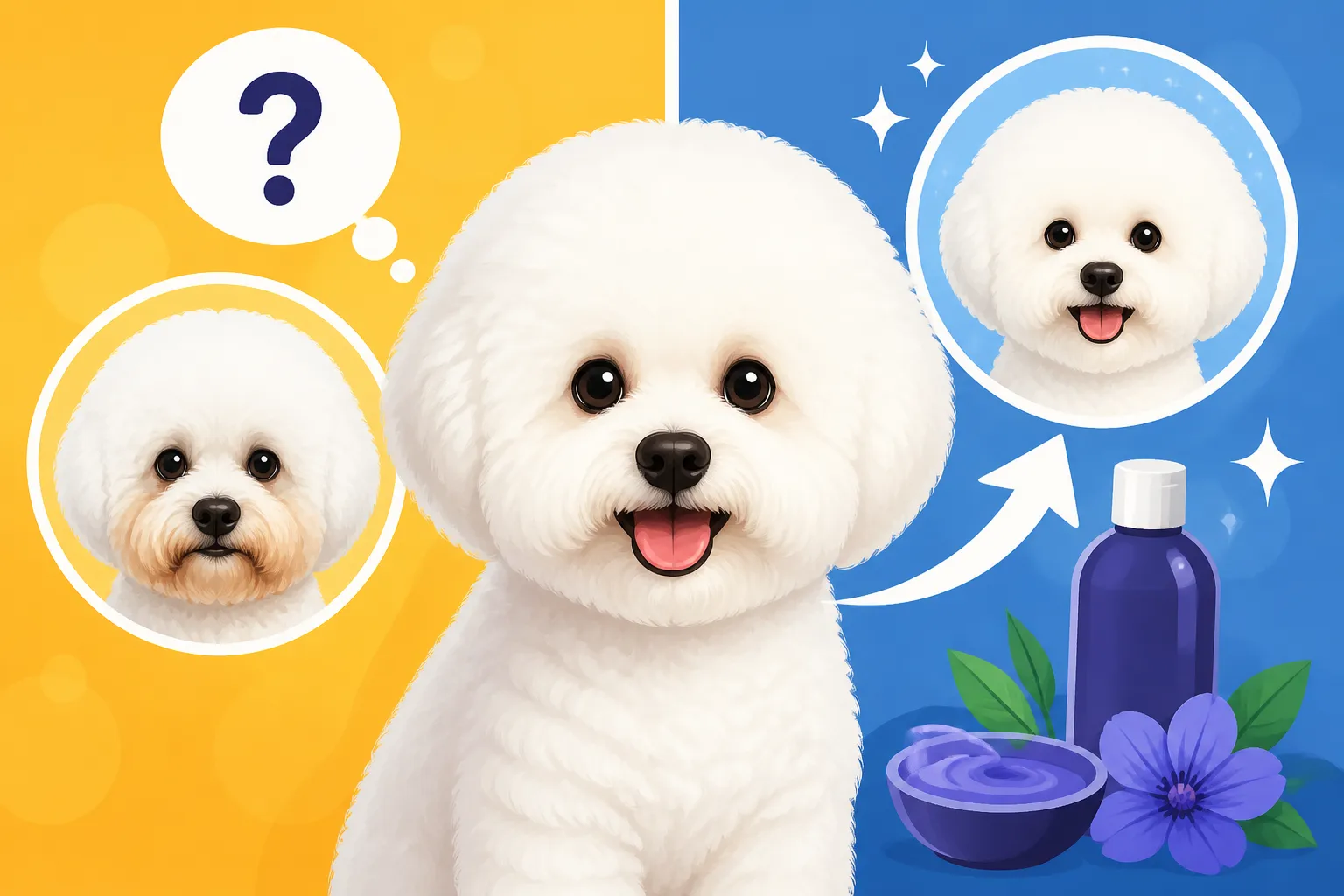
The effectiveness of a blue rinse comes down to basic color theory, specifically the color wheel. On the color wheel, blue is directly opposite yellow. This means that when you apply a tiny amount of blue pigment to something that has a yellowish tint, the blue neutralizes the yellow. It doesn't actually remove the yellow stain or dullness, but rather, the blue and yellow light waves combine in a way that our eyes perceive as white, or at least a much brighter, cleaner white than before.
Think of it like this: if you have a faint yellow cast on your Bichon's coat, adding a controlled amount of blue acts like an optical illusion, making the yellow disappear or become significantly less noticeable. The goal isn't to make your dog blue, but to deposit just enough blue pigment to cancel out the unwanted yellow. It’s a subtle yet powerful trick for optical brightening, making dull or yellowed areas appear whiter and more vibrant.
Types of Blue Products for Pet Coats
When you start looking into blue products for your Bichon, you'll find a few different forms available, each designed to achieve that coveted white look. The most common are specialized shampoos that contain blue or purple pigments. These are often labeled as "whitening" or "brightening" shampoos, and they work by depositing a very light layer of blue onto the hair shaft during the wash. Some brands, available through retailers like Chewy or Amazon, offer these pigmented shampoos specifically formulated for white-coated breeds.
Beyond shampoos, you might also find blue-tinted conditioners. These are typically used after a pigmented shampoo to further enhance the brightening effect and also to provide moisture, which is crucial for preventing the coat from becoming dry or brittle. Lastly, there are sometimes finishing sprays or rinses that can be applied to a damp or dry coat, offering a more temporary or targeted application, particularly useful for touch-ups before a show or an important event. It's important to differentiate these from products that contain harsh bleaches or peroxides, which should never be used on your Bichon's coat, as they can cause severe damage and skin irritation. The blue products rely on pigment, not chemical alteration.
The Pros and Cons of Using a Blue Rinse on Your Bichon Frise
While the idea of a sparkling white Bichon is incredibly appealing, it's wise to weigh the benefits against the potential drawbacks before incorporating a blue rinse into your grooming routine. It’s not a magic bullet, but it can certainly be a valuable tool when used correctly.
The Benefits: What Blue Rinses Can Achieve
The primary benefit of a blue rinse is its ability to optically brighten your Bichon's coat. If your dog's white fur has developed a yellowish tinge over time, whether from environmental factors, slight staining, or natural oxidation, a blue rinse can effectively neutralize those warm tones. The result is a coat that appears much whiter, crisper, and more vibrant, truly living up to that "powder puff" ideal. This can be especially gratifying for pet owners who show their Bichons or just love for them to look their absolute best.
For those persistent, mild yellow areas – perhaps a slight discoloration around the muzzle from slobber or the general body coat looking a bit "off-white" – a blue rinse offers a relatively quick and easy way to achieve immediate visual improvement. It’s a cosmetic fix, yes, but a highly effective one for enhancing the perceived cleanliness and brightness of the coat. When you spend so much time ensuring your Bichon is clean, a product that elevates that cleanliness to a show-stopping sparkle can be incredibly rewarding. It truly makes a difference, giving your Bichon that brilliant glow you adore.
The Risks and Potential Drawbacks
Despite the allure of a super white coat, there are definitely some considerations and potential drawbacks to using blue rinses. The most common issue, and one that gives many owners pause, is the risk of "over-toning." If you use too much product, leave it on for too long, or don't dilute it properly, your Bichon's beautiful white coat can end up with a distinct blue or purple tint, which is usually not the desired effect! This can be quite startling and requires extra effort (and more washes) to correct.
Another concern is the potential for drying out the coat or irritating sensitive skin. While many pet-specific blue shampoos are formulated to be gentle, repeated use, especially with harsher products, can strip the natural oils from the hair and skin, leading to dryness, itchiness, or even flakiness. Bichons are prone to skin sensitivities, so always patch test and observe your dog closely. Lastly, it's important to remember that a blue rinse is largely a cosmetic solution. It doesn't address the root cause of yellowing or staining. If your Bichon has severe tear stains due to blocked tear ducts, or if their coat is yellowing due to a poor diet, a blue rinse will only mask the symptom temporarily. It won’t fix the underlying problem, and relying solely on it might delay seeking proper veterinary or dietary advice. It's just one tool in the comprehensive grooming toolkit, which might include various products, and understanding What a Bichon Frise Owner Spends on Whitening Products can help you budget for the right options without overdoing it.
How to Safely and Effectively Use a Blue Rinse
Using a blue rinse doesn't have to be intimidating, but it does require a bit of know-how and a gentle touch. The goal is a dazzling white, not a Smurf-blue Bichon! With the right approach, you can achieve fantastic results safely.
Choosing the Right Product for Your Bichon Frise
The first and most critical step is selecting a product specifically designed for dogs. Never, ever use human whitening or purple shampoos on your Bichon. Human products are formulated for different hair and skin pH levels and often contain ingredients that can be too harsh or even toxic for dogs. Look for professional-grade "whitening" or "brightening" shampoos or rinses made for white-coated breeds. Reputable brands will often be available at pet supply stores or online retailers like Chewy and Amazon. Always check the ingredients list for gentle, pet-safe components.
Some owners prefer shampoos with a very subtle blue tint for regular use, while others opt for a more concentrated rinse for occasional brightening. If your Bichon has particularly sensitive skin, look for hypoallergenic or all-natural options. When in doubt, ask your professional groomer for their recommendations; they have hands-on experience with many different products and can guide you toward one that will work best for your specific dog's coat and skin type. They can also advise on proper dilution and application, ensuring you get the best outcome without any unwanted blue streaks.
Step-by-Step Application Guide
Once you've chosen your product, the application process is key. Start with a thoroughly clean Bichon. Give them a good bath with their regular shampoo first to remove all dirt and grime. Rinse thoroughly until the water runs clear. This ensures the blue rinse can work directly on the coat for optimal effect. Next, dilute the blue rinse according to the product's instructions. Many concentrated blue shampoos need to be diluted significantly – often a tiny amount mixed with water in a separate bottle. This step is crucial to prevent over-toning and uneven application.
Apply the diluted blue rinse evenly to your Bichon's wet coat, paying special attention to any yellowed areas like the paws, beard, or belly. Work it in gently, but don't scrub aggressively. Let it sit for the recommended time, which is usually quite short, often just a minute or two. This is where patience is key; leaving it on too long is the quickest way to end up with a purple pup. Finally, rinse your Bichon extremely thoroughly. Rinse until you see absolutely no blue suds or tint in the water, and then rinse some more. Follow up with a good conditioner to keep the coat soft and prevent any potential dryness.
Avoiding Common Mistakes
To get the best results and avoid any blue-hued mishaps, steer clear of these common pitfalls. The most frequent mistake is not diluting the product enough or leaving it on for too long. Always follow the manufacturer's instructions for dilution and contact time. A little goes a long way with these products. Another common error is uneven application; make sure you distribute the rinse evenly across the areas you want to brighten. If you just glob it on one spot, you'll get a patch of blue.
Using a blue rinse too frequently can also be problematic. These are best used as an occasional booster rather than every single bath, unless the product is specifically designed for regular use with very mild pigmentation. Overuse can lead to product buildup, coat dullness, or even dry skin over time. And remember, thorough rinsing is paramount! Any residual blue product left in the coat can lead to staining or skin irritation. After rinsing, ensure your Bichon is dried completely, which also helps prevent matting and skin issues. It’s important to take your time and follow proper techniques, even with drying, because knowing How Long Drying a Bichon Frise Takes can significantly impact the final look and health of their coat.
Beyond Blue Rinses: Other Strategies for a Pristine White Coat
While blue rinses are a great tool for achieving a brilliant white, they are just one piece of the puzzle. For truly long-lasting results, you need a holistic approach that addresses the root causes of staining and includes consistent, thorough grooming practices.
Addressing Underlying Causes of Staining
Before reaching for a blue rinse, it's vital to address any underlying issues contributing to your Bichon's coat discoloration. For tear stains, consider consulting your vet. Sometimes, persistent tear staining can indicate dental problems, blocked tear ducts, or even certain food sensitivities. The Tear Stains Under a Bichon Frise's Eyes can often be mitigated by dietary changes, using filtered water, or keeping the hair around the eyes meticulously trimmed. Similarly, saliva staining around the mouth and on the paws can point to excessive licking, which might be a habit, an allergy, or even a dental issue that makes their mouth uncomfortable.
Environmental factors play a huge role too. If your Bichon loves to roll in the grass or splash in muddy puddles, regular cleaning of their paws and belly after walks is essential. Consider using dog-safe wipes for quick clean-ups or even a small, covered outdoor potty area to minimize contact with damp, staining surfaces. Feeding a high-quality, balanced diet can also contribute to overall coat health and may indirectly reduce staining. For example, some owners find that certain foods can exacerbate tear stains, and exploring options from reputable pet food providers like Ollie (though not directly for whitening, a good diet supports overall health) could be a part of their coat health strategy, always checking with your vet before making significant dietary changes.
The Role of Regular Grooming and Maintenance
There's no substitute for consistent, diligent grooming when it comes to a Bichon's white coat. Daily brushing is absolutely non-negotiable to prevent mats and remove loose dirt and debris that can dull the coat. Regular bathing, typically every 2-4 weeks, using a good quality, mild shampoo formulated for white coats, is essential. This routine prevents dirt and environmental pollutants from building up and setting into the coat, which can lead to permanent yellowing over time.
Professional grooming every 4-6 weeks is also a game-changer. Professional groomers have access to specialized tools, products, and techniques that can deeply clean, detangle, and properly dry a Bichon's coat, maintaining its ideal shape and condition. They can also address specific issues like matting, excessive tear staining, or even advise on trimming specific areas to reduce staining. Remember, The Six Week Bichon Frise Groom That Never Stops is a commitment, but it’s the cornerstone of a healthy, beautiful white coat. By combining these foundational grooming practices with the occasional strategic use of a blue rinse, you'll be well on your way to a Bichon Frise whose coat is truly as brilliant as their personality.
Whitening Methods for Your Bichon Frise: A Comparison
Choosing the best way to keep your Bichon Frise's coat gleaming white can feel overwhelming with so many options available. Here's a quick comparison of popular methods, including the blue rinse, to help you decide what fits best for your fluffy companion.
| Method | Description | Pros | Cons | Best For |
|---|---|---|---|---|
| Blue/Purple Rinse/Shampoo | Products with blue/purple pigments to optically neutralize yellow tones. | Immediate, noticeable brightening; makes white appear whiter. | Risk of purple/blue tint if overused; purely cosmetic; may dry coat. | Occasional brightening, show preparation, correcting mild yellowing. |
| Regular Whitening Shampoo | Shampoos with optical brighteners, sometimes mild enzymes, no blue pigment. | Enhances natural brightness over time; less risk of color tint. | Slower results; still cosmetic; may not tackle deep yellowing. | Routine bathing, maintaining natural white; preventing dullness. |
| Tear Stain Removers (topical) | Wipes, liquids, or powders applied directly to stained areas. | Targets specific stains; can be effective for localized issues. | Requires consistent application; can irritate eyes/skin; doesn't fix cause. | Localized tear/saliva stains; quick clean-ups between baths. |
| Dietary Changes/Supplements | Adjusting food, filtered water, or adding supplements to reduce staining. | Addresses root cause of some staining (e.g., tear stains); systemic health benefits. | Slower results; not all staining is diet-related; vet consultation needed. | Persistent tear/saliva stains; improving overall health and coat quality. |
| Professional Grooming | Regular deep cleaning, trimming, and expert product application. | Comprehensive care; experienced application of products; mat prevention. | Cost; requires regular appointments; not a daily solution. | Overall coat health and maintenance; achieving breed standard look. |
Disclaimer
This article is for general informational purposes only and does not constitute professional advice. Laws, prices and regulations vary by location and change over time. Consult a qualified professional for guidance on your specific situation.