The Age a Bichon Frise Counts as Senior
Bichon Frise senior status usually begins between eight and ten years of age, differing from the standard seven-year rule for larger dogs.
Know what to watch for.
Breed-specific conditions, screening and DNA tests, what surgery actually costs, and the daily habits that stretch a healthy lifespan.

Bichon Frise senior status usually begins between eight and ten years of age, differing from the standard seven-year rule for larger dogs.

Bichon Frises face a genetic risk for calcium oxalate bladder stones, requiring prescription diets and lifelong veterinary monitoring.

Dental disease in Bichon Frises explains why small mouths and genetics cause early tartar buildup, gingivitis, and gum inflammation.

Liver shunt risks in the Bichon Frise breed, explaining congenital and acquired portosystemic shunt types and blood flow.

Heart murmurs in Bichon Frises, including causes, grading scales, and associated conditions, explained clearly for owners.

Keratoconjunctivitis Sicca in Bichon Frises causes chronic dryness, inflammation, and potential blindness from inadequate tear production.

Juvenile cataracts in Bichon Frises are hereditary eye conditions causing lens cloudiness and potential blindness in young dogs.

Bichon Frise hip dysplasia risk, common signs of joint stiffness, and steps to keep small dog joints healthy and strong.
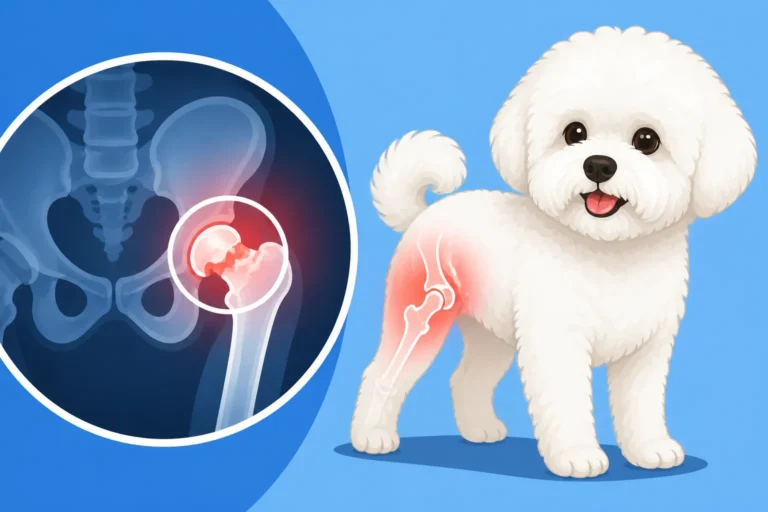
Legg-Calve-Perthes disease causes femoral head collapse and hip pain in young Bichon Frises between four months and one year of age.

Patellar luxation in Bichon Frises explains slipped kneecap symptoms, genetic causes, and when orthopedic surgery is needed.