Whether One Treat Can Restart a Bichon Frise Stone
Calcium oxalate stone prevention in Bichon Frises explains whether one unauthorized treat restarts bladder stone formation.
Know what to watch for.
Breed-specific conditions, screening and DNA tests, what surgery actually costs, and the daily habits that stretch a healthy lifespan.

Calcium oxalate stone prevention in Bichon Frises explains whether one unauthorized treat restarts bladder stone formation.

Bichon Frise calcium oxalate bladder stones require lifelong prescription diets because these stubborn mineral masses cannot dissolve.

Calcium oxalate bladder stone recurrence in Bichon Frise dogs and whether prescription diets prevent new stones after surgery.

Urethrostomy surgery for male Bichon Frises creates a wider opening to prevent recurrent, life threatening urinary blockages.

Repeat bladder stone surgeries for Bichon Frises involve medical risks, financial costs, and genetic recurrence factors.

Bichon Frise bladder stone recurrence rates within three years, alongside calcium oxalate statistics and preventive management strategies.

Calcium oxalate stone recurrence within one year affects about one third of Bichon Frises following surgical stone removal.

Bichon Frise stone surgery recovery expectations, anesthesia side effects, incision care, and pain management for the first week.

Stone surgery for a Bichon Frise removes calcium oxalate bladder stones, stopping painful urinary blockages and infections.
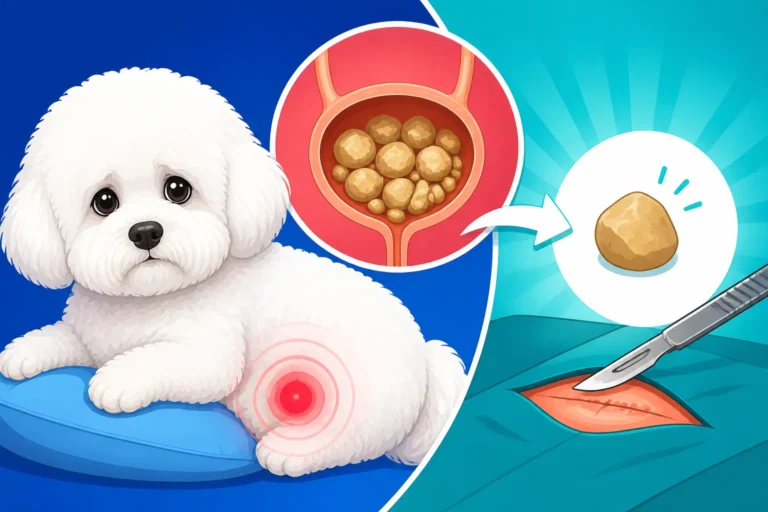
Bichon Frise calcium oxalate bladder stones require surgical removal because no diet or medication can dissolve them safely.