Whether Immunotherapy Shots Work on a Bichon Frise
Immunotherapy shots retrain a Bichon Frise immune system to stop overreacting to environmental allergens like pollen, dust mites, and mold.
Know what to watch for.
Breed-specific conditions, screening and DNA tests, what surgery actually costs, and the daily habits that stretch a healthy lifespan.

Immunotherapy shots retrain a Bichon Frise immune system to stop overreacting to environmental allergens like pollen, dust mites, and mold.

An elimination diet helps a Bichon Frise suffering from food allergies, paw licking, skin irritation, and recurring ear infections.

Bichon Frise allergy testing signs, environmental pollen triggers, and food causes help owners decide on medical steps.
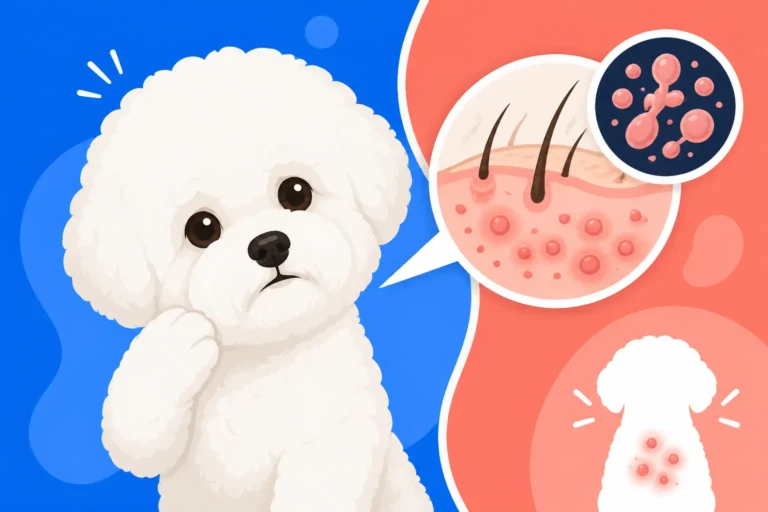
Bichon Frise yeast infections cause greasy skin and musty odors, driven by allergies and trapped moisture in dense coats.

Bichon Frise skin turning pink signals inflammation from environmental or food allergies, causing excessive licking, scratching, and discomfort.

Bichon Frise face rubbing signals skin allergies, ear infections, or dental pain, helping owners identify the discomfort.

Bichon Frise paw licking and chewing reveals underlying allergies and infections, explaining why dogs make their feet raw and how to help.
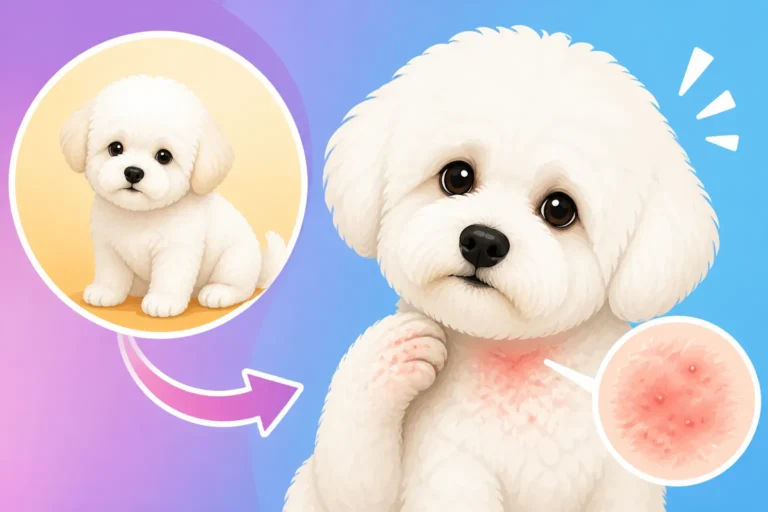
Atopic dermatitis in Bichon Frises usually begins at a specific age, presenting genetic skin issues and environmental allergy triggers.

Cytopoint monoclonal antibody therapy neutralizes the protein canine interleukin-31 to block itch signals and relieve environmental allergies.

Apoquel offers a non-steroidal oral alternative for managing chronic environmental allergies and skin itching in Bichon Frise dogs.