Whether a Bichon Frise Should Be X Rayed Yearly
Annual X-rays for Bichon Frises help detect bladder stones and orthopedic problems early, weighing routine screening benefits.
Know what to watch for.
Breed-specific conditions, screening and DNA tests, what surgery actually costs, and the daily habits that stretch a healthy lifespan.
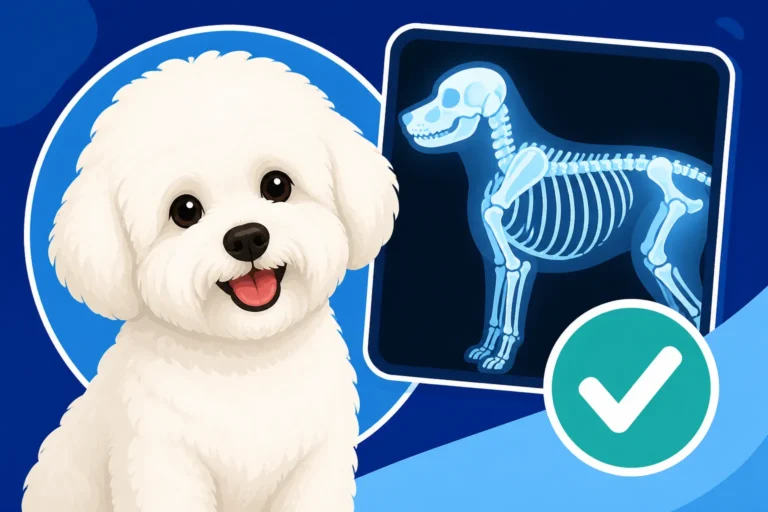
Annual X-rays for Bichon Frises help detect bladder stones and orthopedic problems early, weighing routine screening benefits.

Urine pH monitoring for a Bichon Frise explains how calcium oxalate and struvite stones form in acidic or alkaline urine environments.

A low oxalate diet rarely prevents calcium oxalate stones in a Bichon Frise because their bodies produce internal oxalate.

Vitamin C supplementation for Bichon Frises carries risks of calcium oxalate bladder stones and requires careful review.

Dietary supplements and their actual effectiveness in preventing calcium oxalate bladder stones in Bichon Frise dogs.

Holding urine concentrates minerals and bacteria in a Bichon Frise bladder, raising risks of bladder stones and infections.

Frequent urination protects a Bichon Frise from calcium oxalate bladder stones by regularly flushing out microscopic crystals.

Proper Bichon Frise hydration prevents painful bladder stones and dangerous kidney issues by diluting concentrated urine.

Urine dilution for Bichon Frise bladder stones lowers mineral concentration and prevents painful calcium oxalate crystal formation.

Wet food increases moisture intake, creating diluted urine that prevents calcium oxalate bladder stones in Bichon Frises.