Whether an Indoor Grass Patch Suits a Bichon Frise
The struggle to housetrain a Bichon Frise is a tale as old as time for many dog owners. We adore their fluffy charm and playful spirit, but when it comes to consistent potty habits, they can certainly test our patience! If you've found yourself eyeing those indoor grass patches, wondering if they might be the magic bullet for your tiny companion, you're not alone. This guide will dive deep into whether an indoor grass patch genuinely suits a Bichon Frise, weighing the real-world benefits against the potential complications, so you can make an informed decision for your beloved furry family member.
Why Indoor Grass Patches Appeal to Bichon Frise Owners
Let's be honest, the idea of an indoor potty solution often stems from a place of genuine frustration and a desire to make life easier for both you and your Bichon. These little dogs, as charming as they are, often present unique challenges that make the concept of an indoor grass patch incredibly appealing.
The Perpetual Housetraining Predicament
Many Bichon Frise owners quickly discover that these intelligent but sometimes stubborn pups can be famously hard to housetrain. It's not always about a lack of intelligence; sometimes it's their tiny bladders, their penchant for comfort, or even their deep dislike for inclement weather. Imagine living in an apartment on the third floor, or facing a sudden blizzard, and your Bichon absolutely refuses to set paw outside. This is a common scenario that drives owners to seek alternatives.
A consistent outdoor potty routine is ideal, but life happens. Work schedules, unexpected illness, or even just getting older can make frequent trips outside difficult. For puppies, the window between "I need to go" and "I'm going right here" can be incredibly short. Having an accessible indoor option, particularly during the critical early months, feels like a lifesaver. It promises to minimize accidents, reduce stress, and keep your floors clean, all while offering your dog a designated spot. When you're constantly scrubbing up messes, anything that offers a glimmer of hope feels like a godsend. It's important to understand the common struggles, as covered in topics like Why a Bichon Frise Is Famously Hard to Housetrain, to truly appreciate why an indoor solution might seem so attractive.
Battling the Elements and Time Constraints
Bichon Frises, with their luxurious white coats, often have an aversion to anything that might dampen or dirty their pristine fluff. Rain, snow, or even just wet grass can be met with stubborn resistance. You might find yourself coaxing, pleading, or even carrying your Bichon outside, only for them to hold it until they're back indoors. This isn't just an inconvenience; it can actively hinder housetraining efforts when your dog associates going outside with discomfort. Whether a Bichon Frise Refuses to Go Out in Rain is a common concern that many owners grapple with.
Beyond the weather, modern life often means busy schedules. Maybe you work long hours, or you're simply not physically able to rush outside every hour on the hour, which a young Bichon puppy often requires. An indoor grass patch offers a sense of relief, a consistent "always open" bathroom for your dog, reducing the urgency and potential for accidents when you can't get them out immediately. It feels like a responsible backup plan, especially for smaller breeds known for their smaller bladder capacity.
Understanding the Practicalities of Indoor Grass Patches
While the idea of an indoor grass patch offers a comforting solution, it's crucial to understand the practical realities of owning one. There are different types available, and each comes with its own set of considerations for the diligent Bichon Frise owner.
Types of Indoor Grass Patches: Real vs. Artificial
When you start looking, you'll generally find two main categories of indoor grass patches: those with real grass and those with artificial turf. Both aim to provide a natural-feeling potty surface, but their maintenance and user experience differ significantly.
Real Grass Systems: These typically involve a tray system with a slab of natural, hydroponically grown grass. The appeal here is obvious: it feels, smells, and looks like real grass, which many believe is more appealing to dogs and aids in the transition between indoor and outdoor potty spots. The real grass absorbs urine and helps neutralize odors naturally. However, real grass requires regular replacement, usually every 1-4 weeks depending on use, climate, and the specific product. It's biodegradable, which is a plus for the environment, but it does mean an ongoing subscription cost and the hassle of disposing of used grass. You also have to contend with potential bugs, grass shedding, and ensuring it doesn't get too dry or waterlogged. Think of it like having a small, very particular lawn inside your home.
Artificial Turf Systems: These options use synthetic grass mats, often layered over a drainage grid and collection tray. They are durable, reusable, and typically less expensive upfront. Artificial turf is easy to clean – usually requiring a rinse with water and pet-safe cleaner, and sometimes a deodorizer – but it doesn't absorb urine or odors naturally like real grass. This means more diligent cleaning is necessary to prevent smells from building up, especially with frequent use by a small dog like a Bichon. The initial cost for the unit might be a bit higher than a single real grass patch, but there are no recurring grass replacement fees. Brands on Amazon offer a wide range of these, from simple pads to more elaborate multi-layered systems.
Maintenance, Odor, and Hygiene for a Pristine Bichon Home
Regardless of whether you choose real or artificial, maintenance is paramount, especially when living with a pristine white Bichon Frise. These dogs often have white coats that can show every speck of dirt or urine stain, and their comfort (and your sanity) depends on a clean environment.
With real grass patches, while the grass itself helps with odor absorption, urine can still collect in the tray underneath. This tray needs to be emptied and cleaned regularly to prevent strong smells. Over time, the grass can also become saturated or worn down, losing its effectiveness and becoming less appealing to your dog. It's not a set-it-and-forget-it solution; diligent monitoring and timely replacement are crucial. If the grass starts looking brown or mushy, it's definitely time for a change.
Artificial turf systems demand even more rigorous cleaning. Because the synthetic fibers don't absorb, urine passes through to the collection tray. This tray, and the turf itself, can quickly become a potent source of odor if not cleaned daily, sometimes even twice daily depending on how often your Bichon uses it. Imagine your sweet-smelling Bichon tracking residual urine scent around the house on their fluffy paws. It’s not a pretty thought! Many owners use enzymatic cleaners to break down urine components and specialized deodorizers to keep the smell at bay. A thorough rinse under a tap followed by a spray and air dry is often the routine. This level of upkeep can be more demanding than some anticipate, but it's non-negotiable for a hygienic home environment.
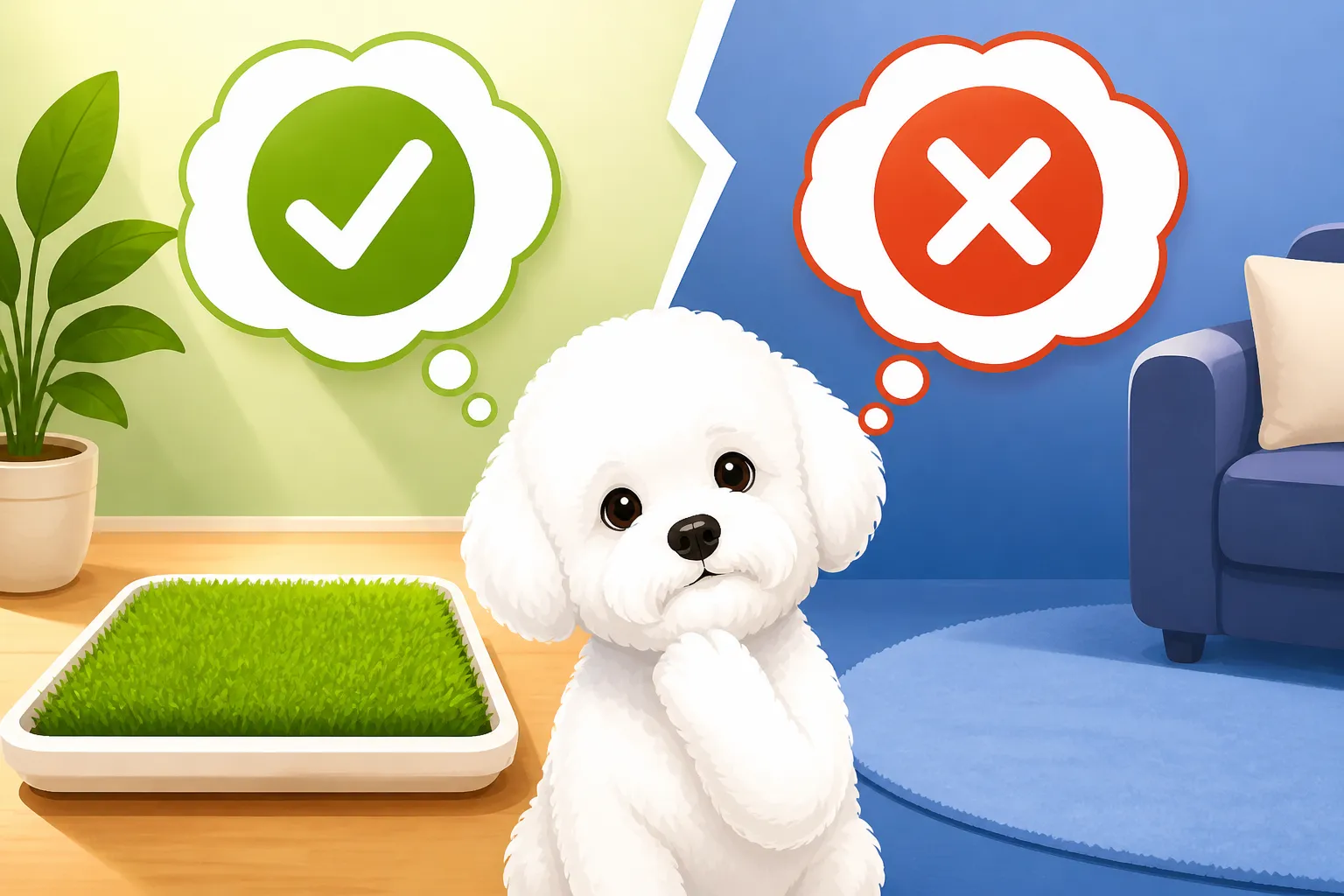
Both systems can introduce a risk of confusing your Bichon about what constitutes an acceptable potty spot. If not managed carefully, your dog might start thinking any carpet or rug that feels "grassy" is fair game. This can completely sabotage your primary housetraining goals, making the effort counterproductive. Whether a Bichon Frise Hides to Toilet Indoors could become a bigger problem if they generalize the indoor potty concept too broadly.
Pros and Cons of an Indoor Grass Patch for Your Bichon Frise
Deciding whether an indoor grass patch is right for your Bichon means weighing the perceived convenience against the potential drawbacks. It's not a one-size-fits-all solution, and what works for one dog or household might not be ideal for another.
The Clear Advantages
There are definitely situations where an indoor grass patch can feel like a game-changer for Bichon owners.
- Ultimate Convenience: This is the big one. Imagine not having to scramble for your shoes and coat every time your Bichon gives "the look." For city dwellers without a yard, those living in high-rise apartments, or anyone with mobility issues, an indoor potty offers unparalleled convenience. It’s always there, always accessible, no matter the weather or time of day. This can be especially helpful for older Bichons who might have trouble holding their bladder as long, as detailed in Whether an Old Bichon Frise Becomes Incontinent.
- Weather Immunity: Your Bichon's disdain for rain, snow, or extreme heat becomes a non-issue. They have a dry, comfortable spot to relieve themselves, which can reduce accidents caused by weather-related refusal to go outdoors. This avoids those frustrating stand-offs at the door.
- Puppy Housetraining Aid: For young Bichon puppies with tiny bladders, an indoor grass patch can bridge the gap between their frequent potty needs and your ability to get them outside. It can help establish a consistent potty location indoors, making cleanup easier while they're learning bladder control. It can be a component of The First Year With a Bichon Frise Puppy, offering a safe zone.
- Health and Safety: During certain periods, like after surgery (e.g., What Stone Surgery Involves on a Bichon Frise) or during quarantine for illness, minimizing outdoor exposure can be vital. An indoor patch allows your Bichon to potty safely and comfortably without external risks. It also offers a safe haven for very small puppies who haven't completed their vaccinations.
The Significant Disadvantages to Consider
While the benefits are appealing, it's crucial not to overlook the potential downsides, especially given the Bichon's specific traits.
- Ongoing Cost and Maintenance: As discussed, both real and artificial grass patches come with ongoing costs. Real grass requires regular purchase, while artificial turf demands an investment in quality cleaners and deodorizers. This adds to What a Bichon Frise Costs a Year to Keep. More importantly, the time commitment for cleaning is significant. If not cleaned diligently, these patches will smell, and that smell will permeate your home. This can be a huge deterrent, transforming a convenient solution into a chore.
- Confusing Housetraining Cues: This is perhaps the biggest pitfall. Dogs learn through association. If you teach your Bichon that it's okay to pee on a grassy mat inside, they may struggle to differentiate between that and your bathmat, your area rug, or even a friend's carpet. This can undermine true housetraining, where the goal is typically to teach the dog that "inside" means "no potty" and "outside" means "potty." It can make the transition to fully outdoor potty habits much harder, and in some cases, create a permanent indoor-potty habit that's difficult to break. This is particularly relevant if you're working on The Toilet Routine That Finally Works on a Bichon Frise.
- Lack of Exercise and Stimulation: An indoor grass patch fulfills a biological need, but it does not replace the physical exercise, mental stimulation, and socialization your Bichon Frise needs from outdoor walks. Relying too heavily on an indoor solution can lead to a less active, potentially bored, and less socialized dog, which can manifest in other behavioral issues.
- Hygiene and Odor Accumulation: Even with the best cleaning routine, some level of odor can linger, especially with artificial turf. The white coat of a Bichon can also pick up residual urine, leading to staining on their paws or belly if they aren't kept meticulously clean. This means more frequent bathing and attention to their sanitary areas.
- Training Challenges: While companies like BAXTER & Bella offer excellent general puppy training resources, integrating an indoor grass patch needs careful thought. It's often best viewed as a temporary tool or a last resort rather than a primary training method, unless your goal is purely for your Bichon to consistently use an indoor potty.
Here's a quick comparison to help visualize the trade-offs:
| Feature | Real Grass Patch | Artificial Turf Patch |
|---|---|---|
| Initial Cost | Moderate (for tray system) | Moderate (for unit) |
| Ongoing Cost | High (regular grass replacement/subscription) | Low (cleaners, deodorizers) |
| Odor Control | Good (natural absorption by grass) | Requires diligent cleaning and enzymatic deodorizers |
| Cleaning | Empty tray, replace grass; occasional unit wipe | Daily rinse of turf & tray, scrub with cleaner |
| Longevity | Grass replaced every 1-4 weeks | Turf & tray reusable for years with proper care |
| "Natural" Feel | Very natural, appealing to most dogs | Textured, but clearly artificial; scent-attractants often added |
| Environmental | Biodegradable grass | Synthetic materials, less eco-friendly disposal |
| Potential Bugs | Possible, as it's living grass | Unlikely |
Integrating an Indoor Grass Patch into a Holistic Training Plan
If you decide an indoor grass patch is a necessary tool for your household, the key to success lies in integrating it thoughtfully into a broader, holistic training strategy. It shouldn't be a crutch that replaces outdoor experiences, but rather a supportive aid.
A Tool, Not a Replacement for Outdoor Potty Training
Think of the indoor grass patch as a secondary tool, not the primary method for housetraining your Bichon Frise. Your ultimate goal should still be for your dog to relieve themselves outdoors, as this promotes good hygiene, reinforces appropriate behavior in various environments, and encourages necessary exercise and mental stimulation.
When you introduce the indoor patch, always guide your Bichon to it, use a consistent verbal cue ("Go potty," "Do your business"), and reward them enthusiastically when they use it correctly. Just as you would with outdoor training, immediate positive reinforcement is crucial. However, it's vital to maintain a strict outdoor potty schedule as well. Many trainers, including those whose methods align with reputable programs like BAXTER & Bella, emphasize consistency and positive reinforcement for outdoor potty training as the foundation.
Consider the grass patch for specific scenarios:
- Late-night emergencies: A quick, silent trip to the patch might save you from a middle-of-the-night accident.
- Inclement weather days: When your Bichon absolutely refuses to brave the storm.
- Short-term absences: If you're only going to be gone for an hour or two longer than usual and want to prevent an accident.
- Aging or infirm dogs: For senior Bichons with reduced bladder control or mobility issues, it can be a true blessing, as highlighted in concerns about Whether an Old Bichon Frise Becomes Incontinent.
Avoiding Confusion and Reinforcing Outdoor Habits
One of the biggest risks of an indoor grass patch is confusing your Bichon about where it's truly appropriate to potty. To mitigate this:
- Designate a specific, consistent location: Place the grass patch in an out-of-the-way spot that is distinctly not carpeted. Make it clear this is its own unique "potty zone."
- Supervise closely: Especially in the beginning, supervise your Bichon when they are indoors to catch any attempts to potty elsewhere. If they head towards the patch, praise them. If they start to squat elsewhere, gently interrupt and redirect them to the patch or outside.
- Clean up accidents thoroughly: If an accident happens off the patch, use an enzymatic cleaner (available on Amazon) to completely eliminate the odor. Dogs are drawn to areas that smell like previous potty spots.
- Prioritize outdoor trips: Always offer the outdoor option first. Take your Bichon out frequently and reward them heavily for doing their business outside. Make outdoor potty breaks positive, engaging experiences. This is part of The Toilet Routine That Finally Works on a Bichon Frise.
- Remove the patch when possible: As your Bichon matures and gains better bladder control, or as the weather improves, gradually reduce reliance on the indoor patch. The goal is often to phase it out once consistent outdoor habits are established, unless it's intended as a permanent solution due to lifestyle or medical needs.
Finally, always be aware that sudden changes in potty habits, like frequent squatting or leaking, could indicate a medical issue rather than a training problem. Bichons are prone to certain urinary conditions, so if your dog suddenly starts having accidents, especially if accompanied by straining or blood in the urine, a vet visit is essential to rule out issues like bladder stones or a urinary tract infection. This important consideration is explored in Whether Frequent Squatting Means Stones Not Training. An indoor grass patch can mask these signs by providing an alternative, so pay close attention to the why behind any changes in your Bichon's potty behavior.
Disclaimer
This article is for general informational purposes only and does not constitute professional advice. Laws, prices and regulations vary by location and change over time. Consult a qualified professional for guidance on your specific situation.