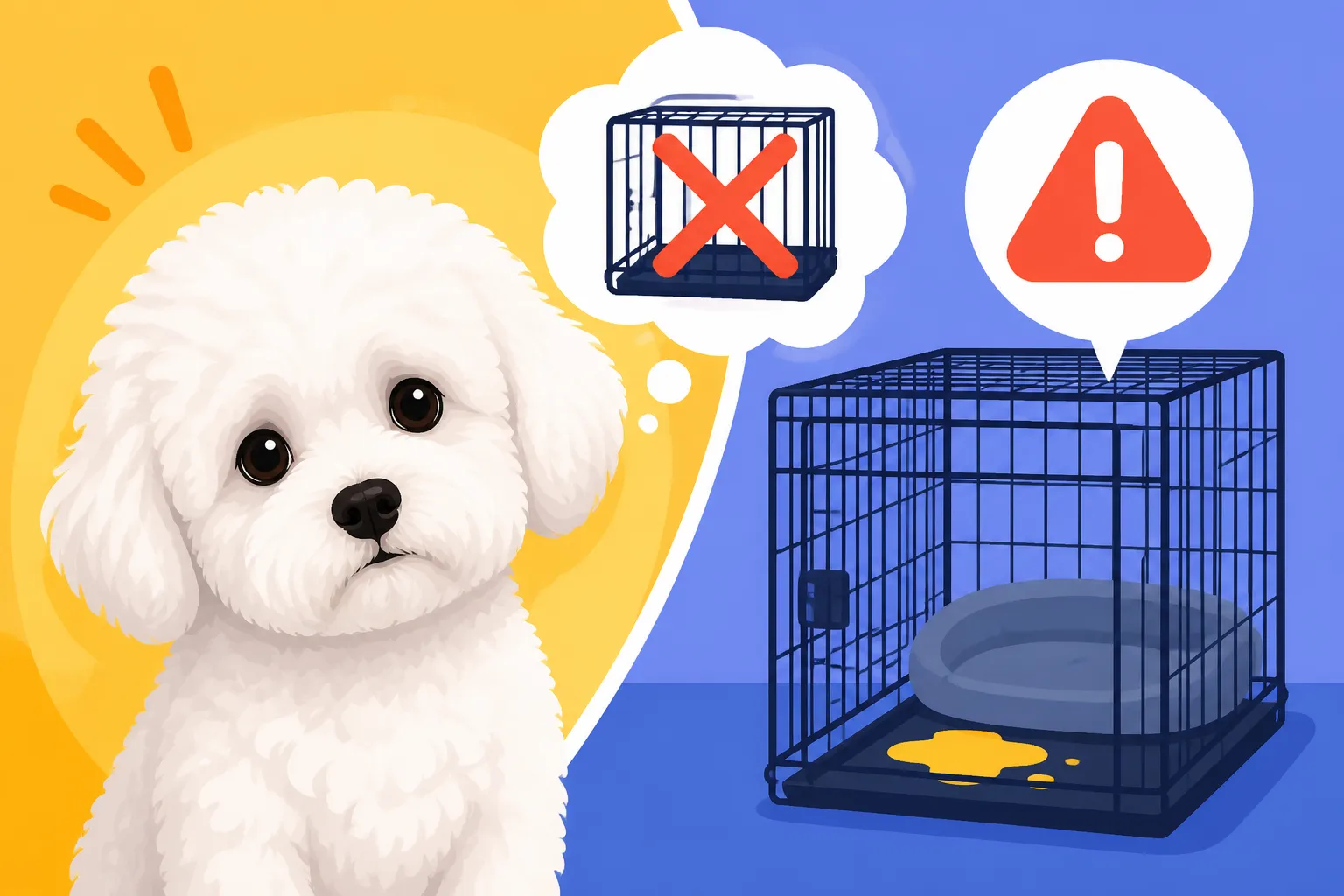
Whether Crate Soiling Means a Bichon Frise Was Caged
Finding your sweet Bichon Frise has soiled their crate can be incredibly upsetting, often leading to a knot in your stomach and a nagging fear: does this mean they were caged and neglected in the past? It's a natural leap to make, especially when you're trying your best to provide a loving home, and this guide aims to unravel the complexities of crate soiling, explaining common reasons beyond past trauma and offering actionable steps to help your furry companion.
The Frustration of Crate Soiling: More Than Just "Bad" Behavior
It's heartbreaking to walk into a room and discover your Bichon Frise has had an accident in their crate. You immediately start to question everything: Is it my fault? Am I doing something wrong? Is my dog just stubborn? This frustration is amplified because we generally understand that dogs have a natural instinct to keep their sleeping areas clean. When they fail to do so, it feels like a fundamental breakdown, and it’s easy to jump to the conclusion that something deeply wrong has happened, like prior abuse or prolonged confinement in squalor.
Why We Assume the Worst with Crate Soiling
The assumption that crate soiling equals a "caged" past stems from a place of empathy. We know how much dogs value their den, a safe, clean space. When a dog consistently soils this space, it challenges our understanding of their innate behaviors. We envision a scenario where a previous owner might have left them for far too long in a dirty crate, forcing them to eliminate there and, over time, eroding their natural instinct for cleanliness. This thought alone is enough to make any caring dog parent feel terrible, and it’s a valid concern that often leads to distress and worry.
It's important to recognize that while this fear is legitimate, it's not always the reality. Our dogs are trying to communicate with us, and sometimes, the message gets lost in translation or is misinterpreted through human emotions. A dog who soils its crate isn't necessarily being defiant or intentionally "bad"; often, they are responding to an internal or external stressor that they simply cannot control. Understanding this distinction is the first step toward effective solutions and relieving some of that emotional burden.
The Difference Between Soiling and a "Caged" Past
While a history of being "caged" – meaning prolonged, forced confinement in a soiled space – can indeed lead to a breakdown of the clean den instinct, it’s crucial to differentiate this from other causes of crate soiling. A dog truly traumatized by such an experience might show a complete indifference to lying in its own waste. They might not try to alert you or seem bothered by the mess, because their natural instinct to keep their space clean has been fundamentally erased through repeated, unavoidable exposure to filth. This is a profound behavioral change that typically requires a very gentle, patient, and often professional rehabilitation approach.
However, many dogs who soil their crates are not suffering from this extreme past. Instead, their accidents might be due to a medical issue, anxiety, or simply incomplete or inconsistent housetraining. These dogs often show distress before or during the act of soiling, or they might try to clean themselves afterward, indicating that the instinct for cleanliness is still very much present, but something else is overriding it. They might whine, scratch at the crate door, or seem visibly uncomfortable. Recognizing these subtle differences can help you tailor your approach more effectively.
Common Reasons a Bichon Frise Soils Its Crate (Beyond Neglect)
Before jumping to conclusions about a traumatic past, it’s vital to explore other, often more common, reasons why your Bichon Frise might be having accidents in their crate. Many of these issues are solvable with patience and the right strategies.
Medical Conditions Mimicking Housetraining Issues
One of the most frequent culprits behind sudden or persistent crate soiling is an underlying medical condition. It's not uncommon for a dog to develop a urinary tract infection (UTI), which can cause discomfort, urgency, and frequent urination. Your sweet Bichon Frise might simply not be able to hold it long enough, even if they desperately want to keep their den clean. Bladder stones, which Bichons are unfortunately predisposed to – in fact, Why a Bichon Frise Forms Stones Twenty Times as Often – are another significant concern. These stones can irritate the bladder, cause inflammation, and lead to an uncontrollable urge to urinate, making accidents unavoidable.
Beyond urinary issues, other health problems can contribute. Conditions that increase thirst, such as diabetes or Cushing's disease, can lead to increased urine production, overwhelming your dog's bladder capacity. If your Bichon Frise is suddenly drinking Whether a Cushing's Bichon Frise Drinks Constantly, that could certainly explain an uptick in accidents. Even certain medications can have side effects that impact bladder control. Any sudden change in your dog's urination habits, frequency, or volume should always warrant a visit to the veterinarian to rule out these physical causes first. It's often the simplest explanation and the quickest to resolve.
Housetraining Gaps and Early Experiences
Sometimes, crate soiling isn't about deep trauma but rather a result of incomplete or incorrect early housetraining experiences. Very young puppies, for instance, simply don't have the bladder control to hold it for long periods. If a puppy is crated for too long before their bladder and bowels are fully developed, they'll be forced to soil their crate out of sheer necessity. This can inadvertently teach them that soiling their sleeping space is acceptable, breaking down that natural clean den instinct before it even has a chance to fully solidify. It's not their fault; it's a physiological limitation.
Another common scenario involves puppies acquired from less-than-ideal environments, such as puppy mills or overcrowded shelters. In these situations, puppies may have been housed in small, unsanitary conditions where they had no choice but to eliminate where they ate and slept. This upbringing doesn't necessarily qualify as "caged" trauma in the strictest sense of severe, individual neglect, but it does mean they missed the crucial developmental window for learning clean habits. They might arrive in your home without ever having learned that their den should be kept clean, requiring a patient, back-to-basics approach to housetraining. For more on the impact of such beginnings, you might find Whether a Mill Bred Bichon Frise Never House Trains insightful.
Anxiety and Stress-Related Soiling
Our Bichon Frises are sensitive souls, and anxiety can manifest in various ways, including inappropriate elimination. Separation anxiety is a prime example: a dog suffering from extreme distress when left alone might urinate or defecate in their crate not because they can't hold it, but because they're panicking. This is often accompanied by other signs like excessive barking, destructive chewing, drooling, or frantic attempts to escape the crate. It's a physiological response to extreme stress, not a deliberate act of soiling.
Even less severe forms of anxiety or fear can trigger accidents. A Bichon Frise might become fearful of the crate itself if it's been associated with negative experiences, such as being left alone for too long, experiencing loud noises while confined, or being punished in or near it. Some dogs are simply more prone to general anxiety or phobias, like fear of thunderstorms or fireworks, which can lead to stress-induced accidents. In these cases, the soiling isn't a sign of a "caged" past, but rather a cry for help related to their current emotional state.
Practical Steps to Address Crate Soiling in Your Bichon Frise
Once you've ruled out the more severe possibilities, it's time to get proactive with a structured approach. Tackling crate soiling requires consistency, patience, and often a bit of detective work to understand the root cause for your specific Bichon Frise.
Rule Out Medical Causes First
Seriously, this is your absolute first step. Before you embark on any training adjustments or behavioral modifications, you must schedule a comprehensive visit with your veterinarian. Explain all the symptoms: how often the accidents occur, when they occur (is it only in the crate? overnight? after a certain amount of time?), the consistency of the stool or urine, and any other changes in behavior. Your vet will likely perform a thorough physical exam and recommend tests such as a urinalysis to check for infections or crystals, and possibly bloodwork.
Given the Bichon Frise's predisposition to bladder stones, your vet might also suggest imaging like X-rays or an ultrasound to directly visualize the bladder and kidneys. This is particularly important because stones can cause chronic irritation and urgency that no amount of training can overcome. Discovering How a Vet Confirms Stones in a Bichon Frise can provide more detail on this diagnostic process. If a medical issue is identified, treating that condition will usually resolve the crate soiling. It's a huge relief to know you're addressing the physical discomfort first.
Re-evaluate and Adjust Your Crate Training Strategy
If your Bichon Frise gets a clean bill of health, it’s time to revisit your crate training approach. Even if you've done it before, a refresher can make all the difference, especially if something in the routine has subtly gone awry.
First, crate size matters immensely. A crate that's too large allows your Bichon Frise to designate one end as a "bedroom" and the other as a "bathroom," which defeats the purpose of leveraging their natural clean den instinct. The crate should be just big enough for them to stand up, turn around, and lie down comfortably. If your current crate is too large, use a divider to adjust the internal space. You can often find adjustable dividers or even purpose-built smaller crates on platforms like Amazon.
Next, establish a strict and consistent potty schedule. Take your Bichon Frise out frequently, especially first thing in the morning, after every meal, after naps, and before bed. Always go to the same designated potty spot and praise lavishly when they eliminate outside. For a detailed guide, check out The Toilet Routine That Finally Works on a Bichon Frise. Remember, puppies need to go out much more often than adult dogs. If your dog is struggling, consider if Whether a Bichon Frise Learns to Use a Pad could be a temporary intermediate step while you reinforce outdoor training.
Crucially, make the crate a positive place. It should never be used for punishment. Instead, associate it with good things: delicious long-lasting chews, favorite toys, or a special meal. A soft, comfortable, and easy-to-clean crate mat (many options are available on Amazon) can make the space more inviting. Start with very short periods, gradually increasing the duration as your Bichon Frise becomes more comfortable. If you’re feeling overwhelmed, structured online courses, like those offered by BAXTER & Bella, can provide step-by-step guidance and support for establishing good crate habits and reinforcing positive associations.
Managing Anxiety and Building Confidence
If anxiety is the underlying cause, your approach needs to shift from pure housetraining to behavioral modification aimed at building confidence and reducing stress. For separation anxiety, the key is desensitization and counter-conditioning. This means gradually introducing your Bichon Frise to being alone in the crate for very short periods, always associating it with positive things, like a high-value treat or a favorite puzzle toy. You might start with simply stepping out of sight for a few seconds, then returning, and slowly increase the time.
Enrichment is also crucial. Provide engaging toys or puzzle feeders that keep your Bichon Frise mentally stimulated and focused on something other than your absence. A KONG stuffed with peanut butter or a high-quality chew toy can be a great distraction. Make sure they get plenty of physical exercise and mental stimulation outside the crate as well, to help burn off excess energy and reduce overall stress levels.
For severe cases of anxiety, don't hesitate to seek professional help. A certified professional dog trainer or a veterinary behaviorist can provide tailored strategies and, if necessary, discuss medication options to help manage extreme anxiety. They can help you identify specific triggers and implement a plan that addresses your individual Bichon Frise’s needs, fostering a sense of security and trust around their crate.
When to Suspect a "Caged" Past and How to Help
While many crate soiling issues have simpler explanations, there are indeed times when a dog's past trauma, particularly being forced to live in squalor, is the root cause. This requires a different, even more compassionate and patient, approach.
Identifying Behavioral Indicators of Past Trauma
If you've ruled out all medical conditions, diligently followed a strict, positive crate training regimen, addressed any anxiety, and your Bichon Frise still consistently soils their crate without any apparent distress or attempt to keep clean, it’s reasonable to consider a past history of severe neglect or being "caged." The key indicator here is a lack of desire to keep clean. A dog who has been forced to live in its own waste for extended periods may have lost the intrinsic motivation to avoid doing so. They may lie in the mess indifferently, which is a stark contrast to a dog who clearly feels uncomfortable or tries to escape.
Other behaviors might also accompany this. Extreme fear or panic specifically associated with confinement, far beyond typical separation anxiety, could be a red flag. This might involve frantic attempts to escape, aggression when approached while crated, or even self-mutilation. Furthermore, dogs with a history of severe neglect often exhibit broader behavioral challenges, such as profound shyness, difficulty forming attachments, resource guarding, or a general lack of socialization. These overarching issues, combined with persistent crate soiling, can paint a clearer picture of past trauma.
A Specialized Approach to Rehabilitation
When past trauma is suspected, rehabilitation must focus on rebuilding trust and slowly re-teaching core concepts that were never learned or were actively unlearned. The first, and often most important, step is to avoid crates entirely for a period, especially if they trigger extreme panic or fear. Instead, create a larger, puppy-proofed safe space using baby gates or a sturdy pet playpen. This allows your Bichon Frise to have ample room to move away from any accidents, giving them the chance to re-learn the preference for cleanliness. You can find durable playpens and gates on sites like Amazon.
When considering the crate again, the reintroduction must be incredibly gradual and entirely positive. Think of it as starting from scratch, even slower than with a typical puppy. Make the crate an inviting, voluntary space. Leave the door open, put high-value treats and toys inside, and let your Bichon Frise explore it at their own pace. Never force them in. You might even use a soft-sided crate or a fabric pet carrier initially, which might feel less like a "cage" and more like a cozy den. The BAXTER & Bella program, with its emphasis on positive reinforcement and building confidence, could provide a structured framework, though you'll need to adapt it with extra patience for a traumatized dog.
Ultimately, working with a force-free trainer or a veterinary behaviorist experienced in rehabilitating traumatized animals is crucial. They can help interpret your Bichon Frise's subtle cues, develop a tailored rehabilitation plan, and guide you through the process of rebuilding their confidence and teaching them that their world is now safe and clean. This journey takes immense patience and understanding, but the bond you forge with your resilient Bichon Frise will be incredibly rewarding.
| Cause of Crate Soiling | Likely Indicators | Potential Solutions |
|---|---|---|
| Medical Issue | Sudden onset, frequent urges, straining, blood in urine, excessive thirst. | Immediate vet check: urinalysis, blood tests, X-rays/ultrasound. Treat condition. |
| Crate Too Large | Dog soils one corner, sleeps in another. | Use a divider to size the crate appropriately (just enough space to stand/turn). |
| Too Long in Crate | Accidents occur after being confined for prolonged periods (e.g., 4+ hours for an adult). | Shorten crate times, increase frequency of outdoor potty breaks. |
| Inconsistent Housetraining | Accidents not limited to crate, dog doesn't signal, inconsistent schedule. | Implement strict potty schedule, consistent rewards for outdoor success, supervision. |
| Separation Anxiety | Destructive behavior, barking, drooling, panic only when alone in crate. | Desensitization, counter-conditioning, enrichment toys, professional trainer. |
| Past Trauma/Neglect | Consistent soiling with indifference, extreme fear of confinement, broader fear/withdrawal. | Avoid crate initially, use playpen, focus on trust, professional behaviorist, gentle reintroduction. |
| Diet/Water Imbalance | Excessive drinking, loose stools, frequent urination. | Consult vet for diet review; ensure fresh water availability, but not excessive intake. |
Disclaimer
This article is for general informational purposes only and does not constitute professional advice. Laws, prices and regulations vary by location and change over time. Consult a qualified professional for guidance on your specific situation.