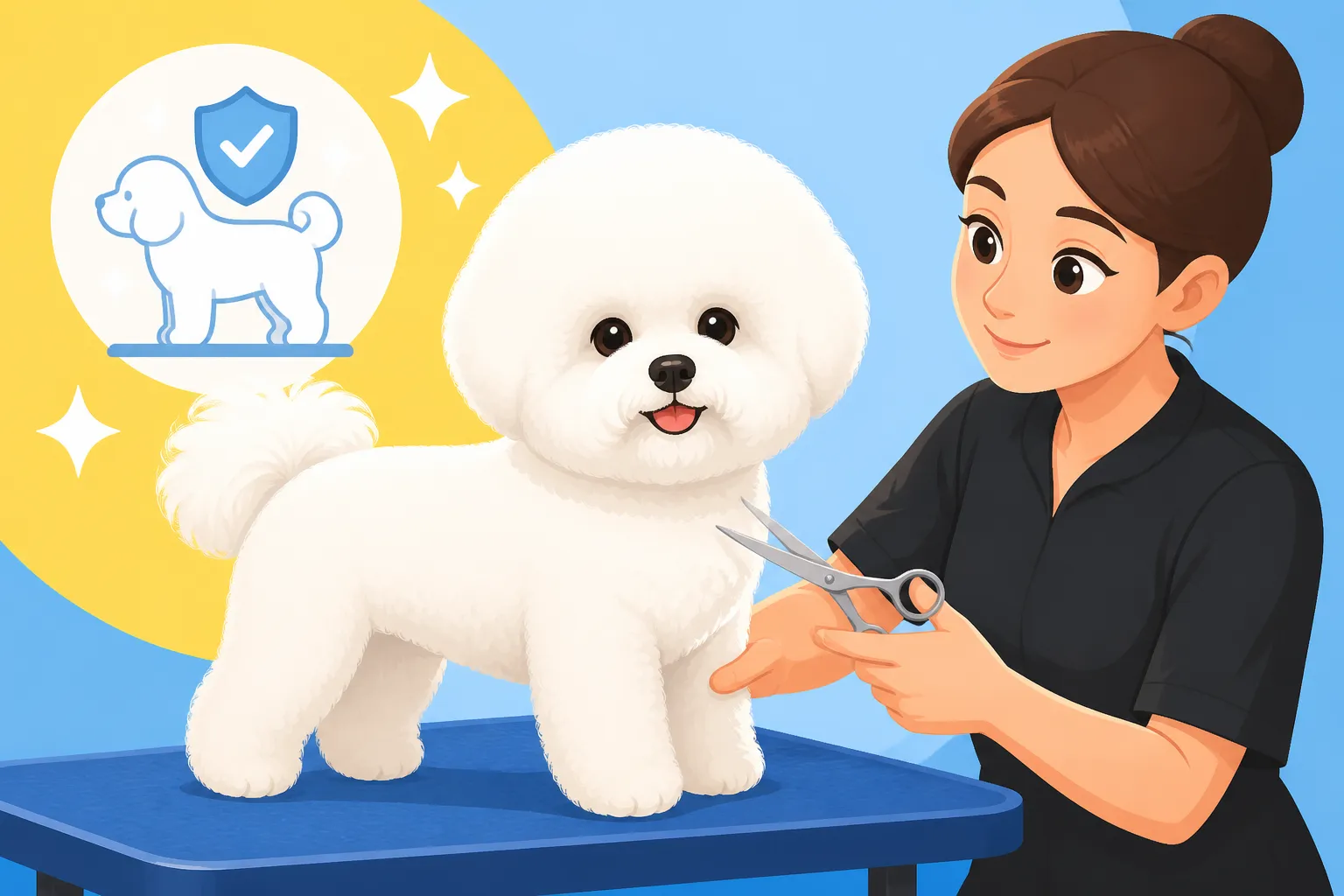
Teaching a Bichon Frise to Stand for an Hour of Scissoring
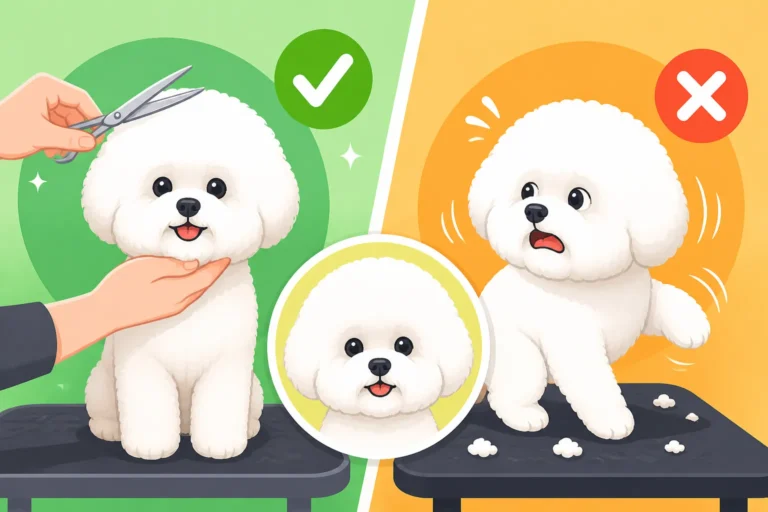
If you’re a Bichon Frise parent, you know that gorgeous, fluffy coat is one of their defining features. But keeping that cloud-like appearance perfectly sculpted, especially with an active, curious little Bichon who'd rather be playing, can feel like an Olympic sport. It's a common frustration to have a dog that simply will not stand still for the meticulous scissoring needed, turning what should be a bonding experience into a wrestling match. This comprehensive guide is here to walk you through how to patiently and effectively teach your Bichon Frise to stand comfortably and calmly for the hour (or more!) of scissoring required to maintain their iconic look.
Understanding the Bichon Frise Temperament and Grooming Needs
Before we even pick up a pair of shears, it's crucial to understand why your Bichon Frise might be less than thrilled about standing still for an extended period. Their delightful personality, while charming, often comes with a lively spirit that prefers action over inaction.
The Bichon Frise Personality: Merry and Active
Bichons Frises are renowned for their cheerful, outgoing, and playful dispositions. They are little bundles of joy, always ready for an adventure or a game of fetch. This "merry" temperament, as it's often described, means they possess an abundance of energy and an inherent curiosity that makes them want to be involved in everything. They thrive on interaction and can get bored quickly, especially if asked to do something that seems, to them, utterly pointless, like standing still on a table.
Imagine your Bichon, full of zest, wanting to chase a ball or cuddle on the couch. Now ask them to stand perfectly still for an hour while you meticulously trim their coat. It's a huge ask for a breed so wired for engagement and movement. This isn't naughtiness; it's just their natural inclination clashing with a necessary task. Our job isn't to squash their spirit but to channel it, using positive reinforcement to make grooming a pleasant, predictable part of their routine, rather than a punishment or a bore. Patience and understanding of their inherent need for activity will be your best allies here.
The Importance of the Bichon Frise's Coat and Scissoring
The Bichon Frise's signature "powder puff" look is no accident; it's the result of skilled grooming, almost exclusively achieved through scissoring. Their double coat consists of a soft, dense undercoat and a coarser, curly outer coat. Unlike many breeds that are primarily clipped with electric clippers, a Bichon's coat is ideally scissored to create that perfectly rounded head, fluffy body, and shapely legs that are characteristic of the breed standard. This level of precision simply isn't possible with clippers alone, which tend to give a blockier, less refined finish.
Scissoring allows the groomer to sculpt the coat, following the natural lines of the dog's body while maintaining the desired length and texture. This continuous growth means their coat is always expanding, and if left untrimmed, it can become a tangled, matted mess that quickly loses its iconic shape and can even cause skin problems. A properly scissored coat also helps prevent mats from forming deep within the dense fur, which can pull on the skin and be quite painful for your dog. So, while it demands patience, mastering this technique—or at least having your dog tolerate it—is fundamental to their comfort and appearance. You might find it interesting to learn more about Why a Bichon Frise Coat Grows Forever and the unique challenges it presents.
Starting Early: Puppy Foundations for Grooming Patience
The key to a well-behaved Bichon on the grooming table almost always lies in early, positive experiences. It’s far easier to introduce good habits from a young age than to try and correct ingrained fears or resistance later on.
Desensitization to Touch and Tools
From the moment you bring your Bichon Frise puppy home, you should begin a gentle process of desensitization to touch and the various tools they'll encounter throughout their life. This isn't about full-blown grooming sessions, but about making these experiences feel normal and non-threatening. Start by simply handling your puppy all over their body—their paws (especially between the toes), ears, tail, and around their muzzle. Gently touch these areas frequently, praising and offering tiny, high-value treats for their calm acceptance. This helps them associate handling with positive outcomes.
Once they're comfortable with being touched, gradually introduce the actual grooming tools. Let them sniff the brush, comb, and even the scissors (kept closed, of course). Gently touch their coat with the brush for a few seconds, then praise and reward. Do the same with a comb. The sound of scissors opening and closing can be startling, so let them hear it from a distance, then closer, always pairing it with a treat. The goal is to build a positive association, teaching them that these objects and touches lead to good things. Keep these early sessions incredibly short – literally 30 seconds to a minute – and always end on a positive note. You can dive deeper into this topic by reading How Early a Bichon Frise Should Meet a Groomer.
The Grooming Table: A Safe and Elevated Space
Introducing the grooming table early is a game-changer for building good grooming habits. For many small dogs, the floor is their domain, and they expect to move freely. Elevating them onto a grooming table immediately changes the dynamic; it signals that this is a specific activity space where different rules apply. It also saves your back from endless bending! The table should be sturdy, non-slip, and have a grooming arm with a loop for safety. This loop is not for restraint or punishment, but purely to prevent your dog from jumping off and injuring themselves.
Start by simply placing your puppy on the table for a few seconds, offering praise and a treat, then immediately taking them off. Repeat this several times a day. Gradually increase the time they spend on the table, always keeping it positive. You can give them a chew toy or a lick mat smeared with peanut butter while they're up there to create a strong positive association. The goal is for them to see the table not as a scary place, but as a predictable spot where good things happen and where they learn to stay still. Resources like those offered by BAXTER & Bella often include guidance on introducing puppies to grooming routines and equipment, which can be incredibly helpful for new owners.
Building Endurance: Gradual Training Techniques
Teaching your Bichon to stand still for an hour isn't something that happens overnight. It's a process of gradually increasing their tolerance and building mental endurance, much like training for a marathon.
Short, Frequent Practice Sessions
The biggest mistake people make when trying to teach their Bichon to stand still is attempting a long session too soon. This almost guarantees failure and creates negative associations. Instead, break down the "hour of scissoring" into tiny, manageable chunks. Start with just 30 seconds of standing still on the grooming table. Praise and reward heavily for those 30 seconds, then release them. You might do several of these short sessions throughout the day, perhaps two or three minutes apart.
As your Bichon consistently performs well at 30 seconds, gradually increase the duration by small increments – 15 seconds at a time. Go from 30 to 45 seconds, then to a minute, then a minute and fifteen, and so on. The key is consistency and patience. If your Bichon starts to get restless or anxious, you've gone too long. Shorten the session next time and build up again. Always aim to end the session before they get frustrated, so the experience remains positive. Using a timer can be really helpful here, allowing you to focus on your dog's behavior rather than constantly checking the clock. Over weeks and months, these short, frequent sessions will add up, building their endurance for longer grooming periods.
Lure and Reward: Positive Reinforcement for Standing
Positive reinforcement is the most effective way to teach your Bichon Frise to stand still. This means rewarding the behavior you want to see. High-value treats are your best friend here – think tiny pieces of cooked chicken, cheese, or specialized training treats. When your Bichon is on the table, use a treat to lure them into a standing position if they try to sit or lie down. Hold the treat just above their nose and move it slightly forward, encouraging them to stand upright. The moment all four paws are on the ground and they're standing still, even for a split second, mark that moment with a verbal cue like "yes!" or a clicker, and immediately give the treat.
The goal is to reinforce the stillness. Don't reward them for moving or trying to get off the table. As they get better, you'll extend the duration of standing before offering the reward. So, instead of rewarding after one second, you might wait for two, then three, and so on. Continue to offer gentle verbal praise ("Good stand!" "Good dog!") and calm, reassuring strokes. This consistent association between standing still, receiving a reward, and praise makes the grooming table a positive place. Different Bichons are motivated by different things, so experiment to find What a Bichon Frise Will Work For. Some might prefer a favorite toy over food, or just your enthusiastic verbal praise.
Essential Tools and Environment for Success
Having the right tools and setting up a conducive environment can make a world of difference in your grooming journey. It's not just about the technique; it's about making the process as smooth and comfortable as possible for both you and your Bichon.
Choosing the Right Grooming Table and Arm
A dedicated grooming table is genuinely one of the best investments you can make for a Bichon Frise owner who plans to do any significant home grooming. Trying to groom on the floor, a kitchen counter, or even a normal table often leads to back pain for you and a restless, insecure dog. Grooming tables are designed with non-slip surfaces, which gives your Bichon a secure footing and prevents slips and slides that can cause anxiety. Look for a table that is sturdy and stable, preferably with an adjustable height so you can work comfortably without stooping.
Crucially, a grooming table needs a grooming arm and a safety loop. The arm attaches to the table, and the loop goes gently around your dog's neck or under their belly (or both, for extra security), ensuring they can't jump off the table and hurt themselves. Remember, this is for safety, not for harsh restraint. It gently reminds them to stay in place. There are many options available, from basic folding tables perfect for home use to professional hydraulic tables. Browsing sites like Amazon can give you a good idea of the range of grooming tables and arms available, from entry-level options to more robust setups. Selecting one that suits your space and budget will significantly improve your grooming experience.
Selecting Quality Scissors and Combs
Just as a chef needs sharp knives, a groomer (even a home groomer!) needs quality tools. For scissoring a Bichon Frise, dull scissors are not just frustrating; they can be painful for your dog, pulling and tearing the coat rather than cutting cleanly. Invest in a good pair of straight grooming shears, ideally around 7-8 inches, made from stainless steel. You might also consider curved shears for shaping the rounded head and feet, and thinning shears for blending lines and reducing bulk. Keep your scissors clean and sharp – professional sharpening is a must for maintaining their edge.
Alongside good scissors, a quality slicker brush and a metal comb are indispensable. The slicker brush helps to remove tangles and loose undercoat, while the metal comb (with both wide and fine teeth) is used to ensure the coat is completely free of knots before scissoring. Scissoring over even tiny tangles will result in an uneven cut. Learning which type of brush suits a Bichon Frise best can make a huge difference in keeping their coat in prime condition between full grooms, making scissoring much easier. Ensure your comb can glide through the entire coat, from root to tip, before you begin any cutting. Having the right tools won't make your dog love standing still, but it will make the process quicker, more efficient, and far less stressful for both of you.
Addressing Common Challenges and Setbacks
Even with the best intentions and early training, there will be days when your Bichon Frise decides they'd rather be anywhere but on the grooming table. Learning how to navigate these challenges is part of the journey.
Managing Wriggling, Biting, and Paw Lifting
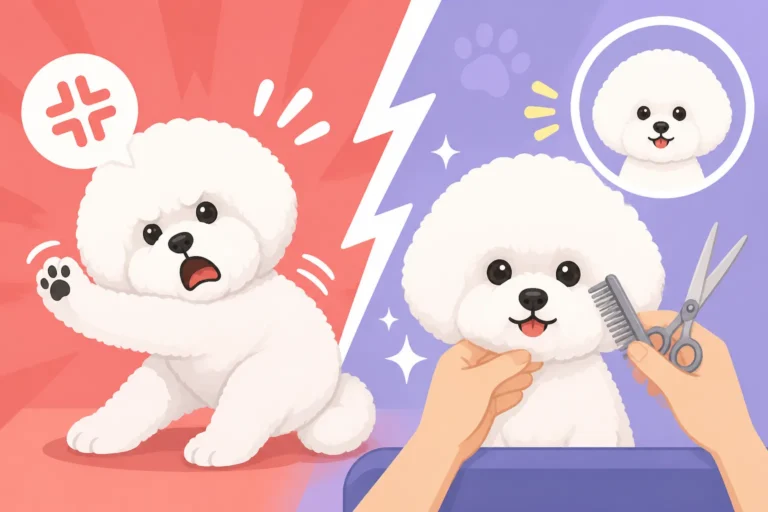
It's inevitable that your Bichon will, at some point, try to wriggle, sit down, lift a paw, or even nip at the scissors during a grooming session. These behaviors are usually signs of discomfort, boredom, or simply testing boundaries. The key is to respond calmly and consistently. If they wriggle, gently but firmly guide them back into a standing position without scolding. If they sit, use your verbal cue and a lure (as practiced) to encourage them to stand again. Reward the instant they comply.
For paw lifting or nipping, pause immediately. A sharp "no" or "leave it" command, followed by waiting for a moment of stillness, can be effective. If nipping is persistent, it might stem from pain or fear, in which case a vet check or professional groomer's assessment is needed. It's important to differentiate between playful nipping and actual aggression. If your Bichon is showing signs of genuine discomfort or fear, like growling or snapping, stop the session and reassess your approach. Sometimes, it could be something as simple as a matted area pulling on their skin, or perhaps their sensitive ears hurting if you're trying to pluck hair. Remember that Whether an Itchy Bichon Frise Bites When Handled is a real concern, so addressing underlying discomfort is paramount. Never punish your Bichon for these behaviors; instead, try to understand the root cause and reinforce the correct behavior with patience.
What if My Bichon Frise Just Won't Stand Still?
There might come a point where, despite your best efforts, your Bichon Frise simply refuses to cooperate on the grooming table. If you've consistently applied positive reinforcement and gradual desensitization and are still hitting a wall, it's time to consider a few things. First, rule out any underlying medical issues. Pain from arthritis, hip problems (like Legg Calve Perthes, which Bichons can get), or even a urinary tract infection can make standing uncomfortable. A visit to your veterinarian for a check-up can often shed light on hidden issues.
If health is not a concern, evaluate your technique. Are your sessions truly short enough? Are your rewards high-value enough? Is your energy calm and reassuring? Sometimes, owners inadvertently create tension, and dogs pick up on this. If you're feeling frustrated, your Bichon will too. At this stage, seeking help from a professional groomer or a certified positive reinforcement dog trainer can be invaluable. They can assess your specific situation, offer hands-on guidance, and perhaps demonstrate techniques you haven't considered. For some Bichons, especially those with severe anxiety or a history of negative experiences, a professional groomer might be able to manage the situation more effectively, even if it means shorter sessions or, in rare cases, exploring options like light sedation if absolutely necessary for their welfare and safety during extensive grooming. Knowing Whether a Bichon Frise Needs Sedation for Grooming is a difficult but sometimes necessary consideration for chronic non-compliance or extreme fear.
Maintaining and Advancing Grooming Patience
Consistent effort and a holistic approach will ensure that your Bichon Frise not only tolerates grooming but potentially even enjoys the attention. This isn't a one-time fix but an ongoing commitment.
Regular Grooming Schedule and Professional Support
To maintain that iconic powder puff look and keep your Bichon comfortable, a regular grooming schedule is non-negotiable. This means consistent home brushing and combing between professional appointments. Think of home grooming as maintenance and professional grooming as the full "reset." For most Bichons, a full professional groom, including scissoring, is needed every 4-6 weeks. This regular schedule helps prevent matting, keeps their coat healthy, and reinforces the standing behavior you've been working on.
Professional groomers are skilled at handling dogs on the table, and their consistent routine can often work wonders, even for dogs who are a bit squirmy at home. They have specialized equipment and experience to work efficiently and safely. By supplementing their work with your consistent home sessions, you create a seamless routine for your Bichon. This combination of diligent home care and professional expertise ensures your dog's coat remains healthy and beautiful, and they learn that grooming is a predictable and safe part of their life. It helps to understand How Often a Bichon Frise Needs a Full Groom to set realistic expectations for maintaining their coat.
The Long-Term Benefits of a Well-Groomed Bichon Frise
Teaching your Bichon Frise to stand patiently for scissoring isn't just about aesthetics; it's deeply tied to their overall well-being and health. A well-groomed Bichon is a comfortable Bichon. Regular grooming prevents painful mats that can lead to skin infections and irritation. It also allows you to regularly inspect their skin for lumps, bumps, parasites, or any changes that might indicate a health issue. Early detection of problems often leads to more successful treatment.
Beyond the physical benefits, the process of patient, positive grooming strengthens the bond between you and your dog. It builds trust and teaches them to be calm and cooperative during handling, which is invaluable for vet visits and other necessary examinations. Imagine the pride you'll feel when your Bichon stands calmly, looking pristine and happy after a scissoring session, a testament to your patience and their training. It transforms a potentially stressful chore into a quiet, focused interaction, ensuring your beloved Bichon Frise lives a healthier, happier, and indeed, prettier life.
Training Steps for Grooming Patience
Here’s a summary of key training steps, highlighting how they apply differently depending on whether you’re starting with a puppy or an adult Bichon.
| Training Step | Puppy Training (8-16 weeks) | Adult Training (6+ months) |
|---|---|---|
| Initial Touch & Handling | Start immediately with gentle, full-body handling; pair with treats & praise. | Re-introduce gentle touch with high-value treats; focus on areas they dislike most. Be very patient. |
| Tool Introduction | Let puppy sniff tools (closed scissors, brush, comb); gentle touches for seconds, then reward. | Re-introduce tools slowly, allowing sniffing. Associate sight/sound of tools with treats, no pressure. |
| Grooming Table Introduction | Place on table for seconds, praise, remove. Repeat frequently. Use lick mat or chew toy. | Place on table for short periods (15-30 seconds), always praise and reward. Ensure a non-slip surface. |
| Standing Endurance | Start with 30-second stand; gradually increase by 15-second increments over weeks. | Start with 15-second stand; assess tolerance and build up slowly. More patience may be required. |
| Lure & Reward | Lure into stand with treat above nose; reward immediately for all four paws on floor. | Use high-value treats to lure into position; reward consistent standing. Ignore or calmly re-direct movements. |
| Addressing Resistance | Gentle redirection for wriggles; never punish. End sessions before frustration. | Identify triggers (pain, fear, boredom); take frequent breaks. Seek professional help if biting or snapping. |
| Consistency | Daily short sessions (5-10 minutes total). | Daily short sessions (10-15 minutes total). Consistency is crucial for habit formation. |
| Professional Groomer Visits | Early, positive "puppy intro" visits (no full groom) for desensitization. | Regular appointments every 4-6 weeks to reinforce training and maintain coat. |
Disclaimer
This article is for general informational purposes only and does not constitute professional advice. Laws, prices and regulations vary by location and change over time. Consult a qualified professional for guidance on your specific situation.