Whether a Bichon Frise Barks at Every Passerby
It’s a scenario many Bichon Frise owners know all too well: that sudden burst of barking as your seemingly sweet, innocent cloud of fluff spots someone walking past the window. It can be incredibly frustrating, leaving you wondering if your precious companion is destined to bark at every single passerby for the rest of their days. This comprehensive guide aims to unravel the mysteries behind your Bichon Frise’s window barking, explore common triggers, and provide actionable strategies to help you manage and reduce this behavior, bringing more peace to your home.
Understanding Why Bichon Frises Bark at Passersby
It's easy to assume your Bichon is just being "yappy," but understanding the root causes of their barking at passersby is the first step toward finding a solution. There's often more going on than meets the eye, and it’s rarely just about being a nuisance. Their barks are a form of communication, and it's our job to figure out what they’re trying to tell us.
The Instinctual Guard Dog Within a Fluffy Exterior
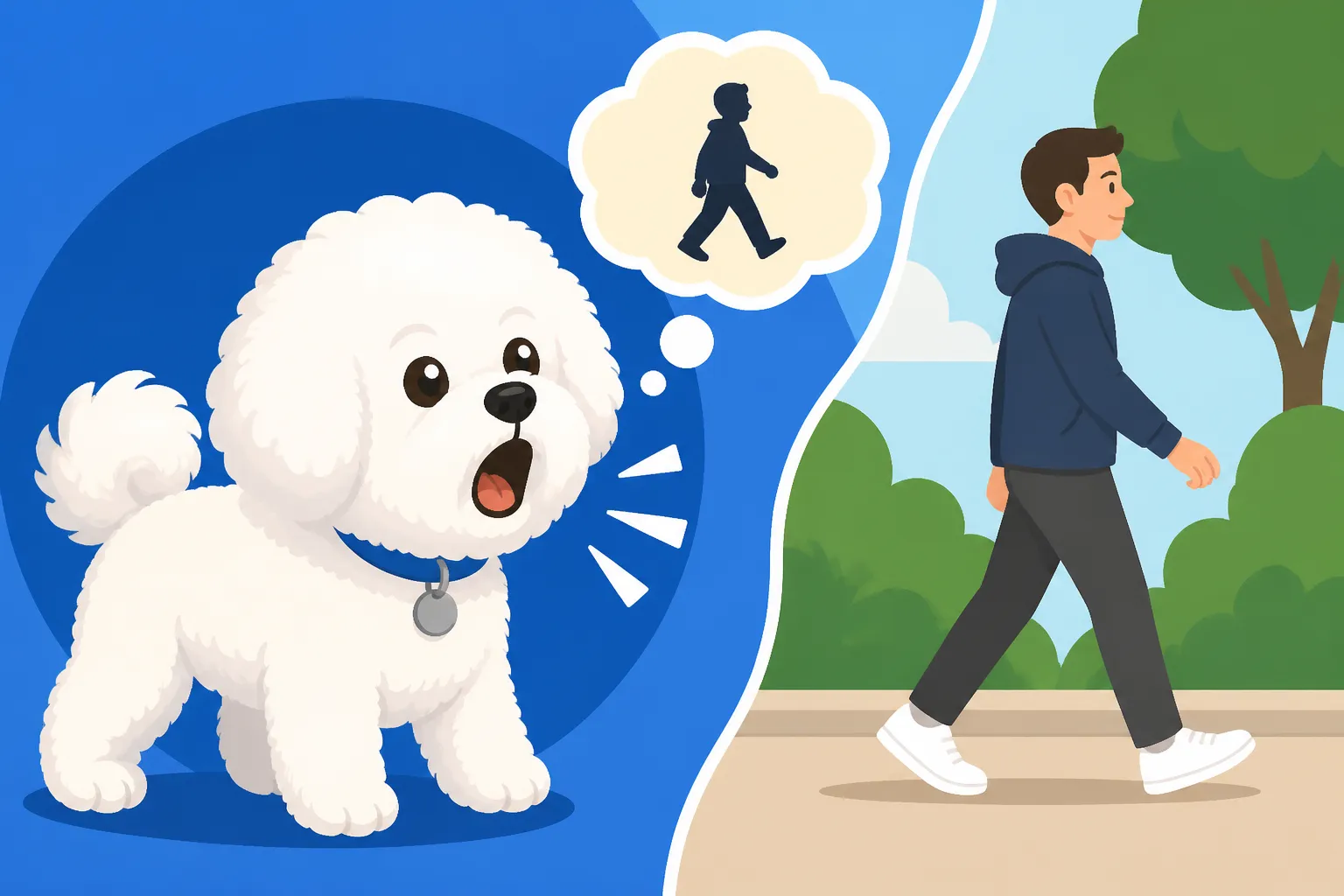
Despite their small size and charming, cuddly appearance, Bichon Frises actually retain a surprising amount of their ancestral instincts, including a strong tendency towards alert barking. They were once companion dogs for nobility, and a part of that role was to alert their human companions to anything unusual. To your Bichon, every passerby, every rustling leaf, every distant car horn, is a potential "intruder" in their perceived territory.
They see their home, and often the immediate outdoor area visible from their favorite lookout spot, as their personal domain. When someone walks past, especially if they make eye contact or pause, your Bichon's instinct kicks in. They're not necessarily being aggressive; they're fulfilling their perceived duty to warn you that "something is out there!" This alert can quickly escalate if the stimulus doesn't go away, or if they feel their warning isn't being acknowledged. It's a natural behavior, but one that can become incredibly disruptive in a modern home environment.
Boredom, Loneliness, and Attention-Seeking
Sometimes, barking at passersby isn't about territoriality at all, but a cry for engagement. Bichon Frises are intelligent and social dogs who thrive on interaction and mental stimulation. If they're left alone for long periods with nothing to do, or if their daily routine lacks sufficient enrichment, they can easily become bored. A passing pedestrian or a squirrel darting across the lawn then becomes the most exciting thing in their otherwise dull day.
Barking, in this context, might be a self-rewarding behavior. It provides an outlet for pent-up energy, and the visual stimulus offers a form of entertainment. They might even learn that their barking gets your attention – even if it's negative attention like you telling them to stop. For a dog that craves interaction, any attention is better than none. Consider if your Bichon has enough puzzle toys, regular playtime, or varied walks to keep their mind and body active. A tired Bichon is often a quieter Bichon.
Anxiety and Fear-Based Reactivity
For some Bichons, window barking is deeply rooted in anxiety or fear. This isn't just about being a little nervous; it's a genuine emotional response where they perceive passersby as a threat, even if that threat is completely imagined. A dog might be fearful due to a lack of early socialization, a negative past experience, or simply an anxious temperament. If your Bichon's barking is accompanied by other signs of stress, such as tail tucked, ears back, panting, or lip licking, it’s likely fear-based reactivity.
They might be trying to make the "scary thing" go away by barking, and when the passerby eventually moves on, your dog unconsciously learns that their barking was successful. This reinforces the behavior, making it more likely to happen again. Understanding if fear is the underlying emotion is crucial because the training approach for an anxious dog is very different from that of a bored or purely territorial one. In such cases, your Bichon isn't trying to be difficult; they’re genuinely distressed and need your help to feel safe. This is where a careful, patient approach to building confidence is paramount, rather than punishment.
Common Triggers and Scenarios for Window Barking
To effectively address your Bichon Frise's barking, it's incredibly helpful to become a detective and identify the specific triggers and scenarios that set them off. It's rarely every single thing, but rather a pattern of particular stimuli that consistently provoke a reaction. Once you know what they are reacting to, you can begin to proactively manage the environment and introduce training.
The Front Window Syndrome
Ah, the classic "front window syndrome." This is probably the most common scenario for Bichon Frise window barking. Your Bichon finds that perfect perch on the back of the sofa, a comfortable dog bed by the bay window, or even just sits at attention right at the glass, transforming into a tiny, fluffy sentinel. From this vantage point, they have a clear view of the world outside – the sidewalk, the street, the neighbor's cat, and, of course, every single person who dares to walk past their home.
The problem here is constant overstimulation. Imagine if you had to be "on alert" all day, watching for every movement, every shadow. It’s exhausting and can quickly lead to a state of heightened arousal. For many Bichons, the front window becomes their personal entertainment system, but one that encourages and reinforces reactive barking. They see something, they bark, the something moves on, and their behavior is inadvertently rewarded. This cycle can be tough to break because the reward is built into the disappearance of the perceived threat.
Sudden Sounds and Movement
It's not always just about visual cues; sudden sounds and unexpected movements can be equally potent triggers for your sensitive Bichon Frise. Think about how many sounds you tune out in your daily life – the distant ambulance, the chirping bird, the kids playing down the street. Your Bichon, with their keen hearing, picks up on far more. A sudden screech of tires, a loud conversation, a bicycle bell, or even just the unexpected crunch of gravel as someone turns the corner can trigger an immediate alert bark.
Similarly, rapid or unexpected movements, even if they're not directly in front of your window, can be a trigger. A flash of light reflecting off a car, a branch swaying violently in the wind, or a person suddenly appearing from behind a bush might elicit a startled reaction followed by a barrage of barks. These triggers can be harder to manage because they are less predictable than a steady stream of pedestrians. It’s important to note how your Bichon reacts to different types of sound and movement – are they only bothered by loud, sudden noises, or does any slight change in their environment set them off?
Other Dogs and Mail Carriers
Certain specific "characters" tend to be universal triggers for many barking Bichon Frises. The sight of another dog, whether on a leash with their owner or just passing by, often ignites a particularly fervent barking session. This could be due to territoriality, excitement, frustration at not being able to interact, or even fear. It's almost as if they're saying, "Hey! Who are you? Get out of my territory!" or "Look, Mom, a friend! Can I play?" The underlying emotion can vary, but the result is usually the same.
Then there's the notorious mail carrier, or delivery driver. This is a highly predictable and frequently occurring trigger, often seen as the ultimate intruder. The uniform, the routine, the approaching vehicle, the sound of the footsteps on the porch – it all combines into a powerful sequence that many dogs learn to associate with a perceived threat. Because these individuals consistently approach and then leave, the dog's barking behavior is constantly reinforced. They bark, the person goes away, therefore the barking "worked." This makes breaking the habit particularly challenging, as the dog truly believes they are successfully warding off an invader every single day. Whether a Bichon Frise Barks at Delivery Drivers is a common concern we hear about.
Strategies to Manage and Reduce Window Barking
Once you've pinpointed the triggers, it's time to put some strategies into action. The good news is that managing and reducing window barking is entirely possible with consistency, patience, and the right approach. It’s a multi-faceted endeavor that often requires a combination of environmental changes and dedicated training.
Environmental Management: Blocking Views and Sound
One of the most immediate and effective ways to reduce window barking is to manage your Bichon's environment. If they can't see the triggers, they can't react to them. It sounds simple, but it’s a game-changer for many owners. Start by identifying the windows your Bichon barks out of most often. For those windows, consider installing frosted window film, which allows light in but obscures the view, or simply keeping blinds or curtains closed during peak "passerby" times. Even placing a tall piece of furniture in front of a window can help break the visual access. Whether Blocking the Window Quiets a Bichon Frise is a method worth exploring for sure.
Beyond blocking the view, consider managing sound. A white noise machine, a fan, or even playing classical music or special "dog-calming" playlists can help muffle outdoor noises that might otherwise trigger your Bichon. This reduces the overall sensory input, making their environment feel less overwhelming and providing fewer cues for them to react to. You can find excellent window films and white noise machines on platforms like Amazon, offering a range of options to suit your home décor and budget. The goal isn't to make your home a sensory deprivation chamber, but to reduce the constant influx of triggers that keep your Bichon in an agitated state.
Redirection and Positive Reinforcement
Once you've managed the environment to some extent, the next step is to teach your Bichon Frise alternative, more desirable behaviors through redirection and positive reinforcement. This means catching them before they start barking (or at the very first sign of interest) and redirecting their attention to something else that earns them a reward. For example, if you see someone approaching, before your Bichon can react, call their name, ask for a "sit" or "stay," and reward them with a high-value treat or praise when they comply.
The key is timing. You want to reward the calm behavior, not the barking. If they bark and then you redirect, they might still associate the initial bark with getting a treat. Make sure the reward is something they absolutely love – a special toy, a tiny piece of cheese, or a favorite crunchy treat. The ultimate goal is for them to eventually learn that "passerby equals look at me, get a treat," rather than "passerby equals bark like crazy." This method helps to change their emotional association with the trigger from one of alarm or excitement to one of anticipation for a reward. Whether a Bichon Frise Works for Food or Praise is something you'll quickly discover here.
Desensitization and Counter-Conditioning
For Bichons whose barking is rooted in fear or anxiety, or for those with very strong reactive tendencies, desensitization and counter-conditioning are powerful, albeit more time-intensive, strategies. Desensitization means gradually exposing your dog to the trigger at a level where they don't react, slowly increasing the intensity. Counter-conditioning means changing their emotional response to that trigger from negative (fear, anxiety, territoriality) to positive (happiness, calm, anticipation of good things).
Here's how it might work: Start with your Bichon in a room where they can barely perceive a passerby, perhaps a distant sound or a blurry figure. As soon as you see or hear a trigger, give them a high-value treat. Repeat this over and over. The moment the trigger appears, a treat appears. The moment the trigger disappears, the treats stop. Gradually, over days or weeks, you can slowly reduce the distance or increase the visibility of the passerby, always ensuring your dog remains under their threshold (meaning they don't react). If they start to react, you've gone too fast, and you need to dial it back. The idea is to create a new, positive association: "Passerby means good things happen!" not "Passerby means I need to alert the troops!" This requires immense patience and keen observation of your dog's stress signals.
Training Tools and Resources to Help Your Bichon Frise
Beyond direct behavioral strategies, there are a number of tools and resources that can significantly aid your efforts in managing and reducing your Bichon Frise's window barking. These can range from practical items you use daily to structured guidance from professionals.
Harnesses and Leashes for Control
While harnesses and leashes might seem more relevant for walks, they actually play a subtle but important role in managing barking behaviors, especially if your Bichon is reactive on leash or if you need to quickly remove them from a triggering situation indoors. A comfortable, well-fitting harness, rather than just a collar, can provide better control and prevent injury to your dog's neck if they lunge or pull when seeing a passerby outside. For a small breed like a Bichon Frise, protecting their delicate trachea is always a concern.
Having a leash handy, even indoors, can be incredibly useful. If your Bichon is prone to running to the window and barking, having them drag a lightweight leash can allow you to gently guide them away from the window or into another room without having to physically grab them, which can sometimes escalate their arousal. This provides a non-confrontational way to manage their movement and interrupt the barking cycle. When choosing equipment, look for reputable brands known for quality and comfort, available at most pet supply stores or online retailers like Amazon. What a harness for a Bichon Frise costs is a consideration, but it's a worthwhile investment.
Interactive Toys and Mental Stimulation
As we discussed, boredom can be a huge factor in window barking. Investing in good quality interactive toys and incorporating more mental stimulation into your Bichon's day can work wonders. These aren't just about keeping them busy; they engage your dog's brain, fulfilling their natural need to 'work' and problem-solve, which can lead to a calmer, more content dog. Puzzle toys, where your Bichon has to figure out how to get treats, are fantastic for this. They turn mealtime or snack time into a stimulating activity.
Consider rotation of toys to keep things fresh. Don't put all the toys out at once; instead, offer a few, then swap them out every few days. Scent work games, where you hide treats around the house for your Bichon to find, are another excellent way to engage their powerful sense of smell and burn mental energy. Even simple training sessions, teaching new tricks or refining known cues, provide valuable mental exercise. A dog whose mind is regularly challenged is less likely to seek out "entertainment" by barking at every passerby.
Professional Help and Online Courses
Sometimes, despite your best efforts, your Bichon Frise's window barking can feel overwhelming, or it might stem from deeper issues like severe anxiety. This is when seeking professional help is a smart and responsible step. A certified professional dog trainer or a veterinary behaviorist can assess your dog's specific situation, identify underlying causes you might have missed, and develop a customized training plan. They can provide hands-on guidance, refine your techniques, and help you navigate complex behavioral challenges.
For those who prefer a flexible learning schedule or don't have access to local trainers, online dog training courses can be a fantastic resource. Companies like BAXTER & Bella offer comprehensive online programs and virtual coaching that can guide you through various training issues, including reactivity and excessive barking. These platforms often provide video tutorials, live Q&A sessions, and a supportive community, allowing you to work at your own pace from the comfort of your home. It's an investment, but the peace of mind and improved relationship with your Bichon are invaluable.
The Importance of Consistency and Patience
Addressing window barking in a Bichon Frise is not a quick fix; it's a marathon, not a sprint. The success of any training plan hinges on two critical elements: consistency and patience. Without these, even the best strategies will fall flat, leaving both you and your Bichon frustrated.
Building a Solid Routine
Dogs, especially Bichon Frises who thrive on predictability, find comfort and security in a consistent daily routine. A solid routine helps reduce anxiety and sets clear expectations, which can significantly impact barking behaviors. This means regular feeding times, consistent potty breaks, scheduled playtime, and predictable walks. When your Bichon knows what to expect, they are generally calmer and less likely to feel the need to constantly monitor their environment.
Unpredictability can lead to stress, and a stressed dog is more likely to bark excessively. For instance, if walk times are sporadic, your Bichon might become anxious about when they’ll get to relieve themselves or burn off energy, leading them to be more on edge. Incorporating mental stimulation at regular intervals also becomes part of this routine, giving them an appropriate outlet for their energy rather than resorting to window barking. A predictable schedule helps your Bichon feel safe and secure in their world, reducing the perceived need to be on high alert.
Avoiding Punishment: Why It Often Backfires
It's natural to feel frustrated when your Bichon Frise barks incessantly, and the urge to scold or punish them can be strong. However, using punishment (like yelling, spraying water, or using shock collars) for barking is almost always counterproductive and can even be harmful. For a dog that is barking out of fear or anxiety, punishment will only increase their fear and anxiety, making the problem worse. They might suppress the barking in your presence, but the underlying emotion remains, often resurfacing as different, more subtle anxiety behaviors or even redirected aggression.
Even for dogs barking out of boredom or attention-seeking, punishment often teaches them to fear you or makes them more cunning about when they bark (e.g., only when you're not around). Instead, focus on positive reinforcement – rewarding the behaviors you want to see. If your Bichon is quietly observing a passerby, that's the moment to reward them. This teaches them that calm behavior is what earns them good things, rather than creating fear around a natural canine communication. Your relationship with your Bichon is built on trust, and punishment erodes that trust.
Long-Term Commitment: Understanding That It's a Journey
Managing window barking is a long-term commitment. There will be good days and bad days, breakthroughs and setbacks. It's important to prepare yourself for a journey, not a sprint. Real behavioral change takes time, especially if the barking has been a deeply ingrained habit or is linked to strong emotions like fear or territoriality. Don't expect instant results; celebrate the small victories, like a shorter barking session or a moment of calm observation instead of an immediate outburst.
Consistency isn't just about training every day; it's about everyone in the household being on the same page with the training methods. If one person uses redirection while another yells, your Bichon will be confused and progress will stall. Be patient with your Bichon, and more importantly, be patient with yourself. There will be times you feel discouraged, but keep reminding yourself that you are working towards a calmer, happier life for both of you. Like any aspect of raising a well-adjusted dog, it's about dedication and understanding that your Bichon is always learning, and so are you.
Distinguishing Between Normal Alertness and Problem Barking
It's important for any Bichon Frise owner to understand that some barking is perfectly normal and even desirable. Dogs bark to communicate, and a complete lack of barking might even be a cause for concern in certain situations. The challenge lies in distinguishing between a natural alert and barking that has become excessive, stress-inducing, or problematic.
What's a Healthy Level of Alertness?
A healthy level of alertness in your Bichon Frise means they might give a few barks to let you know a visitor is at the door, or perhaps a couple of barks when a squirrel suddenly appears on the fence line. This is their way of acknowledging changes in their environment and communicating them to you. It's a natural, instinctual behavior that signals they are aware of their surroundings and fulfilling their role as a tiny, fluffy guardian. Think of it as their doorbell or their alarm system, and often, once you acknowledge their alert, they will settle.
This type of barking is typically short-lived, appropriate to the stimulus, and doesn't escalate into a frenzied, prolonged session. Your Bichon might bark, then look to you for reassurance or guidance, and then calm down. It's not accompanied by signs of extreme stress or frustration, and it doesn't disrupt the household or bother the neighbors on a regular basis. In essence, it's a proportionate response that fits the situation, reflecting a dog that is engaged with its environment but not overwhelmed by it. Whether a Bichon Frise Is a Yappy Breed is a common misconception, but they can be trained to have a healthy level of alertness.
When Barking Becomes Excessive or Stressful
Problem barking, on the other hand, is when the barking becomes excessive, disproportionate to the stimulus, difficult to interrupt, or clearly indicative of stress or anxiety. This is when your Bichon Frise barks at every single passerby, often for prolonged periods, even when the person has long gone. They might bark at shadows, leaves, or even nothing at all, appearing to be in a constant state of arousal. This isn't healthy for them or for you.
Signs that barking is becoming problematic include:
- Duration: Barking continues for several minutes after the trigger is gone.
- Intensity: The barks are frantic, high-pitched, or aggressive-sounding.
- Frequency: Barking occurs multiple times an hour throughout the day.
- Difficulty to interrupt: Your Bichon ignores your commands or attempts to distract them.
- Associated stress behaviors: Panting, pacing, drooling, lip-licking, whale eye, or compulsive licking.
- Impact on quality of life: You can't open your blinds, or your neighbors complain.
- Escalation: The barking leads to lunging at the window, growling, or snapping.
If you recognize these patterns, it's a clear signal that the barking has moved beyond simple alertness and requires dedicated intervention.
| Barking Type | Characteristics | Emotional State | Management Approach |
|---|---|---|---|
| Normal Alertness | Few barks, short duration, appropriate to trigger | Aware, engaged, communicates | Acknowledge, thank them, redirect with praise |
| Problem Barking | Prolonged, frantic, frequent, hard to interrupt | Anxious, fearful, frustrated | Environmental management, positive reinforcement, desensitization, professional help |
Addressing Underlying Health Issues
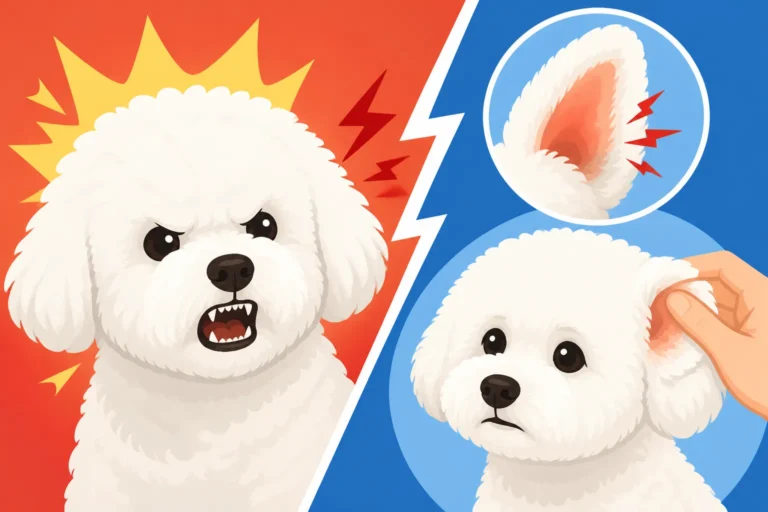
Before embarking on an intensive behavioral modification plan for excessive barking, it's always a good idea to rule out any underlying health issues. Sometimes, a medical condition can cause or exacerbate barking. For instance, pain, discomfort, vision problems, hearing loss, or even cognitive dysfunction in older Bichons can lead to increased barking as a sign of distress, confusion, or an inability to process environmental cues normally.
A thorough veterinary check-up should be your first step, especially if the barking is a new behavior or has suddenly worsened. Your vet can rule out conditions like ear infections, dental pain, arthritis, or even more serious neurological issues. For older Bichons, cognitive decline can manifest as aimless barking or increased vocalization, especially at night. Once any medical causes are addressed, you can then proceed with behavioral training with confidence, knowing that your Bichon isn't suffering physically. This holistic approach ensures you're treating the whole dog and not just the symptom, leading to a much more effective and compassionate solution. Caring for a Bichon Frise Past Eleven and The Signs a Bichon Frise Is Getting Old discuss other health considerations for senior Bichons that might be relevant here.
Disclaimer
This article is for general informational purposes only and does not constitute professional advice. Laws, prices and regulations vary by location and change over time. Consult a qualified professional for guidance on your specific situation.