Whether Punishing Accidents Sets a Bichon Frise Back
It's incredibly frustrating, isn't it? You come home, eager to greet your adorable Bichon Frise, only to find a puddle or a mess right there on your pristine carpet. In that moment of exasperation, the natural instinct might be to scold, to point, or even to rub their nose in it. But trust me, as someone who's navigated the joyful, albeit sometimes challenging, world of Bichon ownership for years, punishing your Bichon Frise for housetraining accidents isn't just ineffective—it can actually set their progress back significantly. This guide will help you understand why this happens and, more importantly, what truly works to build a reliably housetrained companion.
The Counterproductive Nature of Punishment for Accidents
When a Bichon Frise has an accident indoors, it's almost never out of spite or a deliberate act of disobedience. Their little brains don't work that way. Instead, an indoor accident is typically a communication breakdown, an unfulfilled need, or a sign that something else is going on. When we resort to punishment, we introduce fear and confusion into the equation, which only complicates matters.
Why Dogs Don't Understand Post-Facto Punishment
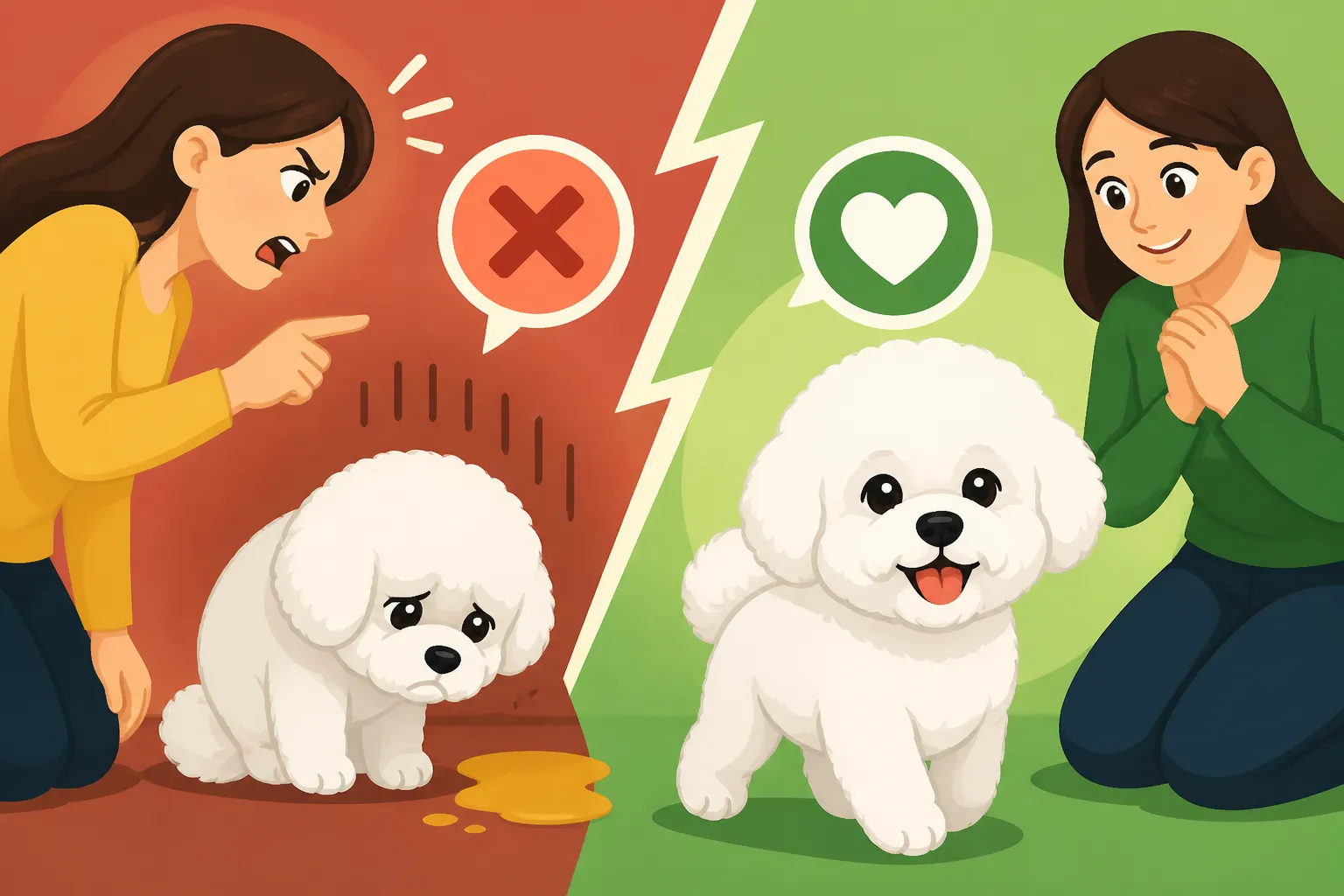
Imagine you forget to take your Bichon Frise out, or you miss their subtle cues that they need to go. They find a discreet spot, do their business, and minutes or even hours later, you discover it. You scold them, perhaps point to the mess, and they cower. It looks like guilt, right? It feels like they know they did something wrong. But here's the hard truth: they don't. What they understand is that you are angry when there's a puddle, and they associate your anger with your presence when the puddle is discovered, not with the act of urinating or defecating itself.
This can lead to a dog who fears you when you discover an accident, or, even worse, a dog who learns to hide their bodily functions from you. Instead of going to the door, they might sneak behind the sofa, under a table, or into another room to eliminate, thinking that by doing so, they avoid your wrath. This isn't housetraining; it's teaching them to be covert, making it even harder to catch them in the act and direct them to the correct spot. It breaks down trust and makes the entire process more stressful for both of you.
Creating Fear and Anxiety Around Elimination
A common outcome of punishing accidents is that your Bichon Frise develops anxiety around the very act of eliminating. If they're regularly scolded for accidents, they might become hesitant to go potty even when they're outside where they're supposed to. They might hold it in for longer periods, which can lead to discomfort, more urgent accidents later, or even potential health issues like urinary tract infections. It's a vicious cycle where the punishment designed to fix the problem actually exacerbates it by making the dog fearful of the natural process itself.
Think about it from their perspective: "Every time I pee, my human gets mad, even if it was a while ago. Maybe peeing is just bad?" This isn't conducive to building confidence or a clear understanding of where and when to eliminate. The goal is to make going outside a positive, rewarding experience, not one fraught with fear of getting it wrong.
Understanding Common Housetraining Challenges in Bichon Frises
Before we dive into solutions, it's vital to acknowledge that housetraining a Bichon Frise can sometimes feel like an uphill battle. They are, for many owners, notoriously hard to housetrain compared to some other breeds. Understanding why can help us approach the problem with more empathy and patience.
Small Bladders and Frequent Urination Needs
One of the primary reasons Why a Bichon Frise Is Famously Hard to Housetrain is their size. Being small dogs, Bichon Frises have small bladders. This means they physically cannot hold their urine for as long as a larger breed. A tiny puppy, especially, needs to go out very, very frequently. You might feel like you're taking them out every 15-30 minutes when they're awake, and that's often exactly what's required in those early weeks.
Missing these crucial windows of opportunity almost guarantees an accident. It's not defiance; it's simply biology. As they grow, their bladder capacity increases, but they will still need more frequent potty breaks than many medium or large dogs. Overlooking this fundamental aspect and expecting them to hold it for hours on end is setting both of you up for failure and frustration. This also means that even a fully housetrained adult Bichon might struggle if your routine suddenly changes or if they're left alone for unusually long stretches.
Medical Issues Mimicking Training Problems
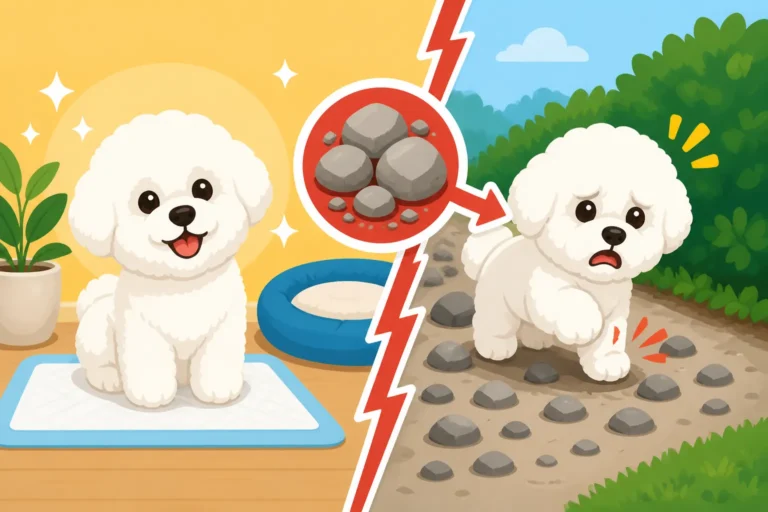
Sometimes, what looks like a training problem is actually a medical one. Bichon Frises are unfortunately predisposed to certain health conditions that can directly impact housetraining. The First Signs a Bichon Frise Has Stones can often include increased frequency of urination, straining, or having accidents indoors when they were previously reliable. Urinary tract infections (UTIs) are also common and can cause similar symptoms.
If your previously housetrained Bichon Frise suddenly starts having accidents, especially if there are other signs like blood in the urine, excessive licking, or discomfort, a trip to the vet is absolutely essential. Don't assume it's a behavioral issue and resort to punishment. A medical problem needs medical attention, not discipline. Ignoring it can lead to worsening health conditions and prolonged suffering for your dog. Whether a Urinary Infection Undoes a Bichon Frise's Training is a crucial point to remember, as these infections make it physically impossible for them to hold it.
Stress, Anxiety, and Marking Behaviors
Beyond pure housetraining, some accidents can stem from stress or anxiety. A new environment, changes in routine, separation anxiety, or even fear of loud noises can trigger indoor elimination. In these cases, punishment only adds to the stress, making the underlying problem worse.
Male Bichon Frises, even neutered ones, can also sometimes engage in urine marking. This is distinct from housetraining accidents; it's often small amounts of urine sprayed on vertical surfaces. While frustrating, it's a territorial or anxiety-driven behavior, not a lack of understanding about where to potty. Punishment for marking is just as ineffective as for other accidents and won't address the root cause. Instead, identifying and mitigating the stressor, combined with meticulous cleaning and potentially professional behavioral guidance, is key.
Effective, Positive Housetraining Strategies
So, if punishment is out, what does work? The answer lies in consistency, positive reinforcement, and understanding your dog's needs. It's about teaching them where to go, not punishing them for going in the wrong place.
The Power of Positive Reinforcement
Positive reinforcement is the cornerstone of effective housetraining. It means rewarding your Bichon Frise lavishly every single time they eliminate in the correct spot. This creates a strong, positive association with going potty outside.
How to implement it:
- Frequent Trips: Take your Bichon Frise out frequently, especially first thing in the morning, after naps, after playtime, and before bed. For puppies, this could be every 30-60 minutes when awake. Whether a Bichon Frise Should Be Taken Out Hourly is a good rule of thumb for many young dogs.
- Go with them: Don't just open the door and let them out. Go outside with them on a leash, even if you have a fenced yard. This ensures you can witness and reward the act.
- Party Time! The instant your Bichon finishes peeing or pooping outside, praise them enthusiastically ("Good potty! Good dog!") and give them a high-value treat they adore. Make it a celebration! This immediate reward is critical for them to connect the action (eliminating outside) with the positive outcome (praise and treat).
- No Punishment for Mistakes: If you catch them in the act of having an accident indoors, interrupt them calmly (a gentle "ah-ah!" or clap, without scaring them), immediately scoop them up, and rush them outside to their designated potty spot. If they finish outside, reward them like crazy. If they don't, bring them back in and try again in 5-10 minutes. If you find an accident after the fact, simply clean it up without any reaction.
Establishing a Predictable Routine
Bichon Frises thrive on routine, and a consistent schedule is your secret weapon for housetraining. Dogs are creatures of habit, and knowing when to expect potty breaks helps their bodies regulate and their minds understand expectations.
Key elements of a routine:
- Waking Up & Bedtime: Potty immediately upon waking and as the last thing before bed.
- Meal Times: Potty about 10-20 minutes after eating and drinking. Digestion stimulates the urge to go.
- Play & Naps: Potty after any extended play session and immediately after waking from a nap.
- Scheduled Breaks: Even if none of the above triggers apply, schedule regular potty breaks throughout the day. This is where The Toilet Routine That Finally Works on a Bichon Frise truly comes into play.
A simple visual schedule can be helpful for the whole family to follow:
| Time Slot | Activity | Notes |
|---|---|---|
| 7:00 AM | Wake & Potty | Immediate outdoor trip |
| 7:15 AM | Breakfast | Followed by a quick potty break |
| 8:00 AM – 12:00 PM | Play/Nap/Potty Every Hour | More frequent for puppies, after waking/play |
| 12:00 PM | Lunch & Potty | If applicable, then another potty break |
| 1:00 PM – 5:00 PM | Play/Nap/Potty Every Hour | Continue hourly or as needed |
| 5:30 PM | Dinner & Potty | Followed by a potty break |
| 8:00 PM | Evening Potty | Last chance before bedtime |
| 10:00 PM | Final Potty Before Bed | Even if they don't seem to need it |
Remember, consistency is key. Every time you deviate, you confuse your Bichon Frise.
Using Management Tools Wisely
Management tools like crates, exercise pens, and indoor potty solutions can be incredibly helpful when used correctly.
Crate Training
A crate, when introduced positively, becomes your Bichon Frise's den. Dogs are naturally clean animals and generally won't soil their sleeping area. This instinct makes crates powerful housetraining aids. Whether Crate Training Works on a Bichon Frise is usually a resounding yes, provided it's done humanely.
- Size Matters: The crate should be just big enough for your Bichon Frise to stand up, turn around, and lie down comfortably. If it's too large, they might use one end as a potty area.
- Positive Association: Never use the crate as punishment. Make it a happy place with soft bedding, safe chew toys, and treats. Feed meals in the crate.
- Time Limits: Remember their small bladders. A puppy cannot stay in a crate for hours. Over-crating can force them to soil their den, breaking down their natural instinct and making future housetraining harder. For adult dogs, typically no more than 4-6 hours, and for puppies, much less. How Long a Bichon Frise Puppy Holds It Overnight is usually a lot longer than they can hold it during the day, due to their metabolism slowing.
Exercise Pens and Indoor Potty Options
For times when you can't actively supervise your Bichon Frise, an exercise pen (or "ex-pen") can be a lifesaver. This confined space can include a water bowl, bed, and an indoor potty solution like a grass patch or pee pads. This setup gives your Bichon a designated spot to eliminate if you're delayed, preventing accidents on your carpet. While some trainers advocate against pee pads, they can be a useful bridge for puppies or for owners in high-rise apartments. Whether a Bichon Frise Learns to Use a Pad depends on your consistency and how you transition them to outdoor-only later.
- BAXTER & Bella offers comprehensive online puppy training programs that often include guidance on using crates and pens effectively for housetraining. Their structured approach can be incredibly beneficial for new owners trying to navigate these early stages.
- For indoor grass patches or high-quality pee pads, you can find a wide variety of options on Amazon, making it easy to set up an interim solution in your exercise pen.
Cleaning Accidents Thoroughly
This might sound simple, but it's crucial. Dogs are drawn to scents. If even a faint odor of urine or feces remains indoors, it acts as a beacon, telling your Bichon Frise, "Hey, this is a good place to go!" Regular household cleaners might mask the smell for you, but your dog's sensitive nose will still detect it.
- Enzyme Cleaners: You need an enzymatic cleaner designed specifically for pet odors. These cleaners break down the uric acid crystals in urine, completely eliminating the scent rather than just covering it up. Brands like Nature's Miracle or Rocco & Roxie Supply Co. (available on Amazon) are excellent choices. Whether Enzyme Cleaner Matters for a Bichon Frise is a definitive yes – it's non-negotiable for effective housetraining.
- Immediate Action: Clean up accidents as soon as you find them. Saturate the area with the enzyme cleaner, let it sit for the recommended time (usually 10-15 minutes), and then blot it up. Avoid scrubbing, as this can spread the odor.
When Accidents Signal a Deeper Issue
Sometimes, despite your best efforts with positive reinforcement and a solid routine, the accidents persist or suddenly reappear. As mentioned earlier, this is when you absolutely must rule out medical causes.
Recognizing Medical Red Flags
Don't assume your Bichon Frise is being stubborn or difficult. If housetraining suddenly goes awry, especially in an adult dog, it's a medical emergency that warrants immediate veterinary attention. Here are some signs to look for that suggest a medical rather than a behavioral problem:
- Increased Frequency or Urgency: Your Bichon Frise needs to go out much more often than usual, or they suddenly can't hold it for even short periods.
- Straining to Urinate: They squat repeatedly with little or no urine coming out. Whether Frequent Squatting Means Stones Not Training is a critical distinction; straining is a huge red flag for medical issues.
- Blood in Urine: Any reddish or pinkish tinge to their urine.
- Excessive Licking: Licking their genital area more than usual.
- Pain or Discomfort: Whimpering, restlessness, or changes in posture when attempting to urinate.
- Drinking More Water: Polydipsia (increased thirst) can be a sign of diabetes or kidney issues, which in turn leads to increased urination.
Bichon Frises are prone to Why a Bichon Frise Forms Stones Twenty Times as Often, specifically calcium oxalate bladder stones. These stones can cause irritation, infection, and even blockages in the urinary tract, all of which manifest as housetraining problems. What a Calcium Oxalate Stone Is in a Bichon Frise describes a painful condition that needs urgent care. A blocked male Bichon Frise is a dire emergency.
Seeking Professional Veterinary Guidance
If you observe any of the medical red flags, or if your housetraining efforts just aren't yielding results, please consult your veterinarian without delay. They can perform a thorough physical exam, urine tests (urinalysis, culture), and possibly imaging like X-rays or ultrasound to check for bladder stones or other issues. Early diagnosis and treatment are crucial for your Bichon Frise's health and comfort.
Remember, your vet is your partner in your dog's health. Don't be embarrassed to discuss housetraining issues, as they are often the first sign of an underlying medical condition. It's far better to rule out health problems first before adjusting your training approach.
Final Thoughts on Patience and Persistence
Housetraining a Bichon Frise, or any dog, requires an abundance of patience, consistency, and understanding. It's a process, not an event, and there will be setbacks. When those frustrating moments happen, take a deep breath, remember that your Bichon isn't trying to upset you, and recommit to your positive reinforcement strategy.
Punishment only teaches fear, not understanding. It erodes the bond you share with your furry companion and can complicate behavioral issues. By focusing on rewarding desired behaviors, creating a predictable routine, utilizing appropriate management tools, and being vigilant about your Bichon's health, you'll be well on your way to a reliably housetrained and happy pup. It takes effort, but the joy of a clean home and a confident dog is absolutely worth it.
Disclaimer
This article is for general informational purposes only and does not constitute professional advice. Laws, prices and regulations vary by location and change over time. Consult a qualified professional for guidance on your specific situation.