Whether the Hair Under a Bichon Frise’s Eyes Should Be Trimmed
Trimming hair under a Bichon Frise eye prevents moisture buildup, bacteria growth, porphyrin staining, and painful corneal ulcers.
The daily stuff, done right.
Feeding amounts by life stage, coat and skin routines, dental and nail care, exercise needs, and what changes as they age.
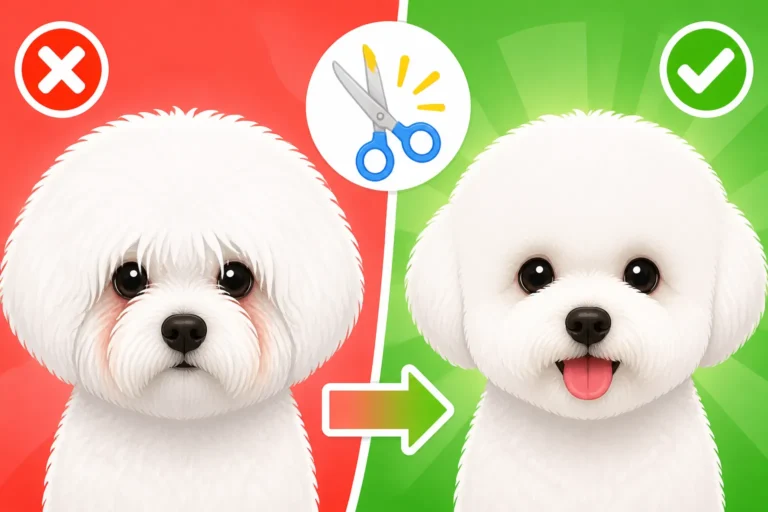
Trimming hair under a Bichon Frise eye prevents moisture buildup, bacteria growth, porphyrin staining, and painful corneal ulcers.

Daily wiping removes surface dirt from a Bichon Frise coat and prevents stubborn stains on paws, muzzles, and hind legs.

Antibiotic use for Bichon Frise tear stains requires careful evaluation due to bacterial and yeast involvement in excessive tearing.

Bichon Frise tear stain supplements safety analysis explains porphyrin pigments, overflow, and yeast causing reddish-brown fur discoloration.

Porphyrins and moisture cause reddish-brown stains on a Bichon Frise while yeast overgrowth acts as a secondary problem.
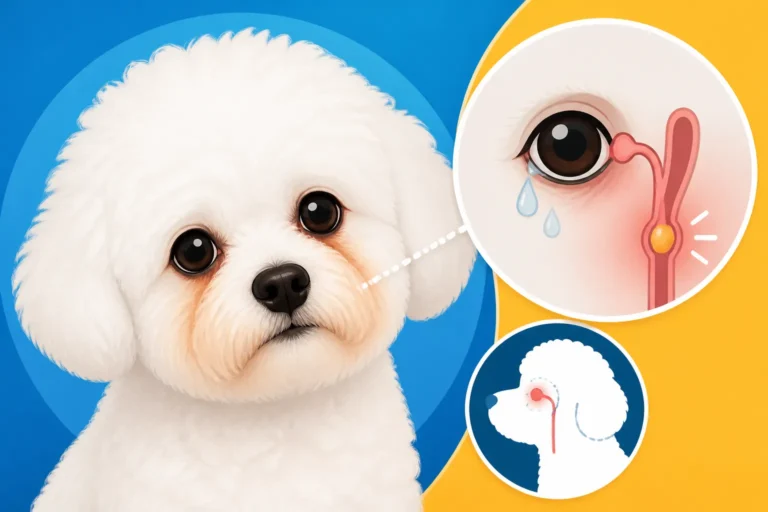
Blocked tear ducts, narrow nasolacrimal ducts, and porphyrins explain reddish brown tear stains on Bichon Frise white fur.

Bichon Frise tear stains result from blocked tear drainage ducts and moisture breeding yeast, causing reddish-brown fur discoloration.
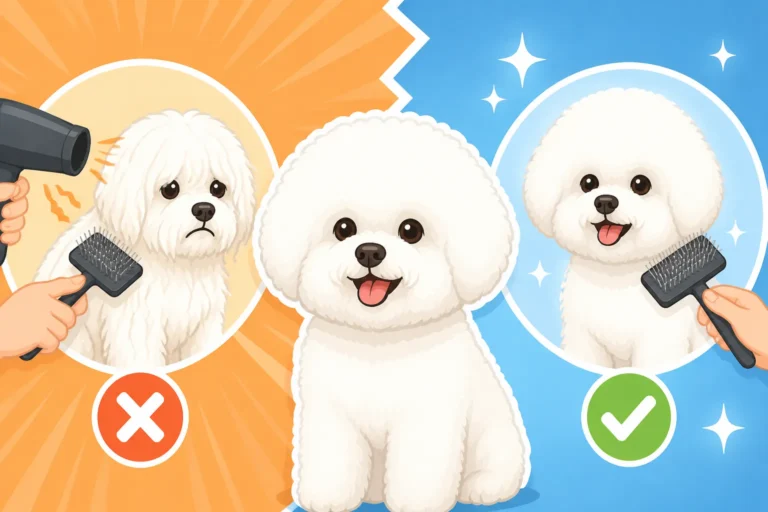
Brushing a Bichon Frise double coat while drying prevents mats, separates dense curly hair, and creates the powder puff look.

Drying a Bichon Frise takes significant time due to a dense double coat trapping moisture within curls, risking painful mats and skin infections.

Whether air drying ruins a Bichon Frise’s look, since a soft undercoat and curly outer coat need careful drying to keep the powder puff outline and avoid mats.