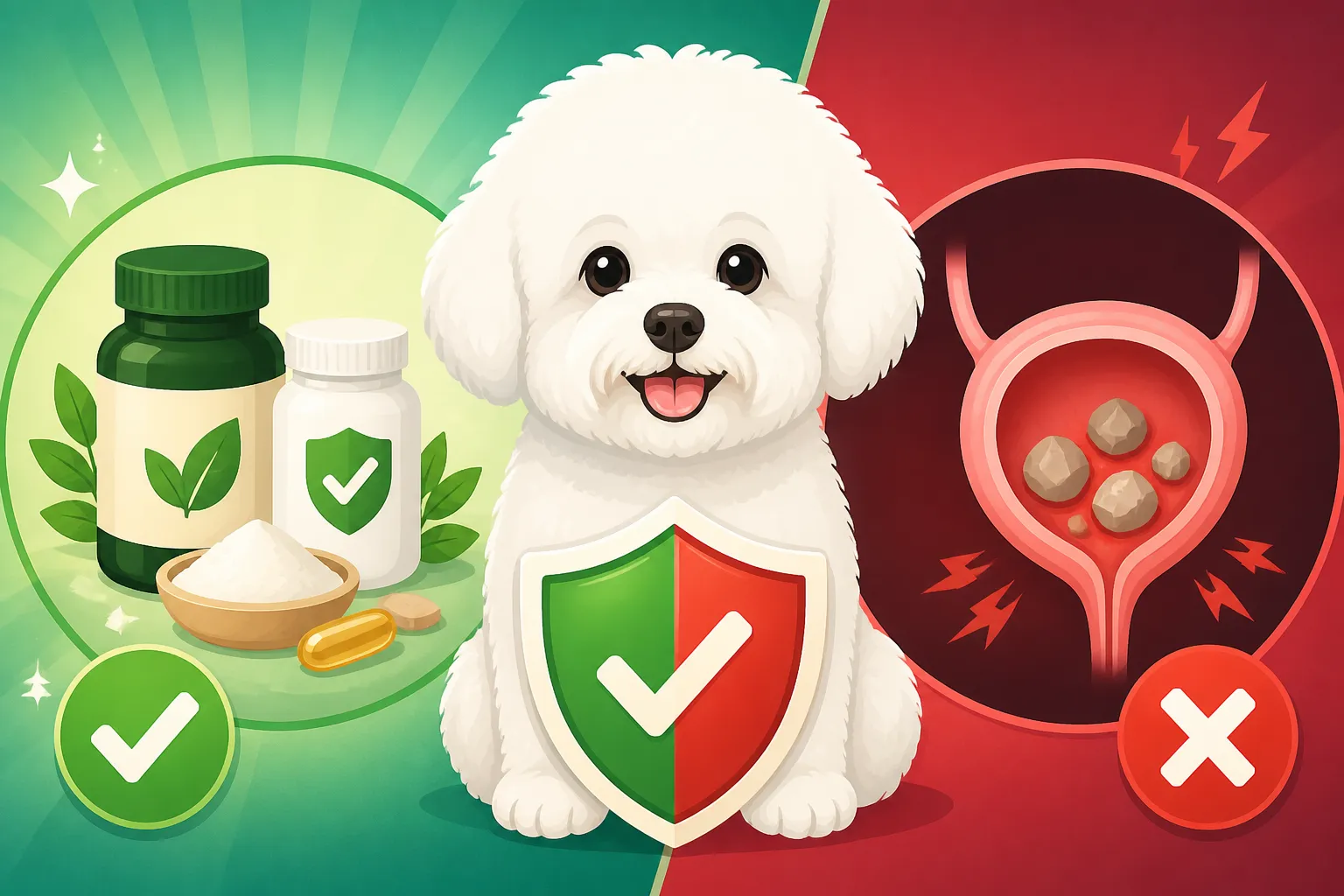
Whether Supplements Prevent a Bichon Frise’s Stones
Living with a Bichon Frise, you quickly learn about their joyous spirit and their luxurious, cloud-like coat. But many of us also become intimately familiar with the dread of bladder stones, a painful and unfortunately common issue for this wonderful breed. The natural instinct is to explore every possible avenue to protect our furry family members, and often, that leads us to the vast and sometimes confusing world of dietary supplements, hoping they might offer a preventative shield. It's truly frustrating to sift through countless claims and anecdotal evidence, wondering if any of these products actually make a real difference. This guide is here to shed light on whether supplements truly hold the key to preventing bladder stones in your beloved Bichon Frise.
The Root of the Problem: Why Bichons Are Prone to Bladder Stones
It’s heartbreaking to learn your sweet Bichon Frise has bladder stones, especially when you feel like you’ve done everything right. But the truth is, this breed has a particular genetic predisposition that makes them more susceptible than many other dogs. Understanding this underlying vulnerability is the first step toward effective prevention, and it helps clarify why supplements aren't always the magic bullet we hope for.
The Genetic Link to Calcium Oxalate
For Bichons, the most prevalent type of bladder stone is the calcium oxalate stone. It's a frustrating reality that this isn't usually due to infection, but rather to metabolic factors and genetics. Think of it this way: some dogs are just built differently internally, creating a urinary environment that's more conducive to these crystals forming and clumping together into stones. It's like having a specific genetic quirk that makes your body produce more of the building blocks for these stones, or makes it harder to flush them away. This genetic predisposition is a significant reason Why a Bichon Frise Forms Stones Twenty Times as Often compared to other breeds.
This isn't to say it's an inevitability for every Bichon, but the risk is undeniably higher. We often wonder, "Is it something I fed them? Did I not walk them enough?" While these factors can play a secondary role, the primary driver for many Bichons forming What a Calcium Oxalate Stone Is in a Bichon Frise is often simply their breed. The urinary tract becomes a prime location for these tiny crystals to aggregate when the urine is too concentrated or contains high levels of calcium and oxalate, which can be a direct result of their unique physiology.
Lifestyle Factors That Influence Stone Formation
While genetics load the gun, lifestyle factors can certainly pull the trigger. Even with a genetic predisposition, things like diet, hydration, and even how often your Bichon gets to relieve themselves can influence stone formation. It's about creating the least hospitable environment possible for those stubborn crystals.
For instance, a diet high in oxalate-rich foods or excessive protein can contribute to the problem, as can inconsistent water intake leading to concentrated urine. If your Bichon isn't drinking enough, their urine becomes a more fertile ground for crystals to form and grow. Similarly, if they hold their urine for long periods, it gives crystals more time to settle and clump. It's about balancing those inherited tendencies with practical, daily habits that promote urinary health. This balance is crucial because once a Bichon has had stones, the focus shifts entirely to prevention, often involving lifelong changes.
Popular Supplements and Their Alleged Benefits
It's completely natural to seek out "helpers" in the battle against bladder stones, especially when surgery is the alternative. The market is flooded with supplements, each promising a unique pathway to improved urinary health. Let's dig into some of the most commonly discussed ones and what owners hope they'll achieve.
Cranberry, Ascorbic Acid, and Urine pH
Cranberry is perhaps the most well-known "natural" remedy for urinary tract issues in both humans and pets. The theory is that compounds in cranberry, specifically proanthocyanidins (PACs), prevent bacteria from adhering to the bladder wall, thus reducing the risk of urinary tract infections (UTIs). Since UTIs can sometimes precede or exacerbate certain types of stones (though typically not calcium oxalate, which is the main concern for Bichons), many owners wonder if cranberry can indirectly help.
Ascorbic acid, or Vitamin C, is another popular choice, often given with the intention of acidifying the urine. The idea here is that certain types of stones (like struvite) form in alkaline urine, so making the urine more acidic could prevent them. However, for calcium oxalate stones, which thrive in acidic or neutral urine, increasing urine acidity with Vitamin C can actually be counterproductive and even dangerous. Moreover, excess Vitamin C is metabolized into oxalate, which can directly increase the risk of calcium oxalate stone formation. This is a critical point that often gets overlooked, and it highlights why Whether Vitamin C Is Bad for a Bichon Frise is a question every Bichon owner should ask their vet.
Potassium Citrate and Its Role
Potassium citrate is one of the few supplements that actually does have a recognized role in preventing calcium oxalate stones, but it's crucial to understand how it works and under what circumstances. Unlike cranberry or Vitamin C, potassium citrate works by alkalinizing the urine (making it less acidic) and increasing citrate levels. Citrate acts as a natural inhibitor of calcium oxalate crystal formation by binding to calcium and preventing it from forming stones.
This isn't a "give it freely" supplement, however. Its use is typically prescribed by a veterinarian when a Bichon has already formed calcium oxalate stones, and the goal is to maintain a specific urine pH range (usually between 7.0 and 8.0) to prevent recurrence. The dosage must be carefully monitored, often requiring regular urine pH testing. Over-alkalinizing the urine can lead to other issues, such as increasing the risk of struvite stones or bacterial infections. Therefore, it's not a generic preventative, but a targeted treatment administered under veterinary guidance.
Novel and Herbal Approaches
Beyond the more common supplements, there's a vast array of novel and herbal remedies marketed for urinary health. These might include various plant extracts, proprietary blends, or homeopathic preparations. The claims often focus on "detoxification," "bladder support," or "anti-inflammatory" properties. For example, some products might contain marshmallow root, dandelion, or corn silk, often lauded for their diuretic or soothing effects on the urinary tract.
While some of these ingredients might have anecdotal evidence for general urinary comfort, rigorous scientific studies proving their efficacy in preventing specific types of bladder stones in Bichon Frises (or any dog breed) are usually lacking. The biggest concern with these less-regulated products is consistency, dosage accuracy, and potential interactions with other medications or existing health conditions. Without clear scientific backing, introducing unknown compounds into your Bichon's diet with the hope of preventing stones can be a risky gamble, potentially doing more harm than good or simply delaying effective, proven strategies.
The Hard Truth: What Science Says About Supplement Efficacy
It's tempting to believe in a quick fix or a natural solution, especially when facing something as daunting as recurring bladder stones. However, when it comes to preventing stones in Bichon Frises, the scientific community is pretty clear: most over-the-counter supplements don't have the robust evidence needed to support their use as primary preventative measures. In fact, some can even be detrimental.
Limited Evidence, Significant Risks
The unfortunate reality is that there is very little peer-reviewed scientific research specifically demonstrating that common dietary supplements, like cranberry or generic urinary support blends, can prevent the formation of calcium oxalate bladder stones in Bichon Frises. Most studies on cranberry, for instance, focus on preventing bacterial adhesion and recurrent UTIs, which is a different issue than the metabolic formation of calcium oxalate stones. For this specific breed and stone type, the evidence simply isn't there.
Furthermore, relying on unproven supplements can delay the implementation of truly effective preventative strategies. Imagine spending months, or even years, giving your Bichon a supplement that has no real impact, while stones are quietly forming internally. This can lead to a more advanced problem requiring more invasive and costly interventions. This is why veterinarians often emphasize proven methods over hopeful guesswork. Moreover, some supplements, as we discussed with Vitamin C, can actively contribute to the problem by altering urine chemistry in an undesirable way, leading to an increase in oxalate excretion or changes in pH that favor calcium oxalate formation.
The Danger of Self-Medication
One of the biggest pitfalls for well-meaning owners is the temptation to self-medicate or add supplements without veterinary consultation. The urinary tract is a delicate system, and the balance of urine pH, specific gravity, and crystal components is complex. Tinkering with this balance without understanding the precise nature of your Bichon’s risk (e.g., are they forming calcium oxalate, struvite, or another less common stone type?) can have serious unintended consequences.
A supplement that might be appropriate for one type of stone (like potassium citrate for calcium oxalate) could be entirely wrong, or even harmful, for another. And a supplement that's great for general urinary comfort might do nothing to prevent the specific biochemical processes leading to stone formation. Always remember, just because a supplement is labeled "natural" doesn't mean it's benign or universally beneficial. Your veterinarian is the best resource for tailoring a prevention plan, understanding your Bichon's specific history, and advising on any medications or supplements. They can guide you through the process, ensuring you're not inadvertently putting your pet at risk.
Proven Pillars of Stone Prevention for Your Bichon Frise
While the world of supplements might seem appealing, the most effective strategies for preventing bladder stones in Bichon Frises are well-established and backed by veterinary science. These aren't quick fixes, but rather consistent, dedicated approaches that tackle the root causes of stone formation.
Prescription Diets: The Gold Standard
When it comes to preventing the recurrence of calcium oxalate stones, a prescription veterinary diet is almost always the cornerstone of the prevention plan. These diets, like Hill's Prescription Diet c/d Multicare or Royal Canin Urinary SO, are not just "special" food; they are carefully formulated therapeutic tools. They work by:
- Controlling Mineral Levels: Specifically reducing calcium and oxalate content, which are the building blocks of these stones.
- Altering Urine pH: Many of these diets are designed to produce urine that is slightly alkaline, which helps to inhibit calcium oxalate crystal formation. This is often achieved through ingredients that affect urine chemistry, similar to how potassium citrate works, but in a balanced, dietary form.
- Increasing Water Intake: Many prescription urinary diets are highly palatable wet foods, or kibble designed to encourage greater thirst, directly supporting the goal of diluting urine. This directly relates to The Diet a Bichon Frise Stays On for Life for stone-prone Bichons.
It's critical that your Bichon eats only the prescription diet. Even small amounts of other foods, treats, or table scraps can negate the diet's therapeutic effects. This is a tough pill to swallow for owners who love to share, but it's a non-negotiable part of effective stone prevention. If you're wondering Whether Diet Alone Stops a Bichon Frise Reforming Stones, the answer is generally yes, but only if it's the right prescription diet and adhered to strictly.
Maximizing Water Intake
Dilute urine is your Bichon's best friend in the fight against stones. The more water they drink, the less concentrated their urine becomes, making it harder for crystals to form and clump together. Think of it like a river versus a stagnant pond: crystals have a much harder time settling and growing in a fast-flowing, dilute environment. This is why Whether Water Intake Changes a Bichon Frise's Risk is a resounding "yes!"
Here are some tried-and-true ways to encourage your Bichon to drink more:
- Offer Multiple Water Sources: Place water bowls in various locations around the house. Some dogs prefer ceramic bowls, others stainless steel.
- Water Fountains: Many Bichons are enticed by the moving water in pet drinking fountains. The freshness and motion can make drinking more appealing.
- Wet Food: As mentioned, feeding a high-moisture diet, like Whether Wet Food Helps a Bichon Frise's Stones, significantly increases their daily water intake. You can even add a little extra water to their wet food or kibble (if not already on a wet prescription diet) to boost hydration. Whether Diluting Urine Prevents Bichon Frise Stones is a proven strategy.
- Fresh Water Daily: Always ensure their water is fresh and clean. Stale water is less appealing.
- Ice Cubes: Some Bichons love to crunch on ice cubes, which is a fun way to get more water into them.
Consistent Monitoring and Prompt Action
Prevention isn't just about diet and water; it's also about vigilance. Regular veterinary check-ups and specific diagnostic tests are crucial for staying ahead of stone recurrence. This includes routine urinalysis and imaging.
Your vet will likely recommend regular urine tests to monitor pH, specific gravity (how concentrated the urine is), and look for any microscopic crystals or signs of infection. Beyond urinalysis, imaging, such as X-rays or ultrasounds, is vital because calcium oxalate stones can be radiopaque (visible on X-rays), allowing early detection before they become problematic. Whether a Bichon Frise Should Be Urine Tested Yearly is almost always a yes for those prone to stones.
Catching crystals or very small stones early can mean the difference between dietary management and another invasive surgery. These check-ups are an investment in your Bichon's long-term health and comfort. Considering the potential costs involved with repeated surgeries, it’s also wise to think about pet insurance options, as companies like Healthy Paws can often help with the ongoing veterinary expenses associated with chronic conditions, though stone prevention itself is primarily about daily management. Knowing What a Bichon Frise Costs a Year to Keep truly highlights the value of proactive care and potentially, a good insurance plan.
Here's a quick comparison of common approaches:
| Strategy / Supplement | Primary Mechanism (Purported/Proven) | Efficacy for Calcium Oxalate Stones in Bichons | Potential Risks / Considerations |
|---|---|---|---|
| Prescription Diets | Control minerals, optimize pH, promote dilute urine | High (Proven) | Strict adherence required; veterinary guidance |
| Increased Water Intake | Dilutes urine, flushes crystals | High (Proven) | Consistency needed |
| Potassium Citrate | Alkalinizes urine, increases citrate to bind calcium | High (Proven as Treatment) | Requires vet prescription & monitoring; dosage critical |
| Cranberry | Prevents bacterial adhesion (UTIs) | Low/None (for CaOx stones) | No direct action on CaOx stone formation |
| Vitamin C (Ascorbic Acid) | Acidifies urine (intended for struvite) | Harmful (Increases CaOx risk) | Metabolized to oxalate; increases CaOx stone risk |
| Herbal/Novel Blends | "Urinary support," "detoxification" (general claims) | Low/None (Unproven) | Lack of scientific evidence; unknown interactions; inconsistent dosing |
Ultimately, while the idea of a simple supplement preventing stones is appealing, the science points to dedicated dietary management, excellent hydration, and consistent veterinary oversight as the true heroes in keeping your Bichon Frise stone-free.
Disclaimer
This article is for general informational purposes only and does not constitute professional advice. Laws, prices and regulations vary by location and change over time. Consult a qualified professional for guidance on your specific situation.