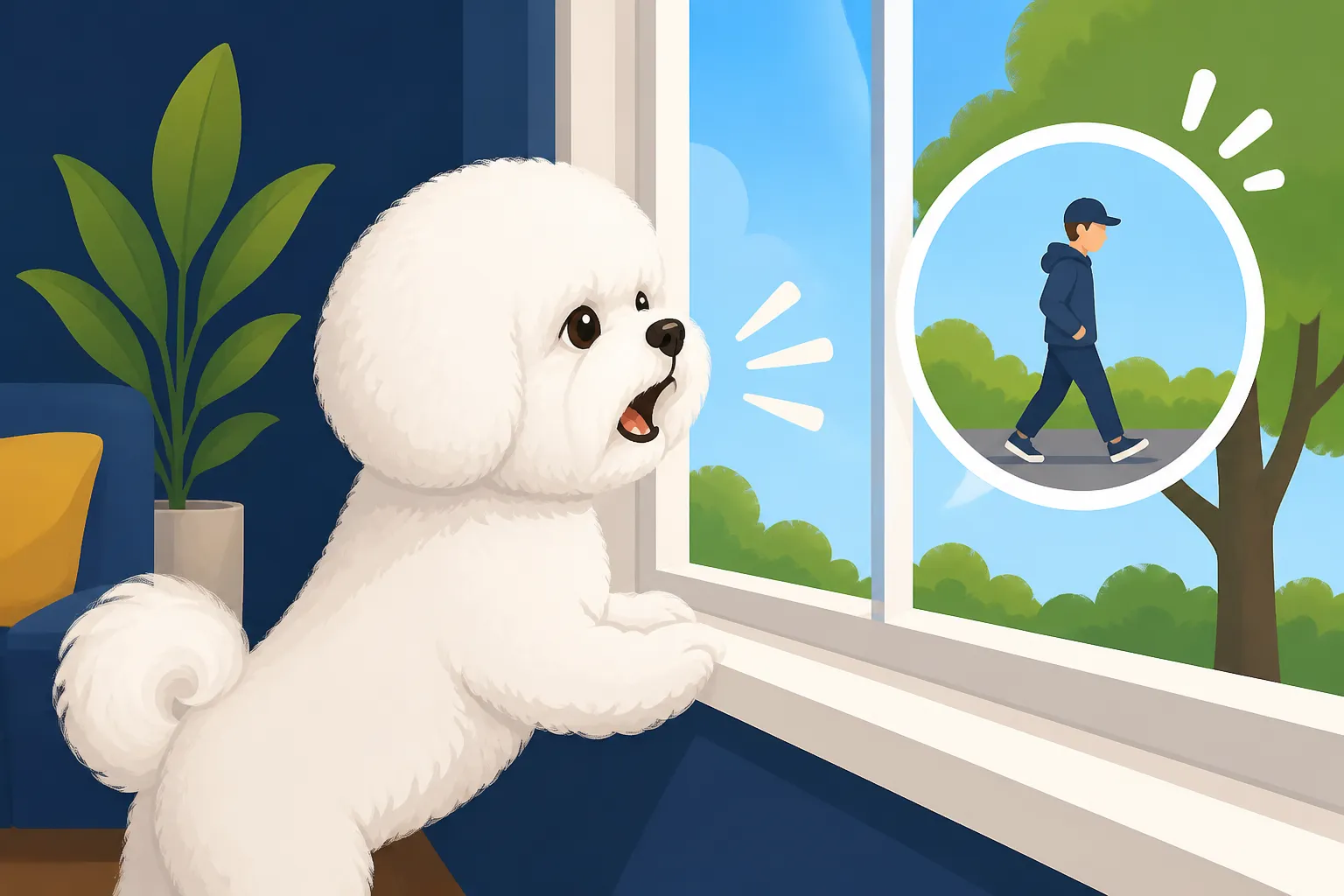
The Window Barking a Bichon Frise Does
There's nothing quite like the joyful, fluffy companionship of a Bichon Frise, but sometimes, their delightful personalities come with a rather loud side effect: incessant window barking. It can be incredibly frustrating to have your otherwise charming little cloud erupt into a frenzy every time a leaf blows past or a delivery truck rumbles down the street, making quiet moments a distant dream and neighborly relations a bit strained. This comprehensive guide will delve into why your Bichon might be acting like the neighborhood watch, and offer detailed, empathetic strategies to help manage and reduce this common, yet challenging, behavior.
Decoding the Drive: Why Your Bichon Frise Barks at Windows
Bichon Frises, despite their small stature, often have big personalities and an even bigger capacity for alerting you to, well, just about everything. Window barking isn't usually born out of malice; it's a deeply ingrained canine behavior amplified by certain triggers and sometimes, by our own unintentional responses. Understanding the underlying motivations is the first step toward effective management.
The Territorial Imperative
For many Bichons, window barking is a classic territorial display. They see their home as their kingdom, and that window is their lookout post. Every person, dog, squirrel, or even gust of wind that passes by is perceived as an intruder or a potential threat to their domain. They might bark to warn you, their beloved pack, that danger is approaching, or to tell the perceived intruder to move along.
This isn't necessarily aggression; it's often an attempt to control their environment. They feel responsible for keeping watch, and in their mind, their barking is successfully driving away these "threats." After all, the mail carrier always leaves after they bark, right? This self-reinforcing cycle makes it a tough habit to break. They truly believe they are doing their job, and quite effectively, too!
Boredom and Lack of Mental Stimulation
Let's be honest, a Bichon Frise is a smart cookie. They need more than just physical exercise; their clever little brains thrive on mental challenges. If your Bichon isn't getting enough engagement, that window can become the most exciting form of entertainment available. It's like having a doggy television that plays an endless loop of intriguing, fast-moving objects and sounds.
A bored Bichon will seek out stimulation, and observing the outside world from a window provides a constant stream of novelty. The barking then becomes a way to express that pent-up energy, excitement, or even frustration. It's a self-generated game, and every passerby is a new character in their personal drama. Providing ample enrichment, puzzle toys, and training sessions throughout the day can sometimes significantly reduce this type of barking.
Anxiety and Fear-Based Reactions
Sometimes, window barking isn't about protecting territory or seeking entertainment; it's rooted in fear or anxiety. A Bichon Frise, while generally cheerful, can be sensitive. If they've had negative experiences with strangers, other dogs, or even loud noises, the sight of these things through a window can trigger a defensive, fear-based bark.
They might be barking to make the "scary" thing go away because they feel vulnerable. This type of barking often comes with other body language cues like tucked tails, flattened ears, trembling, or retreating shortly after barking. If you suspect fear is at play, approaching the situation with extra patience and positive reinforcement is crucial. For these sensitive souls, the outside world can be a lot to process from behind a pane of glass.
Unmasking the Triggers: What Sets Off Your Bichon Frise's Alerts
Once you understand why your Bichon barks, the next step is to pinpoint what specifically causes the eruptions. Every dog is an individual, and while common themes exist, your Bichon will have its own unique list of triggers. Observing these closely is key to crafting an effective management plan.
Visual Stimuli: The Moving Targets
The most obvious triggers are visual. Anything that moves outside your window can become a target. This includes, but is certainly not limited to:
- People walking by: Joggers, parents pushing strollers, neighborhood kids on bikes.
- Other dogs: Especially if they're walking past your property or pausing to sniff.
- Vehicles: Mail trucks, delivery vans, school buses, even passing cars.
- Wildlife: Squirrels, birds, stray cats – nature's own reality show.
- Reflections: Sometimes, the light catching a window or even their own reflection can be enough to startle them into barking.
These visual cues create an immediate response. Your Bichon sees something, their alert system goes off, and the barking begins. It's an instant reaction, often escalating rapidly. Keeping a diary of these instances can help you spot patterns, like whether it's always the same time of day or specific types of passersby.
Auditory Cues: The Sounds of the Street
Even if your Bichon can't see something, they might still hear it and react. Their sense of hearing is far more acute than ours, picking up sounds we might miss. Auditory triggers can include:
- Distant barking: Another dog in the neighborhood setting off a chain reaction.
- Car doors slamming: Especially if it's near your driveway or a neighbor's.
- Footsteps on the pavement: Signaling an approaching presence before they're visible.
- Children playing: Laughter, shouting, the squeak of a scooter.
- Construction noises: Jackhammers, trucks beeping, saws.
Sometimes, the combination of a faint sound followed by a visual confirmation is what really ramps up the barking. Pay attention to their ears – do they prick up before they even see anything? This can indicate an auditory trigger at play. Addressing these unseen triggers might require different strategies, such as using white noise or playing calming music.
Environmental Factors: Beyond the Obvious
Beyond direct sights and sounds, other environmental factors can contribute to window barking. These are often subtle but can add to your Bichon's overall state of arousal or stress.
- Window placement: A window that offers a panoramic view of a busy street will naturally present more triggers than one facing a quiet garden.
- Light conditions: Shadows, reflections, or sudden changes in light can sometimes cause a reaction.
- Lack of routine: Dogs thrive on predictability. A chaotic home environment or inconsistent schedule might make a sensitive Bichon more prone to reactive barking.
- Restricted access: If a dog is constantly trying to get to a window but is always blocked, the frustration can build, making their eventual barking even more intense when they finally get a glimpse.
Understanding the specific triggers is critical. It helps you anticipate situations and choose the most appropriate intervention. A Bichon who barks at every moving object needs a different approach than one who only barks at the mail carrier or other dogs.
Early Intervention: Training a Puppy to Ignore Windows
Bringing a fluffy Bichon Frise puppy home is a joy, and it’s also the perfect time to lay the groundwork for a calm, quiet demeanor around windows. Preventing problem barking is always easier than fixing it later. Early, consistent training makes a huge difference in shaping a well-adjusted adult dog.
The Power of Positive Exposure and Socialization
From a young age, expose your Bichon puppy to a variety of sights and sounds in a positive, controlled way. This means taking them out for walks where they see people, other dogs, and vehicles, always pairing these experiences with treats and praise. The goal is for them to associate novel things with good feelings, rather than fear or over-excitement.
When they’re observing the world from a window, keep it short and supervised initially. If a person walks by and your puppy looks, but doesn’t bark, immediately praise and offer a high-value treat. This is called counter-conditioning – changing their emotional response from "intruder!" to "treat opportunity!" Never force them to stay at a window if they seem overwhelmed. The key is gradual, positive exposure. Consider programs like BAXTER & Bella, which offer comprehensive online puppy training that can guide you through effective socialization techniques and positive reinforcement methods from the very start. These resources can be invaluable for new puppy parents.
Teaching a "Look at That" Game
This is a fantastic proactive exercise for puppies. Sit with your Bichon puppy near a window, but not so close that they're overwhelmed. When you see a trigger (a person, a dog, a car) approach, point it out calmly and say "Look at that!" The instant your puppy looks at the trigger, and before they can bark, mark the behavior (a clicker works great here) and give them a treat.
The aim is to teach your puppy that the sight of a trigger is a signal to look at you for a treat, rather than to bark. Repeat this many, many times. Start with distant, less intense triggers and gradually work your way up to closer, more distracting ones. If your puppy barks, the trigger was too intense, and you need to move further away from the window or use a more powerful treat. This game flips the script, making the trigger a positive predictor for good things from you.
Crate Training and Designated "Safe Spaces"
Crate training can be incredibly beneficial, especially for managing a Bichon puppy's window access. A crate provides a secure, comfortable den where your puppy can relax away from stimulating windows. If you know a busy time of day is approaching (like school pickup or mail delivery), you can preemptively put your puppy in their crate with a long-lasting chew toy or a stuffed Kong. This prevents them from practicing the barking behavior and reinforces calmness. Whether Crate Training Works on a Bichon Frise is a great resource if you're exploring this option.
Beyond a crate, establishing other "safe spaces" away from windows can be helpful. This could be a playpen in a quieter room, a comfy dog bed in a hallway, or even a specific spot in the living room where they can relax without a direct view of the street. Teaching your puppy to settle in these areas from a young age helps them develop self-control and reduces their reliance on window-watching for entertainment.
Strategies for Managing Established Window Barking
If your Bichon Frise has already developed a robust window barking habit, don't despair! It’s certainly more challenging to undo an ingrained behavior, but with consistency, patience, and the right techniques, you can significantly reduce the frequency and intensity of their outbursts.
Environmental Management and Blockading the View
The easiest and often most effective first step is to simply remove the opportunity to bark. If your Bichon can't see the triggers, they can't bark at them. This isn't a long-term fix for the underlying behavior, but it's an excellent way to stop the habit from getting reinforced.
Consider various options for blocking the view:
- Window film: Frosted or decorative window film applied to the lower half of windows can obscure the view while still allowing natural light in. You can find many affordable options on Amazon.
- Blinds or curtains: Keep them closed or partially closed during peak "trigger times."
- Baby gates or exercise pens: Use these to restrict access to certain rooms with problem windows when you can't actively supervise.
- Rearranging furniture: If your Bichon has a favorite window perch, try moving their bed or a couch to block their access to that spot. Whether Blocking the Window Quiets a Bichon Frise delves deeper into these practical solutions.
The goal here is to manage the environment so your Bichon doesn't get to practice the barking behavior. The more they practice, the stronger the habit becomes.
Redirection and the "Quiet" Cue
Once you've managed the environment to some extent, you need to teach your Bichon what to do instead of barking. Redirection is key. When a trigger appears, and before your Bichon gets into a full-blown barking frenzy, immediately redirect their attention to something else.
This could be:
- A high-value treat: Lure them away from the window with a tasty treat.
- A favorite toy: Engage them in a game of fetch or tug in another part of the room.
- A training cue: Ask them to "sit," "down," or "stay" – anything that gets them to focus on you.
Simultaneously, start teaching a "quiet" cue. The trick is to teach "quiet" after they've started barking, but before they've escalated. When they bark, say "Quiet!" in a firm, calm voice. The instant they stop, even for a split second, reward them heavily with a treat and praise. Wait for them to bark again, say "Quiet!", and reward the silence. Gradually increase the duration of silence required before the reward. This teaches them that being quiet when asked earns them good things. Teaching a Bichon Frise a Quiet Cue offers more insights into this specific training.
Desensitization and Counter-Conditioning (Advanced)
This approach aims to change your Bichon's emotional response to triggers from negative (fear, excitement) to positive. It's a more advanced technique that often benefits from professional guidance.
- Desensitization: Gradually expose your Bichon to triggers at a low intensity they can tolerate without barking. This might mean starting with a window that's far from the street, or having a friend walk past at a great distance. As they remain calm, slowly decrease the distance or increase the intensity.
- Counter-conditioning: As you expose them to triggers at a low level, pair the sight of the trigger with something highly positive, like a constant stream of high-value treats or a favorite game. The moment they see the trigger and don't react with a bark, they get a reward. The idea is for them to associate the trigger with good things, making the barking less necessary.
This process takes time and immense patience. If your Bichon is highly reactive, it’s best to consult with a certified professional dog trainer or veterinary behaviorist for a tailored plan. They can help you identify subtle stress signals and guide you through the desensitization process safely and effectively.
Tools and Aids to Help with Window Barking
Beyond direct training and environmental adjustments, there are various tools and aids that can complement your efforts to reduce window barking. These aren't magic bullets, but they can certainly make the journey smoother for both you and your Bichon Frise.
Calming Aids and Supplements
For Bichons whose barking stems from anxiety or over-arousal, calming aids can sometimes take the edge off, making them more receptive to training.
- Pheromone diffusers/sprays: Products containing synthetic canine appeasing pheromones (like Adaptil) can create a calming environment. Plug-in diffusers can be placed in rooms where your Bichon spends time, helping to reduce general stress levels.
- Calming supplements: Various natural supplements containing ingredients like L-theanine, tryptophan, or chamomile are available. These can help promote relaxation without sedation. Always discuss any supplements with your vet before introducing them, especially if your Bichon is on other medications or has underlying health conditions. You can often find these options on platforms like Amazon, but always read reviews and check ingredients carefully.
- Thundershirts or anxiety wraps: These snug-fitting garments provide gentle, constant pressure, which can have a calming effect on some dogs, similar to swaddling a baby. They can be particularly helpful during periods of high outdoor activity or if your Bichon gets anxious during storms or fireworks, which might then translate to window reactivity.
Remember, these are aids, not solutions. They work best when combined with behavioral modification training. Whether Medication Helps an Anxious Bichon Frise offers further discussion on managing anxiety in your pet, which can sometimes underpin barking.
White Noise Machines and Calming Music
Auditory triggers are a big part of window barking. Sometimes, simply masking those external sounds can make a world of difference.
- White noise machines: These devices produce a broad spectrum of sound that can effectively block out sudden outdoor noises like car doors, distant barking, or footsteps. Place one near the problem window or in the room where your Bichon spends time.
- Calming dog-specific music: There are playlists and albums specifically designed with frequencies and tempos that promote relaxation in dogs. Playing this softly throughout the day can create a more serene atmosphere and help drown out irritating external sounds. YouTube and various streaming services offer many such options.
These tools help create a quieter, more predictable auditory environment for your Bichon, reducing the need for them to respond to every external sound. It lessens the perceived "threat" or novelty of the outside world.
Professional Training Programs and Resources
While much can be done at home, sometimes a fresh perspective and expert guidance are invaluable, especially if the barking is severe or persistent.
- Online training platforms: Many online resources offer structured courses for behavior modification, including barking. Platforms like BAXTER & Bella provide comprehensive programs that can guide you step-by-step through positive reinforcement techniques and exercises tailored to common dog behaviors. Their flexibility allows you to learn at your own pace and apply lessons directly to your home environment.
- Certified Professional Dog Trainers (CPDT-KA): A local trainer can observe your Bichon's behavior in person, help identify subtle triggers, and develop a customized training plan. They can also teach you crucial handling skills and proper timing for rewards and cues.
- Veterinary Behaviorists (DACVB): For severe cases of anxiety, fear, or aggression that manifest as window barking, a board-certified veterinary behaviorist is the highest level of expertise. They are veterinarians with specialized training in animal behavior and can prescribe medication if necessary, alongside a comprehensive behavior modification plan.
Don't hesitate to seek professional help. A trainer or behaviorist can provide objective advice and effective strategies that you might not have considered, helping you and your Bichon find peace.
When Window Barking Signals Something More
While often a behavioral issue, persistent or sudden onset window barking can sometimes be a symptom of an underlying medical problem or a deeper behavioral challenge. It's always wise to rule out health issues, especially if the barking seems to come out of nowhere or is accompanied by other unusual signs.
Underlying Medical Conditions
Our dogs can't tell us when something hurts or when their senses are failing, but changes in behavior are often their only way of communicating distress.
- Pain or Discomfort: A Bichon suffering from joint pain, dental issues, or even a hidden injury might become more reactive and bark more frequently. They might feel vulnerable and bark defensively, or simply be irritable due to discomfort. For example, conditions like Arthritis in a Bichon Frise at Eleven could make them less tolerant of perceived intrusions. If your Bichon's mobility seems off, or they seem hesitant to jump, this could be a factor.
- Vision or Hearing Loss: As Bichons age, their eyesight and hearing can naturally decline. A dog with impaired senses might startle more easily, leading to reactive barking when something appears suddenly or sounds are muffled and confusing. For instance, The Age Cataracts Appear in a Bichon Frise could be a factor. If your Bichon suddenly starts barking at things they used to ignore, or seems more jumpy, a vet check for vision and hearing is a good idea.
- Hormonal Imbalances: Conditions like hypothyroidism, while less common for causing barking directly, can affect a dog's overall temperament, making them more anxious or irritable. Hormonal changes can manifest in a myriad of subtle ways, sometimes contributing to a lower tolerance for stimuli.
If you notice a sudden change in your Bichon's barking habits, particularly if it's accompanied by other symptoms like lethargy, changes in appetite, increased drinking, or unusual aggression, a trip to the veterinarian is always the first step to rule out any medical causes.
Separation Anxiety and General Anxiety Disorders
Sometimes, window barking isn't just about what's outside the window; it's about what's inside the house – or rather, who isn't.
- Separation Anxiety: Bichons are highly people-oriented and can be prone to separation anxiety. If their window barking primarily occurs when they are left alone, it might be part of a larger anxiety picture that also includes destructive chewing, inappropriate urination, or excessive vocalization (howling, whining) when separated from you. The window barking might be an outlet for their distress or an attempt to call you back. [Whether an Anxious Bichon Frise Needs Medication] discusses various aspects of anxiety.
- Generalized Anxiety: Some Bichons are simply prone to general anxiety, making them more sensitive and reactive to their environment overall. Every new sight, sound, or change can be perceived as threatening. This underlying anxiety can significantly contribute to window barking, as they are constantly on high alert.
Managing anxiety requires a holistic approach, which often includes behavior modification, a predictable routine, enrichment, and sometimes, medication prescribed by a vet or veterinary behaviorist. Addressing the root anxiety will be far more effective than just trying to stop the barking in isolation.
The Bichon Blitz and Over-Stimulation
The famous "Bichon Blitz" or zoomies is a burst of frantic energy that often involves running laps around the house. While generally joyful, sometimes this high energy, especially if it's not appropriately channeled, can contribute to reactive barking. A Bichon that is over-stimulated or hasn't had enough appropriate exercise (both physical and mental) might use window barking as an outlet.
It's not that the blitz causes the barking, but rather that an over-stimulated dog has a lower threshold for reacting to triggers. They're already "amped up," so a passing squirrel quickly pushes them over the edge. Ensuring your Bichon gets enough regular exercise, playtime, and mental enrichment can help them be calmer overall, reducing their reactivity. Whether the Bichon Blitz Happens Every Day explores this energetic phenomenon more thoroughly.
Living with a Bichon Frise and Window Barking Long-Term
Managing window barking in a Bichon Frise is rarely a quick fix. It's a journey that requires commitment, understanding, and a willingness to adapt your strategies over time. Long-term success hinges on consistency and a deep understanding of your individual dog.
Consistency is Your Best Friend
This cannot be stressed enough: consistency is paramount. Every family member needs to be on the same page with the training plan. If one person allows the barking and another tries to correct it, your Bichon will get mixed signals and the behavior will likely persist.
- Consistent responses: Everyone should use the same cues ("Quiet!"), the same rewards, and the same methods for redirection.
- Consistent boundaries: If a window is off-limits during certain hours, it needs to be off-limits to everyone. Don't let your Bichon get away with barking sometimes and not others.
- Consistent routine: A predictable daily schedule for feeding, walks, playtime, and training can reduce overall anxiety and help your Bichon feel more secure, making them less prone to reactive behaviors.
It might feel tedious at times, but unwavering consistency is what ultimately reshapes behavior patterns. Think of it like a marathon, not a sprint.
Environmental Management as a Permanent Fixture
For many Bichon owners, environmental management isn't just a temporary training aid; it becomes a permanent part of living with their alert little dogs. This might mean:
- Strategic window coverings: Keeping blinds or curtains partially closed on particularly busy windows or using decorative film year-round.
- Designated quiet zones: Ensuring your Bichon always has access to a comfortable, stimulating "safe space" away from the busiest windows, perhaps with a long-lasting chew or puzzle toy.
- Outdoor enrichment: Making sure your Bichon gets plenty of outdoor time for sniffing, exploring, and appropriate exercise. A tired Bichon is often a quieter Bichon. What a Bichon Frise Needs Every Day covers daily care that can impact behavior.
This proactive management isn't about giving up; it's about setting your Bichon up for success by reducing the constant temptation and over-stimulation that windows can provide.
Patience, Persistence, and Seeking Support
There will be days when you feel like you're making no progress, or even going backward. Your Bichon might have a "barking relapse" or seem to ignore all your training. On these days, it's important to remember:
- Patience: Behavior change takes time. Celebrate small victories and don't get discouraged by setbacks.
- Persistence: Keep at it. Every consistent interaction, every successful redirection, every moment of quiet you reward, is chipping away at the old habit.
- Support: Don't hesitate to reach out to a professional trainer, vet behaviorist, or even supportive online communities of Bichon owners. Sometimes, just knowing you're not alone in the struggle can make a huge difference.
Living with a Bichon Frise is incredibly rewarding, and addressing challenging behaviors like window barking strengthens the bond you share. By understanding their motivations, managing their environment, and training with love and consistency, you can help your fluffy friend become a calmer, happier companion.
| Trigger Type | Common Examples | Immediate Action | Long-Term Strategy |
|---|---|---|---|
| Visual | Mail carrier, passing dog, jogger, squirrel | Redirect attention with treat/toy, "Quiet!" cue | Window film/curtains, desensitization, "Look at That" game |
| Auditory | Distant barking, car door slam, children playing | Redirect attention, engage in quiet game | White noise machine, calming music, basic obedience training |
| Anxiety/Fear | Loud noises, perceived threats, being alone | Remove from window, provide comfort/toy | Calming supplements, safe space, professional behavioral support |
| Boredom/Excess | Anything moving, lack of enrichment | Engage in active play/puzzle toy | Increase mental and physical exercise, structured playtime |
Disclaimer
This article is for general informational purposes only and does not constitute professional advice. Laws, prices and regulations vary by location and change over time. Consult a qualified professional for guidance on your specific situation.