Whether Home Brushing Makes Salon Visits Easier
One of the biggest worries many Bichon Frise parents share is the looming dread of the next grooming appointment. It's a common frustration to pick up your fluffy companion only to be told they were a matted mess, or worse, had to be shaved down because their coat was too tangled. This guide is here to shed light on how consistent home brushing isn't just a chore, but a transformative practice that makes those professional salon visits infinitely easier, less stressful for your dog, and often, less expensive for you.
The Unique Grooming Demands of a Bichon Frise Coat
If you share your life with a Bichon Frise, you know their glorious, cloud-like coat is one of their most defining features. But that beauty comes with a significant responsibility. Unlike many breeds, the Bichon's coat doesn't shed in the traditional sense, which is wonderful for allergy sufferers, but creates a unique grooming challenge.
The Anatomy of the Bichon Coat and Matting Risks
A Bichon Frise sports a double coat, meaning they have a soft, dense undercoat and a coarser, curly outer coat. When loose hair naturally falls out, instead of dropping to your floor, it gets trapped within the dense undercoat and the curly outer layers. Think of it like a tangled fishing net. This trapped hair, combined with daily activities, moisture, friction from collars or harnesses, and even just sleeping, quickly forms mats. These aren't just minor tangles; mats can range from small knots to large, dense felted patches that pull tightly on your dog's skin, causing significant discomfort and even pain. It's crucial to understand Why a Bichon Frise's Shed Hair Stays in the Coat and the distinct characteristics of Whether a Bichon Frise Has an Undercoat to truly grasp why this happens.
Imagine your own hair, if it were curly and never shed, and you simply never brushed it. After a day or two, you’d have a knot. After a week, a dreadlock. Now picture that all over your dog's body, pulling on their delicate skin every time they move. It’s not just an aesthetic issue; it’s a welfare issue. Owners often underestimate how quickly these mats can form, sometimes even between professional grooms, leaving them feeling guilty or surprised when the groomer delivers the bad news.
The Cascade Effect of Mats on Grooming Experience
When a Bichon Frise arrives at the grooming salon with significant matting, it completely changes the entire experience – for your dog, for the groomer, and ultimately, for your wallet. A matted coat often means a painful and prolonged de-matting process, if it's even possible without causing undue stress or injury to the dog. Many ethical groomers will simply refuse to de-matt extensively, opting instead for a full shave-down to remove the painful, tightly bound coat.
This necessary intervention, while beneficial for the dog's comfort in the long run, can be incredibly stressful for your Bichon. They might associate the groomer with pain and discomfort, making future visits even more challenging. Moreover, extensive de-matting or shaving down a matted coat requires extra time, specialized tools, and more physical effort from the groomer, which almost always results in additional charges. It's a scenario that no one wants: a stressed dog, a frustrated groomer, and a higher bill for the owner. Understanding Whether a Matted Bichon Frise Must Be Shaved clarifies why this extreme step is sometimes the only humane option.
Grooming: A Skill Learned Through Positive Reinforcement
Let's be realistic: very few dogs naturally enjoy being brushed, bathed, or having their nails trimmed, especially a Bichon Frise with their sensitive nature. Grooming is a learned behavior, a process of desensitization and positive association that starts from puppyhood. If your Bichon only experiences grooming as something that happens a few times a year at the salon, and those experiences are painful due to matting, they're going to dread it.
Think about how you teach a child to sit still for a haircut or to brush their teeth. It takes patience, consistency, and positive reinforcement. The same applies to your Bichon. If regular home brushing isn't part of their routine, they're not learning to tolerate or even enjoy being handled and combed. This lack of positive exposure to grooming tools and handling makes the professional groomer's job much harder, as they are essentially starting from scratch with a dog that might be fearful, squirmy, or even prone to snapping out of pain or anxiety. Consistent home grooming helps them learn Teaching a Bichon Frise to Stand for an Hour of Scissoring long before they ever set paw in a professional salon.
How Regular Home Brushing Transforms Salon Visits
Now, let's flip the script. Imagine a world where your Bichon Frise actually enjoys their trips to the groomer, where you pick them up looking pristine, and the groomer comments on how cooperative and lovely they were. This isn't a fantasy; it's a reality achievable through consistent home brushing.
Minimizing Stress and Eliminating Pain
The most significant benefit of regular home brushing is the reduction, and often elimination, of pain during grooming. When a Bichon arrives at the salon with a clean, mat-free coat, the groomer can simply bathe, dry, and scissor or clip the coat without encountering painful tangles. This transforms the experience for your dog. Instead of feeling tugs, pulls, and the discomfort of de-matting tools, they experience gentle brushing, warm baths, and skilled scissoring.
A pain-free grooming session fosters a positive association with the groomer and the process itself. Your Bichon will be calmer, more cooperative, and less anxious on future visits. They might even start to look forward to the attention and pampering. This psychological comfort is invaluable, not just for the dog's well-being but also for the longevity of your relationship with your groomer. They'll appreciate working with a happy, comfortable dog, allowing them to focus on achieving that perfect "powder puff" look that Bichons are famous for.
Saving Time and Money at the Salon
Let's talk practicalities: time and money. Groomers often have to charge extra for what's called "de-matting" fees. These fees compensate for the additional time, effort, and specialized products needed to carefully work through a tangled coat, or for the wear and tear on their clippers when forced to shave through dense mats. A well-maintained coat, free of mats, means the groomer can proceed directly to the bath and styling, sticking to their standard pricing and schedule.
Consider a hypothetical: a grooming salon might quote a base price for a Bichon Frise, but then add a significant surcharge for a matted coat. If your Bichon consistently comes in with a coat that only needs washing and styling, you avoid those extra costs. Over a year, this can add up to substantial savings, making your investment in home grooming tools and your time truly pay off. It’s also important to remember that the groomer's time is valuable. A dog that is easy to groom allows them to stay on schedule and provide excellent service to all their clients. This understanding ties into what a groomer charges extra for a matted Bichon Frise, illustrating the direct financial impact.
Building a Stronger Relationship with Your Groomer
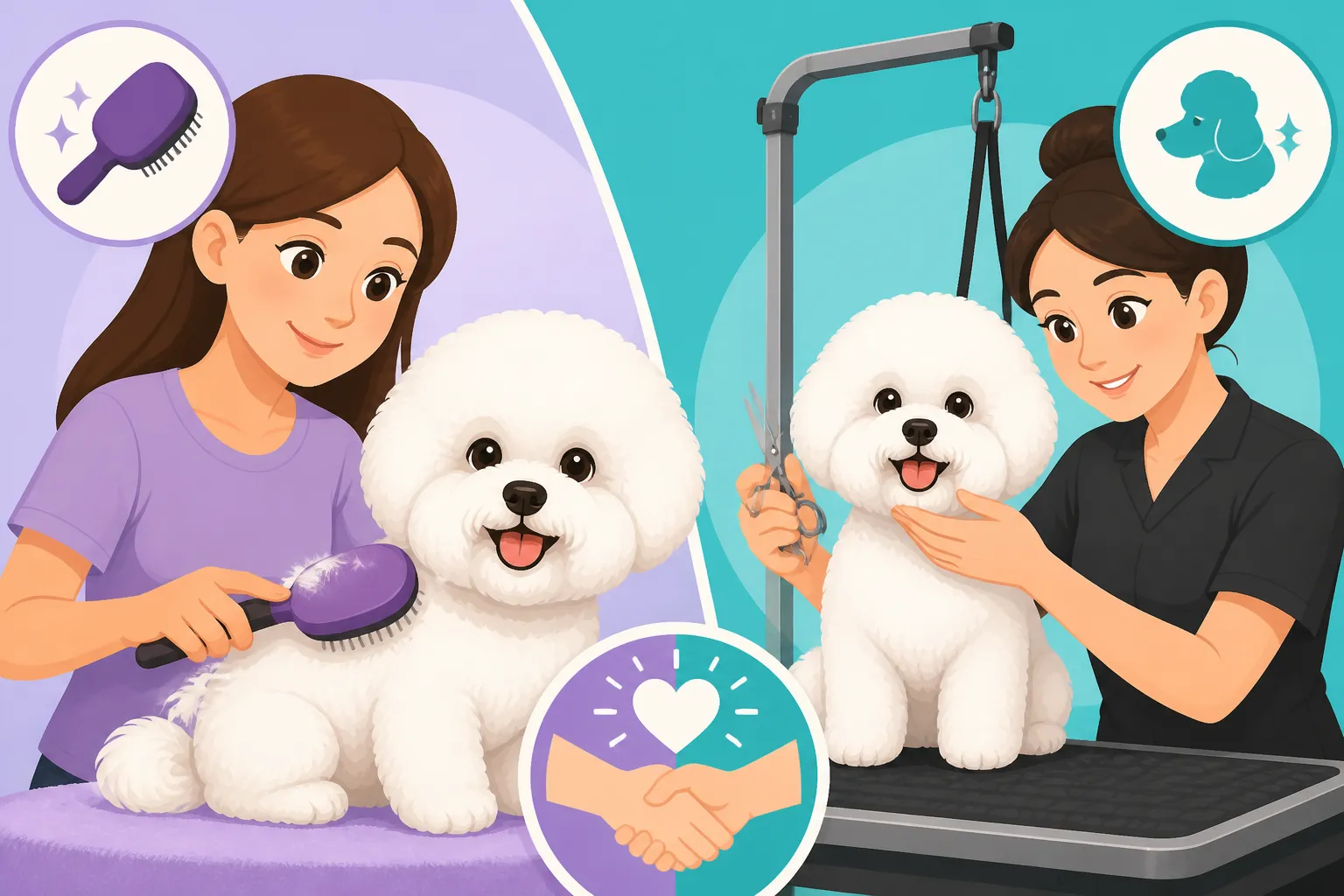
Just like any professional relationship, clear communication and mutual respect are key. When you consistently present your Bichon Frise at the salon with a clean, mat-free coat, you're not just helping your dog; you're building a strong, positive relationship with your groomer. They see that you're an attentive and responsible pet parent who cares for your dog's comfort and coat health between visits.
Groomers are often passionate about their craft and the well-being of the dogs they care for. They're more likely to go the extra mile for a dog whose owner partners with them in maintaining the coat. This might mean offering tips for home care, being more flexible with scheduling, or simply giving your Bichon extra love and attention during their stay. A good groomer becomes an indispensable part of your Bichon's care team, and home brushing is your way of being a star player on that team. They want to create a beautiful finish, and that's so much easier on a coat that isn't pulling and painful.
Practical Steps for Effective Home Brushing
Okay, so we agree that home brushing is a game-changer. But how do you actually do it effectively? It’s more than just a quick run-through with any old brush. It requires the right tools, the right technique, and a consistent, positive approach.
Assembling Your Grooming Arsenal
You don't need a salon full of equipment, but investing in a few key tools will make all the difference. You'll want to look for quality items, perhaps from retailers like Amazon, to ensure they last and are effective.
- Slicker Brush: This is your primary weapon against mats. Look for one with fine, bent wire bristles. The bristles should be firm enough to penetrate the coat but not so stiff that they scratch your dog's skin. A good slicker brush will tease out loose hair and smaller tangles.
- Metal Comb: Often called a greyhound comb, these typically have two sections: one with wider-spaced teeth and one with finer teeth. This is critical for checking your work and finding hidden tangles. After using the slicker brush, always follow up with the metal comb to ensure you can comb through the coat completely from skin to ends. This truly confirms the absence of mats.
- Detangling Spray: A good quality, dog-specific detangling spray can make brushing much easier, especially for working out stubborn knots without causing discomfort. Never brush a dry coat if it's tangled, as this can break the hair and damage the coat.
- Nail Clippers/Grinder: While not directly for brushing, regular nail trims are part of overall grooming comfort. If nails are too long, they can splay paws, affect gait, and even cause pain.
- Grooming Table (Optional but Recommended): A small, sturdy grooming table with a non-slip surface and a grooming arm (like those often seen with BAXTER & Bella training kits) can elevate your dog to a comfortable working height, saving your back and helping your dog associate grooming with a specific, calm place. This helps them learn to stand still and makes the process much safer and more efficient.
Understanding Which Brush Suits a Bichon Frise and Whether a Slicker Reaches a Bichon Frise's Skin will guide your choices in finding the best tools for your particular Bichon's coat.
Establishing a Consistent and Positive Routine
Consistency is paramount. A quick brush every day or every other day is far more effective than an hour-long de-matting session once a month.
- Start Young: If you have a puppy, begin grooming exposure early, even before their full adult coat comes in. Keep sessions short (just a few minutes) and positive. Use plenty of praise and high-value treats. Let them sniff the tools, touch them gently, and slowly introduce the sensation of brushing.
- Short and Sweet Sessions: Aim for 10-15 minutes daily or every other day. This prevents mats from forming and keeps the coat manageable. For a full discussion on duration, check out How Long Brushing a Bichon Frise Takes. For frequency, you might be interested in Whether Brushing Every Other Day Is Enough.
- The "Line Brushing" Technique: This is the golden rule for double-coated breeds like Bichons. Instead of just brushing the top layer, you need to brush in sections, from the skin out.
- Part the hair horizontally near the bottom of your dog's leg or side.
- Hold the top layer of hair up with one hand.
- Using your slicker brush, brush downwards through the exposed section of hair, working through any tangles.
- Once that section is mat-free, drop a little more hair from the top layer and repeat, working your way up your dog's body.
- Always finish by combing through with your metal comb to ensure no tiny knots were missed. If the comb snags, go back with the slicker brush.
- Positive Reinforcement: Make grooming a positive experience. Offer treats, gentle praise, and calm reassurance. If your dog becomes stressed, take a break. Never scold or punish them for wiggling; this will only make them associate grooming with negative feelings.
Targeting Mat-Prone Areas
Certain areas on a Bichon Frise are notorious for matting. Pay extra attention to these spots during your daily routine:
- Behind the Ears: This area often gets neglected and can quickly form dense mats due to friction and moisture.
- Armpits and Groin: These sensitive spots are highly prone to matting because of movement and friction. Be extra gentle here.
- Under the Collar/Harness: If your Bichon wears a collar or harness, these areas will rub and matt easily. Make sure to remove their gear for brushing.
- Tail: The base and underside of the tail can become quite matted.
- Paws and Legs: Mud, dirt, and daily activity can cause matting between the paw pads and up the legs.
- Beard and Muzzle: Food and water residue can lead to mats and staining here. Daily wiping and gentle combing are a must.
When you encounter a small tangle, use your detangling spray generously and gently work through it with the wide-toothed side of your metal comb, or the very tip of your slicker brush. Never yank or pull, as this can cause pain and skin irritation.
The Importance of Brushing Before and After Baths
This is a critical tip often overlooked! Never bathe a matted Bichon Frise. Water acts like a shrink wrap, tightening mats and making them impossible to remove without shaving. Always thoroughly brush and comb your Bichon before a bath to ensure they are completely tangle-free.
After the bath, drying is just as important. Bichon Frises have thick coats that can take a long time to dry naturally, increasing the risk of mats. Use a force dryer (if you have one and your dog tolerates it) or a regular hairdryer on a cool or low heat setting while brushing the coat to ensure it's thoroughly dry and fluffy. Brushing while drying also helps prevent new mats from forming as the coat dries. For more detailed advice on drying, consider How Long Drying a Bichon Frise Takes and Whether Brushing While Drying Sets the Coat.
Here’s a quick overview of the benefits:
| Aspect | Bichon with Regular Home Brushing | Bichon with Infrequent Home Brushing |
|---|---|---|
| Grooming Experience | Calm, pleasant, pain-free | Stressful, potentially painful, may require sedation |
| Coat Condition | Soft, fluffy, mat-free, easy to comb through | Tangled, matted, pulling on skin, difficult to comb |
| Groomer's Work | Efficient, focused on styling, able to achieve desired cut | Time-consuming de-matting, often results in shave-down, less styling |
| Owner's Cost | Standard grooming fee, potentially lower due to less work | Higher fees due to de-matting surcharges or extra time |
| Dog's Welfare | Positive association with grooming, healthier skin and coat | Negative association with grooming, skin irritation, discomfort |
| Time at Salon | Shorter, more focused session | Longer, more intensive session |
The Long-Term Impact of Consistent Home Grooming
The benefits of regular home brushing extend far beyond just smoother salon visits. It’s an investment in your Bichon Frise’s overall health, happiness, and your bond with them.
Promoting Overall Coat and Skin Health
Think of brushing as a massage for your dog's skin. It stimulates blood flow, which is beneficial for skin health, and helps distribute natural oils throughout the coat, keeping it healthy, shiny, and less prone to breakage. Regular brushing also allows you to perform mini-health checks. As you brush, you'll feel for any unusual lumps, bumps, hot spots, or skin irritations that might otherwise go unnoticed beneath a thick coat. This early detection can be critical for addressing potential health issues, like those associated with The Atopic Skin a Bichon Frise Is Born With or conditions that manifest as skin changes.
Additionally, a mat-free coat dries more efficiently, reducing the risk of skin infections caused by trapped moisture, such as yeast or bacterial skin issues, which can sometimes be exacerbated by underlying conditions. Knowing What Atopic Dermatitis Does to a Bichon Frise emphasizes the importance of a healthy skin barrier, which is supported by regular grooming.
Deepening the Bond with Your Bichon Frise
For many Bichon Frise owners, grooming time becomes a cherished bonding ritual. When it's a positive, gentle experience, your dog learns to trust your touch and enjoy the quiet moments together. It's a time for cuddles, soft words, and focused attention that strengthens the emotional connection between you and your pet. This isn't just about brushing hair; it's about building communication and mutual understanding.
The tactile interaction of brushing can be very calming for both you and your Bichon. It reinforces your role as a comforting and caring presence in their lives. This bond can translate into better behavior in other areas too, as a dog that is comfortable with being handled is generally more amenable to vet visits, medication administration, and other necessary care.
Empowering Owners and Ensuring Lifelong Comfort
As a Bichon Frise owner, feeling capable and confident in maintaining your dog's coat is incredibly empowering. You know you're doing your part to keep them comfortable and happy, preventing painful mats and making their professional grooming experiences much more pleasant. This active participation in their care is a testament to your commitment as a pet parent.
Ultimately, consistent home brushing ensures your Bichon Frise can live a life free from the discomfort of matted fur, enjoying their beautiful coat and feeling good in their skin. It’s a habit that supports not just their appearance, but their overall physical and emotional well-being throughout their entire life. Whether your Bichon is a young pup or a cherished senior, this habit of care makes all the difference. Caring for a Bichon Frise Past Eleven often involves adjusting grooming routines, but the core principle of consistent brushing remains vital.
Disclaimer
This article is for general informational purposes only and does not constitute professional advice. Laws, prices and regulations vary by location and change over time. Consult a qualified professional for guidance on your specific situation.