Whether Frequent Squatting Means Stones Not Training
It's incredibly frustrating when your sweet Bichon Frise, who you thought was finally mastering housetraining, suddenly starts squatting all over the house or constantly asking to go out, only to produce a tiny dribble. You might wonder if you're failing at training, if your dog is being stubborn, or if they simply have the smallest bladder on the planet. But sometimes, what looks like a training mishap or a behavioral quirk is actually a cry for help from a medical condition like bladder stones, a common issue in our beloved Bichons. This guide will walk you through how to tell the difference between a training setback and a serious health concern, and what steps you need to take to help your furry family member.
The Heartbreaking Confusion: Is It Behavior or a Bladder Stone?
When you’ve put in all the effort with housetraining, enduring sleepless nights, endless trips outside, and countless clean-ups, only for your Bichon Frise to regress, it can feel like a punch to the gut. It’s natural to question your training methods, or even your dog’s intelligence or willingness to learn. But for Bichons, their propensity for certain health conditions means that what seems like a behavioral problem can often be a hidden medical one, particularly with urinary issues.
When Training Falls Apart: The Frustration of Persistent Accidents
Picture this: you've diligently followed all the advice – consistent potty breaks, positive reinforcement, managing water intake at night, and celebrating every successful outdoor pee. Your little fluffball was getting it, mostly. Then, seemingly out of nowhere, they start squatting repeatedly indoors, maybe even on the rug you just cleaned. It’s not a full-blown puddle, often just a few drops, but it’s frequent, and it’s disrupting your life and their progress. You start to feel exasperated, thinking "Are we back to square one? Is my Bichon just exceptionally Why a Bichon Frise Is Famously Hard to Housetrain?"
This feeling of failure is completely valid, especially when you’re doing everything by the book. It's easy to assume your dog is being difficult, or that you haven't been firm enough, or perhaps that their tiny bladder just can't cope. You might even start to think about things like Whether a Housetrained Bichon Frise Suddenly Starts Leaking after so much effort. But before you double down on training, it's crucial to consider other possibilities, especially given the Bichon Frise's genetic predisposition to certain health problems that manifest in urinary symptoms.
Unpacking Frequent Squatting: Beyond "Just a Small Bladder"
We often joke about small dogs having small bladders, and to some extent, it's true – they generally need to urinate more frequently than larger breeds. However, there's a significant difference between a dog needing to go out more often because of a small bladder and a dog trying to go frequently but producing very little urine each time. When your Bichon is constantly squatting, often with an arched back or straining, and only managing a few drops, that's a red flag. It’s not just a "small bladder" issue; it indicates an urgency and discomfort that is physiological, not behavioral.
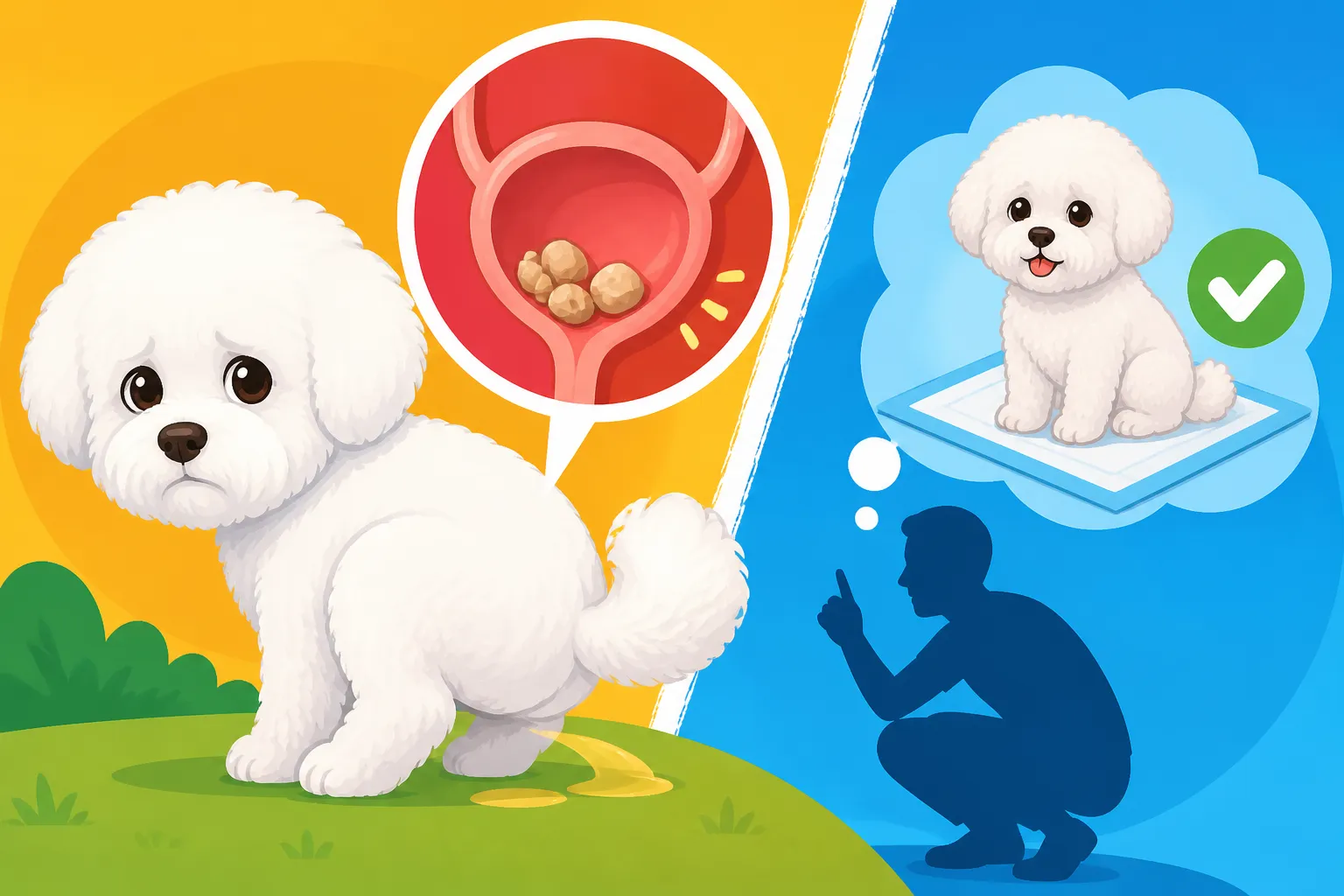
This type of frequent, unproductive squatting suggests that something is irritating the bladder or blocking the urethra, making your dog feel like they constantly have to relieve themselves, even when there's not much urine to pass. While an ordinary urinary tract infection (UTI) can cause similar symptoms, for a Bichon Frise, the possibility of bladder stones — specifically calcium oxalate stones — looms large. This breed is unfortunately highly prone to forming these painful concretions, which can irritate the bladder lining, cause inflammation, and even obstruct the flow of urine. So, while you're busy wondering if your training is off, your dog might actually be in considerable discomfort.
The Telltale Signs: When Frequent Squatting Points to Stones
Distinguishing between a behavioral problem and a medical issue requires careful observation. It's not just about how often your Bichon squats, but how they squat, what comes out, and any other accompanying symptoms. These details are vital clues that can help you and your veterinarian pinpoint the true cause of the problem.
More Than Just Peeing: What to Look For in the Urine
When your Bichon is frequently squatting, take a moment—if you can—to observe the urine itself. This isn't always easy, especially if they are having accidents indoors, but it's one of the most important diagnostic indicators.
One of the most concerning signs is blood in the urine. This might appear as a pinkish tinge, a noticeable reddish streak, or even a dark, rusty color. The presence of blood, medically known as hematuria, is a strong indicator of irritation or damage to the urinary tract, which bladder stones commonly cause. As stones rub against the delicate lining of the bladder and urethra, they can cause microscopic or macroscopic bleeding. If you see blood, even a tiny bit, it's a serious sign that warrants immediate veterinary attention. You might be asking Whether Blood in a Bichon Frise's Urine Means Stones, and the answer is that it's a very strong possibility that needs to be checked out.
Beyond blood, also pay attention to the clarity and smell of the urine. Is it cloudy instead of clear? Does it have an unusually strong, pungent odor? Cloudy urine can indicate the presence of crystals, white blood cells (from infection), or other debris. A foul smell often accompanies bacterial infections, which can either cause stones or occur secondary to the irritation caused by stones. While some dietary factors can temporarily affect urine appearance, persistent cloudiness or odor, especially combined with frequent squatting, is a red flag.
The Act of Urination Itself: Straining, Dribbling, and Discomfort
Observe your Bichon carefully when they attempt to urinate. Are they hunching their back, arching excessively, or visibly straining as if trying very hard to go? Do they stand in the squatting position for a long time, only to produce a tiny stream or just a few drips? This kind of straining, known as stranguria, is a classic sign of pain or obstruction in the urinary tract. Imagine trying to pee with a sharp object irritating your bladder or blocking the exit – that's likely what your dog is feeling.
Sometimes, despite all the straining, only a small amount of urine comes out, or perhaps just a persistent dribble. This isn't a sign of bad manners; it's a sign of a bladder that either cannot empty properly or is constantly irritated, signaling an urgent need to void even if there's little to pass. If your male Bichon is showing these signs, it's even more critical because their urethra is narrower and longer than a female's, making them more prone to a complete blockage by a stone. A complete blockage is a life-threatening emergency. If you observe your Bichon straining persistently without producing any urine, or minimal urine, it’s imperative to seek emergency veterinary care immediately. This is definitely a situation where you need to know Whether a Straining Bichon Frise Is an Emergency, and the answer is often a resounding yes.
Behavioral Shifts Beyond the Potty Pad
When a dog is in pain or discomfort, it rarely just affects one part of their routine. Bladder stones can cause more generalized behavioral changes that extend beyond their potty habits. You might notice your formerly playful and bouncy Bichon becoming more withdrawn, lethargic, or less interested in their usual games and walks. They might be reluctant to jump on furniture or to be picked up, especially if it puts pressure on their abdomen.
Some dogs become unusually irritable or even snap when touched around their hindquarters or belly, indicating localized pain. A loss of appetite or a general decrease in energy are also common systemic signs that something is seriously wrong. They might seek out quiet, isolated spots to rest, trying to cope with their discomfort. These broader changes in temperament and activity level, when seen alongside frequent, unproductive squatting, paint a clearer picture that it's not a training issue but a medical crisis needing professional attention.
What to Do When You Suspect Stones: A Vet Visit is Non-Negotiable
If you're reading these signs and recognizing them in your Bichon, the most important thing you can do is not delay. Do not try to solve it with more rigorous training or simply waiting it out. A veterinarian needs to assess your dog as soon as possible to get a definitive diagnosis and begin treatment.
Gathering Information for Your Vet
Before you head to the vet, take a few moments to gather as much information as possible. Your detailed observations are gold to your veterinarian. Make notes on:
- Frequency of urination: How often is your Bichon squatting or asking to go out?
- Volume of urine: Are they producing large amounts, small amounts, or just dribbles?
- Appearance of urine: Is there any blood, cloudiness, or unusual color?
- Odor: Is the urine particularly strong-smelling?
- Straining: Are they visibly straining, arching their back, or taking a long time to urinate?
- Behavioral changes: Have you noticed any lethargy, pain, irritability, or changes in appetite?
- Timing: When did these symptoms start? Have they worsened?
- Diet: What does your Bichon eat regularly, including treats and any table scraps?
If you can, try to collect a fresh urine sample (first thing in the morning is often best) in a clean container just before your appointment. This can be invaluable for the vet to perform a urinalysis right away. Remember, the goal is to provide a comprehensive picture so your vet can accurately assess the situation.
How a Vet Confirms Stones and Rules Out Other Issues
When you bring your Bichon Frise to the vet with suspected urinary issues, they will likely start with a thorough physical examination, focusing on palpating the abdomen and bladder. The next crucial step will be diagnostic tests.
A urinalysis will be performed on that fresh urine sample. This test looks for signs of infection (bacteria, white blood cells), inflammation (red blood cells), and the presence of crystals that can indicate a predisposition to stone formation. Sometimes, the crystals themselves can cause irritation, even without full-blown stones.
To definitively confirm bladder stones, imaging is usually required. X-rays are often the first port of call, as many common stone types (like calcium oxalate, which Bichons are prone to) are radiopaque, meaning they show up clearly on an X-ray. Your vet will be looking for dense, visible masses within the bladder. Sometimes, smaller stones or certain types of stones might not show up perfectly on X-rays. In such cases, or if more detail is needed, an ultrasound is an excellent tool. Whether an Ultrasound Finds a Bichon Frise's Stones is a common question, and yes, it’s highly effective, allowing the vet to see the bladder walls, assess for inflammation, and detect stones that might be missed on an X-ray, as well as checking the kidneys for any issues.
The vet may also recommend blood work to check kidney function and overall health, especially if surgery is being considered. These tests are vital not just to confirm stones, but also to rule out other conditions like severe urinary tract infections without stones, or other bladder diseases that might present with similar symptoms. Getting an accurate diagnosis quickly is the key to appropriate treatment and your Bichon's comfort. How a Vet Confirms Stones in a Bichon Frise involves a combination of these methods to ensure nothing is missed.
Reclaiming Housetraining After a Stone Diagnosis
Discovering your Bichon Frise has bladder stones is undoubtedly stressful, but the good news is that once the underlying medical issue is addressed, you can usually get their housetraining back on track. It requires patience, understanding, and a renewed commitment to consistency.
The Road to Recovery: Managing Post-Treatment Urination
After your Bichon receives treatment for bladder stones — whether that's through a specialized diet to dissolve certain types of stones or through surgery to remove them — their urinary habits will begin to normalize. However, it's not an instant fix. The bladder and urethra may still be inflamed or sensitive for a period, leading to residual urgency or discomfort. It's crucial to understand that during this recovery phase, accidents might still happen, and this is not a training failure. It's a physiological response to healing.
Your role becomes one of supportive caregiver and consistent guide. Stick to a very frequent potty schedule, even more so than when you first housetrained them. Celebrate every successful outdoor elimination enthusiastically. Keep in mind that a dog who has experienced pain while urinating might develop some apprehension about the act itself, even after the pain is gone. Be gentle, reassuring, and always positive. This period is about rebuilding trust and comfort, not punishing mistakes.
Tools and Techniques for Success
Getting back to basics with housetraining is often the most effective approach. Re-establish a strict toilet routine, taking your Bichon out frequently, especially after waking, eating, and playing. Reward them generously with praise and high-value treats every time they go to the bathroom outside. Consider using a bell on the door to teach them to signal their need to go, which can empower them and reduce accidents. Many owners find programs like those offered by BAXTER & Bella helpful for structured training guidance.
For indoor accidents during this transition, using an enzyme cleaner, readily available on platforms like Amazon, is essential. These cleaners don't just mask odors; they break down the urine enzymes that attract dogs back to the same spot. If the scent of past accidents lingers, your Bichon will be much more likely to repeat the mistake there, undoing all your hard work. Whether Enzyme Cleaner Matters for a Bichon Frise is a common question, and for effective housetraining, the answer is a resounding yes! A good enzyme cleaner is an indispensable tool. You might also want to revisit all the core principles of The Toilet Routine That Finally Works on a Bichon Frise to solidify their understanding.
Prevention and Ongoing Care: A Holistic Approach
Once bladder stones have been diagnosed and treated, the focus shifts to preventing recurrence. For Bichon Frises, this isn't a temporary measure; it's a lifelong commitment to specific care protocols that will keep them healthy and stone-free.
The Lifelong Diet: Key to Stone Prevention
One of the cornerstones of preventing calcium oxalate stones in Bichon Frises is a prescription veterinary diet. These specialized foods are formulated to alter the pH of the urine and reduce the concentration of stone-forming minerals. It’s absolutely critical that your Bichon Frise stays on this specific diet for the rest of their life. The Diet a Bichon Frise Stays On for Life is a serious commitment, and veering off it, even for seemingly innocent treats, can undo all the preventive work.
Many owners wonder, Whether a Bichon Frise Must Stay on the Diet Forever. The simple answer is yes, because their genetic predisposition means the risk of recurrence is incredibly high without strict dietary management. Even small amounts of inappropriate foods or treats can shift the urine chemistry enough to facilitate new stone formation. It's a challenge, especially if your Bichon is a picky eater, but consistency is paramount for their long-term health and comfort.
Hydration and Monitoring: Your New Routine
Beyond diet, ensuring your Bichon Frise is adequately hydrated is another vital component of stone prevention. Diluted urine is less likely to form crystals. Encourage water intake by offering fresh water frequently, using a pet water fountain (some dogs prefer moving water), adding water or broth to their food, or even offering ice cubes as treats. Whether a Bichon Frise Should Be Encouraged to Drink more is definitely part of the strategy.
Regular veterinary monitoring is also essential. This typically involves periodic urine tests to check the urine's pH and concentration, as well as to screen for crystals or infection. In some cases, your vet might recommend yearly or bi-yearly X-rays or ultrasounds to catch any new stone formation while the stones are still small and manageable. Whether a Bichon Frise Should Be Urine Tested Yearly is a common recommendation, as is monitoring urine pH at home with special strips your vet can provide. This proactive approach allows you to catch any potential issues early, preventing recurrence of painful symptoms and costly interventions.
Remember, seeing frequent squatting isn't always a sign of a naughty dog; it can be a significant indicator of a medical problem like bladder stones in a Bichon Frise. By being observant, seeking prompt veterinary care, and committing to lifelong preventive measures, you can ensure your fluffy companion leads a healthy, happy, and (mostly) accident-free life.
Disclaimer
This article is for general informational purposes only and does not constitute professional advice. Laws, prices and regulations vary by location and change over time. Consult a qualified professional for guidance on your specific situation.